A Letter to Bailey and His Elephant

If you have seen a 19th-century Barnum & Bailey circus wagon, you have seen the painting of Henry Herman Cross (1837-1918). Although trained in Paris to be a portrait painter, Cross ran away to join the circus and spent many years traveling with the shows as their graphic artist. He even made trips to Africa with Bailey to acquire animals. Cross’s work is also found on backdrops, posters, newspapers, and brochures for his friend ‘Buffalo’ Bill Cody.

The Graphic Arts Collection holds several envelopes decorated by Cross, which were mailed to James Anthony Bailey (1847-1906), the partner of P.T. Barnum (18101-1891). As everyone knows, Barnum and Bailey  (and Cooper) merged their individual circuses in 1881 to form “P.T. Barnum’s Greatest Show On Earth.”

Bailey and Cooper had been operating the “Cooper and Bailey Circus,” which featured a baby elephant known as Columbia, advertised as “the first elephant born in the United States.” Barnum wanted to buy the elephant for his circus but Bailey would not sell. Eventually, they agreed to combine the two operations, featuring the elephant now known as Jumbo.

One envelope is dated 1881 and another 1884. Although Barnum and Bailey were only together a few years, it was not a happy partnership and men separated in 1885. On the envelope seen above, Bailey is pictured on the right spoon feeding pap to a baby elephant while Barnum is seen on the left impersonating an elephant in an exhibition case. A proclamation claims this to be “the only baby elephant ever born on wheels.”


Today, the largest collection of Cross’s paintings can be seen at the Gilcrease Museum in Tulsa, Oklahoma. The Buffalo Bill Historic Center in Cody, Wyoming, also houses many canvases. See the exhibition catalogue: H.H. Cross (1837-1918), The T.B. Walker collection of Indian portraits; 125 reproductions of paintings by Henry H. Cross, of which 22 are in color (Madison: State Historical Society of Wisconsin, 1948). Western Americana (WA) 2009-2369N
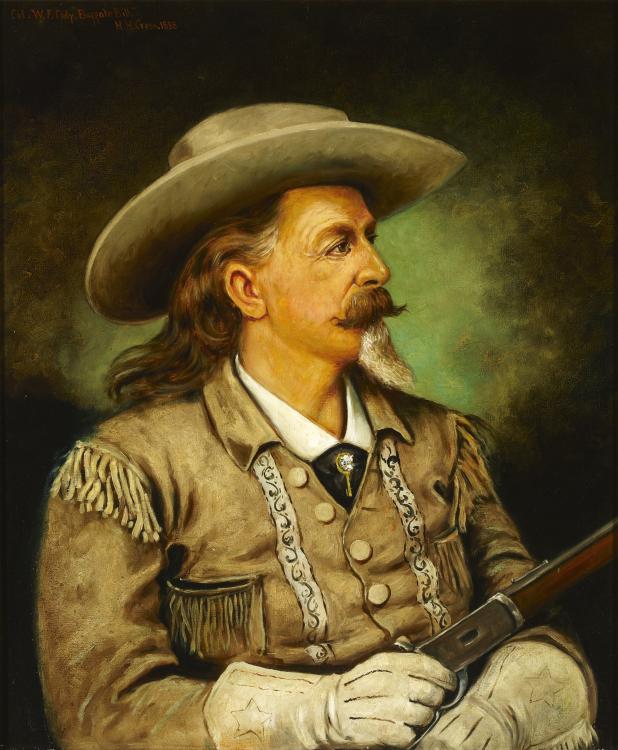

H.H. Cross, Buffalo Bill, William Frederick Cody. ©Gilcrease Museum

Cheap and Well-Illustrated

The Wild Woman: or, The Wrecked Heart: Being the True Autobiography of the “Wild Woman,” Who Was Recently Exhibited at Cincinnati, and Was Rescued from Her Persecutors by the Citizens of That City, and Sent to the Insane Asylum at Dayton, Ohio. The History of This Strange Woman Furnishes Incidents of the Most Thrilling Narrative Ever Written, and Is Now Offered for the First Time (Philadelphia : Barclay & Co., 1864). Designs by Charles F. Noble (born ca. 1833) and Nathaniel Orr (1822-1908). Sinclair Hamilton Collection of American Illustrated Books (GAX) Oversize Hamilton 1887q


Four years after the wood engraver Nathaniel Orr finished the plates for Twelve Years a Slave, he was asked to supply a few cuts for another captivity narrative. This time it was the autobiography of Alice Galon, a young woman who was (according to a very complex story) seduced by Clarence Withrow, a villain who became her lover and then killed their baby. When she suffered a nervous breakdown, he put her on exhibit as a wild mountain woman, charging 15 cent per view.

The actual woman at the center of this tragedy was named Ann Walter, an emotionally challenged girl held captive by Captain J. W. C. Northecote and his cohorts. For several months in 1856, they traveled the Midwest exhibiting Walton as a “Wild Woman of the Wachita Mountains of Missouri.”

When they got to Cincinnati, the police thankfully stopped the show and brought them all in for questioning. On July 16, 1856, an account of the trial was published locally and repeated in the New-York Tribune (see below). Walton spent a period of time at an asylum in Dayton, Ohio, before being released.


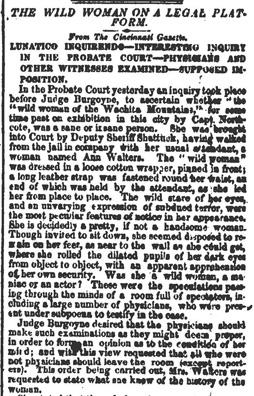
“The wild woman on a legal platform: lunatico inquirendo–interesting inquiry in the probate court–physicians and other witnesses examined–supposed imposition,” The Cincinnati Gasetic, New-York Daily Tribune, July 16, 1856: 6.
.

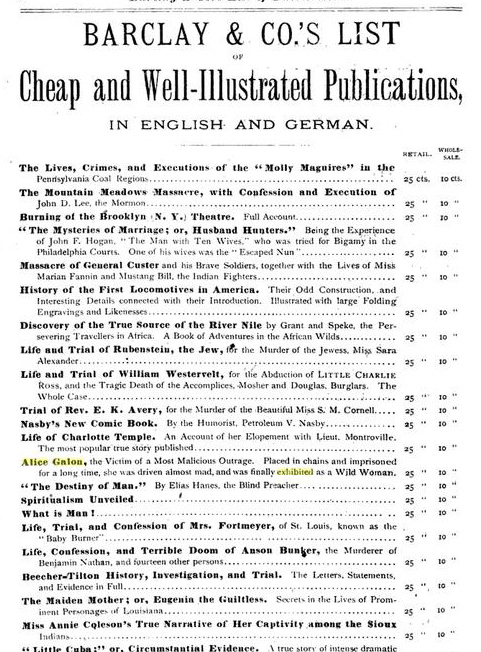
The first edition of the narrative was published in 1857 by the Cincinnati firm of E. E. Barclay & Company, whose lurid accounts of sex and murder were printed in both English and German.  Seven years later, after the firm moved to Philadelphia, the story was reprinted with only a new title page. This is the copy held in the Sinclair Hamilton collection at Princeton.

“What devilish impulse suggested to Clarence Withrow the thought of speculating upon his crazed and unhappy victim, is a mystery of wickedness too deep to comprehend. Arraying her in a manner suitable to his scheme, assisted by wily accomplices, he exhibited her as a wild woman, who had been captured in the mountains.” Page 80


[Alice Galon], Das wilde Weib; oder: Das gebrochene Herz: Eine selbstverfasste Lebensbeschreibung des wilden Weibes, das neulich in Cincinnati ausgestellt war, aber von den Bürgern dieser Stadt den Händen ihrer Verfolger entriffen und in das Irrenhaus in Dayton gebracht wurde (Cincinnati: Verlag von Barclay & Co., No. 6 West 4te Strasse, 1857). “Diese Geschichte des wilden Weibes, die Vorfälle der rührendsten Art enthält, die je geschrieben wurden, wird nun zum ersten Mal dem Publikum angeboten.”


The Watermark Collection

Thomas Keith Tindale and Harriett Ramsey Tindale, The Handmade Papers of Japan; foreword by Dard Hunter (Rutland, Vt.; Tokyo, Japan: Charles E. Tuttle, 1952). Published in an edition of “not more than two hundred and fifty copies.”

Portfolio (v. [4]) contains foreword by Haruji Yoshida (director general, Government Printing Agency) and catalog (5 p.), and 20 sheets of colored papers made at the Oji Paper Mill of the Government Printing Agency in Tokyo, each with a pictorial light and shade watermark made by the tesuri-kako-ho (hand-rubbing) method from engravings by Seishiro Suzuki, Yayoji Shiomi, Kinnojo Kawashima and Sadakichi Kataoka.

Gift of Edwin N. Benson, Jr. Class of 1899 and Mrs. Benson in memory of Peter Benson, Class of 1938. Graphic Arts: Reference Collection (GARF) Oversize TS1095.J3 T5q

Overhead lighting
Back lighting
Snow and Crow. Engraving by Kinnojo Kawashima. The watermark is on grey paper and is of a crow resting on a blossoming branch which is covered iwth snow. Note the detail of the bird’s claw.


The first attempt to produce a fine piece of book-making in America


After appearing in 54 numbers (28 pages each), Harper’s Illuminated and New Pictorial Bible came out in all its morocco-bound, hand-tooled, gold-embossed, and gilt-edged glory in the early part of 1846. Frank Weitenkampf called it “the first richly illustrated book in the United States, the first attempt to produce a fine piece of book-making.” By 1859 the Bible had sold 25,000 copies at more than a half million dollars retail. –details from Eugene Exman, The Brothers Harper (Z473.H29 E9 1965).

The total edition is uncertain since a large number of copies were lost in their building fire of 1853.


The initial idea came from the engraver Joseph Alexander Adams (1803-1880), who contracted with Harper’s on the guarantee of half the final profits from the Bible.  According to Exman:

Adams was “concerned with the problem of printing wood engravings, especially to find a border that would both support and protect the blocks. In 1839, he developed a galvanic process whereby an electric current passing through a solution holding copper would coat a wax mold of his border engraving with a shell of copper. This shell, when affixed to a block, gave the necessary support to the engraving itself. This discovery, now known as electrotyping was simultaneously developed that same year by two Englishmen and a Russian.

Another mechanical aid was the development of the six-roller press by Isaac Adams (not related to the engraver) and his brother Seth of Boston. This press was first put into operation at Cliff Street in 1840. Since the Adams press could take a larger sheet than other presses, this may have been the reason for the decision to issue the Harper-Adams Bible in folio.”

John L. O’Sullivan of the Democratic Review wrote “We think it questionable taste to print the edition in the obsolete form of folio.”

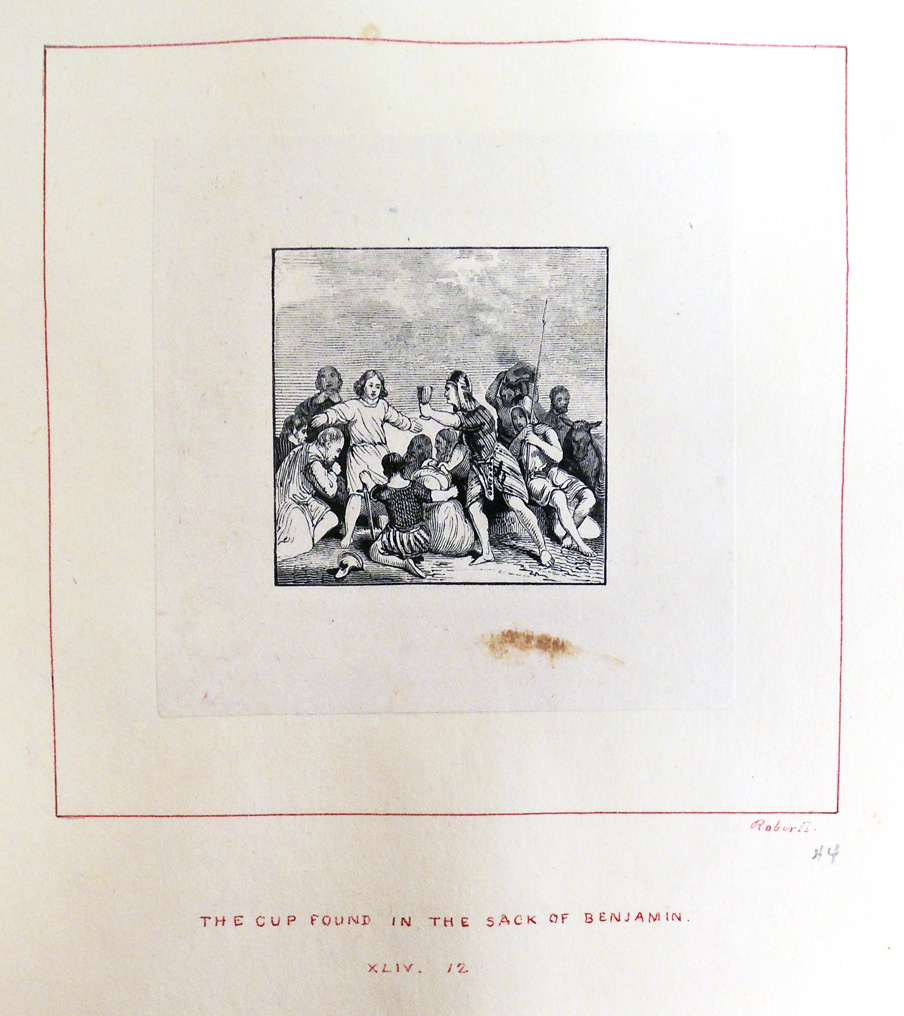
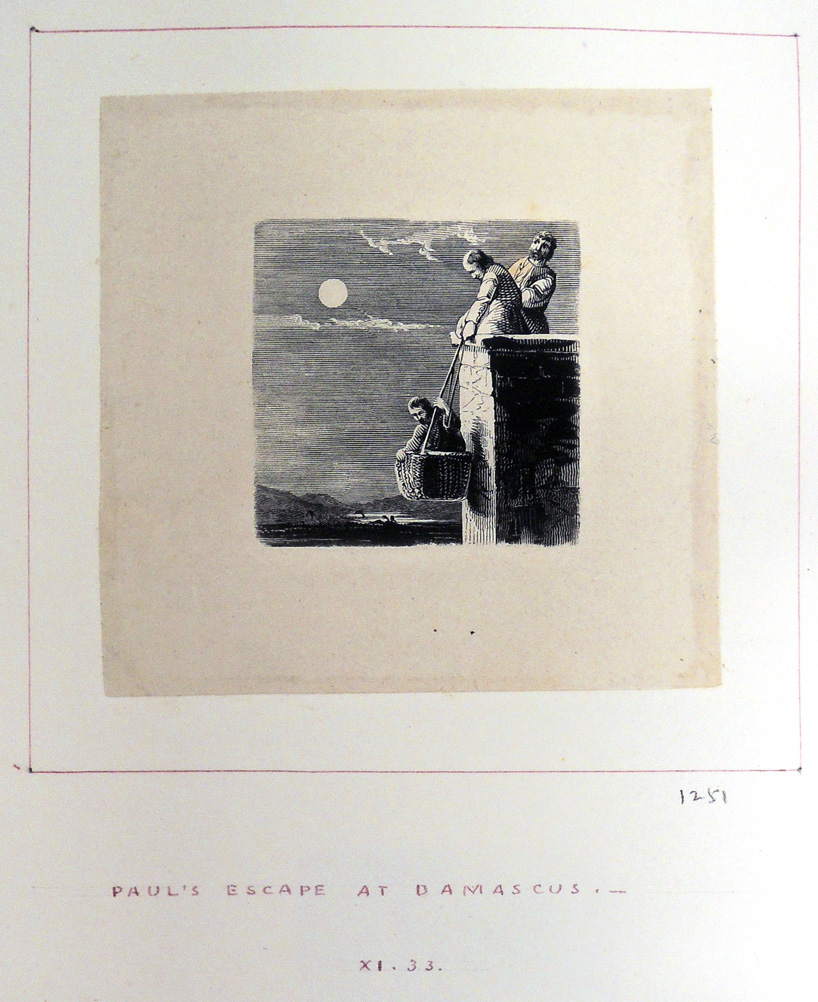
John Gadsby Chapman (1808-1889) supplied 1,400 designs to be engraved, for which he was paid $2,121.80. In his volume of proofs for the bible Illustrations, Chapman lists the engravers as Roberts, Childs, Minot, Howland, Gordon, Butler, Morse, Orr Jr. (Nathaniel), Hall Hart, Kinnersley (Henry), Kinnersley (Augustus F.), Peckham, Bookhour, Holland, and Weeks. He goes on to say only a few can be definitely ascribed to Adams (such as the title page above).

John Gadsby Chapman (1808-1889), Bible illustrations ([New York? 1846?]). 5 v. Note: “These proofs, from the original cuts, were taken by hand by the Engravers thereof, in course of execution for ’Harpers Family Bible’ – New York 1843.-44. 45- and are, so far as I know, the only complete set existing. Presented by me to my Daughter. – Rome October 5. 1879. – John G. Chapman.” Sinclair Hamilton Collection of American Illustrated Books. Graphic Arts Collection (GAX) Oversize Hamilton 199q

Gee’s Bend Prints Acquired


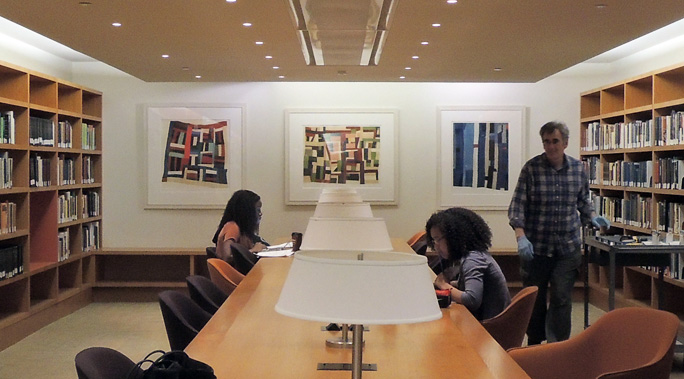
Loretta Pettway (American, born 1942), Remember Me, 2006. Color soft ground and spit bite aquatint etching. Edition of 50; printed and published by Paulson Fontaine Press. Graphic Arts Collection GAX 2017 AAS1

Mary Lee Bendolph (American, born 1935), Get Ready, 2006. Color soft ground and spit bite aquatint etching. Edition of 50; printed and published by Paulson Fontaine Press. Graphic Arts Collection GAX 2017 AAS2

Loretta Pettway (American, born 1942), Lazy Gal, 2006. Color soft ground and spit bite aquatint etching. Edition of 50; printed and published by Paulson Fontaine Press. Graphic Arts Collection GAX 2017 AAS3


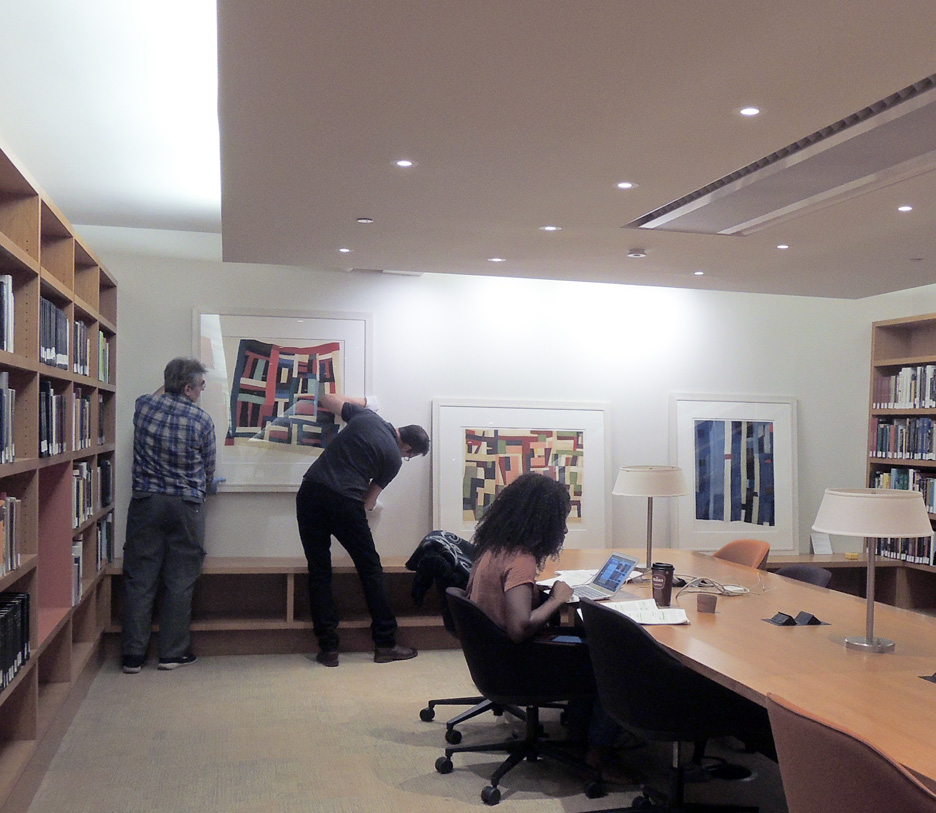
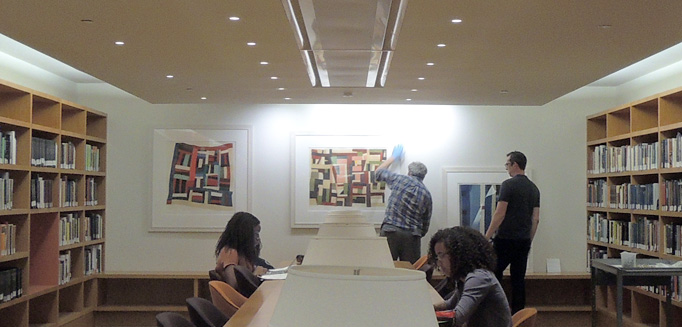
Three spectacular new etchings have been acquired for Firestone Library’s African American Studies Room (B floor) thanks to a joint initiative between the Princeton University Art Museum, Princeton University Library, and the Department of African American Studies.

Many thanks to all those who participated, especially our art handlers John Walako and Rory Mahon, see here, who did a beautiful job hanging the works this morning.

Mary Lee Bendolph and Loretta Pettway are members of the Gee’s Bend Quilters Collective and live in the area of Rehoboth and Boykin, Alabama. For a history of the group, see their website: https://www.soulsgrowndeep.org/gees-bend-quiltmakers

The etchings were produced in 2006 in collaboration with the printmakers at Paulson Bott (now Fontaine) Press in Berkeley, California. See more at: http://paulsonfontainepress.com/


John Beardsley’s 2002 study, Gee’s Bend: the Women and their Quilts, has been placed in the AAS room so students and visitors can learn more about the collective. For additional source material, see this video from Glass World Films:

The Quiltmakers of Gee’s Bend (Award-winning PBS Feature) from Glass World Films on Vimeo.

Photographydatabase

1879 Hall, Princeton University

Andrew Eskind recently posted information on the former George Eastman House photography database we all like to use. I repost here in case you missed it.

1. photographydatabase.org is alive and well. It extends work Greg Drake and I did at Eastman House, but no longer has any relationship with GEH (now GEM). I had permission to export the data–much of it grant supported–and to extend it beyond its status at the time of my departure in 2003.

2. Yes, it continues to be maintained and web served via Filemaker which favors Safari and Chrome web browsers, and has issues with Firefox (and perhaps other) browsers. The issues are mostly cosmetic, but no guarantees.

3. We edit offline on a daily basis, but only refresh the online copy one per month–usually mid-month. The current version still says “March” but will change to “April” probably sometime next week.

4. The relationship to pic.nypl.org is simply as one source among many they use. However, PIC in no way supercedes photographydatabase.org. In fact, I believe their snapshot is based on the 1998 print edition of the final G.K. Hall print edition. There is no formal relationship and they don’t track additions, deletions, corrections (yes, we catch mistakes on occasion)–I think photographydatabase includes nearly twice as many photographer records as PIC lists as sourced from us.

More importantly, photographydatabase collates public photography collections worldwide-now over 1000. It also collates museum exhibitions (not gallery exhibs)-now nearly 9500 – both historic and current. To a lesser extent we track galleries–not their exhibs, just the photographers they represent or whose work they have in inventory. The world is far too dynamic to keep everything up-to-date-some museums provide Annual Reports of their new photography acquisitions, most do not. Some are easy to monitor via their websites-many don’t provide such information online. We’re currently in the process of sorting out which part of the Corcoran Gallery of Art’s photography collection has been distributed to the National Gallery, and which has gone to GW. Same issue with Time, Inc. as well as a couple of smaller collections.

5. For an historic overview of the long-term evolution, see these postings graciously mentored by A.D. Coleman a few years ago-still basically current:

http://www.teachingphoto.com/2011/04/24/hello-world/
http://www.teachingphoto.com/2014/03/26/the-making-of-photographydatabase-org-2/

As always, Greg and I are happy to hear from users with suggestions, corrections, or just in need of navigational support. Regards, Andrew Eskind, Rochester, NY

Histoire de Mr. Jobard and others


Studies of modern comics often begin with Rodolphe Töpffer (1799-1846), although many artists (Gillray in particular) were drawing linear narratives much earlier. Princeton holds 17 volumes attributed to Töpffer, beginning with a facsimile of La bibliotheque de mon oncle (Geneve, Imprimerie de la Bibliothèque universelle, 1832). Rare Books (Ex) PQ2542.T2 xB5 1832

French artists were publishing similar books in the 1830s through the print shop La maison Aubert. In her wonderful new study, Another World, Patricia Mainardi writes, “Each of the twelve comic books published by Aubert in the “Collection of Jabots” has the same size and format, identical with those of Töpffer and no doubt dictated by the publisher. Seven were written by the caricaturist Cham, who wrote his first two, The Story of Mr. Lajaunisse and Mr. Lamélasse, in 1839, when he was twenty-one years old.

An admirer of Töpffer, Cham later redrew the illustrations for Töpffer’s Mr.. Cryptogame when it was published in the journal L’Illustration in 1845 in wood-engraved format. While it is beyond question the Töpffer influenced these French artists, it is also possible that the French artists influenced Töpffer as well.” — Another World: Nineteenth-Century Illustrated Print Culture (2017)

Aubert’s 1846 catalogue lists seven lithographed books by Cham (pseudonym of Camles Amedee of Noah, 1819-1879) and the Graphic Arts Collection is fortunate to have recently acquire five of these earliest books, including:

Mr. Lamélasse ([Paris]: Aubert, [1839?]). Graphic Arts Collection (GAX) 2017- in process.

Un génie incompris: [Histoire de la vie de M. Barnabé Gogo] ([Paris]: Aubert & Cie, [1839?]). Graphic Arts Collection (GAX) 2917- in process

Histoire de Mr. Lajaunisse ([Paris]: Chez Aubert, [1839]). Graphic Arts Collection (GAX) 2017- in process. Note, Mr Lajaunisse has been digitized in full by Yale University’s Beinecke Library: http://brbl-dl.library.yale.edu/vufind/Record/3584197


Histoire de Mr. de Vertpré et de sa ménagère aussi (Paris: Aubert, 1840). Graphic Arts Collection (GAX) 2017- in process

Histoire de Mr. Jobard ([Paris]: Chez Aubert & Cie., [1840?]). Graphic Arts Collection (GAX) 2017- in process


Thanks to the British Museum, we known La maison Aubert specialized in popular prints and satires. “Founded in 1829 by Charles Philipon (who was always the brains of the enterprise) and his brother-in-law Gabriel Aubert (who ran the shop), a notary who had bankrupted himself. First established as the Magasin des Caricatures in the Passage Véro-Dodat in 1829 (which moved to the Place de la Bourse in 1841) and a second shop in the Galerie Colbert in 1835.”

About the same time Aubert (who died in 1847) established his own lithographic printing press under the imprint Aubert et Cie, publishing books by Cham and many others. See James Cuno, “The business and politics of caricature-Charles Philipon and the Maison Aubert,” Gazette des Beaux-Arts CVI (1985): 95-112.


Un genie incompris tells the story of a young draftsman of dubious talent who is rejected by the Academy of Fine Arts and eventually, is forced to become a caricaturist!


Here are a few of Cham’s delightful other plates.


1844 Plain Directions for Obtaining Photographic Pictures

Thanks to Sara Stevenson for discovering the following new information.

In the November 1844 issue of The Art-Union, Thomas Willats placed the following advertisement:

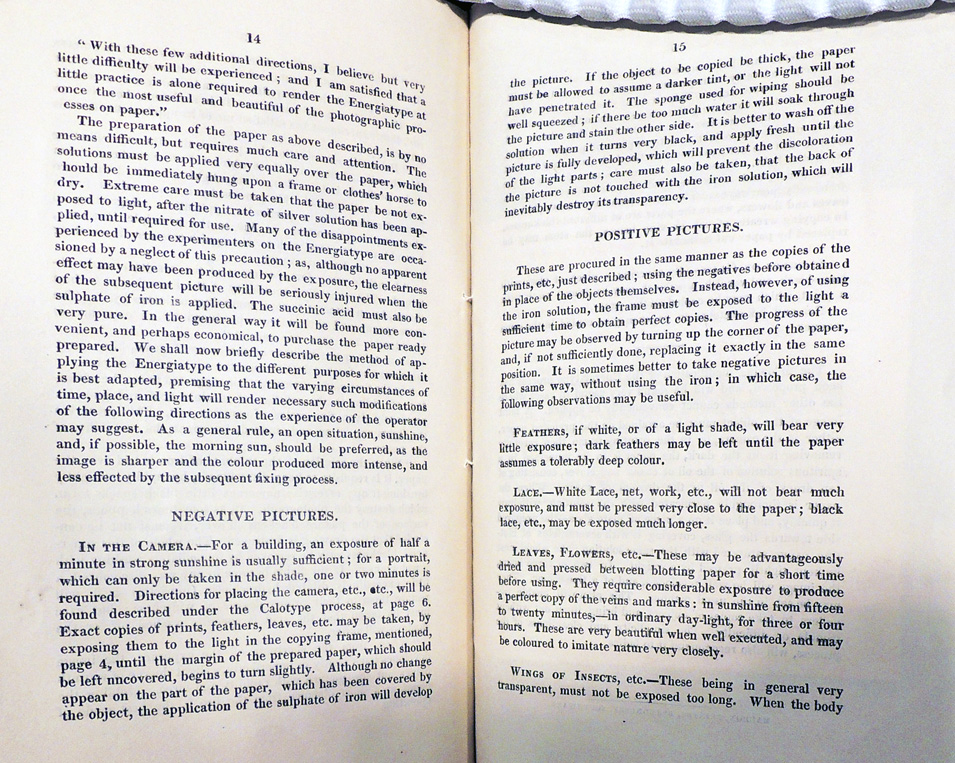
“Photography . . . Energiatype, photogenic and iodized paper, and every apparatus or chemical preparation required in Photography may be obtained, upon the most moderate terms, of Thomas Willats, Optician, 98, Cheapside, for many years with E. Palmer, Newgate-street, who has retired from the business. Lists of prices forwarded gratis, and full instruction given to purchasers. ‘We have examined some of the pictures executed by means of Mr. Willats’s improved camera, and find them most perfect, even to the minutest detail. The camera is of superior value, as it can be adjusted with greet facility and certainty, and obviates the trouble in the old instrument.’”

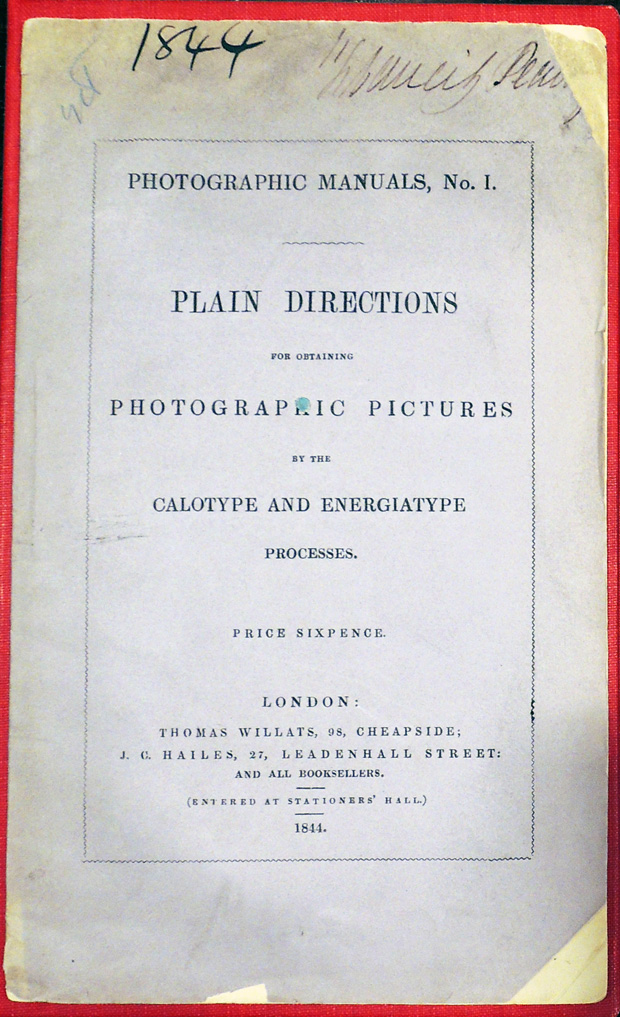
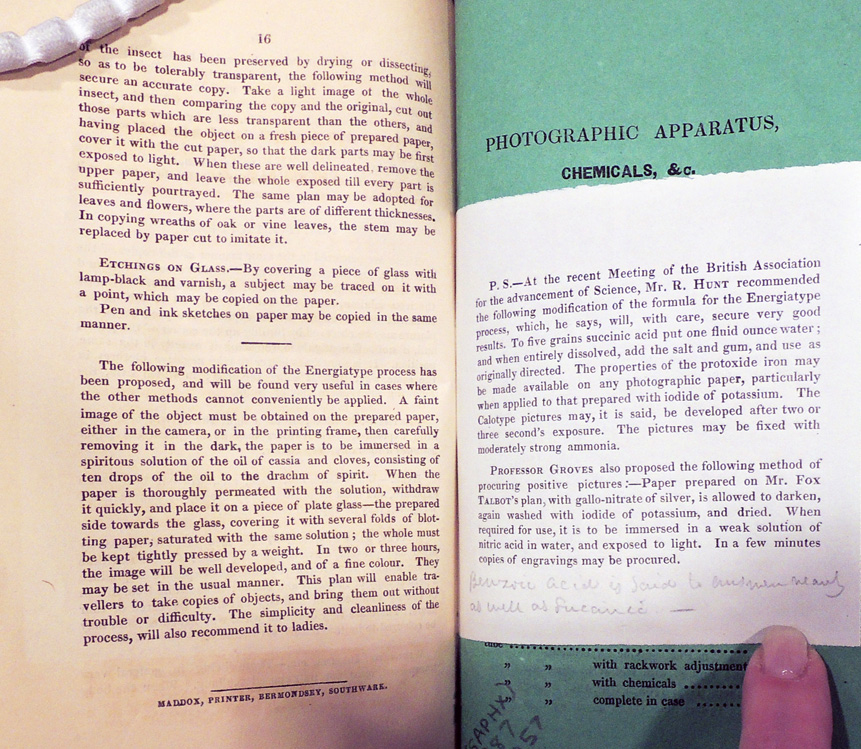
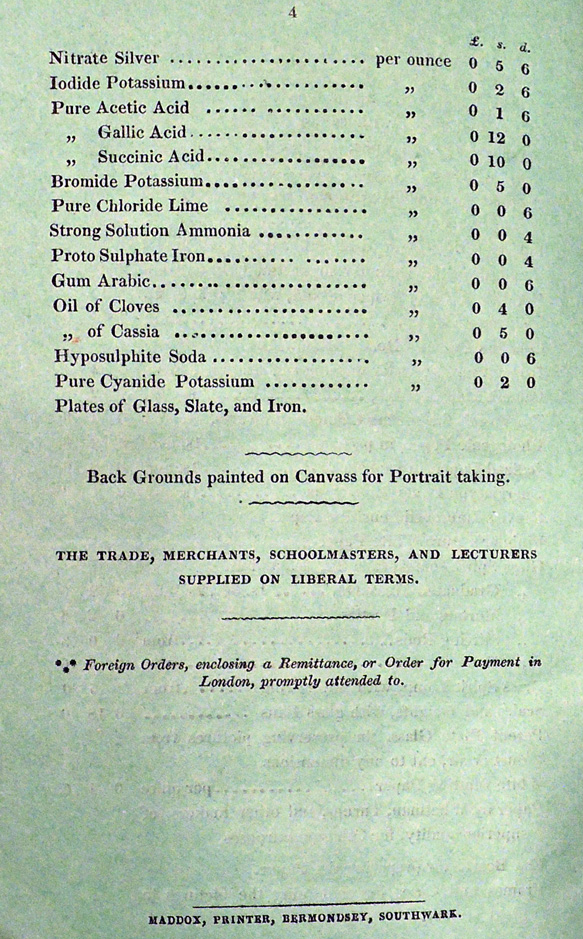
Horne, Thornthwaite, and Wood became the successors to Palmer’s shop and Thomas Willats set up at a fashionable Cheapside address where he not only sold equipment but also began publishing a series of scientific manuals, the first in 1844 titled Plain Directions for Obtaining Photographic Pictures by the Calotype, Energiatype, and other processes on paper… . By 1845, his brother Richard Willats had joined the firm, now known as “T. & R. Willats”. New editions and revisions of the first manual were issued in 1845, 1846, 1847, 1850, 1851, 1852, 1853, 1855, and 1860.

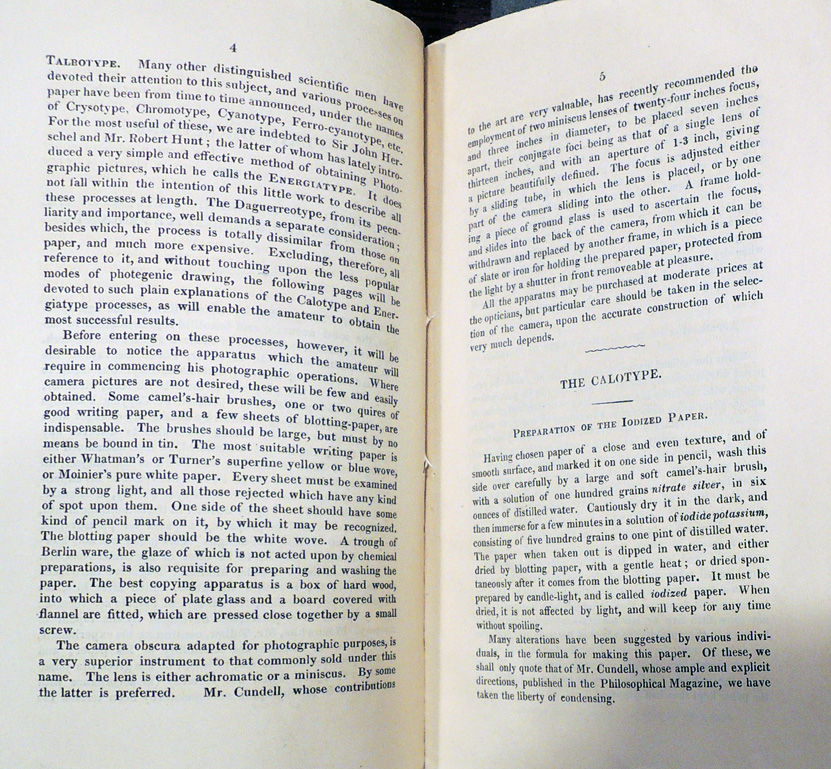
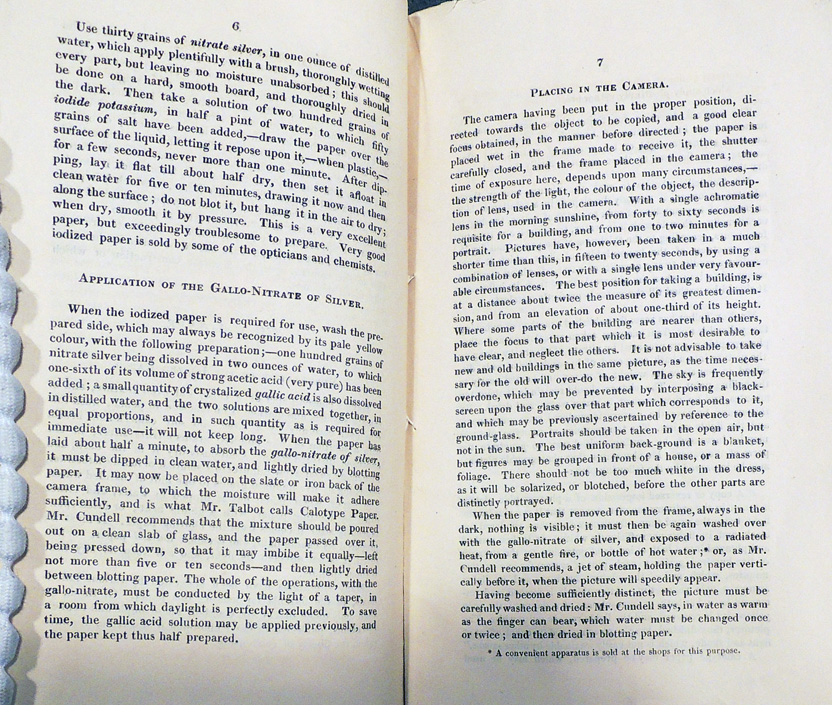
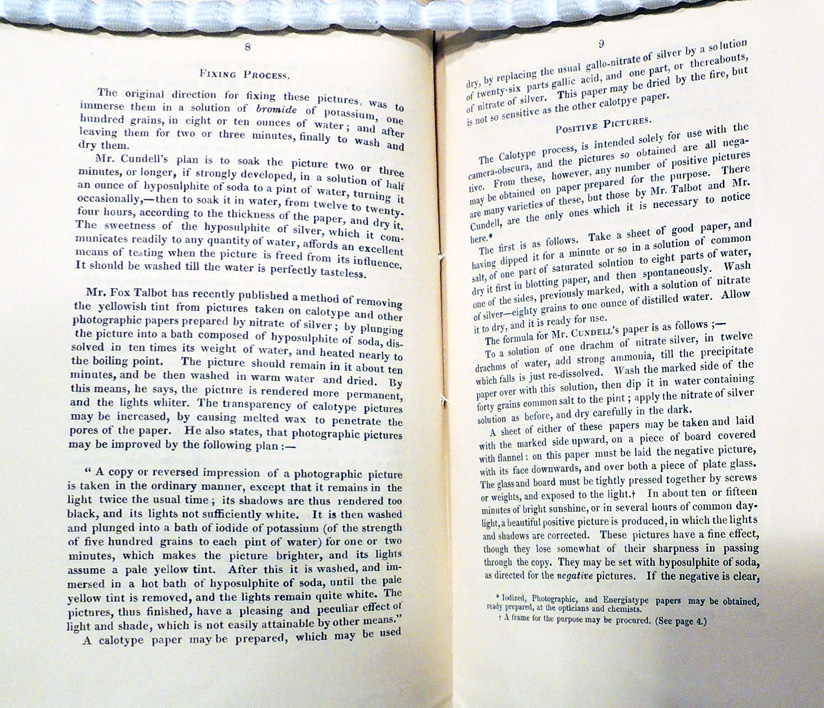
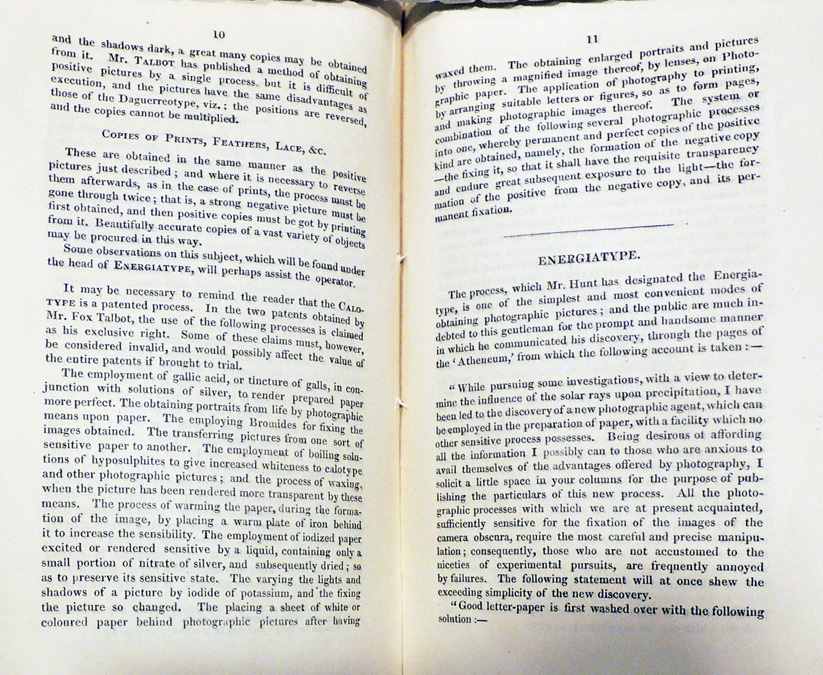
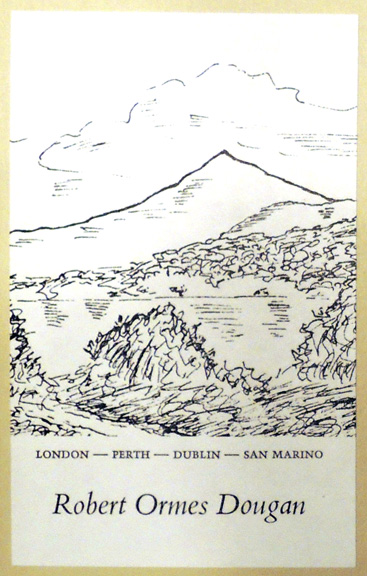
A copy of the first edition of Thomas Willats’s publication was collected by Robert Ormes Dougan (1904-1999) and came to Princeton University Library when a small portion of his collection was acquired by Peter Bunnell. (See catalogue: The Robert O. Dougan Collection of historical photographs and photographic literature at Princeton by Peter C. Bunnell, 1983). Princeton, Oxford, and Cambridge hold the only three institutional copies of this important early document.

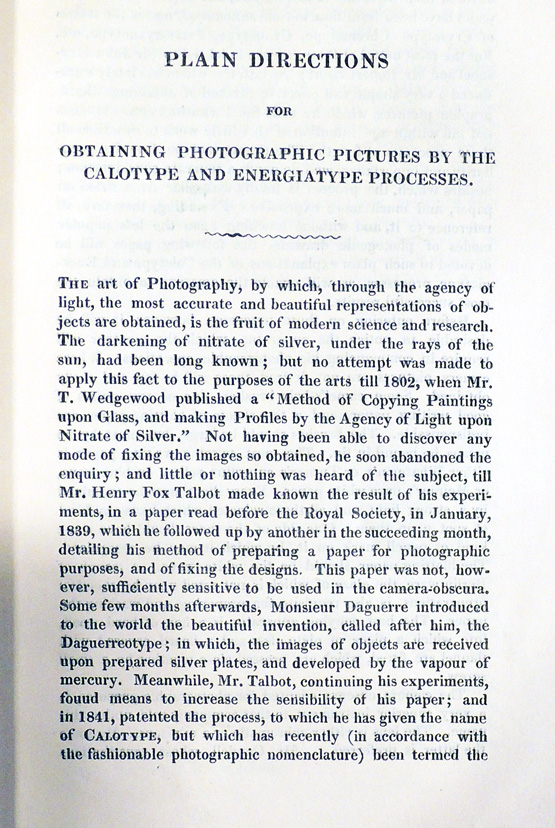
Since it is so rare, here is a copy:


Plain directions for obtaining photographic pictures by the calotype and energiatype processes (London: T. Willats, 1844). Provenance: Robert O. Dougan Collection of Historical Photographs and Photographic Literature at Princeton. Marquand Library (SAX): Rare Books XB87.0057


**In 1897, daguerreotypes of Thomas Willats and Richard Willats were exhibited in London. If anyone knows the present location of these, please let us know.


Kōbunsō: a bookstore without a door

Kōbunsō Taika Koshomoku (弘文荘待賈古書目) is a set of antiquarian book catalogues published by Shigeo Sorimachi (反町 茂雄) owner of Kōbunsō (弘文荘), an early version of amazon.com. It was a bookstore without a physical shop.

These catalogues were given to collectors and sales were made through the listings. Most feature Japanese and Chinese literature although European rare books appear in several sales. We are fortunate to have even a partial set of the Kōbunsō catalogues issued between June 1933 (Showa 8) and February 1984 (Showa 59).

According to the Samurai Archives of pre-20th-century Japanese history, Sorimachi Shigeo (1901-1991) was a book dealer and a scholar of book history. “He first began working for Isseidô Bookstore in the Kanda district of Tokyo in 1927. Five years later, he established his own operation, Kôbunshô (弘文荘), selling books by catalog. Through his efforts in the book world, he helped uncover a number of manuscripts and other old books which had not been known to be extant, including a copy of Matsuo Bashô’s Kai ôi, and a copy of the Tameie version of Tosa nikki.”


Sorimachi also wrote several books on graphic arts, book history, and an autobiography: Shigeo Sorimachi (1901-1991), Ichi koshoshi no omoide (Memories of an Old Bookshop) (Tokyo: Heibonsha, 1986). East Asian Library (Gest) Z463.3 .S67 S67


Thanks to Tara McGowan for her help organizing these volumes.

A parody of Victor Hugo’s “Légende des Siècles”

Le Sire de Chambley (Edmond Haraucourt 1856-1941), La Légende des sexes. Poëmes hystériques. 1st edition (Bruxelles: pour l’auteur, 1882 [Nevers, 1883]). Binding by Carayon. Copy 22 of 212. Graphic Arts Collection GAX 2017- in process

Fabulous endpapers.


The Graphic Arts Collection is fortunate to have acquired a first edition of Edmond Haraucourt’s first book, published when he was twenty-six years old at his own expense, to parody Victor Hugo’s Légende des Siècles (Legend of the Centuries). He called his book, La Légende des sexes.


Our copy has a particularly fine Japonism style binding by the French artisan known only as Carayon. The endpapers are beautiful color woodcuts depicting the Japanese folktale, Shita-kiri Suzume (Tongue-Cut Sparrow).


A member of the whimsical literary circles of Hydropathes and the Chat Noir, Haraucourt published the volume under the pseudonym Le Sire de Chambley and under his own fictitious imprint. Even so, he was not accepted into the Académie Française because of the book, which was promoted as “l’épopée du bas-ventre” (genteelly translated as an epic of the lower abdomen).

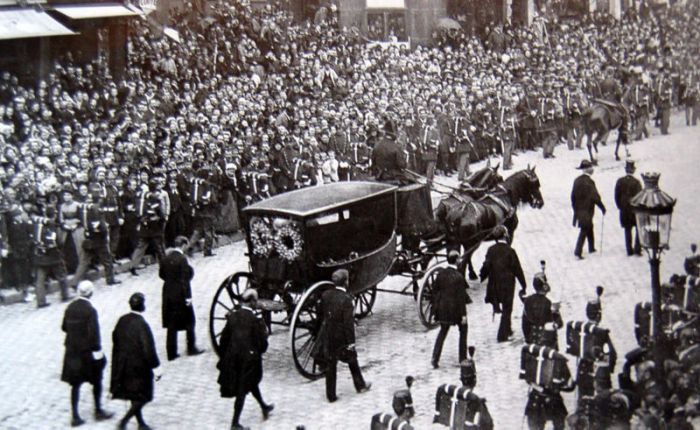
Haraucourt knew Victor Hugo (1802-1885) a few months before Hugo’s death and was one of the ten poets to accompany his coffin at his funeral. In accord with Hugo’s will he was carried in the hearse of the poor but followed by chariots loaded with flowers. Haraucourt went on to serve as President of the Victor Hugo Foundation from 1928 to his death in 1941.

See also Victor Hugo (1802-1885), La légende des siècles (Paris: Hetzel, [188-?]) Recap PQ2285 .L15 1880