Next week, our colleague Gillett Griffin (former curator of graphic arts) will open an exhibition of his own graphic arts entitled: The Eyes Have It Gillett Griffin. Mounted in the Solley Lobby gallery at the Arts Council of Princeton on Witherspoon Street, the show will run from September 6 to 30, 2014. Congratulate Gillett in person at the opening reception on Sunday, September 14 at 3:00 pm.
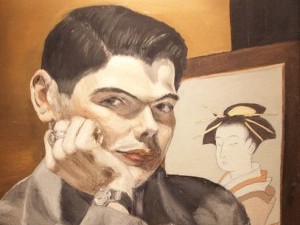
On view will be “a collection of paintings, drawings and sketches from the field notes and diaries of Gillett Good Griffin, an artist, collector, teacher, curator and sponsor of Pre-Columbian and Primitive Art at the Princeton University Art Museum.” http://artscouncilofprinceton.org/exhibit/the-eyes-have-it/
Ode to an Empty Shelf
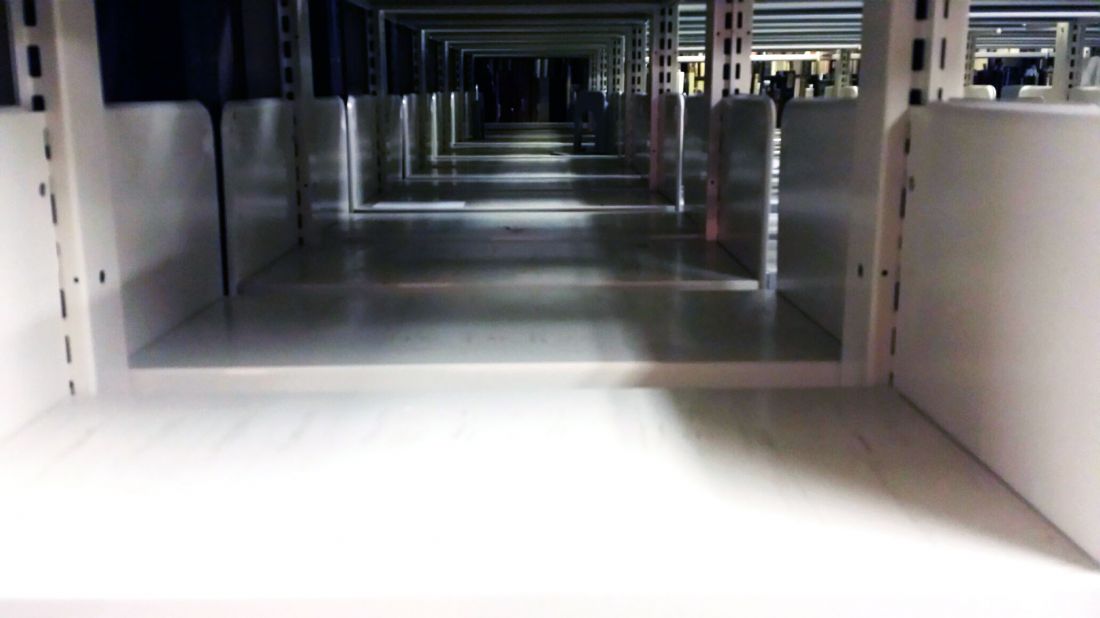 An empty shelf is like a mind—
Fill it with compelling verse.
Keep some order or you shall find—
chaos, confusion, or something worse!
by Miriam Jankiewicz
 This week Rare Books and Special Collections will move 200,000 books (give or take a few almanacs), along with fishing rods, educational wall hangings, bronze sculpture, pastel portraits, and much more. After eight months on temporary shelves down the hall, we will move it again to a (hopefully) permanent location. Sincere thanks to the our generous staff who are all helping. Please wish us luck.

View from Inspiration Point
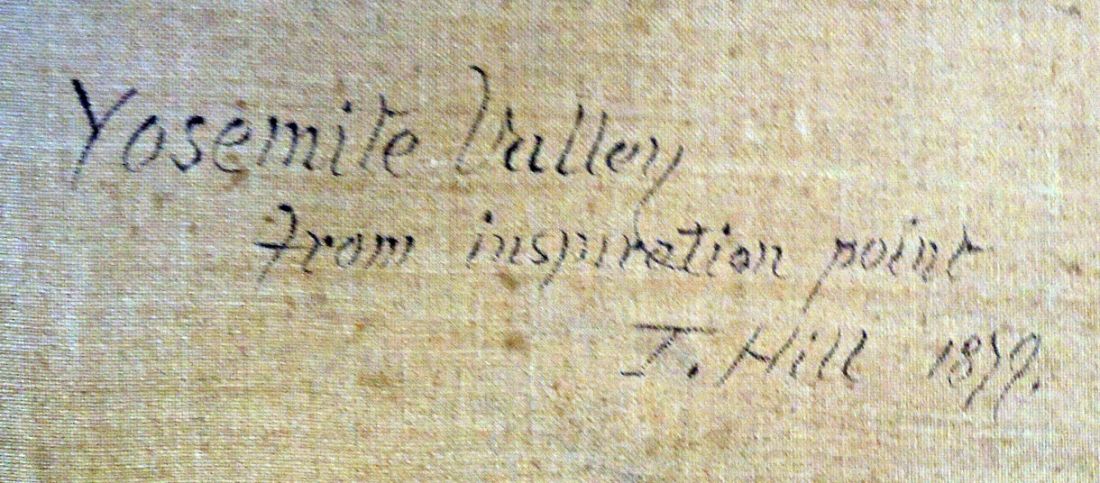
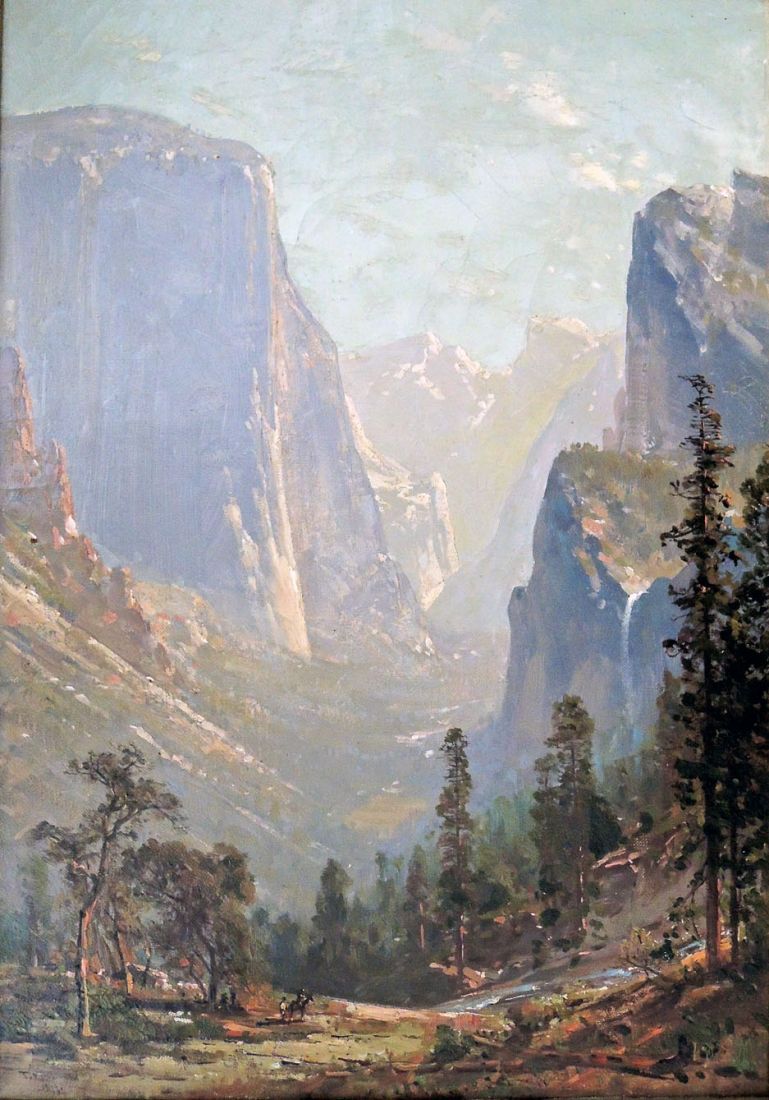 Thomas Hill (1829-1908), Looking up Yosemite Valley, California (or Yosemite Valley from Inspiration Point), 1889? Oil on canvas. Gift of J. Monroe Thorington, Class of 1915.
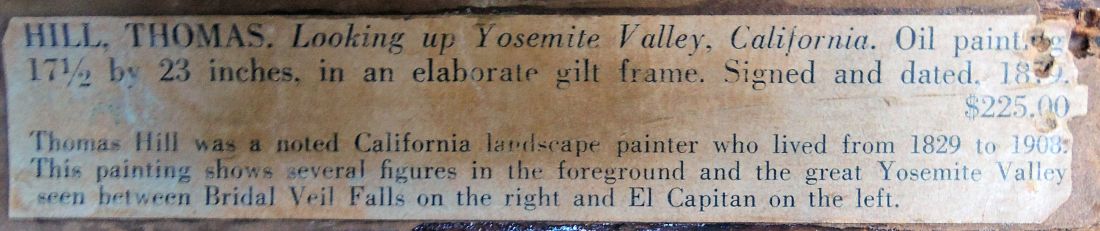 Label pasted to the verso [above] and inscription on the canvas [below]
We are fortunate to have five paintings and two prints by the British-born artist Thomas Hill (1829-1908). Because of our ongoing renovation, three of Hill’s paintings were recently moved back into storage. Here are the images so they won’t disappear entirely.
Hill’s studio, on the grounds of the Wawona Hotel, is now a National Park Service visitor center. The NPS has posted a good overview of the artist and his Yosemite paintings at: http://www.nps.gov/yose/historyculture/thomas-hill.htm
In 1872, Thomas Hill moved back to San Francisco with his wife Charlotte Hawkes and their nine children. Here, amid the beauty and grandeur of the California landscape, he thrived and became an important part of the growing California art scene. During the late 1870s, Hill became increasingly popular as a landscape painter, particularly of Yosemite subjects. After a sketching tour in the spring of 1879, he returned with over 30 oil sketches, quickly turning several into larger paintings.
Hill’s Studio in Wawona, in a community near Yosemite’s Mariposa Grove of Giant Sequoias, was finished by January 1884. In the 1880s, he separated from his wife, and spent less time in San Francisco and Oakland.
Increasingly, he found happiness and success in Yosemite. By 1886, Hill settled at Wawona and, when not traveling, spent summers there and winters in nearby Raymond. Hill’s work at Wawona was prolific and modestly profitable—in three years he sold 163 paintings. He seemed to enjoy the relaxed lifestyle and easy popularity as Wawona’s resident artist. As with many artists, his fortunes fluctuated with the erratic art market. After 1880, Hill’s popularity declined and it became increasingly difficult for him to sell paintings. Although Hill suffered a stroke in 1896, he continued to paint, but his sales slowed and his travels were limited. As late as 1906, it was reported that he was “still at work and his easel is set up at a very early hour each morning.” Thomas Hill died on June 30, 1908, in Raymond, California.
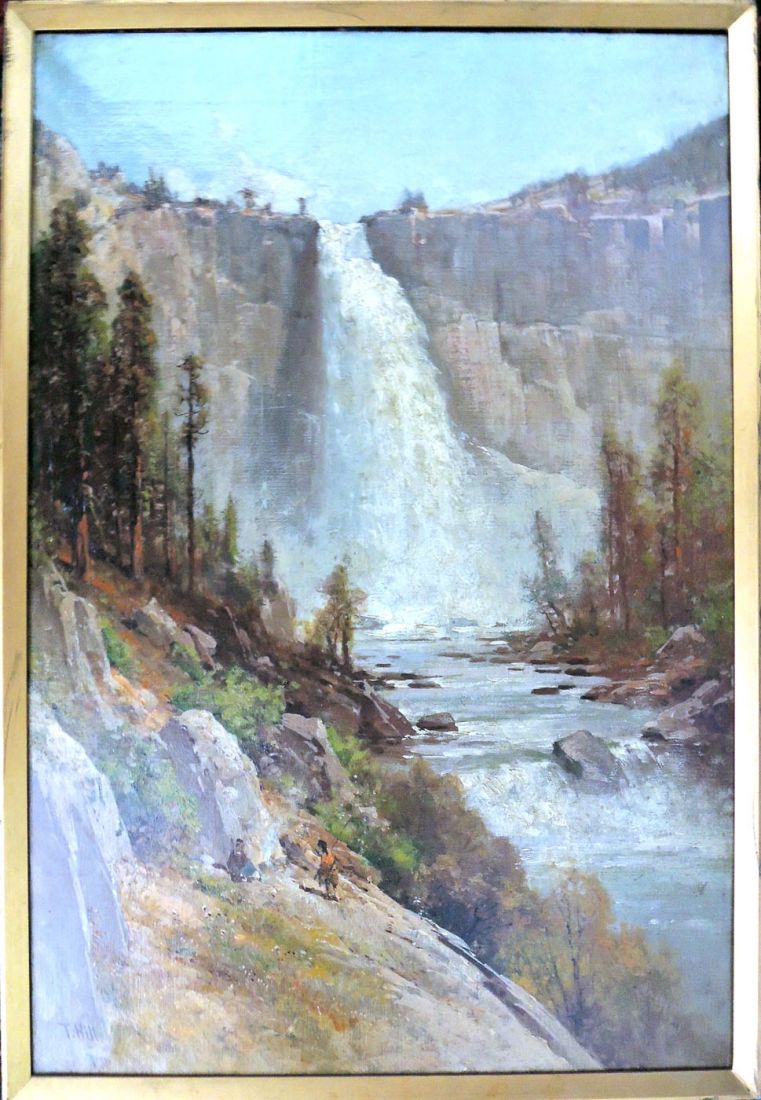
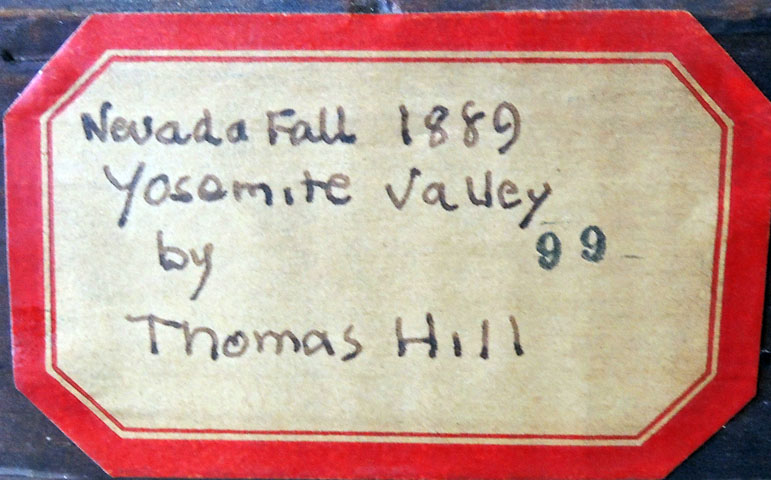 Thomas Hill (1829-1908), Nevada Fall, Yosemite Valley, 1889. Thorington Alpine Views Collection. Gift of J. Monroe Thorington, Class of 1915.
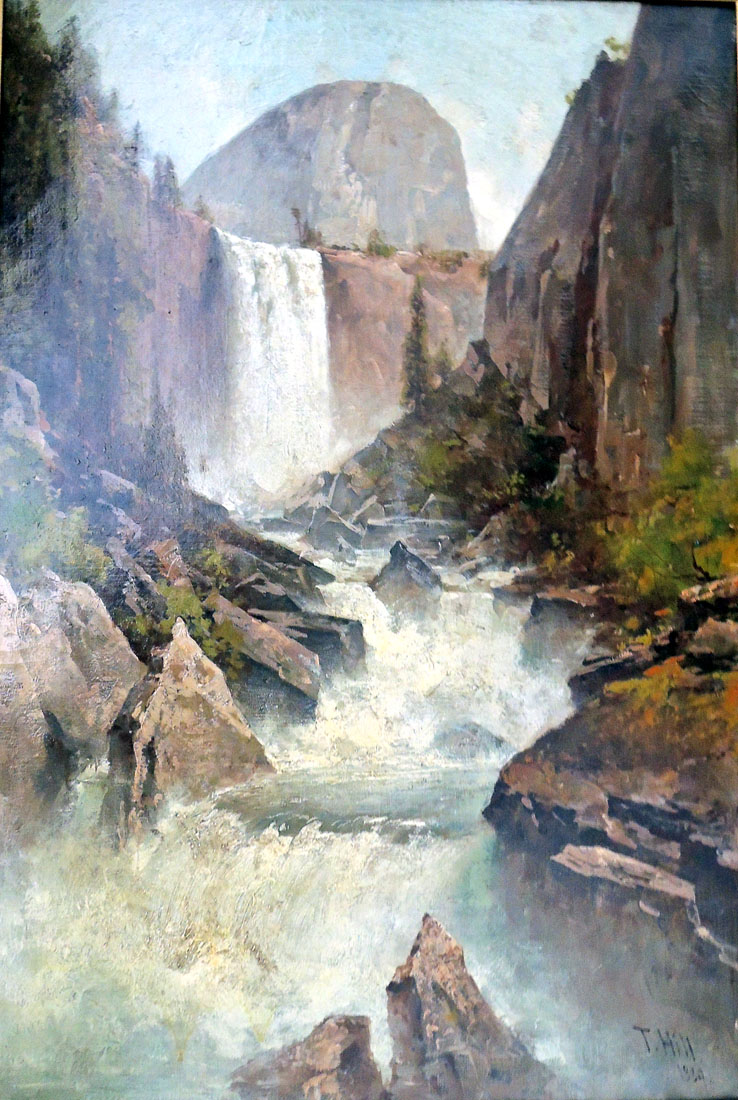
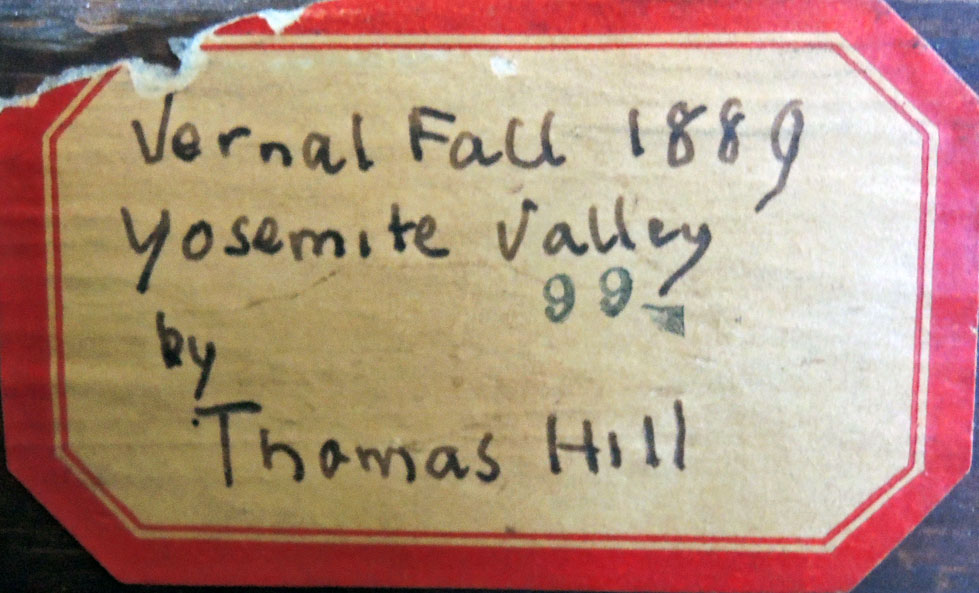

Thomas Hill (1829-1908), Vernal Falls, Yosemite, 1889. Oil on canvas. Thorington Alpine Views Collection. Gift of J. Monroe Thorington, Class of 1915. Signed and dated: “T. Hill // 1889”.
Wild Pilgrimage
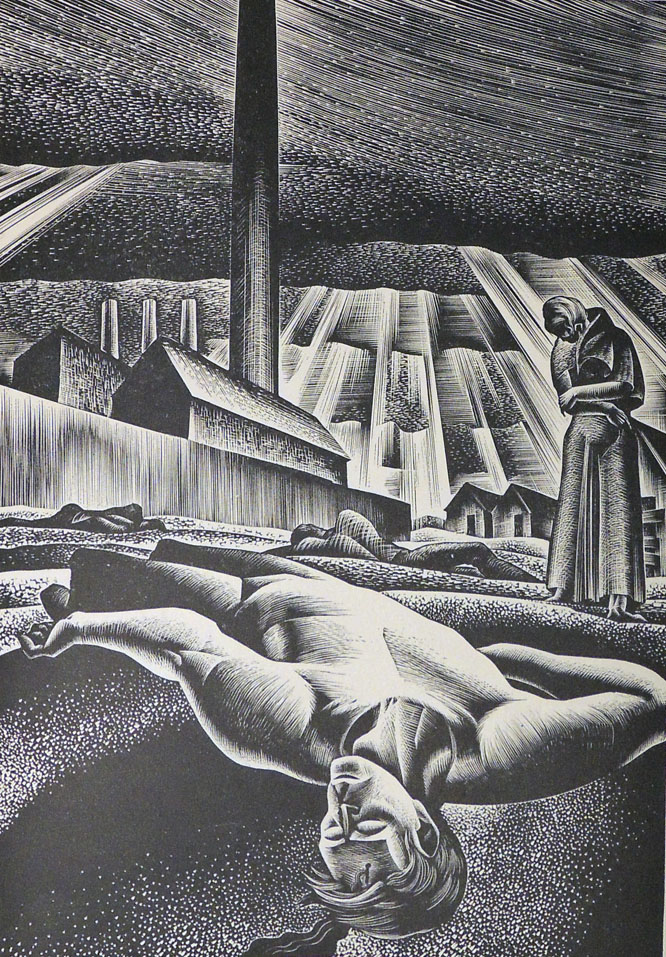
Lynd Ward (1905-1985). Wild Pilgrimage. New York: H. Smith & R. Haas, 1932. [95] leaves of plates. Gift of David B. Long in honor of Gillett G. Griffin. Graphic Arts Collection (GAX) 2007-2559N
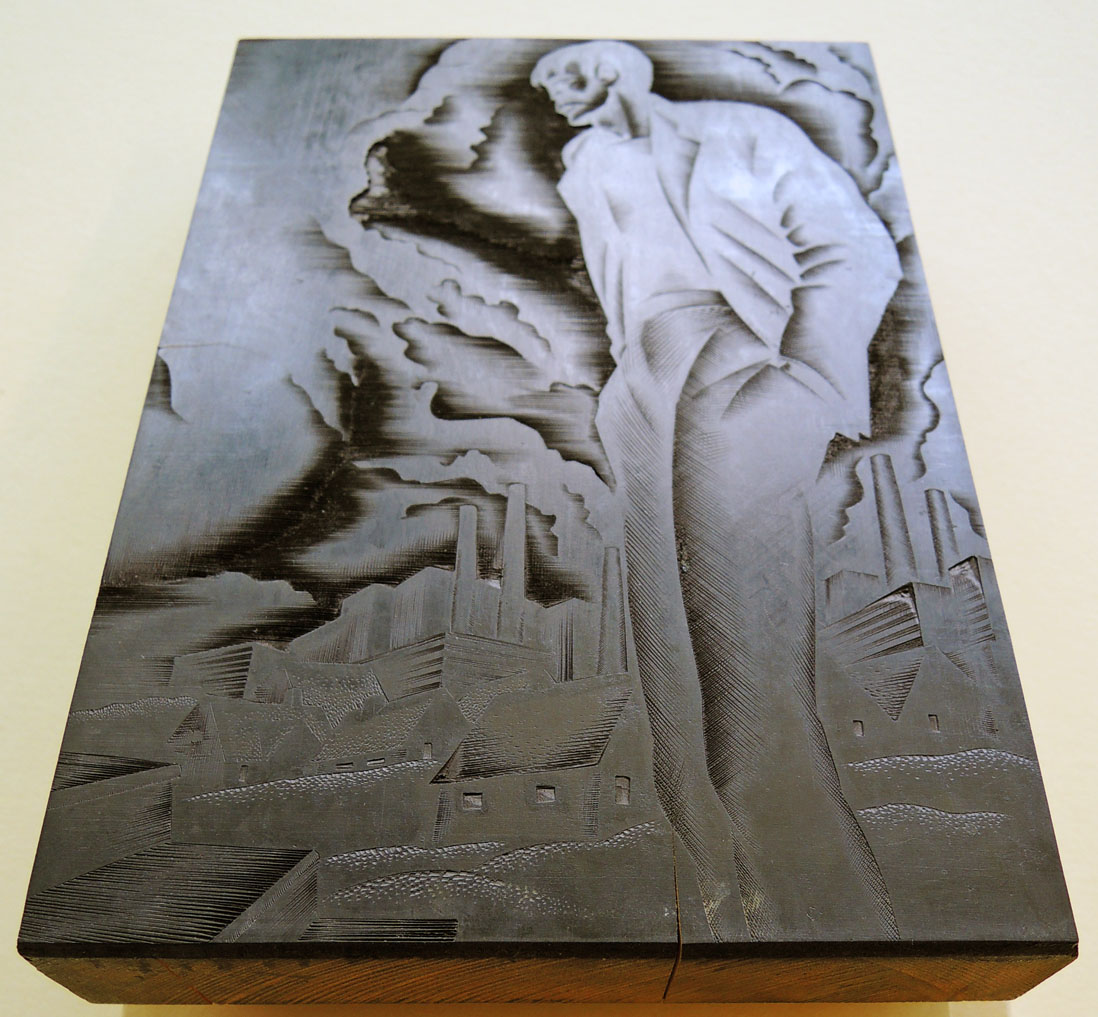
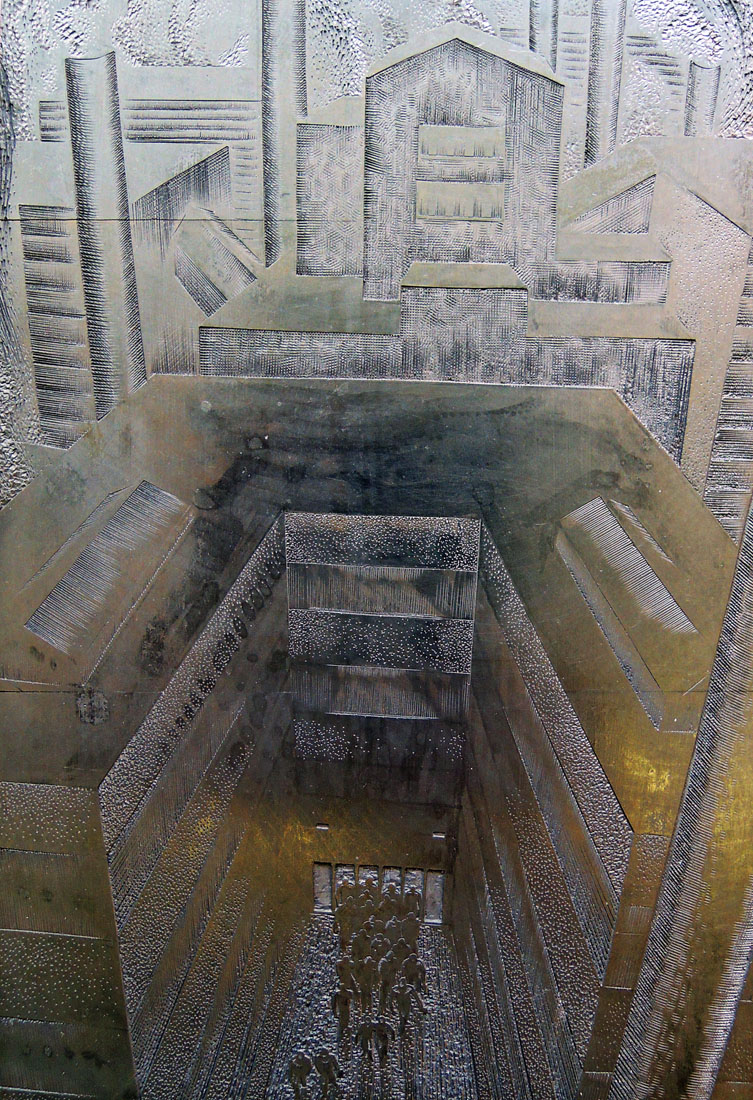
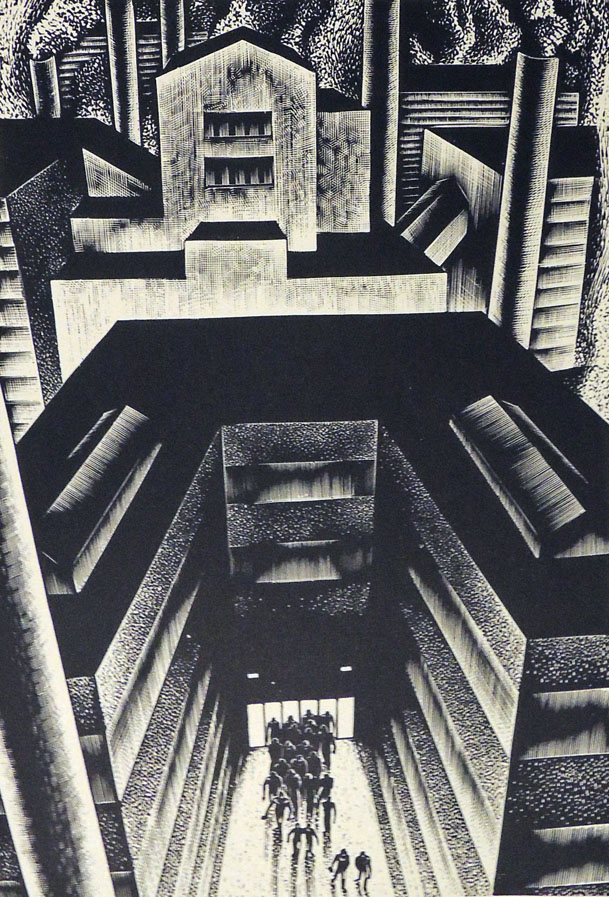
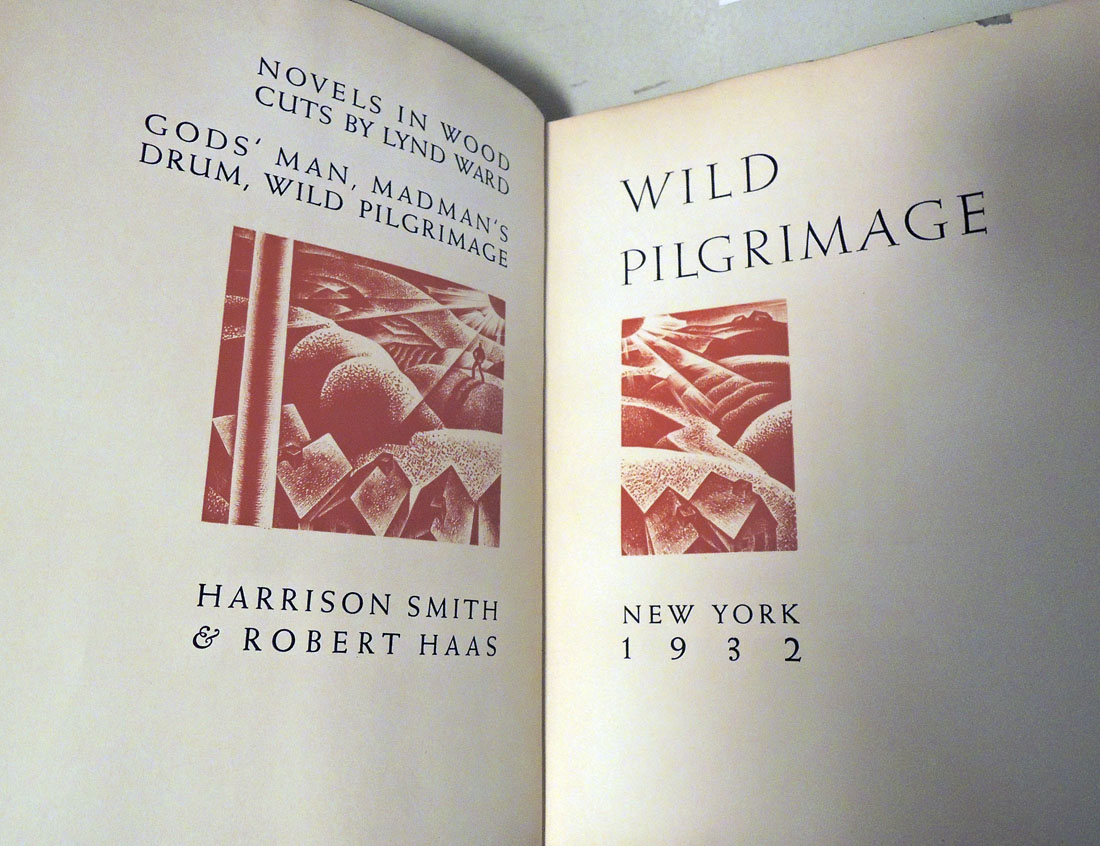 The Graphic Arts Collection is proud to hold several editions of Lynd Ward’s graphic novel Wild Pilgrimage. In addition, we have a complete set of Ward’s carved woodblocks used in the original printing. Each block has been carefully conserved and housed individually to prevent further cracking or chipping.
 In his 1932 NYT’s review of Wild Pigrimage, Harold Strauss wrote that Ward’s story “is severely simple. A young man, aroused by communistic propaganda and his hatred of the ugliness of industrialism, breaks away to the countryside of his dreams.”
But Strauss encourages the reader not to be content simply knowing the plot. “Such is the story but one must page through the book to appreciate its intensity and vitality.”
The reviewer concludes with a comparison to the Flemish graphic novelist Frans Masereel (1889–1972) who he considers the only other true woodcut novelist. “In Wild Pilgrimage,” notes Strauss, “Ward has made such strides toward profundity and power that this reviewer, for one, will grant him ascendancy over his German predecessor.”
Although it might not be apparent here, Ward has used two colors of ink to print his story, black for action in the actual world and rose-red for the world within his mind. Happily, in later volumes, he realizes this is an unnecessary conceit given the power of the visual narrative and returns to black ink exclusively.
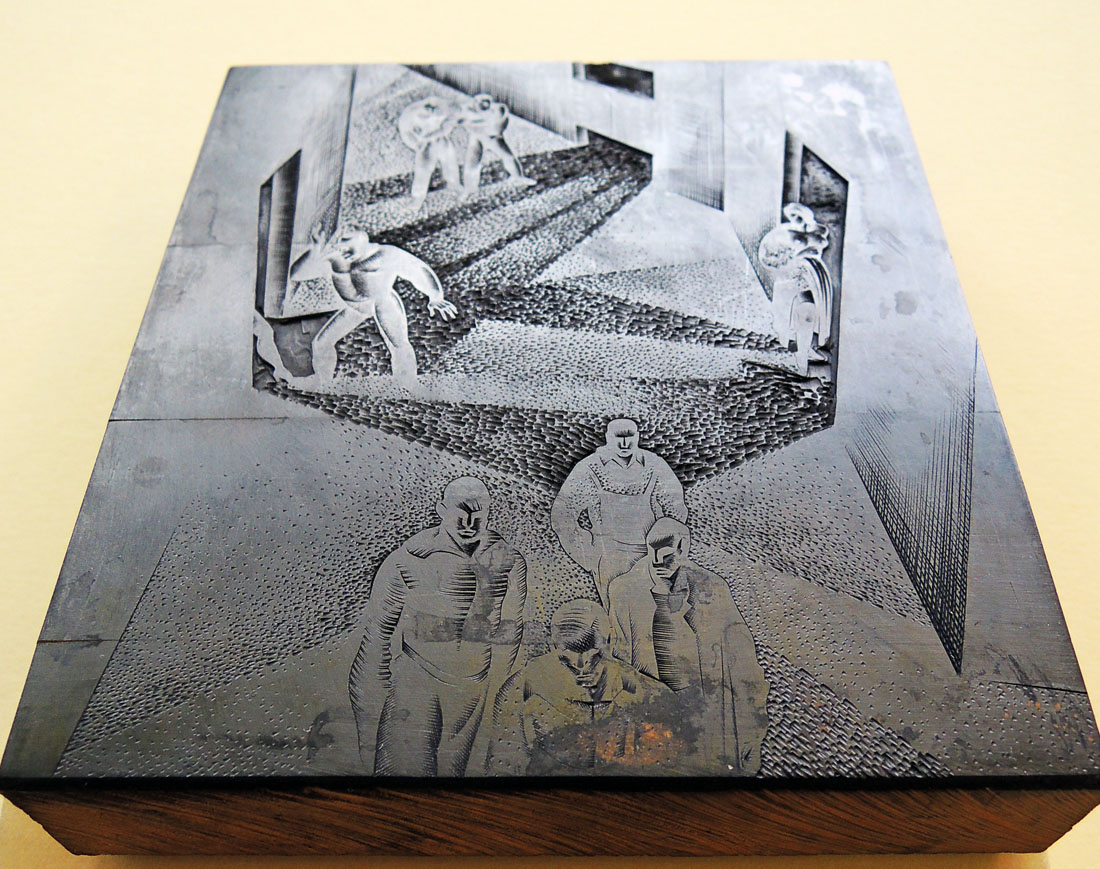
 Harold Strauss, “Two Tales Told in a Sequence of Pictures: Wild Pilgrimage by Lynd Ward…,” New York Times Dec 18, 1932.
La Ciudad Infinita
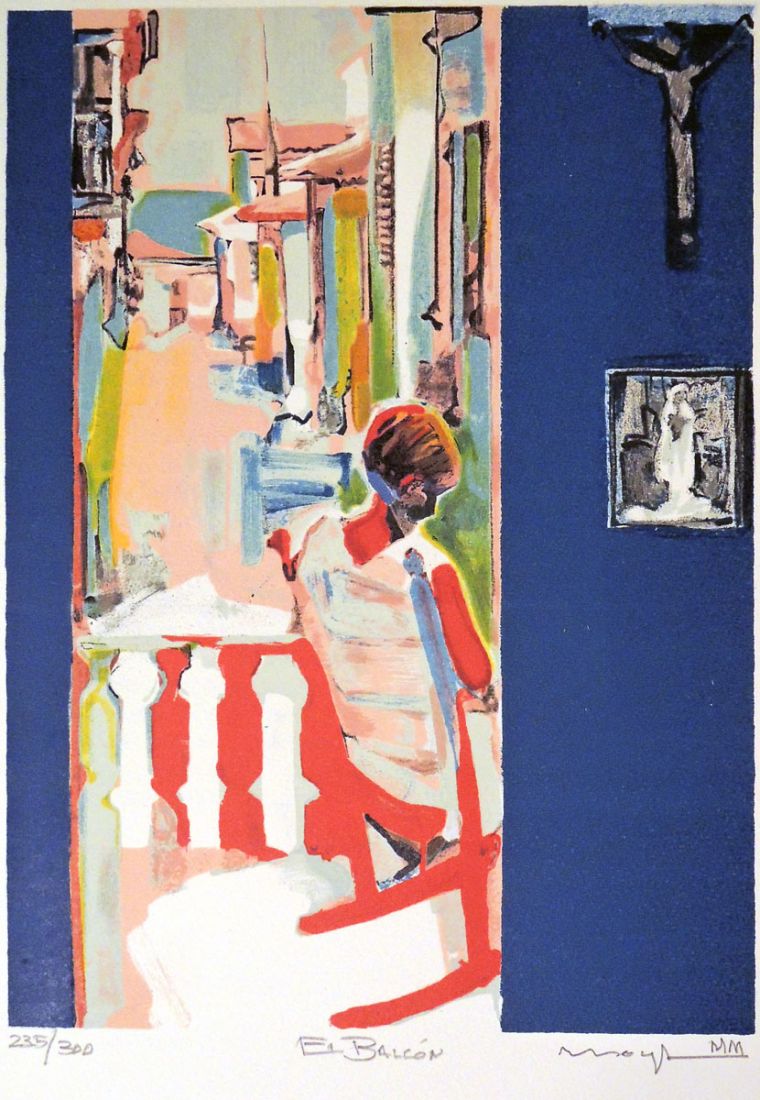
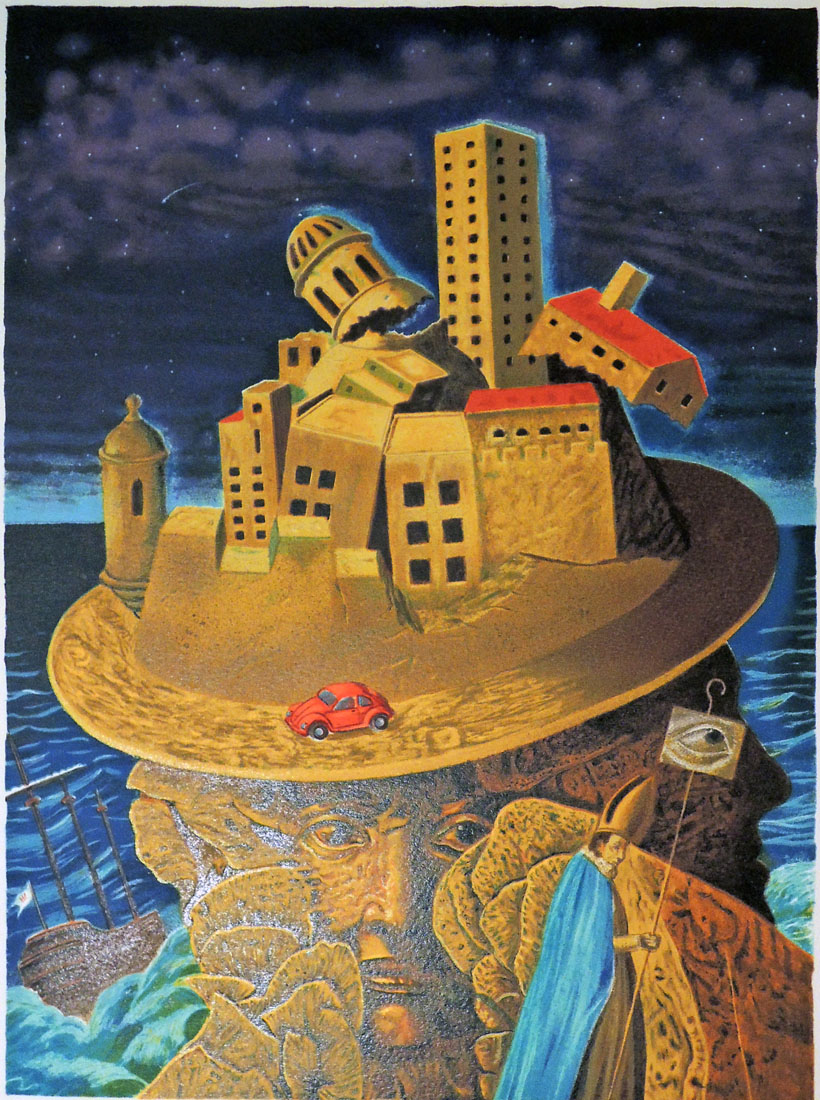
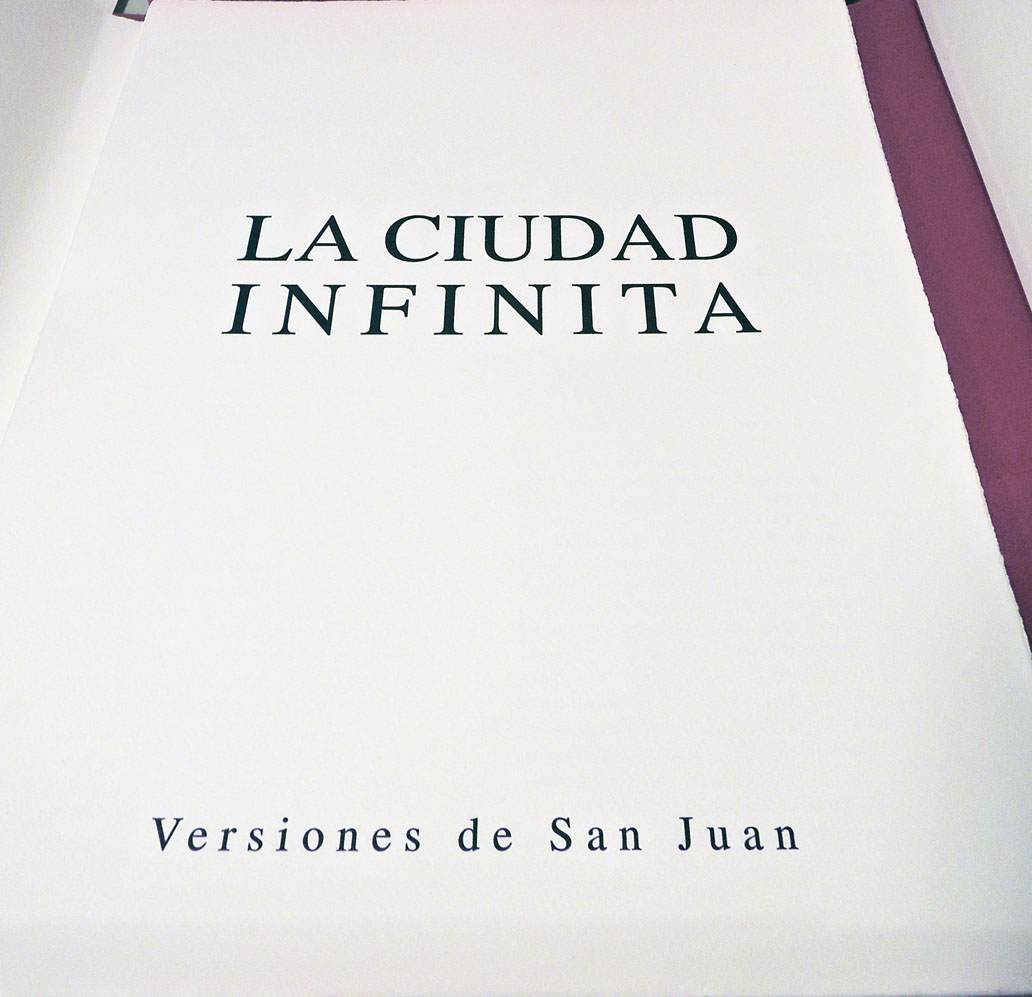
La Ciudad infinita: versiones de San Juan ([San Juan]: Comisión Puertorriqueña para la Celebración del Año 2000 en la Ciudad de San Juan, [2000]). Copy 235 of 300;
15 lithographs and poems are numbered and signed. Graphic Arts Collection (GAX) Oversize Z232.A85 C58 2000e
 The authors include Magali García Ramis; Emanuel Bravo; Fernando Cros; José Miguel Curet; Angelamaría Dávila; Vanessa Droz; José María Lima; Dorian Lugo; Noel Luna; Joserramón “Che” Meléndez; Urayoán Noel; Olga Nolla; Lilliana Ramos Collado; Edwin Reyes; Aurea María Sotomayor; and José Luis Vega.
Artists include Luis Alonso; Carlos Dávila Rinaldi; Antonion Maldonado; Roberto Moya; Mari Mater O’Neill; María Antonia Ordóñez; Marta Pérez; Nick Quijano; Arnaldo Roche Rabell; Nora Rodríguez Vallés; José Rosa; Carmelo Sobrino; Rafael Trelles; Rafael Tufiño; and Jorge Zeno.
Cleaning the Botanicals
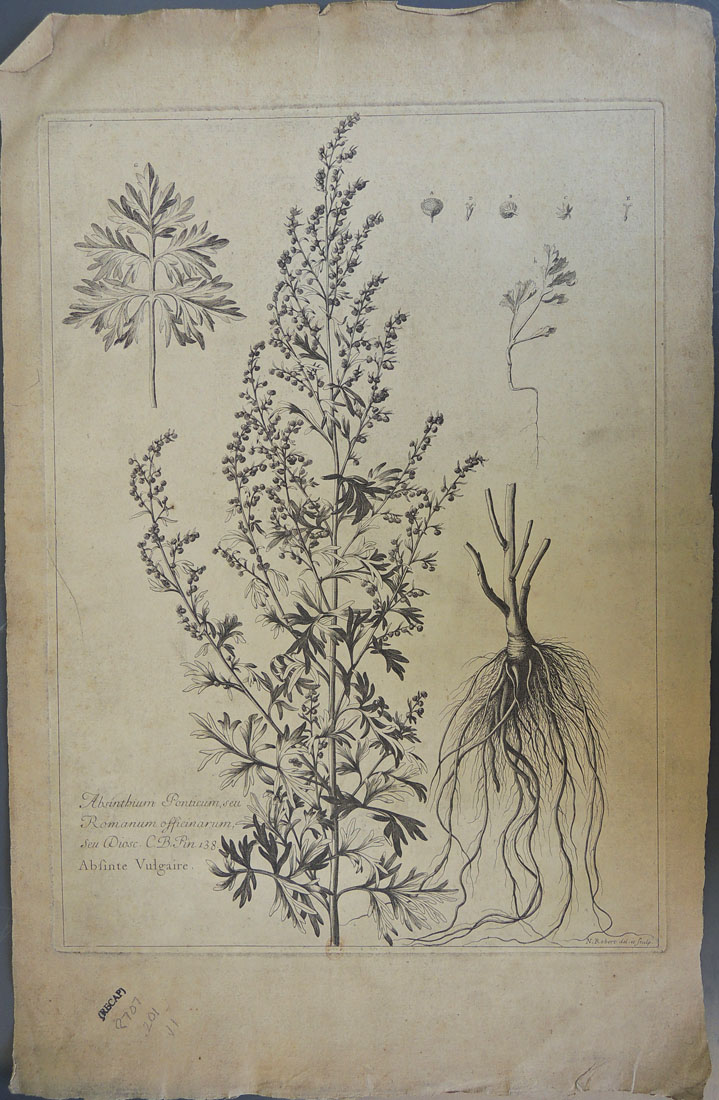
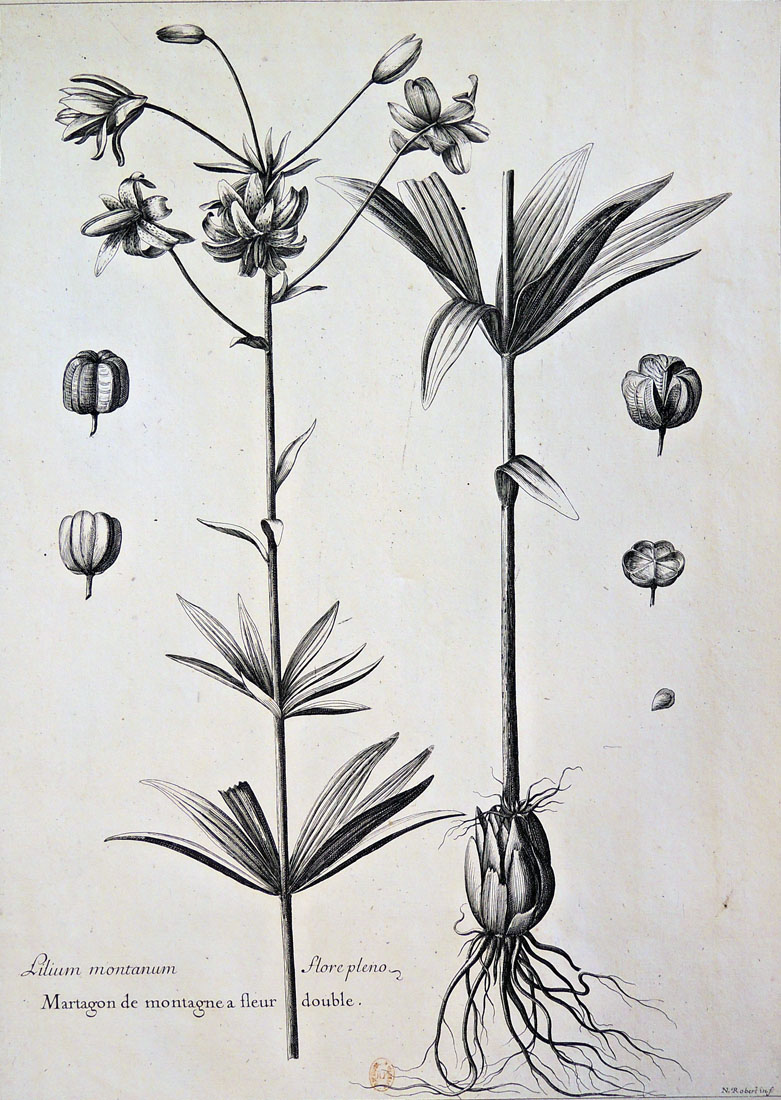
Before cleaning
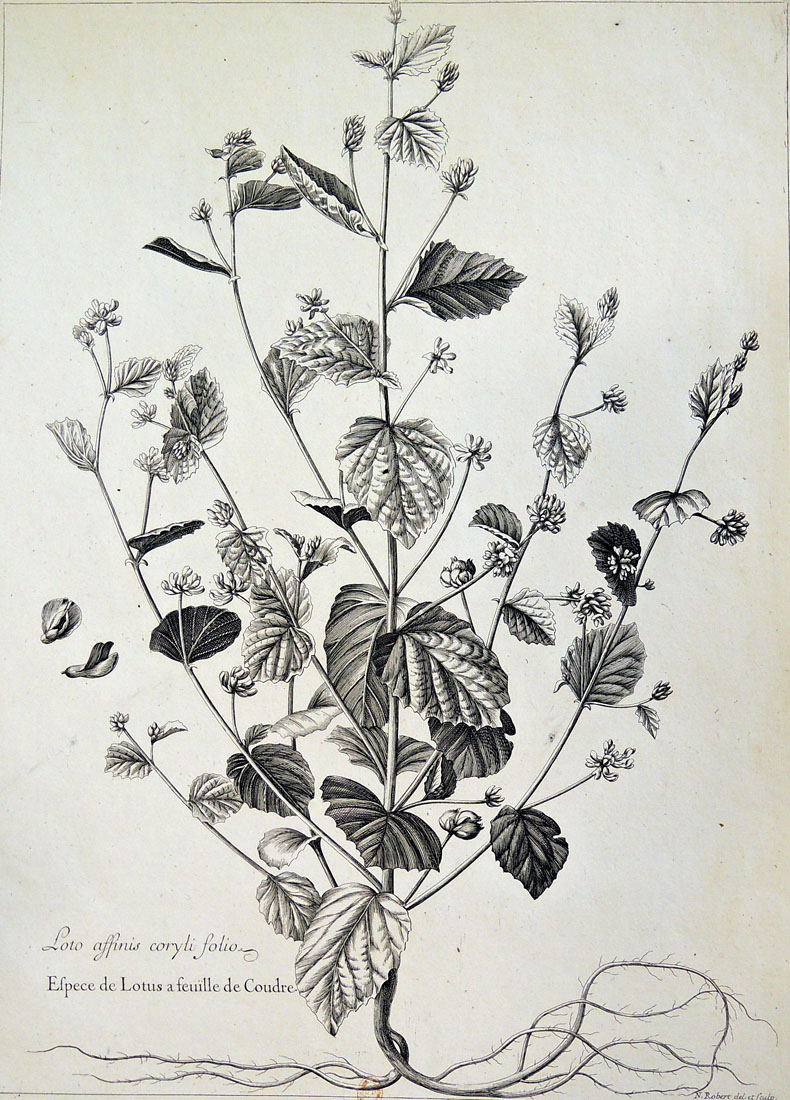
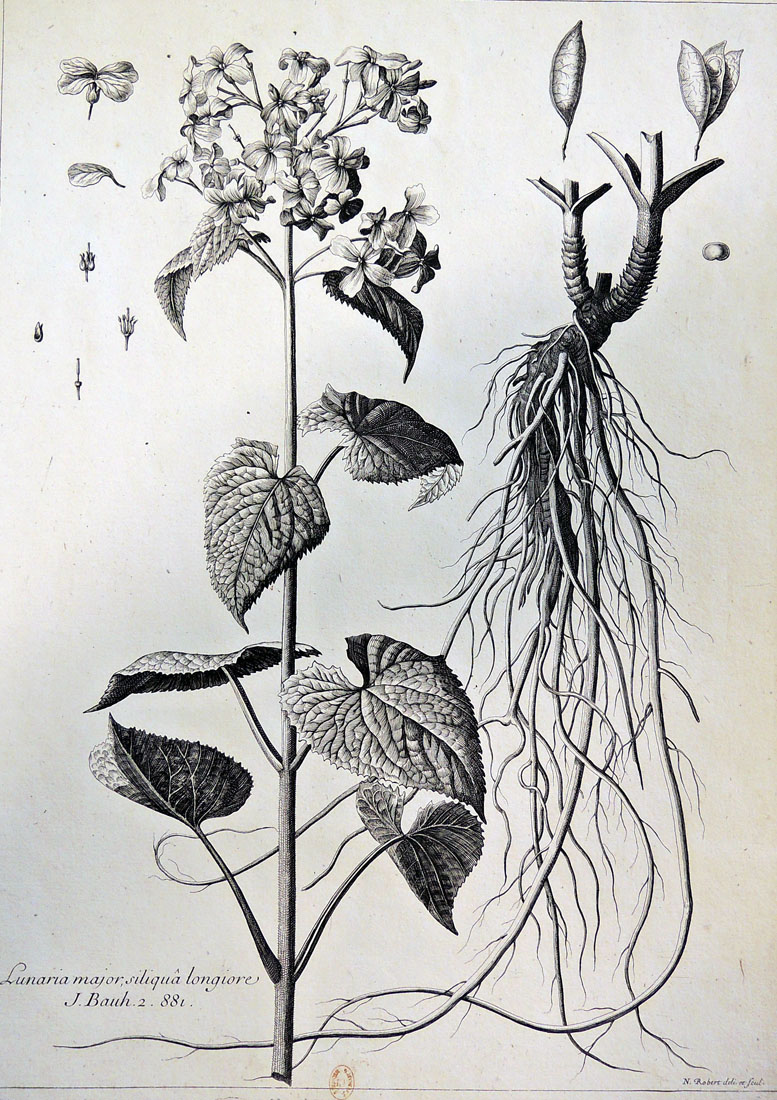
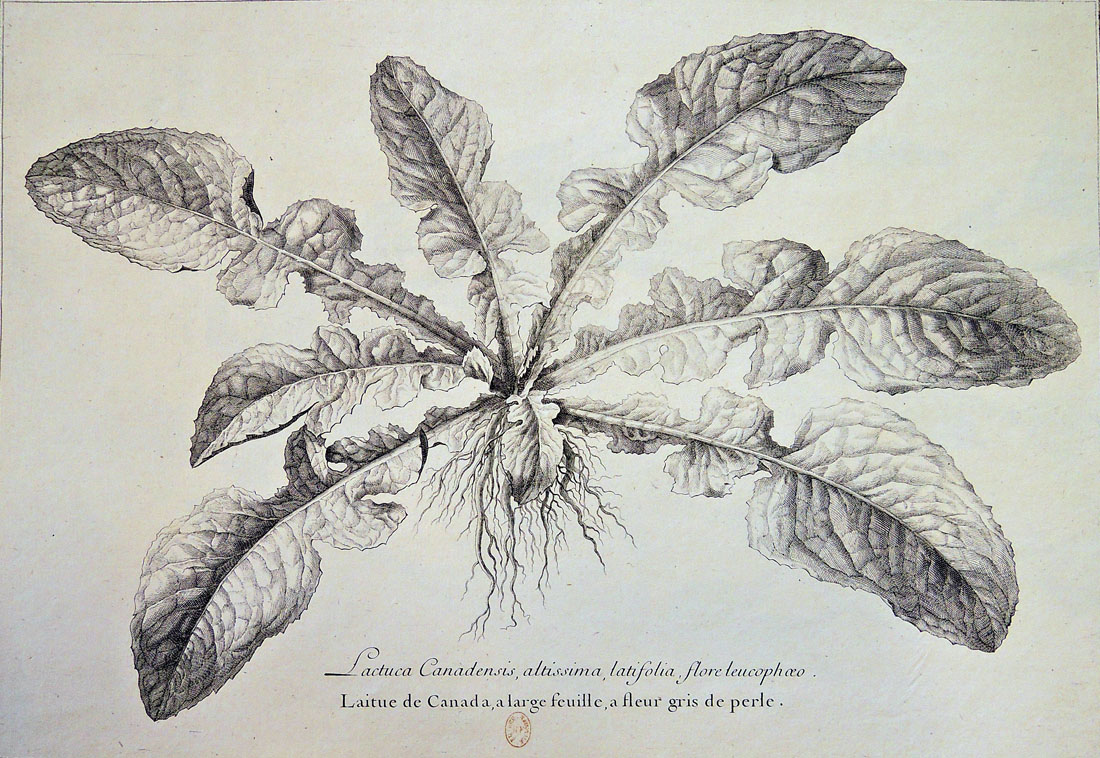
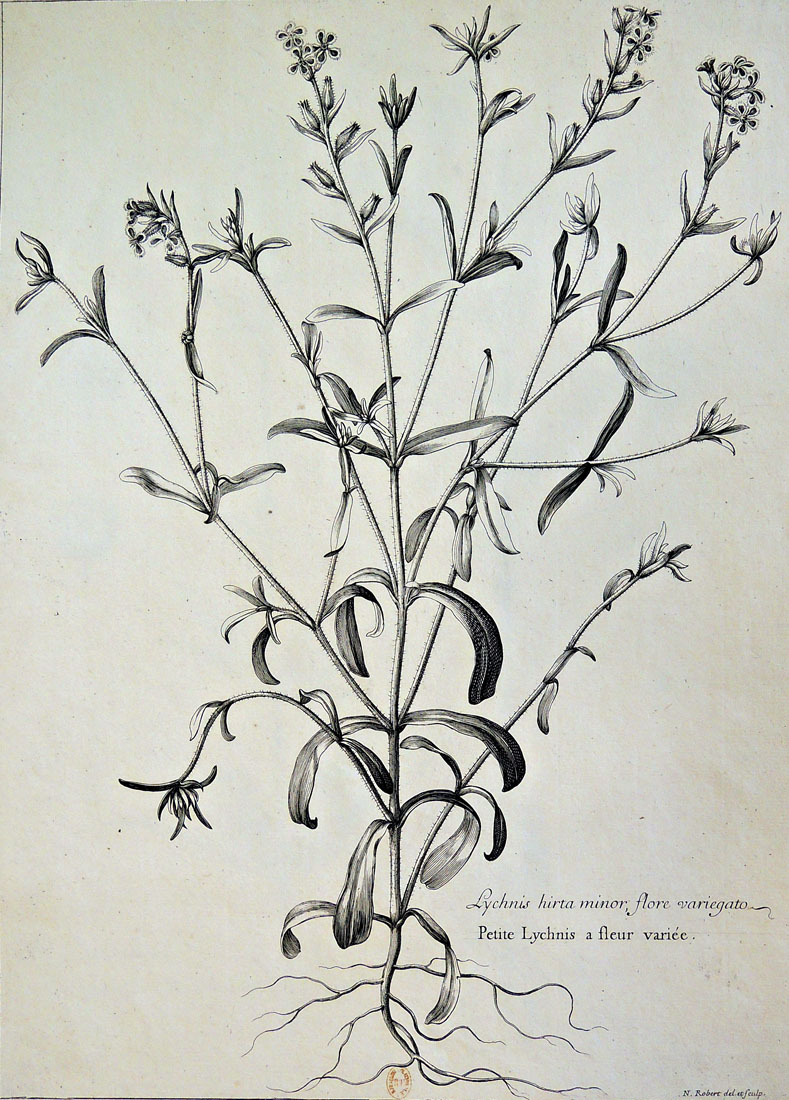
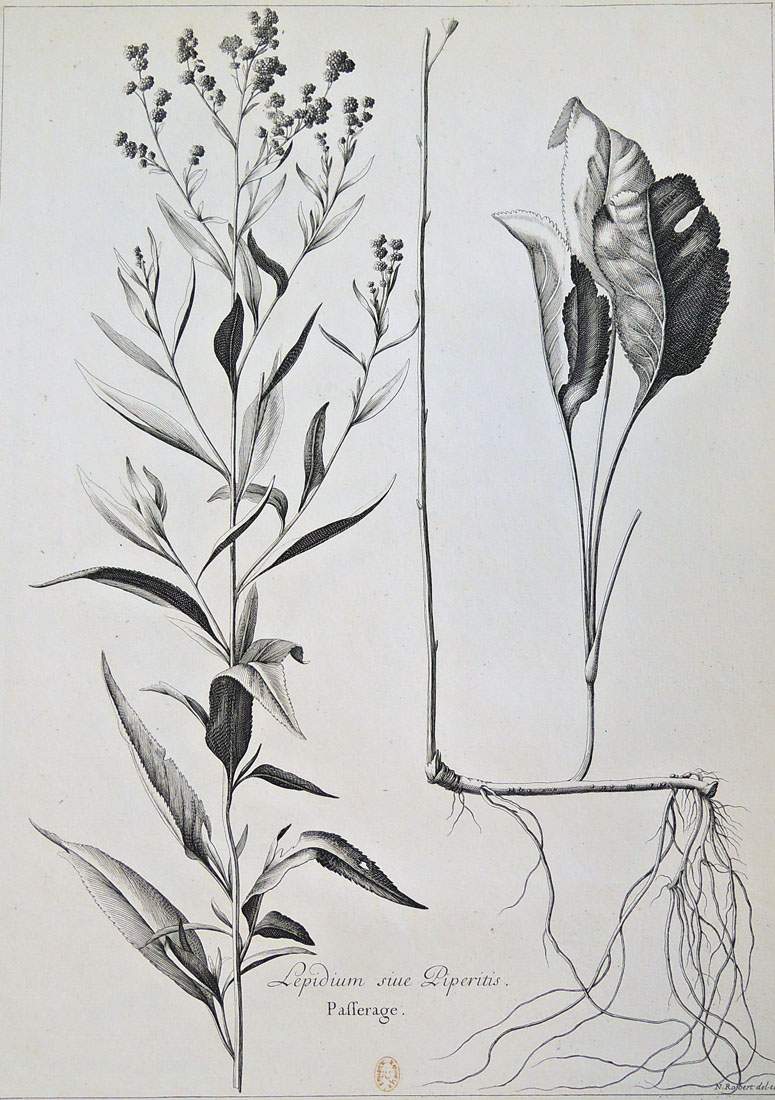
Our paper conservator, Ted Stanley is in the process of cleaning several hundred French botanical prints from Estampes pour servir à l’histoire des plantes, Paris: Imprimerie royale, [1700s]. The engravings by Abraham Bosse (1602–1676), Nicolas Robert (1614–1685), and Louis de Châtillon (1639–1734) were discovered by Prof. Volker Schröder in great need of attention. With only washing, no bleaching, the plates have been beautifully restored to their original condition.
Several plates from this collection will be on view during the Versailles on Paper exhibition opening next February 2015 in Firestone’s main gallery. Sincere thanks to Ted Stanley and to Volker Schröder for their assistance in this project.
 After cleaning

Art added to Firestone walls
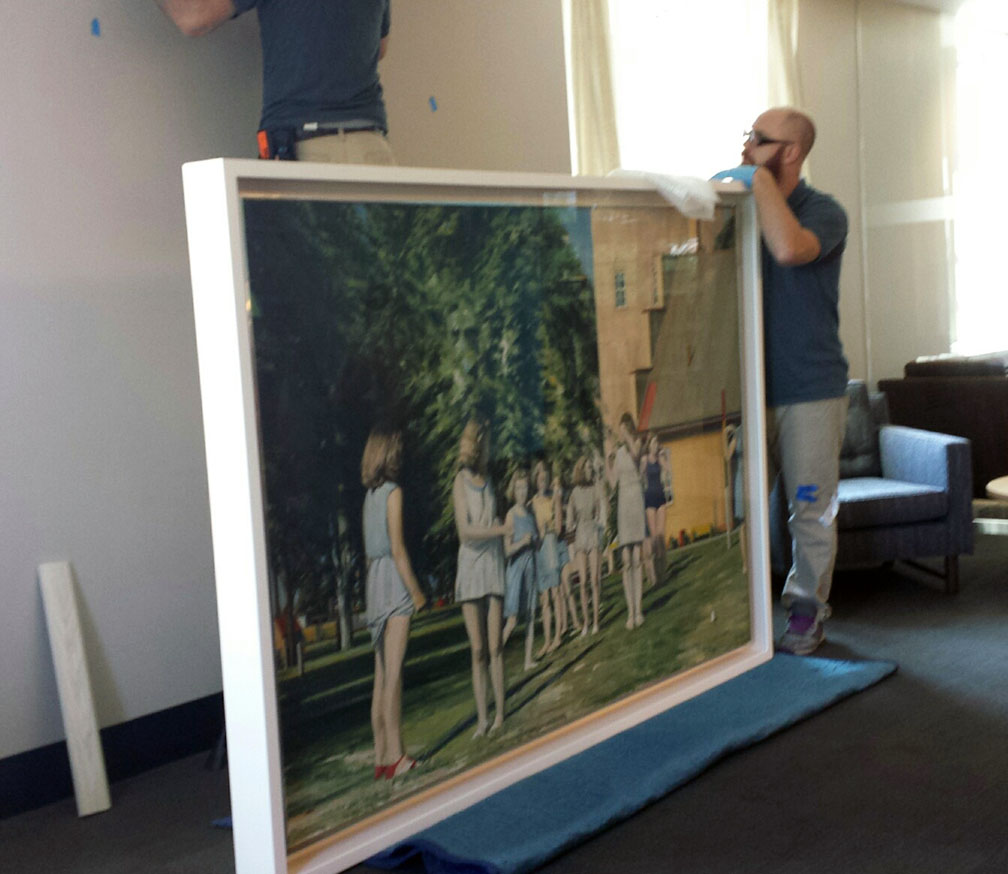 Following the art program designed by architect Frederick Fisher, 2013 Gold Medal recipient by the Los Angeles Chapter of the American Institute of Architects, several new paintings have been added to the walls of Firestone Library. Painting and sculpture is now on view from the Princeton University Art Museum, Princeton Campus Collections, and Firestone’s Rare Books and Special Collections.
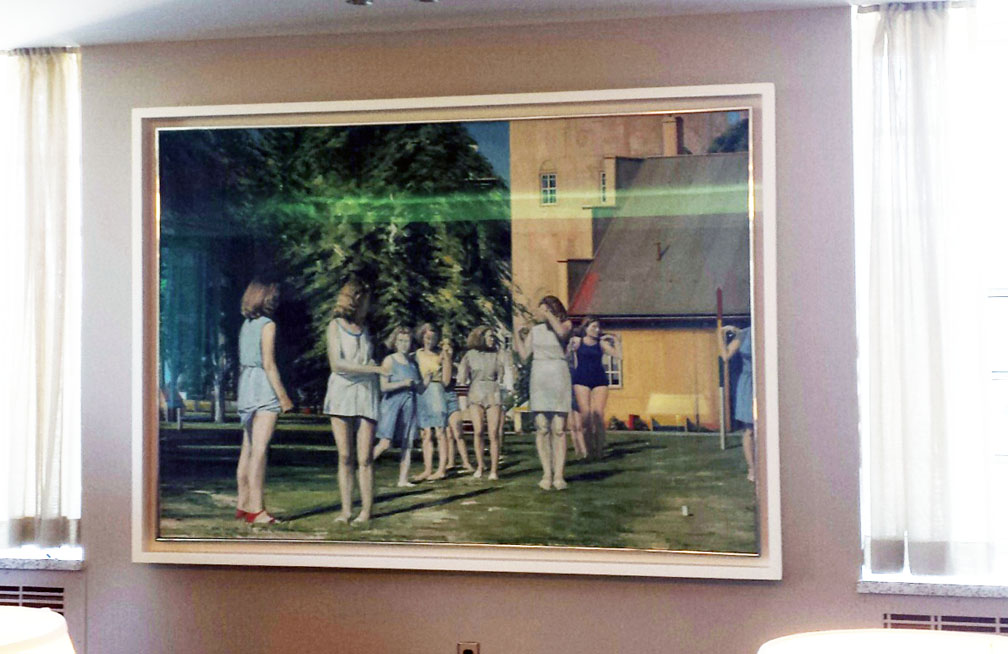 Sidney Goodman (American, born 1936), Lawn Practice, 1971. Oil on canvas. Princeton University Art Museum. Gift of Liza and Michael Moses 2007-151
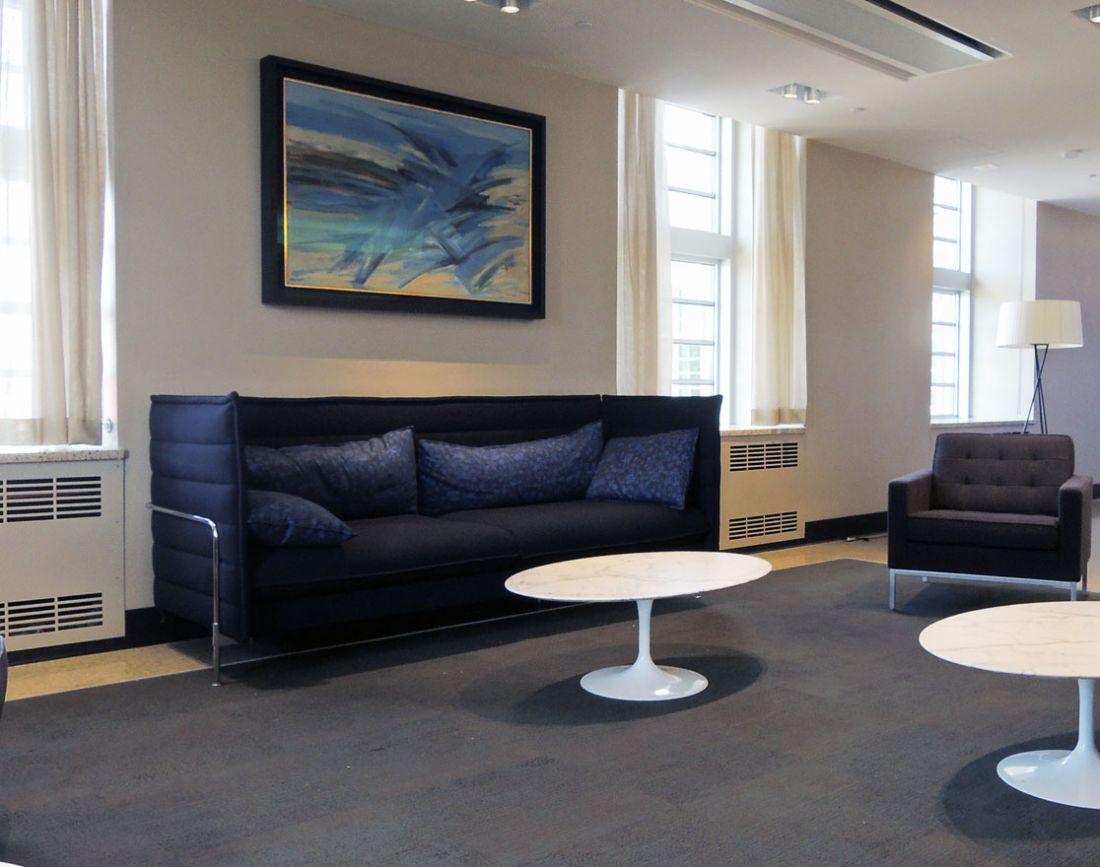
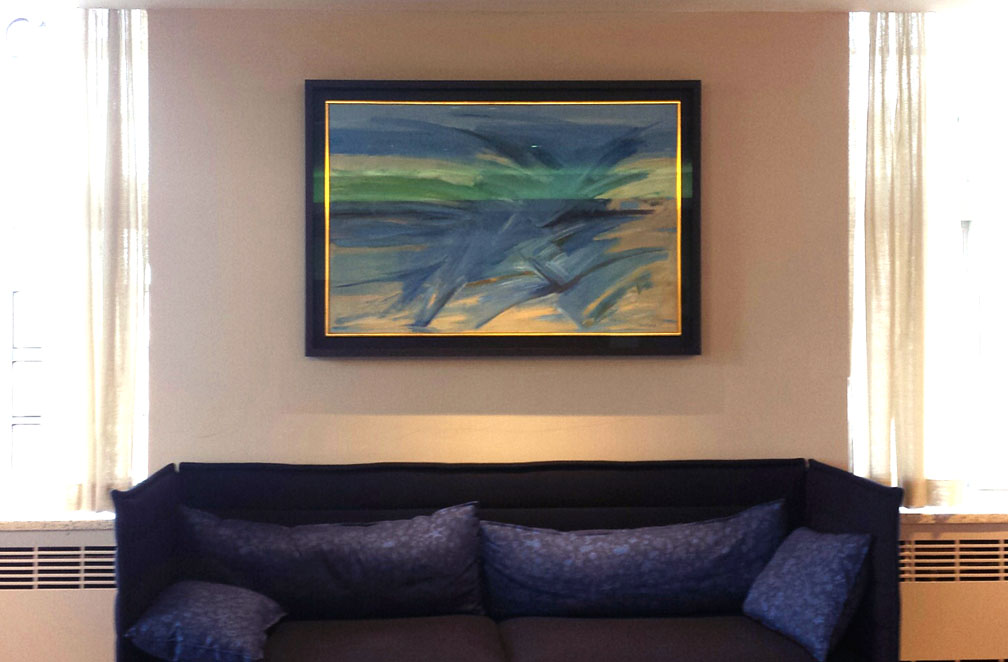
William Kienbusch (American 1914-1980), To the Ocean, Outer Sand Island, 1957. Oil on canvas. Princeton University Art Museum. Gift of James H. Beal, Class of 1920 and Mrs. Beal; y1962-5
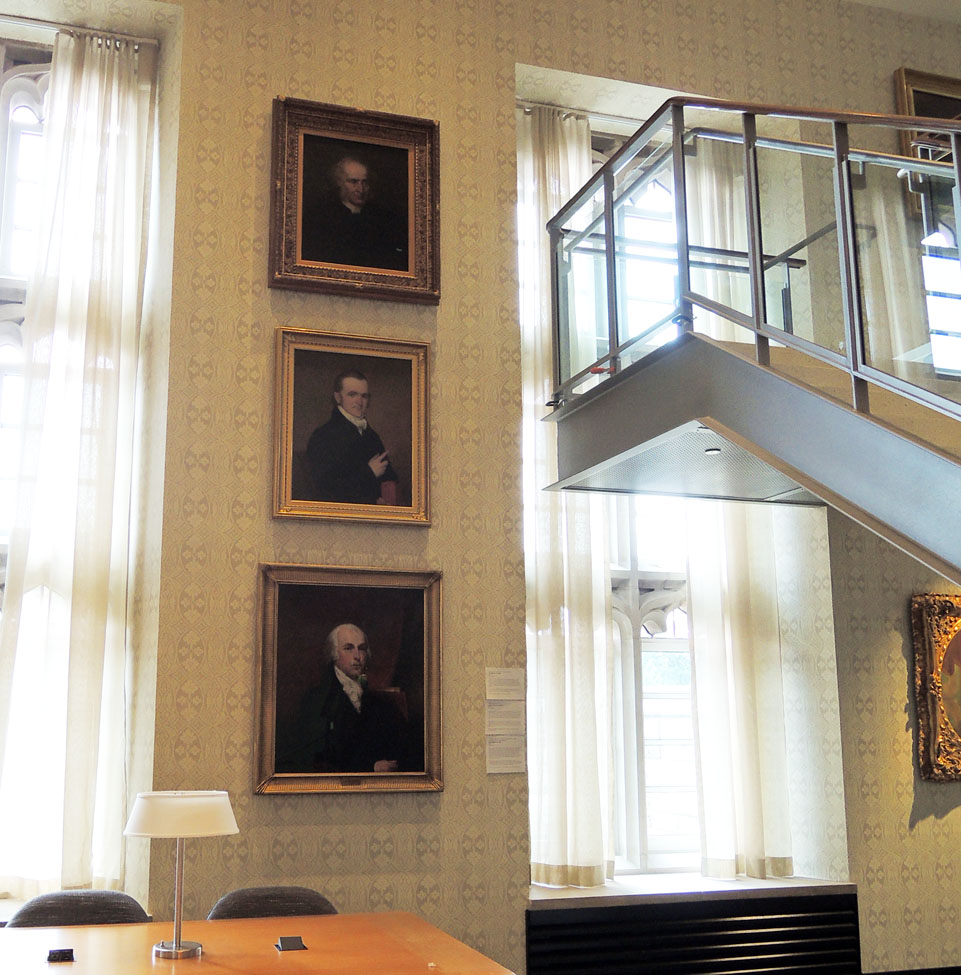
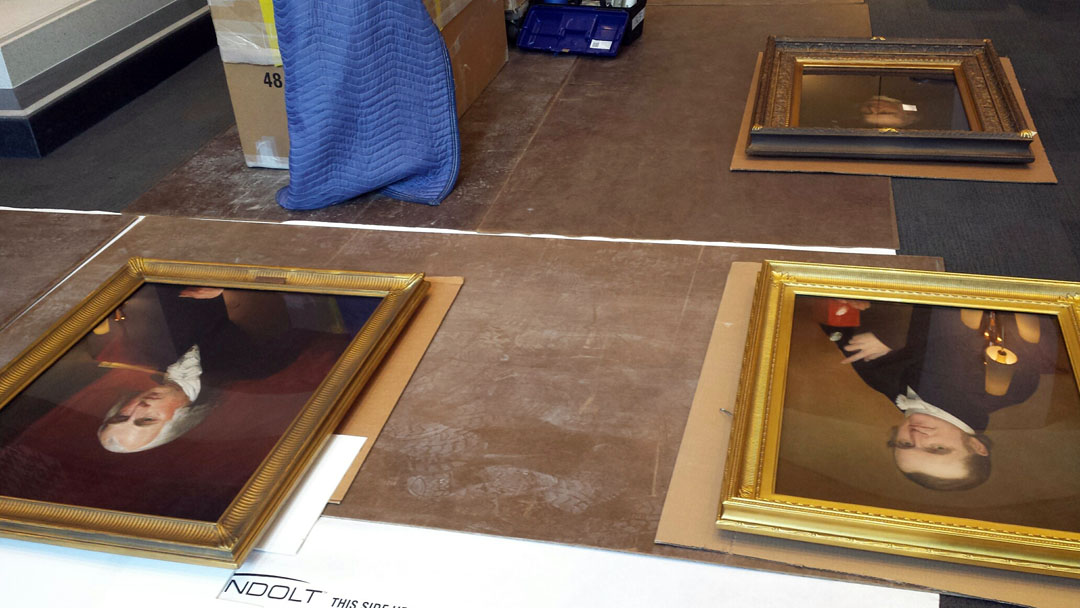 Welcome back to portraits of James McCosh, Samuel Cox, and James Madison, freshly glazed.
Tawny Lemming

John Woodhouse Audubon (1812–1862), Tawny Lemming and Back’s Lemming, ca. 1847. Oil on canvas. GC 154 Audubon Collection, Rare Books and Special Collections
As Birds of America was wrapping up, John James Audubon (1785–1851) began collaborating with Reverend Dr. John Backman of Charleston on a work dealing with the animals of North America. The Viviparous Quadrupeds of North America occupied the final decade of Audubon’s life although he did not live to see the completion of the publication in 1854. His son, John Woodhouse Audubon (1812-1862) completed approximately half of the drawings, watercolors, and oil paintings for the project, which were lithographed, printed and colored by J.T. Bowen.
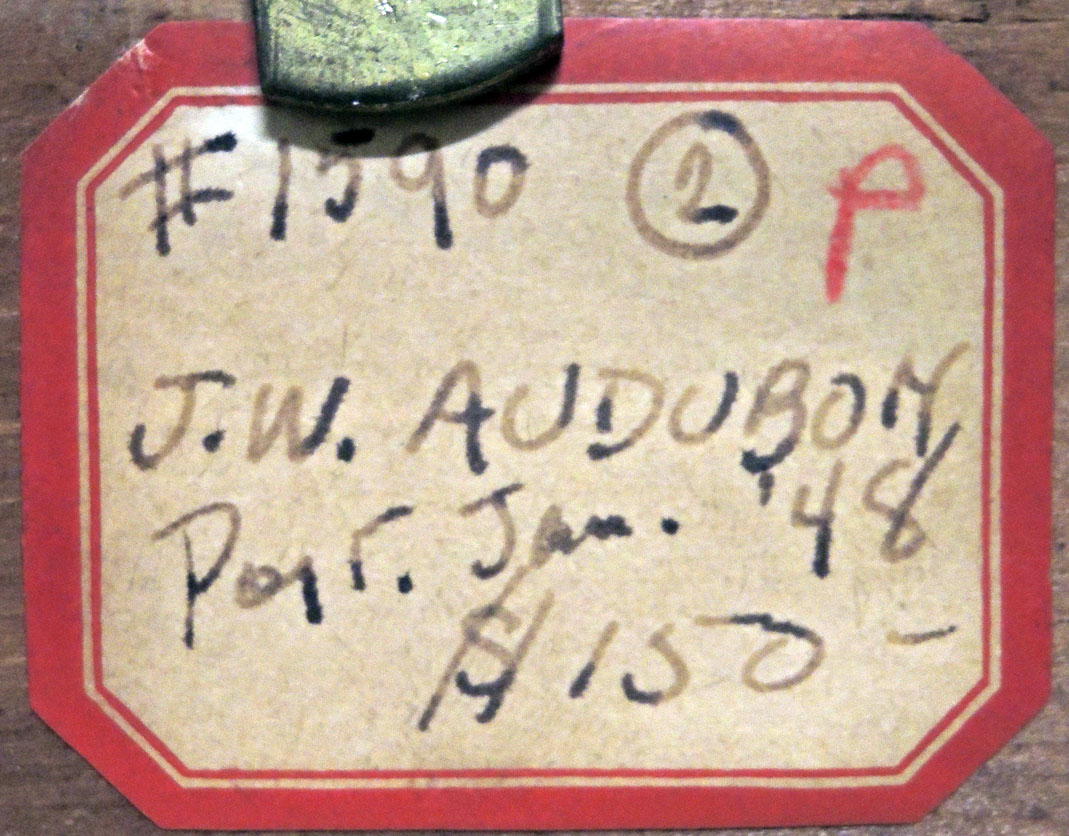
According to Howard Rice’s exhibition catalogue, the text for plate 120 of The Quadrupeds states; “this [Tawny] Lemming is one of those animals we have never seen except the stuffed specimens. Our figure was drawn in London by J.W[oodhouse] Audubon from the original skin procured by Mr. Drummond.” Attribution of the drawing to John Woodhouse Audubon is further confirmed by the fact that in the small octavo edition of the same plate the legend has been changed (presumably corrected) to read: “Drawn from Nature by J.W. Audubon.”
Rice could not confirm whether or not there once existed drawings, as distinguished from oil paintings, for all the plates of the quadrupeds. If such drawings did once exist, then Princeton’s painting should probably be considered a variant version in oils rather than the prototype from which the lithograph was made.

 John James Audubon life mask, from the original by Robert Havell,
molded and cast by Robert Baird.
Elliott and His Friends
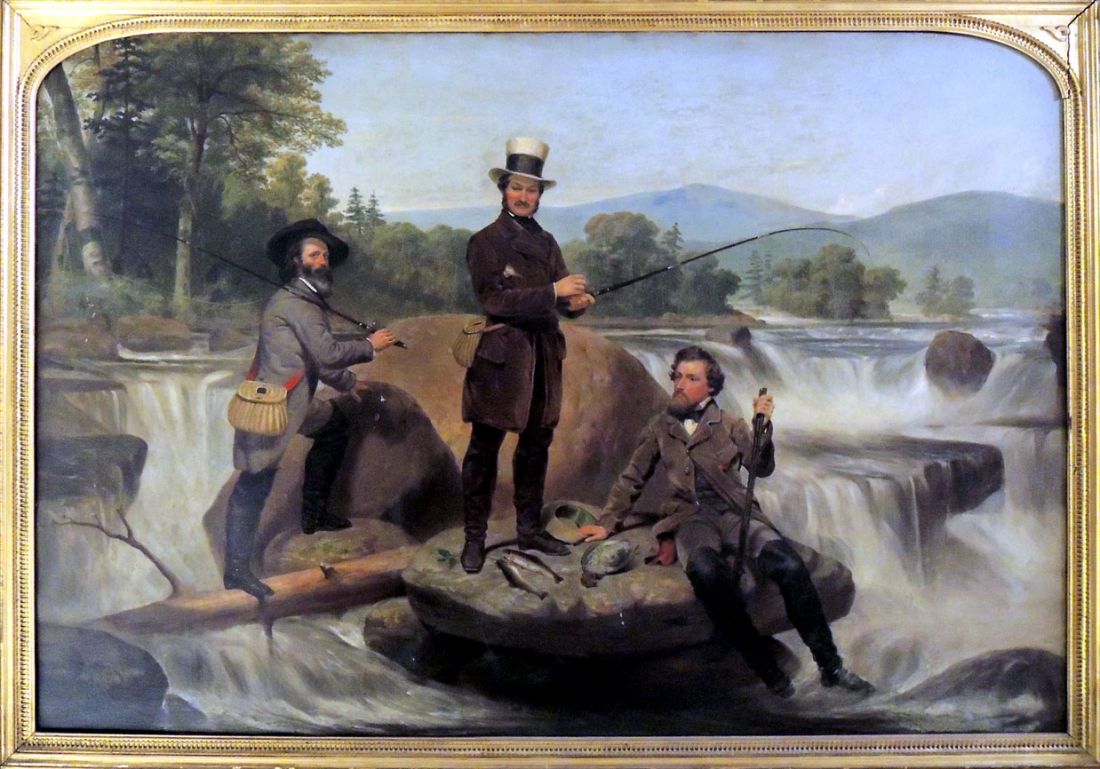
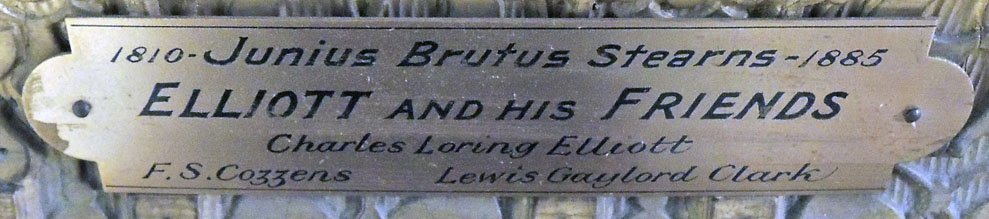
Junius Brutus Stearns (1810–1885) painted over a dozen fishing scenes, including Elliott and his Friends (1857). The nearly life size canvas depicts his colleague, portrait painter Charles Loring Elliott (1812-1868) at the left; the humorist Frederic S. Cozzens (1818-1869) on the right; and Lewis Gaylord Clark (1808-1873), editor and publisher of The Knickerbocker, standing in the center.
Whether or not the three men actually spent time together fishing is unknown but they were certainly all friends. Elliott made at least 11 portraits of Clark and of his wife before being celebrated with an extended biography in Clark’s magazine.
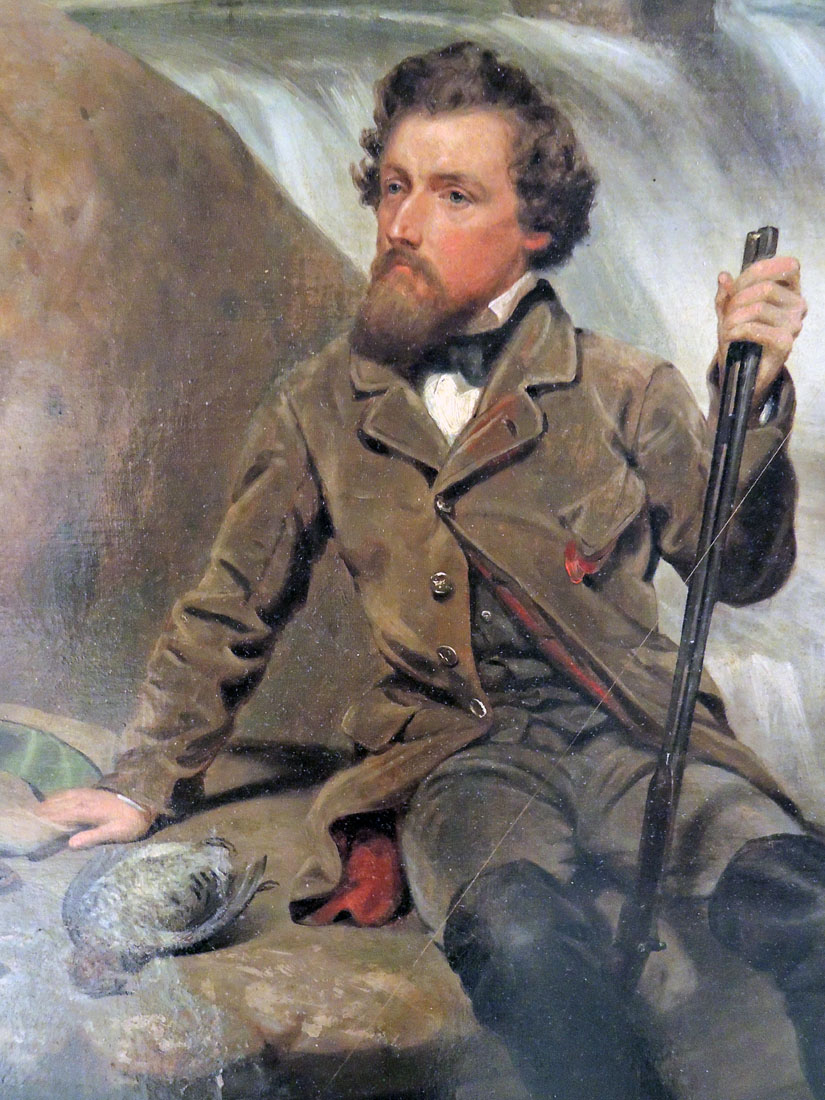 In the year before he posed for Elliott and his Friends, Cozzens published “The Sparrowgrass Papers, or Living in the Country” in The Knickerbocker. The story tells the humorous adventures of Mr. Sparrowgrass when he moves his family out of the city and experiences the joys of fishing (among other activities).
“…the slow and sleepy village presents a contrast, which, upon the whole, can scarcely be considered as favorable to the latter. Plumbers are very slow in the country; carpenters are not swift; locksmiths seldom take time by the forelock; the painter will go off fishing; the grocer on a pic-nic; the shoemaker to the menagerie.”– The Sparrowgrass Papers, 1856.
Our donor, Carl Otto Kretzschmar von Kienbusch, Class of 1906 (1884-1976) was an avid fisherman who gave the library Cozzens’ book at the same time he donated Stearns’ painting. Each June, he spent a month fishing for salmon on the rivers of eastern Canada. Even after he went blind in 1966, Kienbusch continued to fish with the help of a guide.
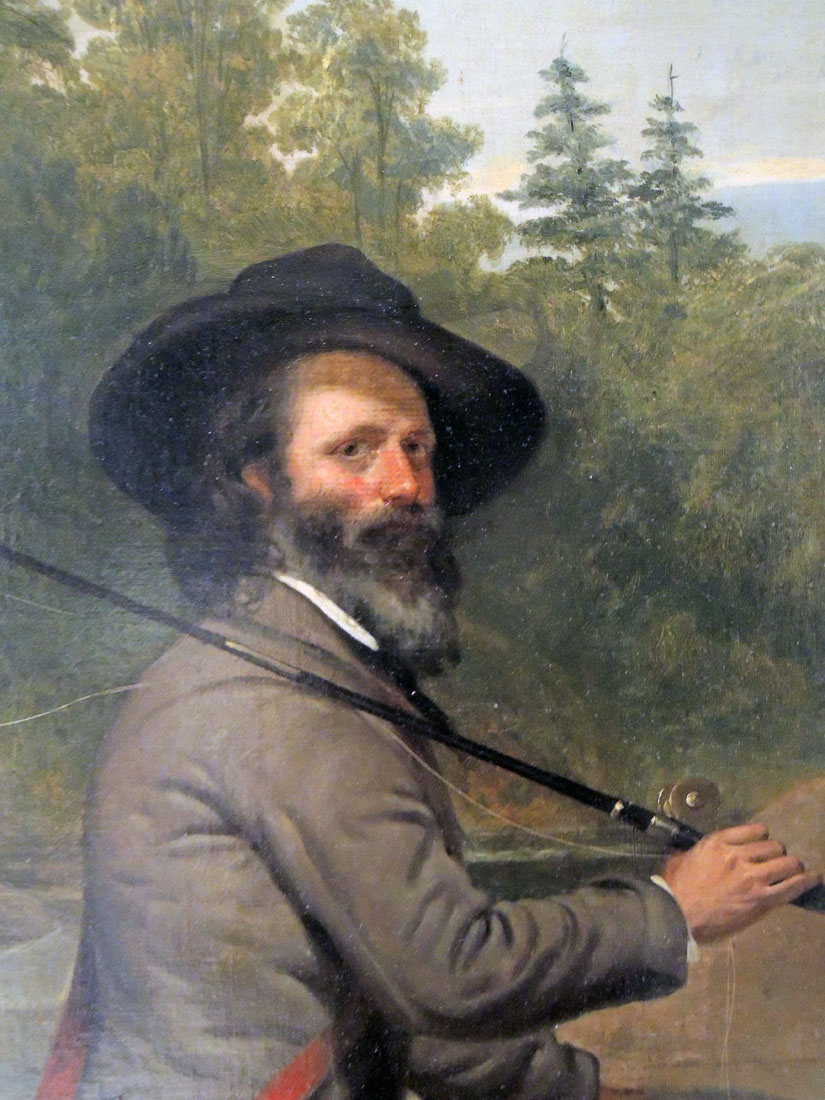
Junius Brutus Stearns (1810-1885), Elliott and his Friends, 1857. Oil on canvas. Gift of Otto von Kienbusch, Class of 1906.
Frederic S. Cozzens (1818-1869), The Sparrowgrass Papers, or, Living in the Country (New York: Derby & Jackson; Cincinnati : H.W. Derby, 1856). Graphic Arts Collection (GAX) Hamilton 644 and Rare Books: Otto von Kienbusch Angling Collection (ExKi) PS1449.C64 xS6
Angelica’s Ladies Library
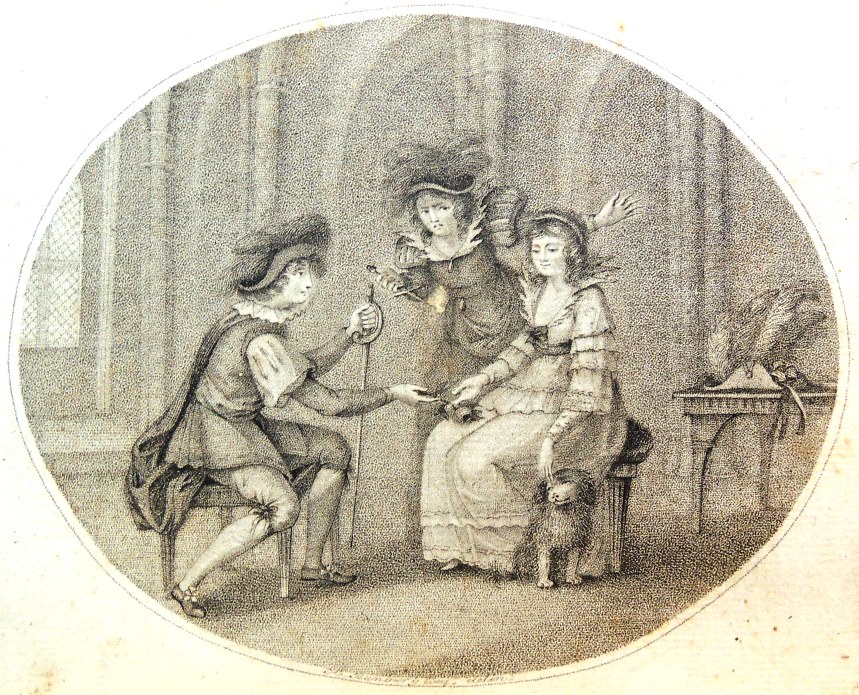
The neo-classical painter Angelica Kauffmann (born Switzerland, 1741-1807), was admired in her day, as much for her beauty as her painting. Her status as an artist was so great that she was included in 1768 as a founding member of the Royal Academy alongside Benjamin West and Paul Sandby. She was, however, not allowed in their life class because of the nude model.
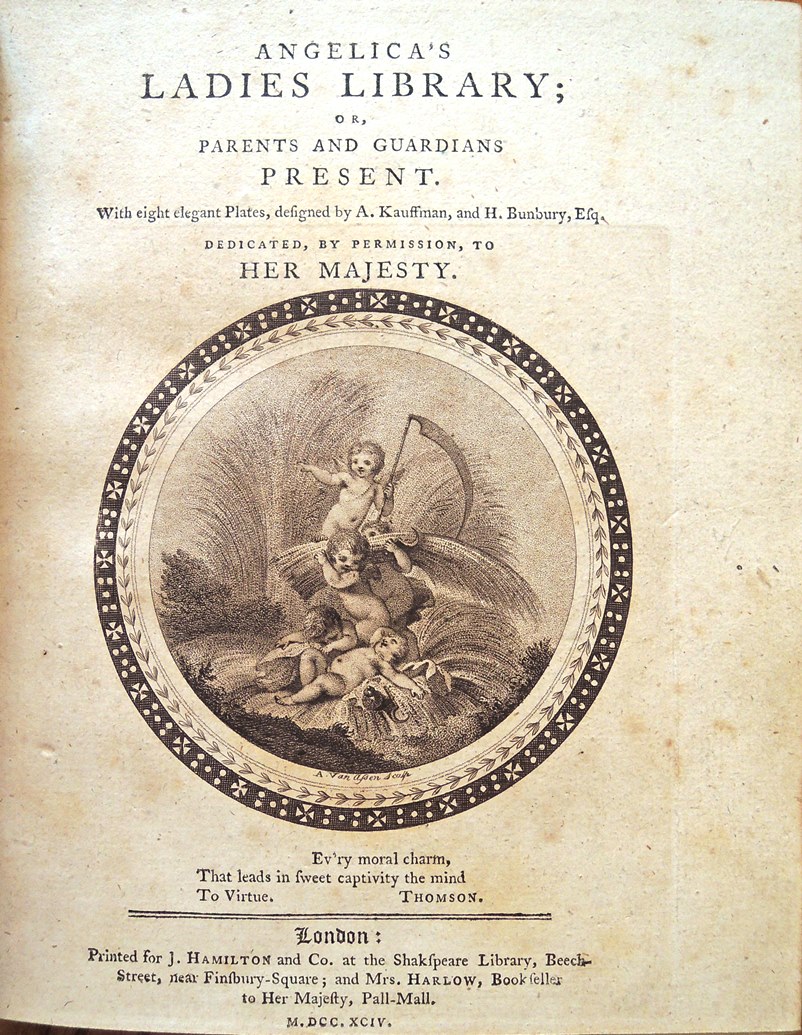
Many of Kauffmann’s designs were engraved and published with various books of poetry or prose, such as this group of stories which includes John Dryden’s Love and Jealousy [Love Triumphant]; and Edward Moore’s Fables of the Female Self. In the present volume, Kauffmann was responsible for two of the designs and Henry William Bunbury (1750-1811) the others.
Angelica’s Ladies Library; or, Parents and Guardians Present (London: printed for J. Hamilton and Co. at the Shakspeare Library, Beech-Street, near Finsbury-Square; and Mrs. Harlow, Bookseller to Her Majesty, Pall-Mall, M.DCC.XCIV. [1794]). Gift of Dixon Q. Brown. Graphic Arts Collection Rowlandson 1794.2
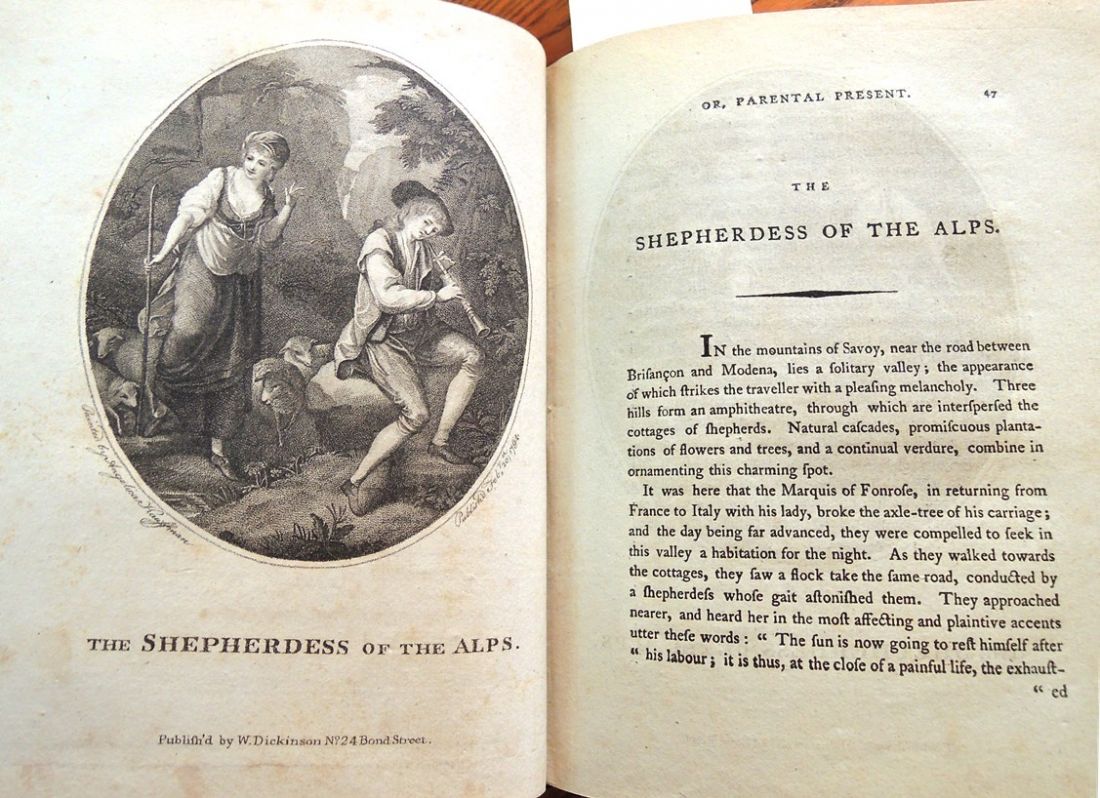

In 1781, George Keate (1729-1797) wrote An Epistle to Angelica Kauffman. In a foreword, he notes (and I believe this is correctly transcribed) “Accidentally discoursing with Angelica, on the Subject of Colours, and making some Inquiry concerning one of them then on her Palette, she informed me that it was prepared from the Gums which envellop the Mummies brought from Egypt; and had, if skilfully used, a very happy Effect in some Parts of Painting.”
“This Circumstance suggested to me the Idea of the following Epistle; which presenting itself with some Air of Novelty, I pursued it with the greater Warmth, from the pleasurable Opportunity it afforded me of doing Justice to so distinguished an Artist, and celebrating the very uncommon Talents, the unaffected Diffidence, and amiable Disposition, which are so happily united in the Character of that Lady to whom this Poem is addressed.”
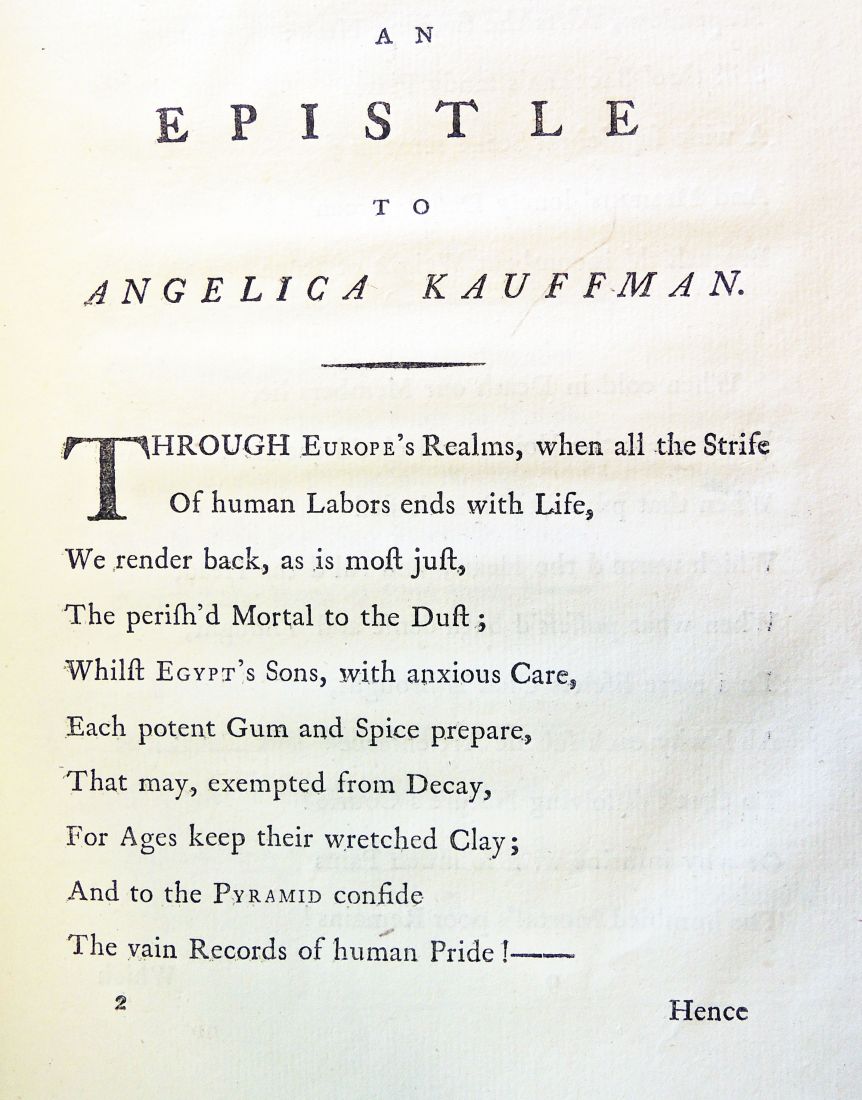
George Keate (1729-1797), An Epistle to Angelica Kauffman (London: Printed for J. Dodsley, 1781) Rare Books (Ex) 3808.85.332