Category Archives: Books

books

Voyages au Soudan oriental et dans l’Afrique septentrionale

tremaux voyage1
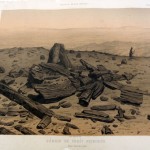
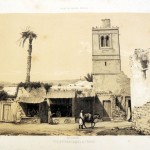
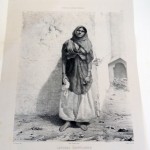
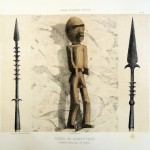
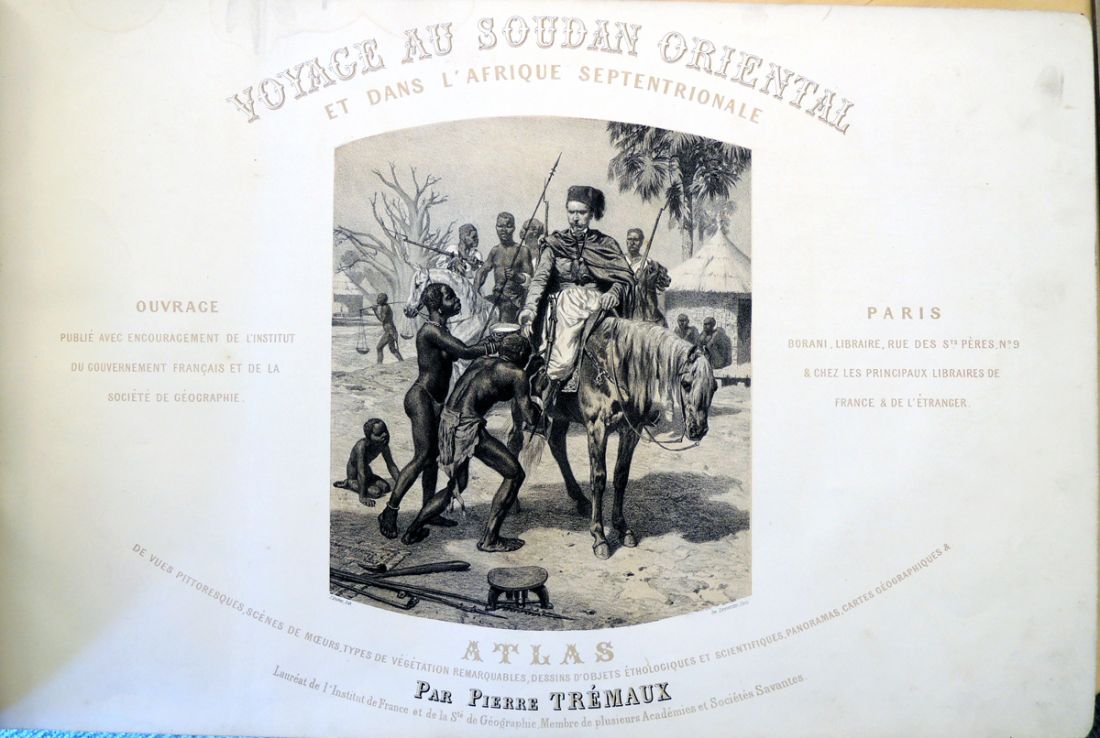
Pierre Trémaux, Voyages au Soudan oriental et dans l’Afrique septentrionale, exécutés de 1847 à 1854: comprenant une exploration dans l’Algérie, les régences de Tunis et de Tripoli, l’Égypte, la Nubie, les déserts, l’île de Méroé, le Sennar, le Fa-Zoglo, et dans les contrées inconnues de la Nigritie (Paris: Borrani, [1852-1858]). Purchased with funds provided by the Friends of the Princeton University Library, Rare Book Collection, and Graphic Arts Collection. GAX 2013- in process
tremaux voyage3
Pierre Trémaux is not well known but holds a place in the history of illustrated books for publishing one of the first photographically illustrated travelogues. North Africa, Egypt in particular, was one of the earliest destinations for European photographers and one of most frequently represented subjects. By autumn 1839 the daguerreotypist Frédéric Goupil-Fesquet was in Egypt, together with the painter Horace Vernet, gathering material for their travelogue Voyage d’Horace Vernet en Orient (1843). The first extensive survey was completed by Joseph-Philibert Girault de Prangey in 1842-43 covering Asia Minor, Syria, Egypt, Palestine, and Greece. None of the early publications of these trips included actual photographs.
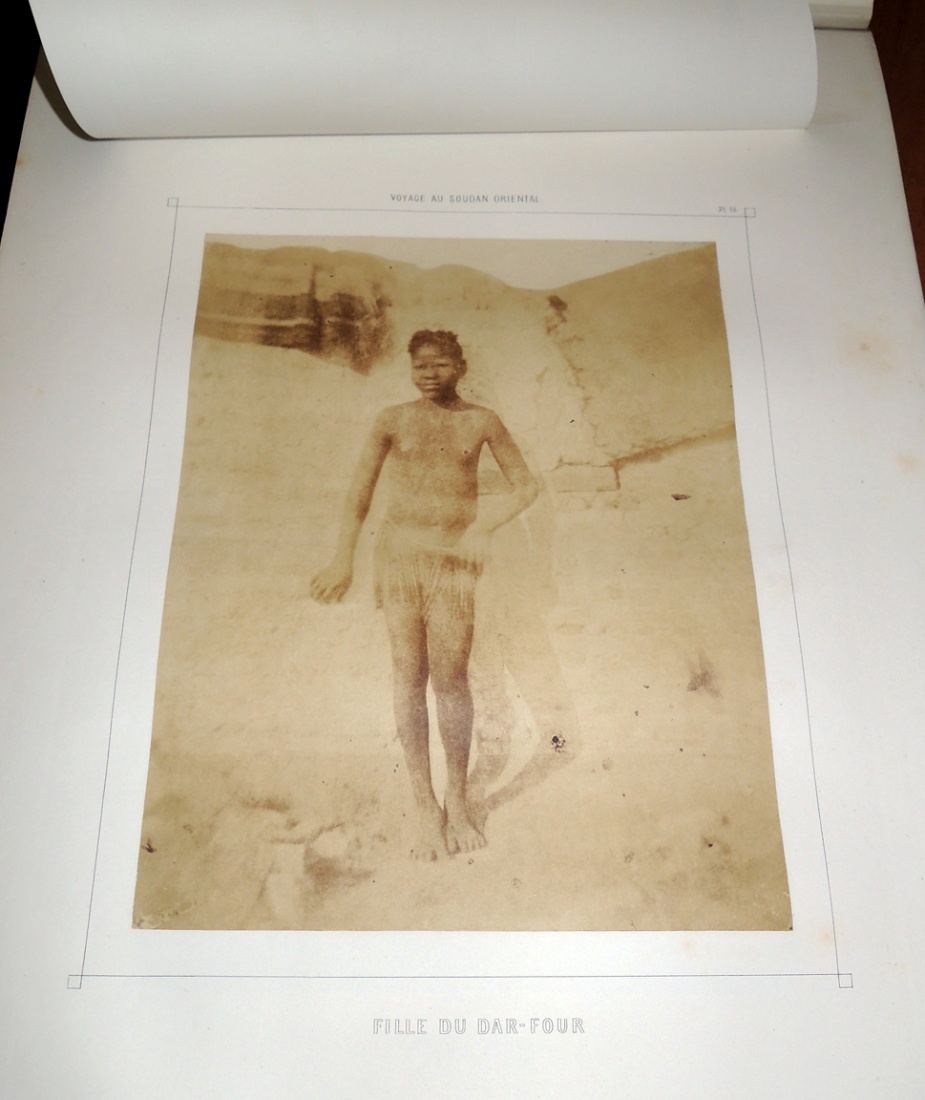
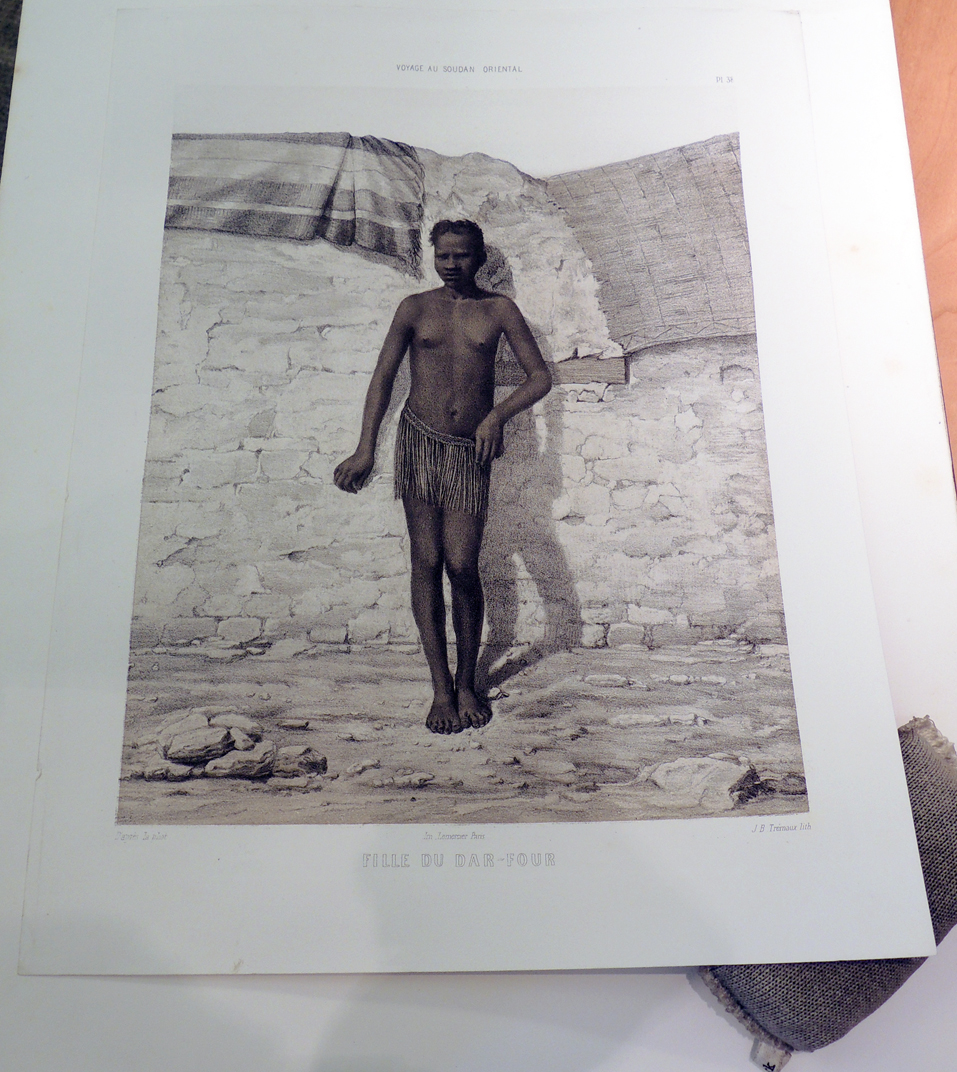
tremaux voyage16   tremaux voyage15

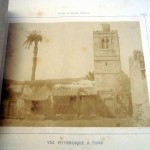
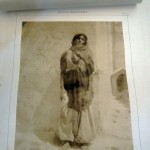
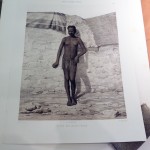
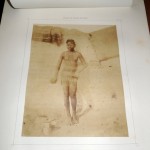
As an architect interested in urban planning, Pierre Trémaux traveled to Algeria, Tunisia, Upper Egypt, Eastern Sudan and Ethiopia beginning in 1847 (preceding Maxime Du Camp by two years and Félix Teynard by four years). At first, he made drawings and daguerreotypes as the basis for lithographic illustrations but wished to publish a more authentic record of the African culture. On the second expedition, he brought a camera and chemistry to create calotypes of the people, buildings, and landscape of in Libya, Egypt, Asia Minor, Tunisia, Syria, and Greece. A third and final expedition included both photographs and sketches. Trémaux published an account of his travels in parts from 1852 to 1858.
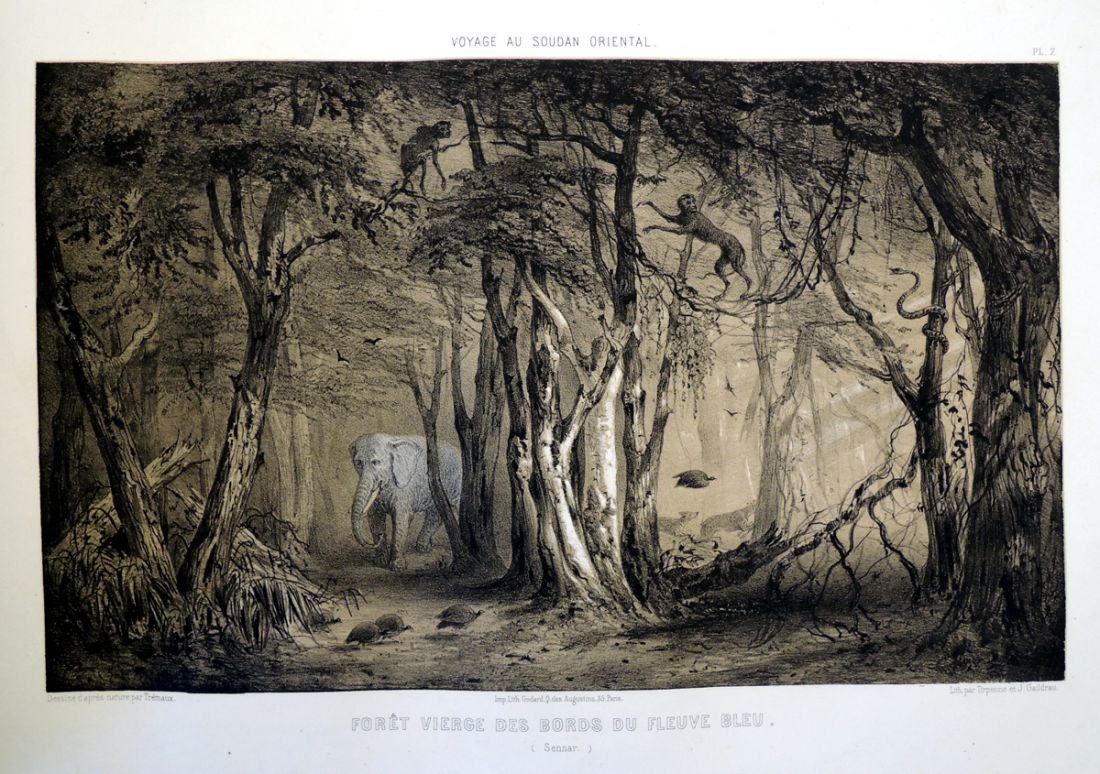
It is with the publication of Voyage au Soudan oriental et dans l’Afrique septentrionale exécutés en 1847 à 1854 that the photographically illustrated travel book begins. In this folio, Trémaux made paper photographs and then, for each one also had lithographs created. The two are bound together so the reader has the authenticity of the photograph–thought to be a truthful document–along with the more robust image of the drawn lithograph. This took a tremendous amount to time and money but demonstrations the importance given to the publication at that time.

The book is included in the catalogue for the Grolier exhibition The Truthful Lens, where it is noted that the artist signed his plates, “Trémaux lithophot. Precédé Poitevin,” referring to Alphonse-Louis Poitevin, a French engineer who is credited with developing photomechanical processes such as photolithography in the 1850s. The entry goes on to mention that copies vary greatly, such as the one at The Avery Library, Columbia University, which has 58 photolithographs, but no calotypes.

Special thanks to the Friend of the Princeton University Library and Steve Ferguson, Rare Book Division, for making this acquisition possible.
 

Wessobrunn prayer

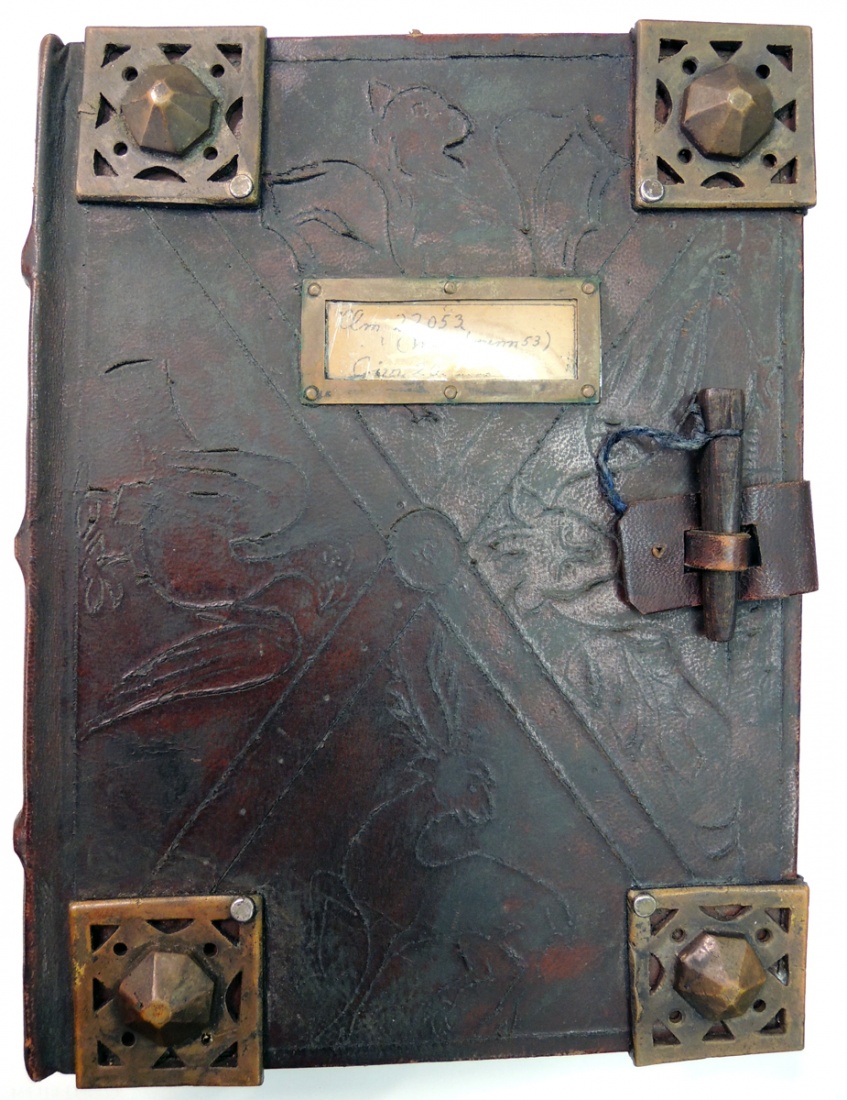
clm 22053

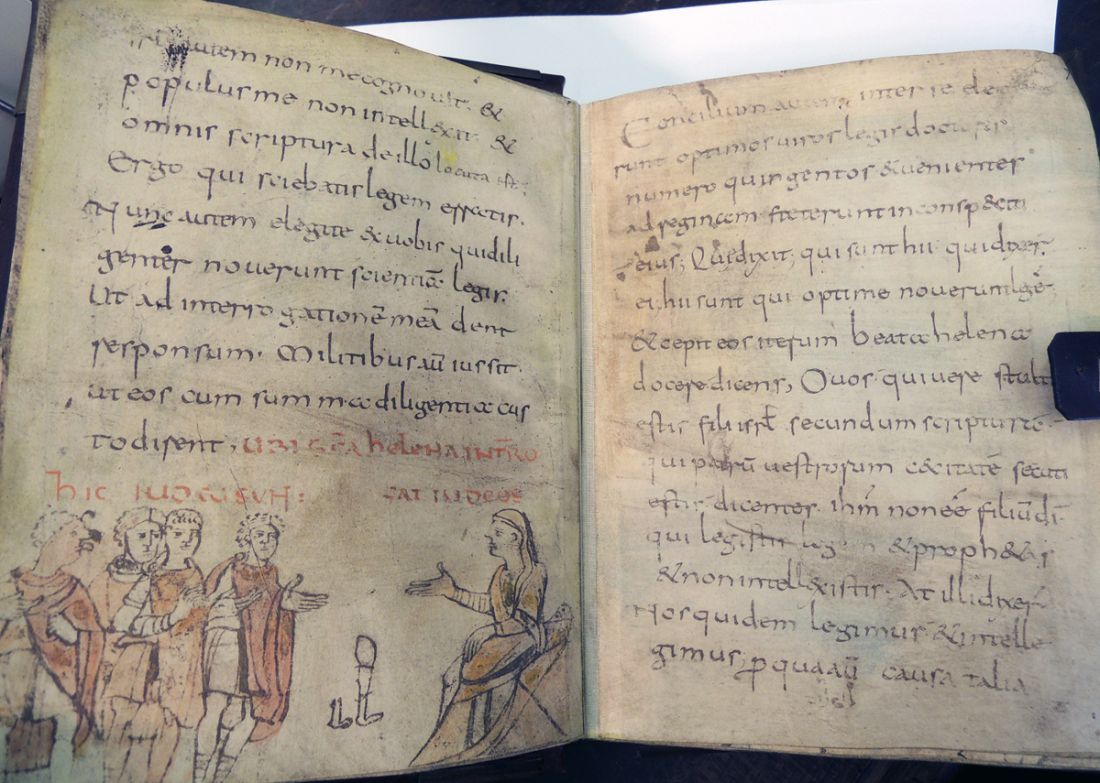
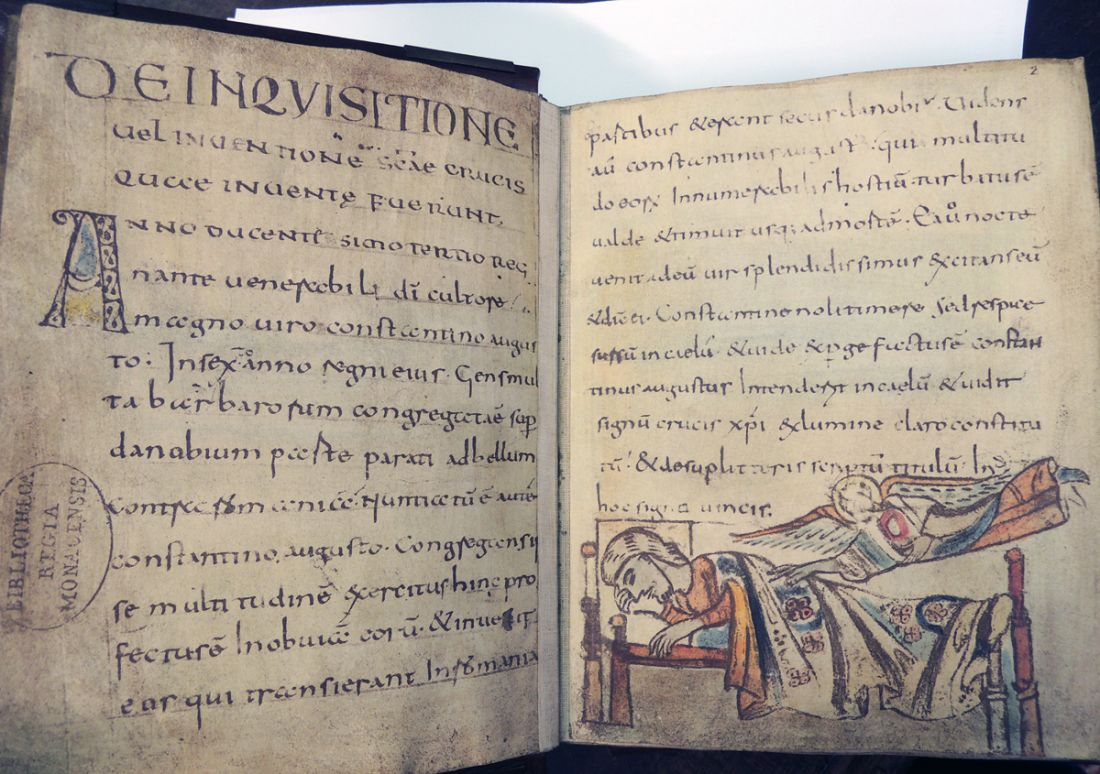
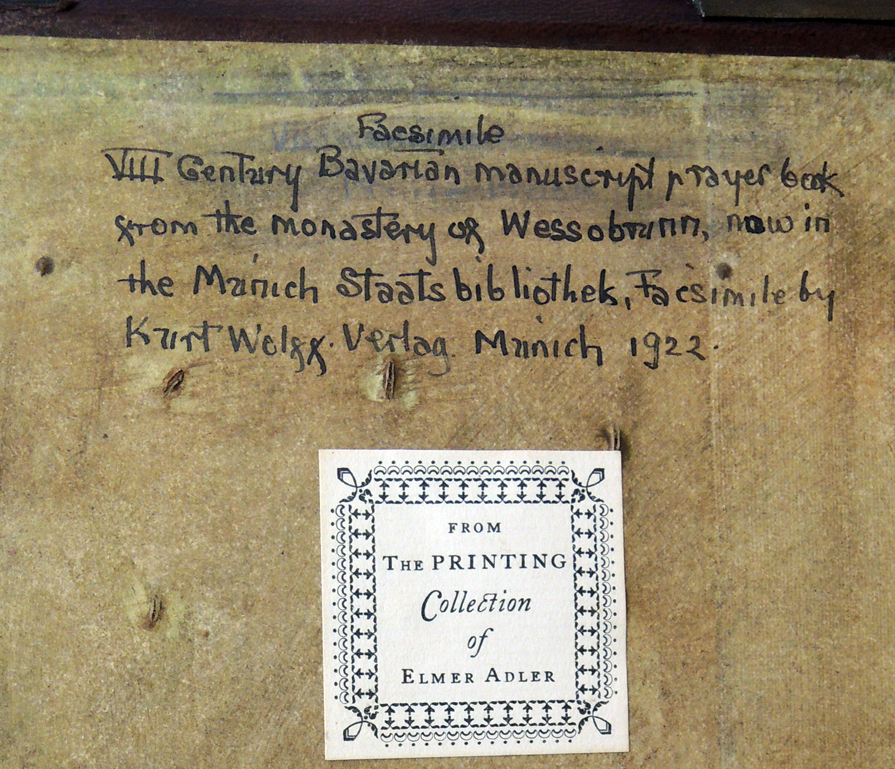
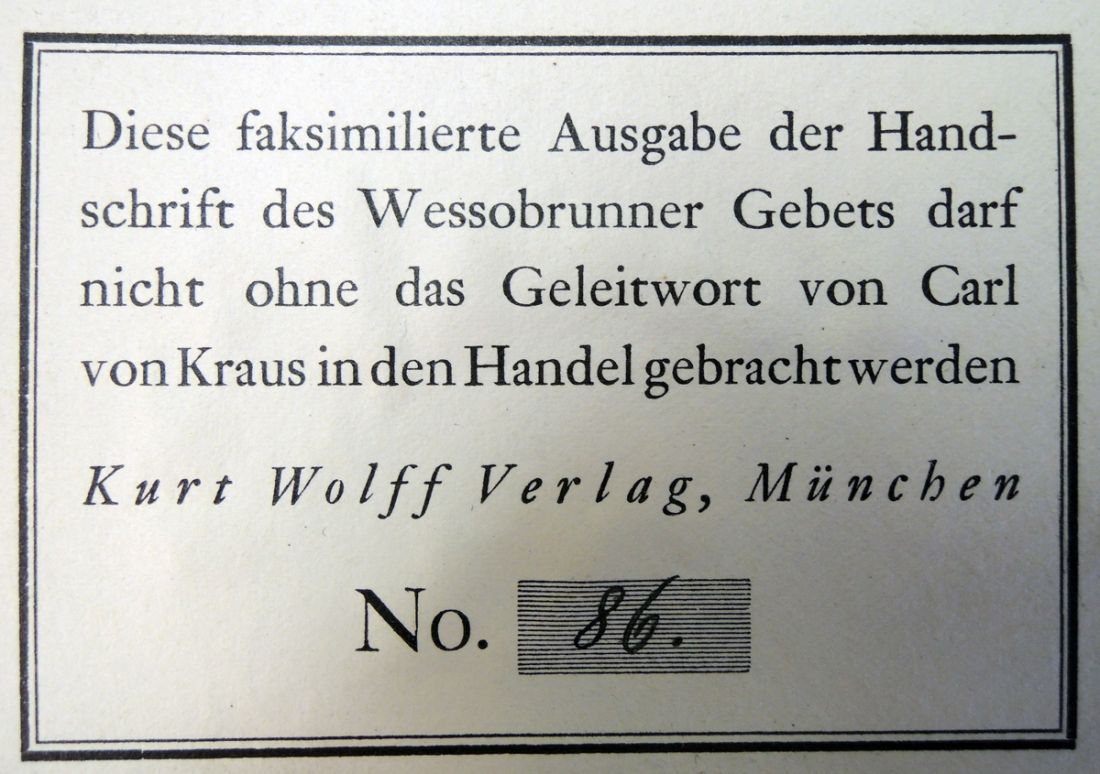
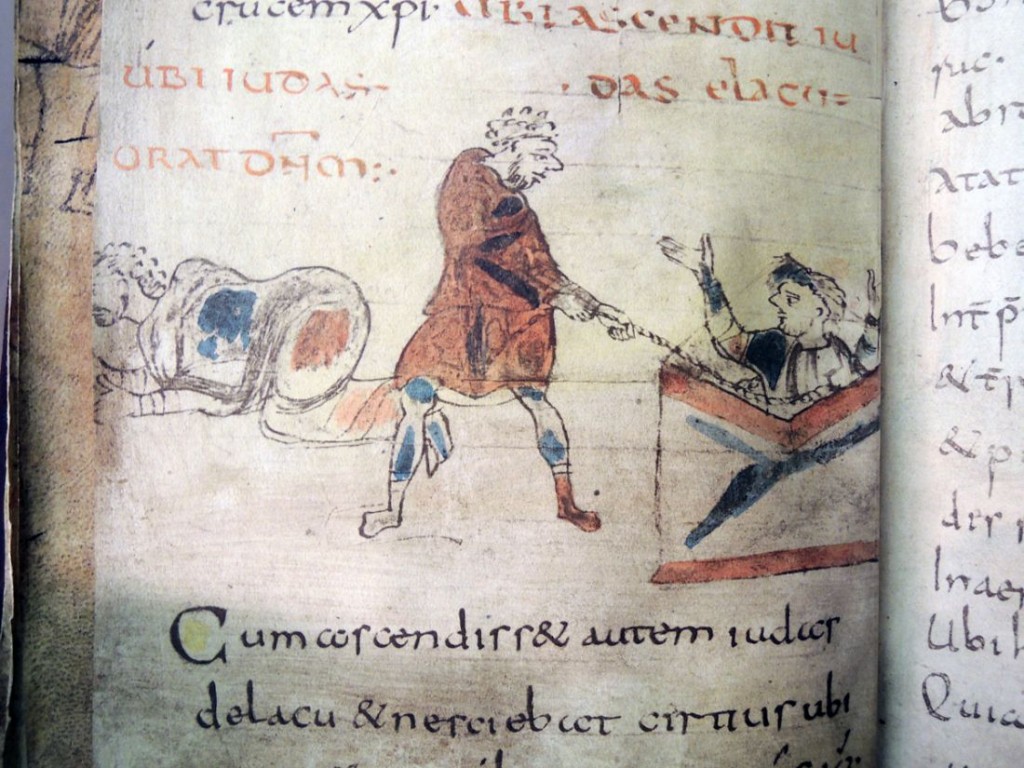
Bayerische Staatsbibliothek. [Handschrift des Wessobrunner Gebets]. [Munich, Kurt Wolff Verlag, 1922]. Graphic Arts Collection (GA) 2006-3082N

The Wessobrunn Prayer, sometimes called the Wessobrunn Creation Poem (Wessobrunner Gebet), believed to date from around 790, is among the earliest known poetic works in Old High German. Princeton University Library holds three copies of this 1922 facsimile edition of the manuscript. The one in graphic arts comes to us from the collection of Elmer Adler.

clm 22053e

Written in a Bavarian dialect, the poem is named after Wessobrunn Abbey, a Benedictine monastery in Bavaria. For centuries it was the repository of the manuscript, which is now in the Bavarian State Library in Munich.

clm 22053dBound in a facsimile leather binding, the volume is blind-stamped with brass bosses & wooden peg in leather clasp. Ours comes with Die handschrift des Wessobrunner Gebets; Geleitwort zu der faksimile-ausgabe von A. von Eskardt, von Carl von Kraus (Munich: Kurt Wolff Verlag, 1922). The 1923 edition at Marquand Library includes an English language translation.

clm 22053c
clm 22053b
clm 22053f

Livres du poètes

cortege3
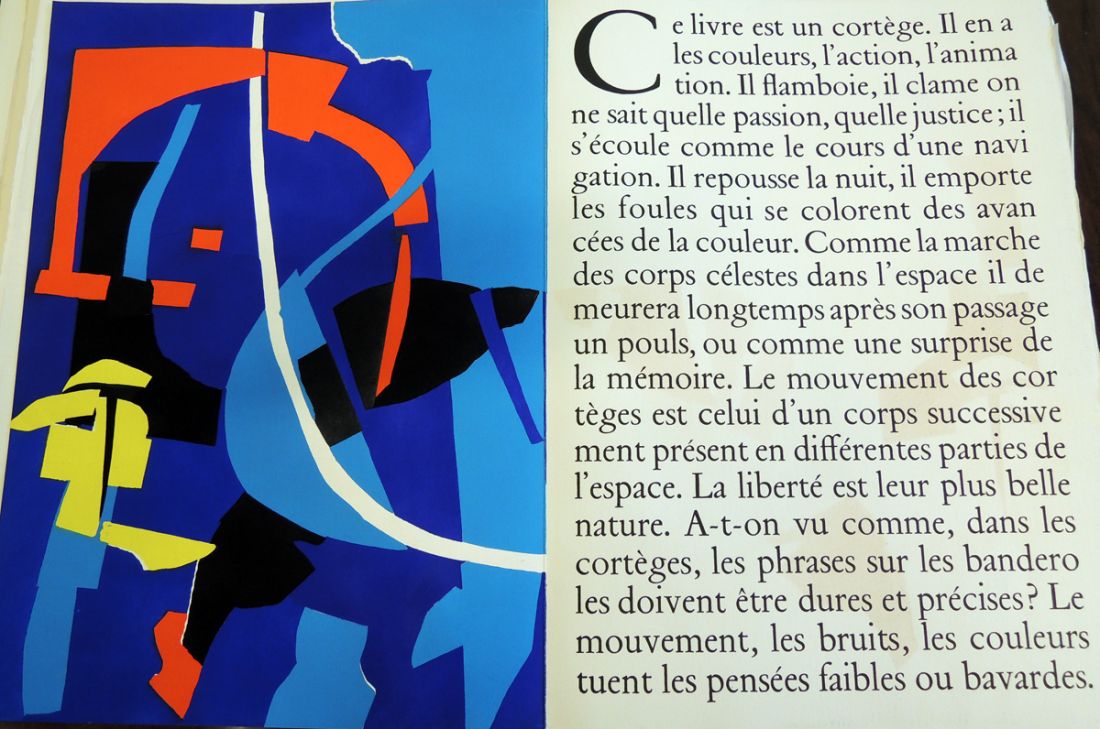
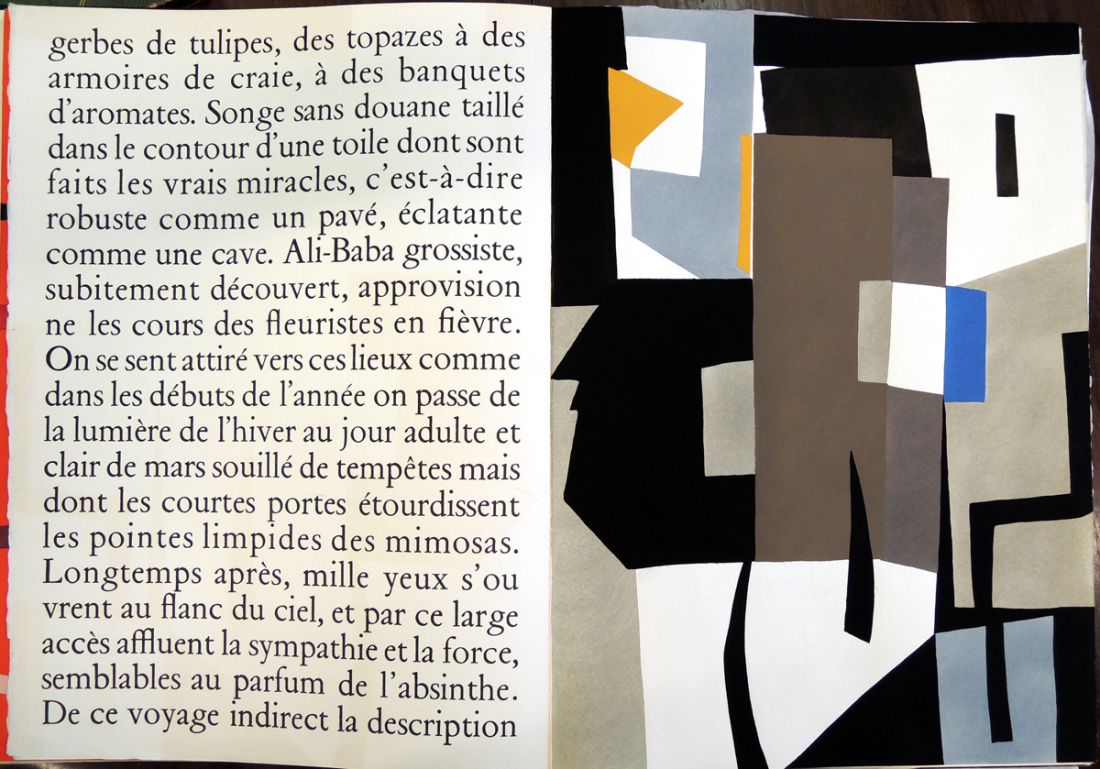
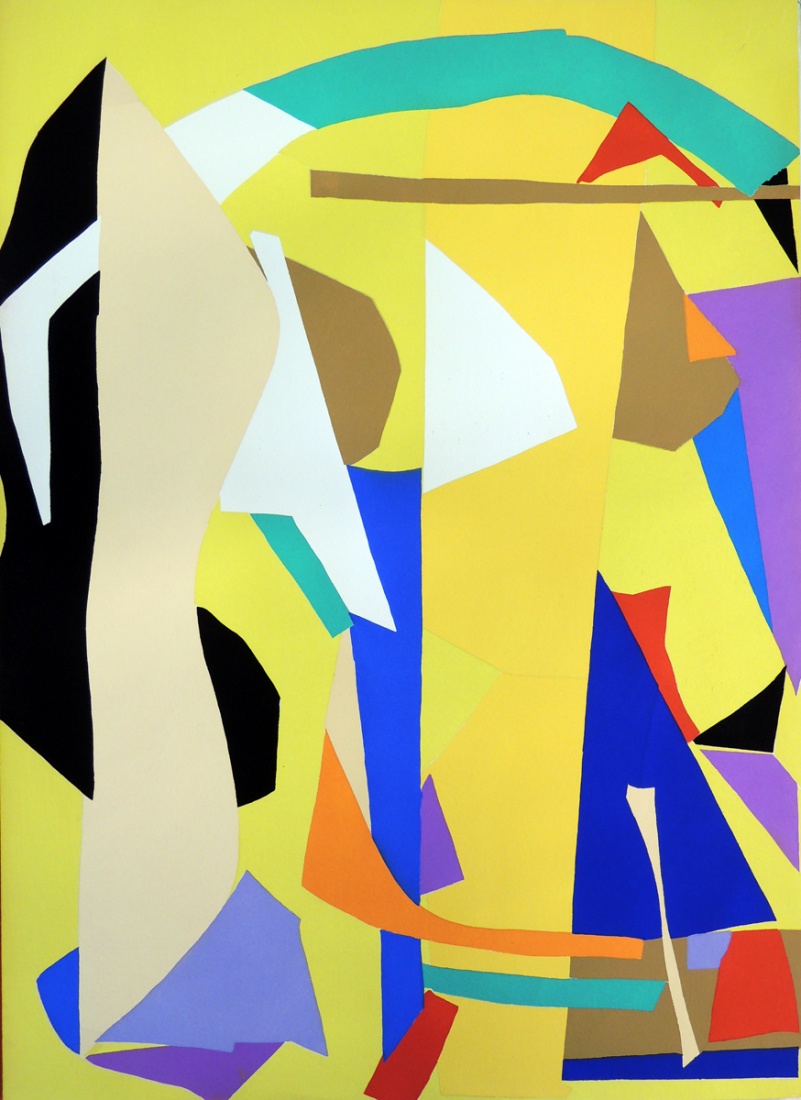
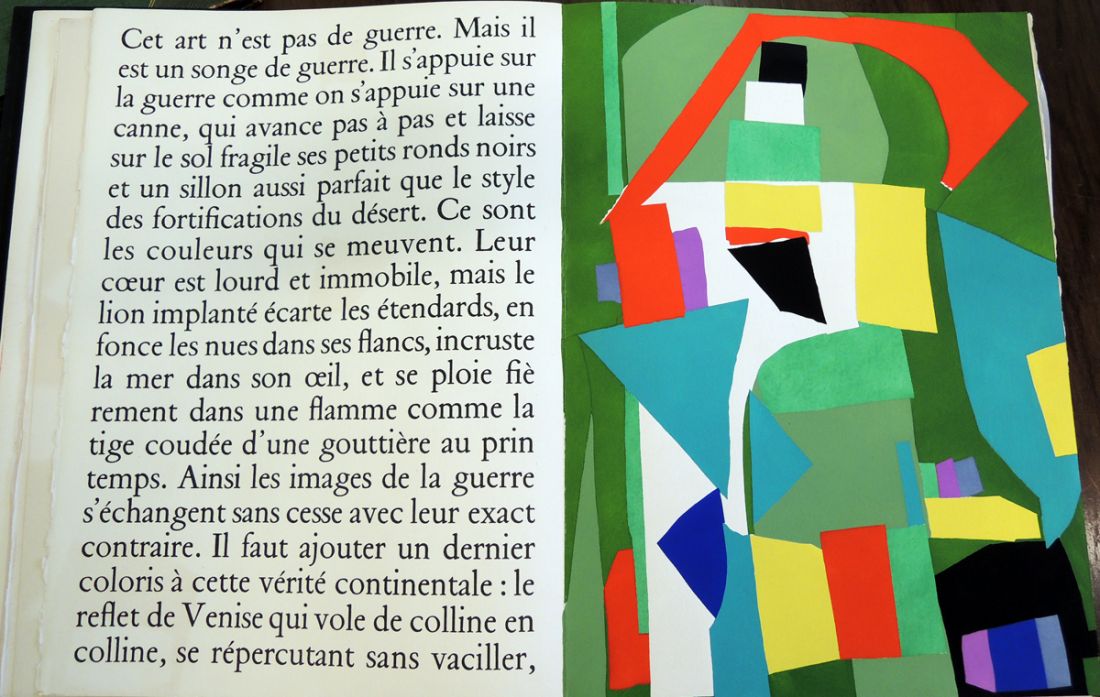
Beginning with Voir Nicolas de Stael in 1953, the French poet Pierre Lecuire (born 1922) created and published over 30 books in collaboration with visual artists. Number six was the spectacular Cortège (Procession), with 25 designs from papiers collés (paper cutouts) by Andre Lanskoy (1902-1976) and pochoir color by Maurice Beaufumé (Graphic Arts Collection GAX 2003-0040F).

cortege2
Lecuire insisted that he was not creating livres d’artistes (artist’s books) or livres de peintres (painter’s books) but livres du poètes or poet’s books. He said, “I make poets’ books with painters.”

He took control over all aspects of the production of his books, including paper, font, and the medium of the images. It was Lecuire, for instance, who suggested to the Russian-born artist Andre Lanskoy that he work in papiers collés or cut paper, similar to what Henri Matisse (1869-1954) used when creating is 1947 masterpiece Jazz. While Matisse worked with the pochoir studio of Edmond Variel to be sure the color was exact, Lecuire work with the studio of Beaufumé to do the same.
cortege5                    cortege4

Beaufumé’s studio began in the 1930s when he colored, among other things, a number of books for Francis Meynell and the Limited Editions Club, including several volumes of The Comedies, Histories & Tragedies of William Shakespeare (1939-1940). But in 1940, the artist was drafted and the printing and coloring of the series was moved to New York.
Printed in a huge font by Marthe Fequet and Pierre Baudier, the text of Cortège begins: [rough translation] “This book is a procession. It has its colors, action and animation. It blazes, it proclaims one knows not which passion, which justice; it flows like the course of a navigation….”

cortege1

See also: Henry Bouillier and Astrid Ivask, “Pierre Lecuire or the Poem in Majesty,” World Literature Today 62, no. 1 (Winter 1988): 14-22.

See also: Pierre Lecuire (born 1922), Livres de Pierre Lecuire. [Catalogue] Édité … à l’occasion de l’exposition Livres de Pierre Lecuire au Centre national d’art contemporain … du 26 janvier au 12 mars 1973 ([Paris: Centre national d’art contemporain, 1973]). Graphic Arts Collection (GA) NC980 .L37


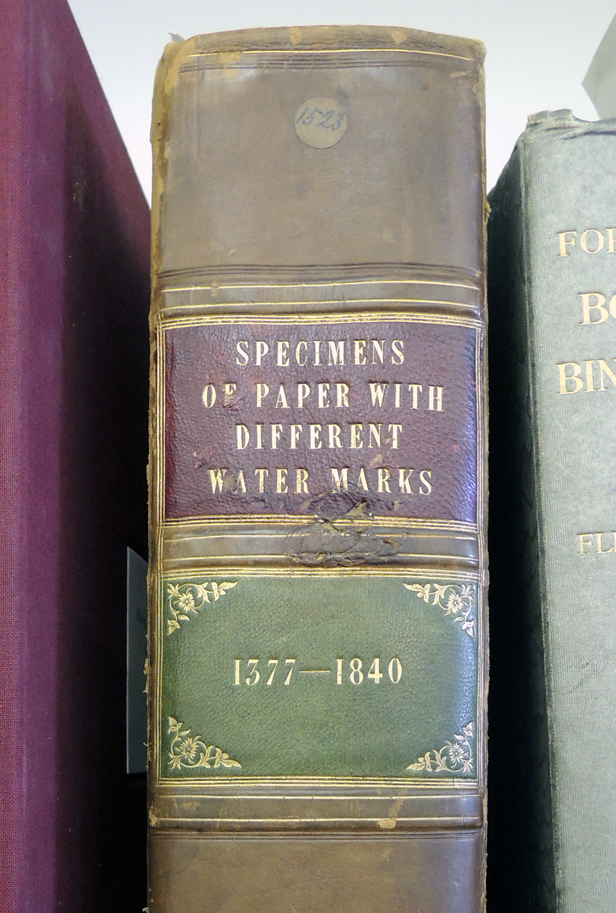
Specimens of Paper with Different Water Marks, 1377-1840

specimens of paper12

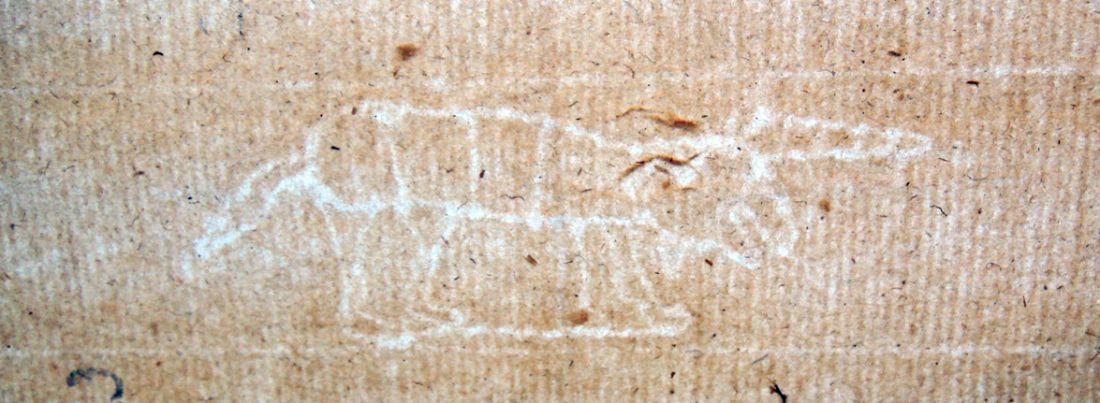
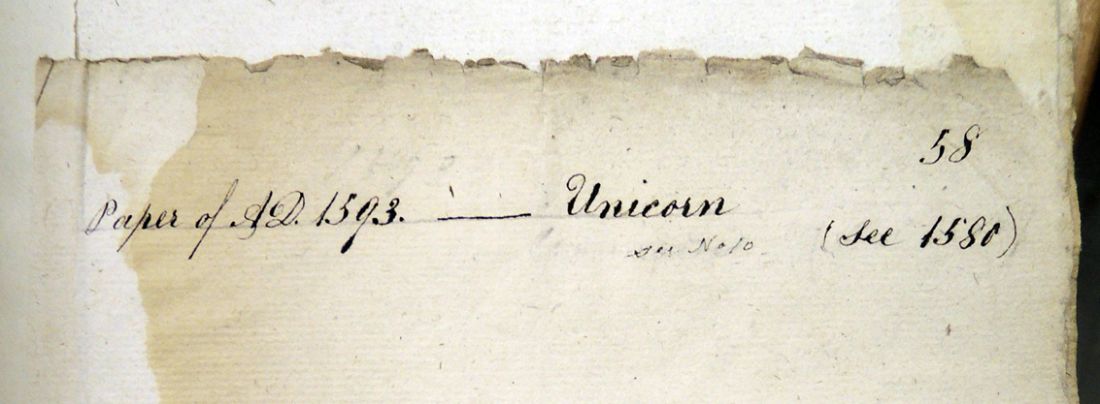
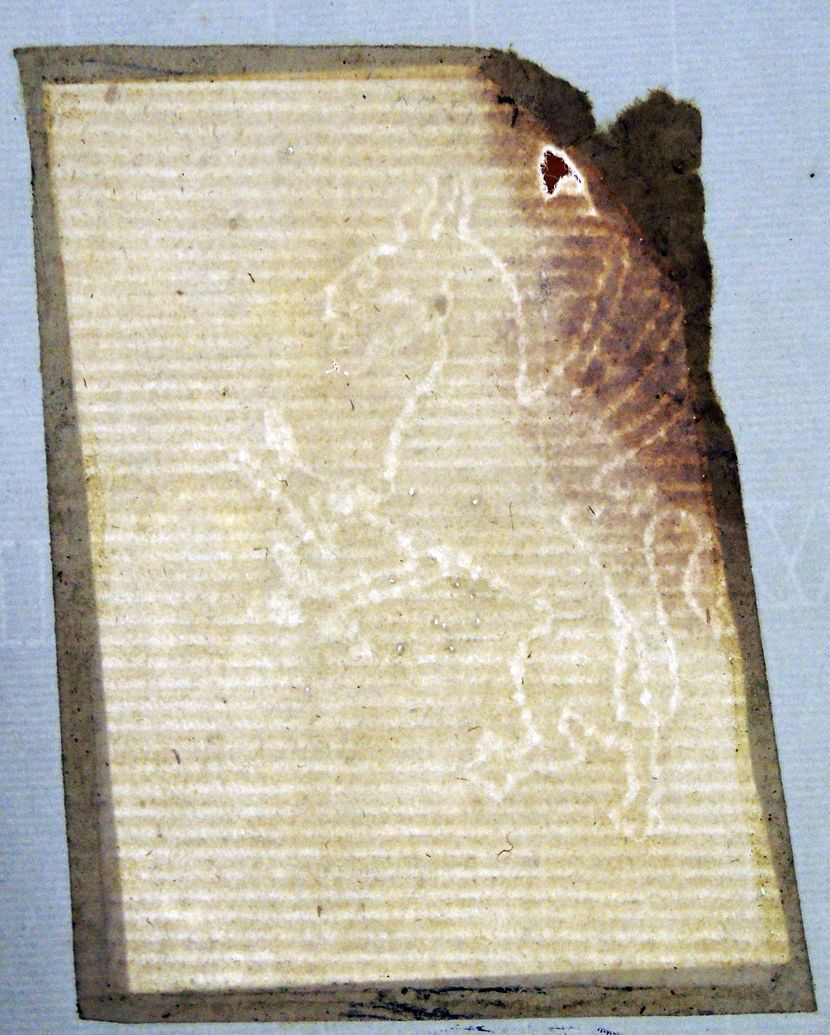
1593 unicorn watermark

specimens of paper8


specimens of paper3

1377 griffin watermark

specimens of paper4

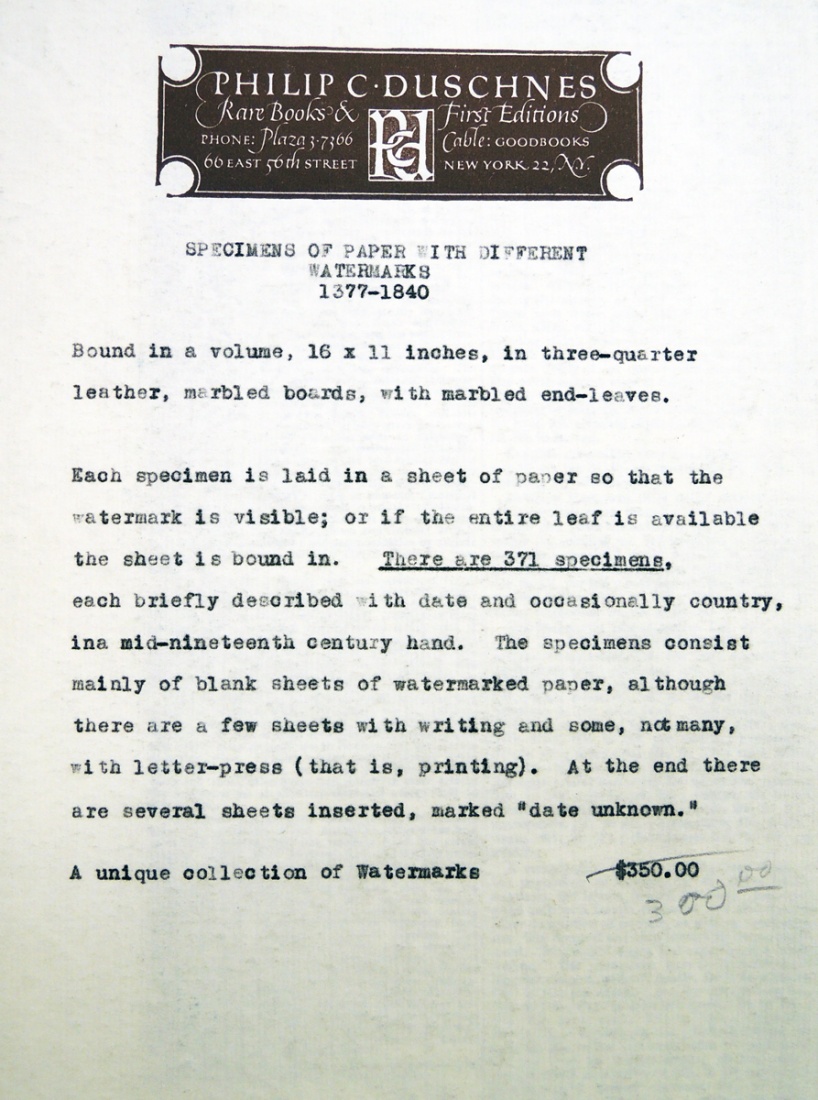
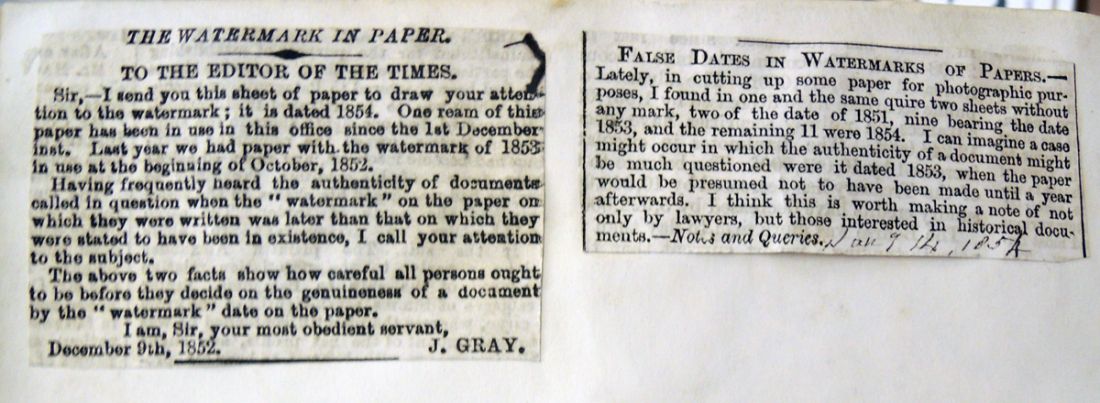
During the 1952-53 fiscal year, a unique collection of nearly 400 specimens of European papers with different watermarks (1377-1840) was acquired for the Graphic Arts Collection, at the suggestion of Elmer Adler (1884-1962) with a fund turned over to the Library by the Friends of the Princeton University Library (FPUL). Adler must have been a good negotiator, talking rare book dealer Philip Duschnes down from $350 to $300.

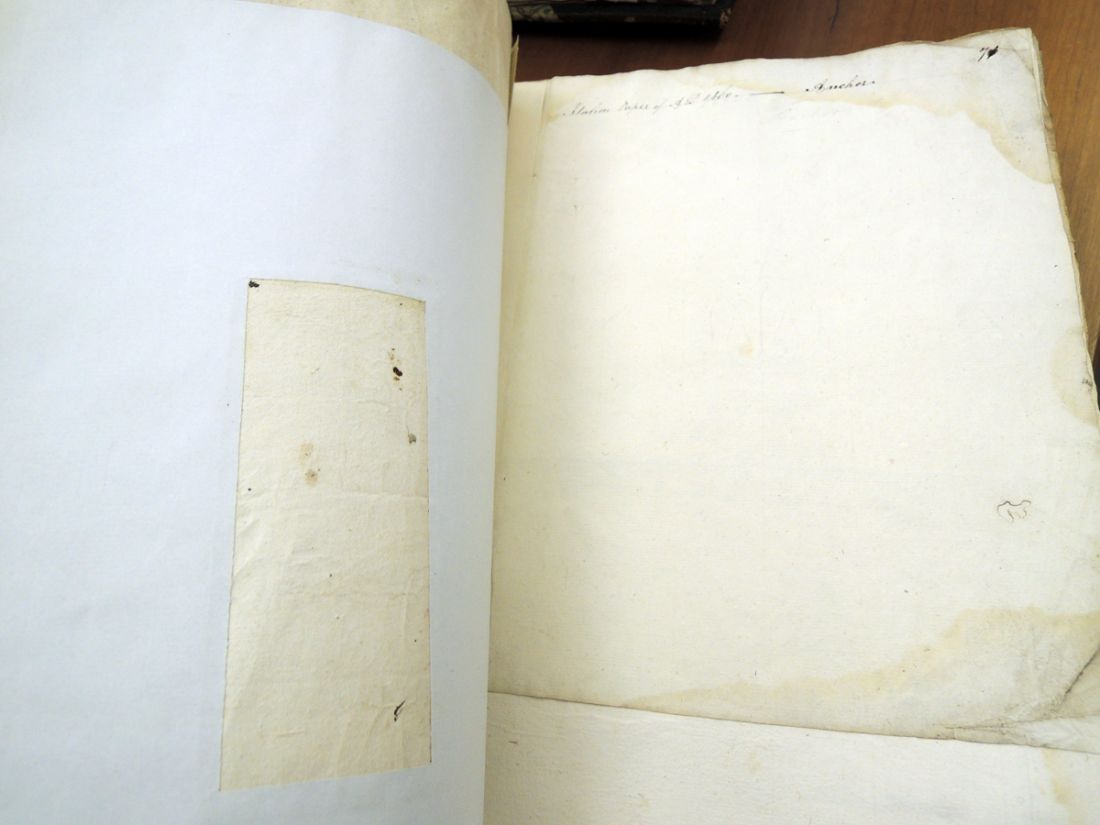
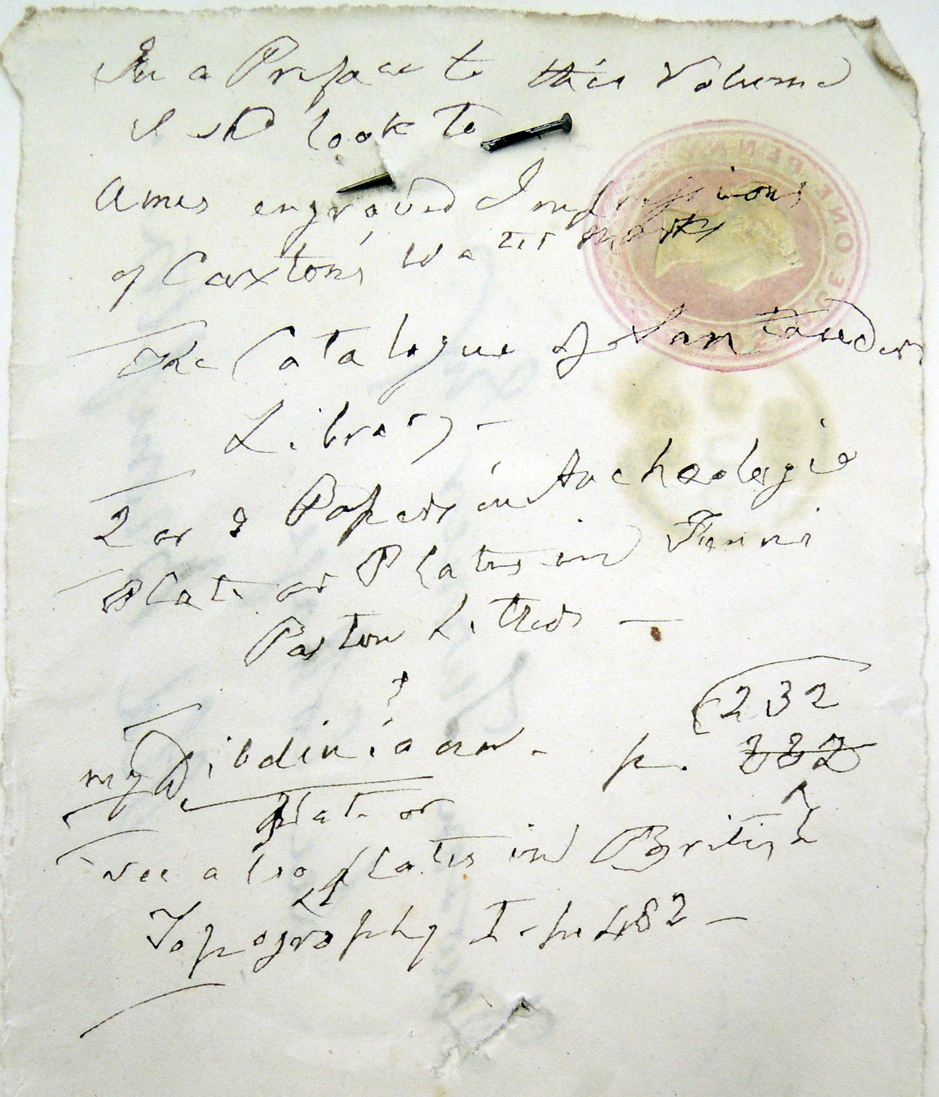
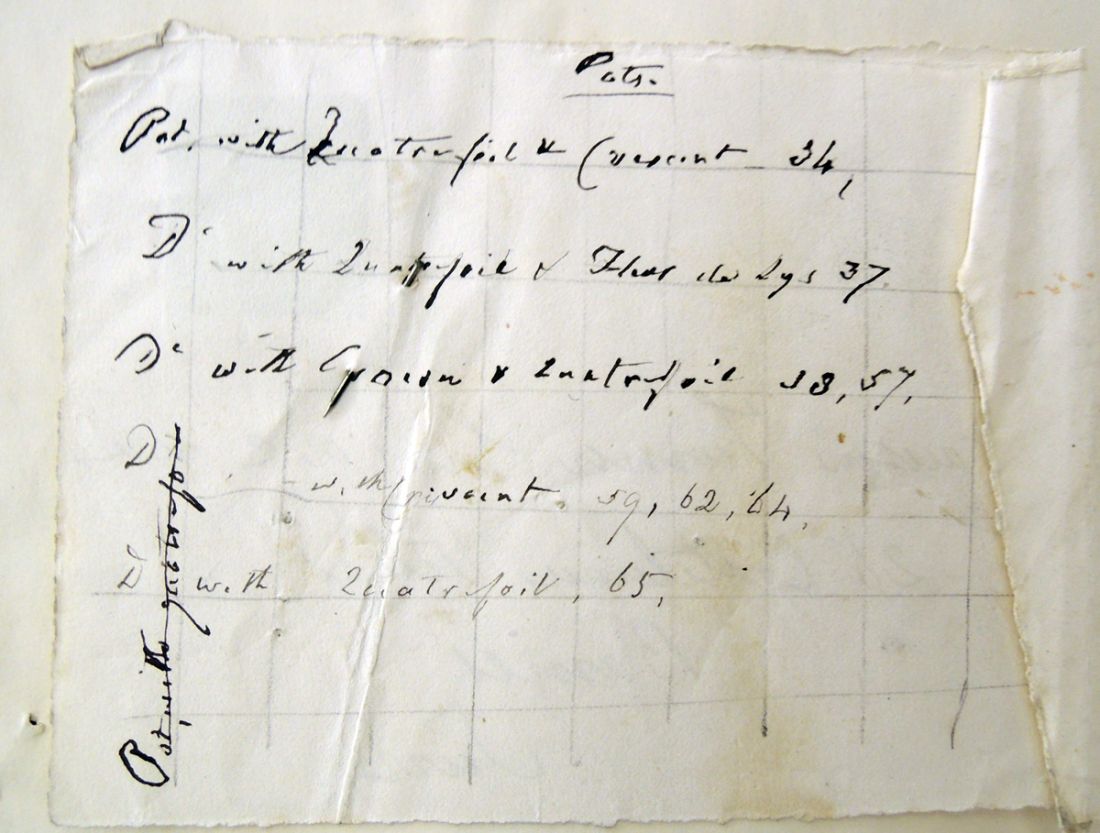
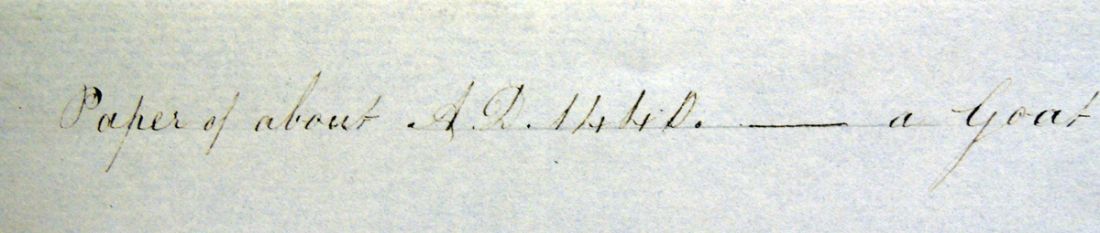
The album was elaborately created with sheets of many shapes and sizes bound in various layers, with a brief description written at the top of each sheet. I have included the front matter pinned to the endpapers.

specimens of paper1

Originally in the collection of Dawson Turner (1775–1858), the auction catalogue description reads: ’Watermarks on Paper. A very curious collection of upwards of three hundred and seventy specimens of paper with various Watermarks, for A.D. 1377 to A. D. 1842, collected with a view to assist in ascertaining the age of undated manuscripts, and of verifying that of dated ones, by Dawson Turner, Esq. and bound in 1 vol. half calf.’

See also: Catalogue of the Remaining Portion of the Library of Dawson Turner, Esq., M.A., F.R.S., F.S.A., F.L.S., etc., etc. formerly of Yarmouth: which will be sold by auction by Messrs. Puttick and Simpson … Leicester Square … on Monday, May 16th, 1859, and seven following days (Sunday excepted). [London, 1859], item 1523.


specimens of paper2
apecimens of paper8

specimens of paper6  apecimens of paper5
specimens of paper5

Specimens of Paper with Different Water Marks, 1377-1840. 1 v. (unpaged); 40 cm. 371 specimens of watermarked paper, together with brief descriptions of each in a mid-nineteenth century ms. hand. The specimens are mainly blank leaves, though some leaves feature writing and letterpress. Specimen 334 is stamped sheet addressed to Dawson Turner (1775-1858), Yarmouth. Purchased with funds from the Friends of the Princeton University Library. Graphic Arts: Reference Collection (GARF) Oversize Z237 .S632f

specimens of paper9

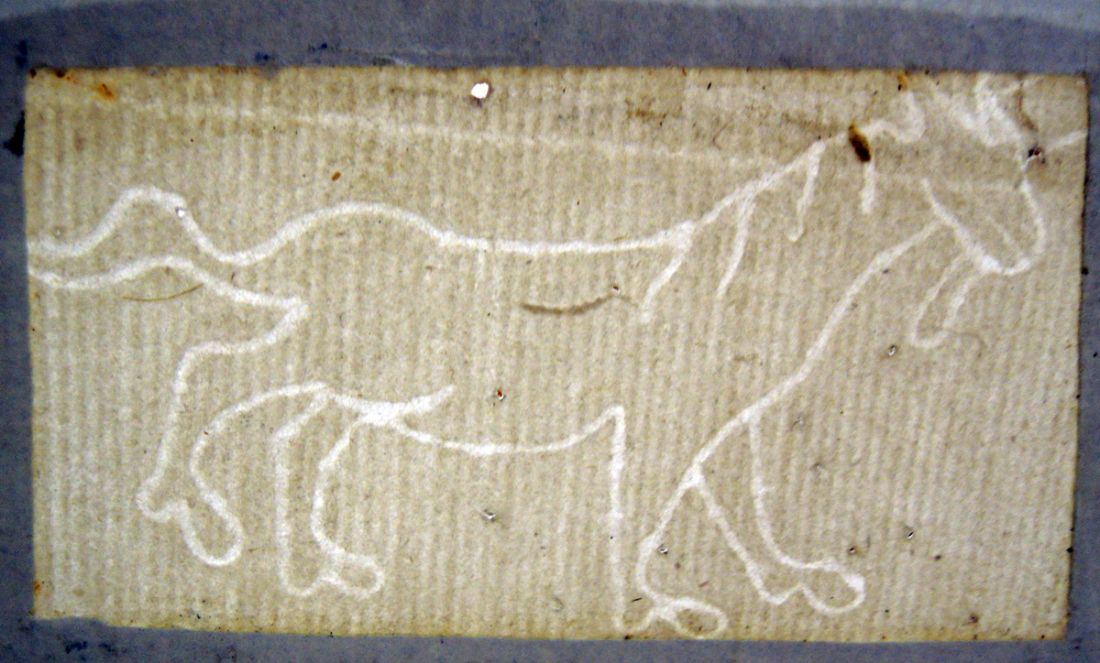
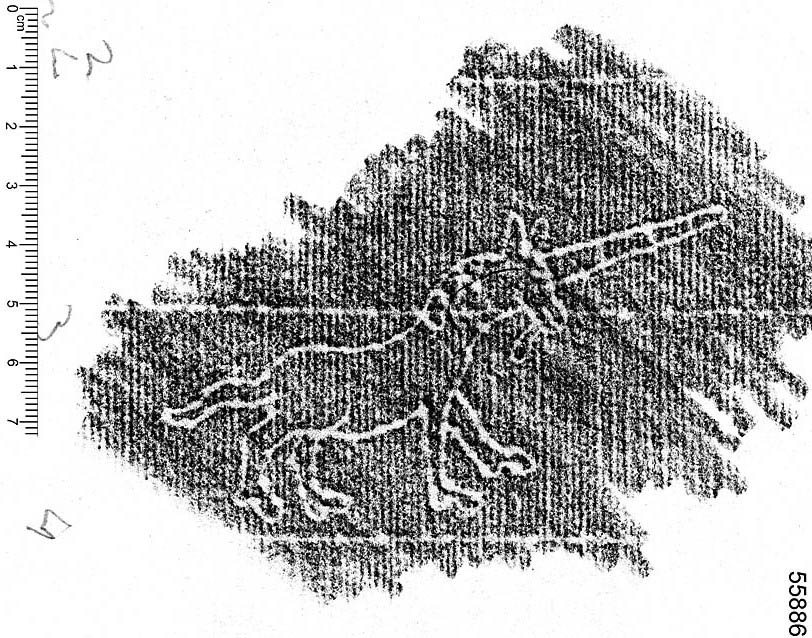
Dawson Turner may have seen a goat, but this is a definitely a Unicorn, specifically a “bearded unicorn”, with its horn removed by Victorian scissors. The date c.1440 is almost certainly wrong; a much more plausible date is mid-1470s.
Thanks very much to Paul Needham for the correction.

watermark 4

For comparison, here is an image of a Unicorn precisely of this type used by Caxton, in Bruges, c. 1475.

specimens of paper11

NO, IT IS

14799Kentridge_NL1

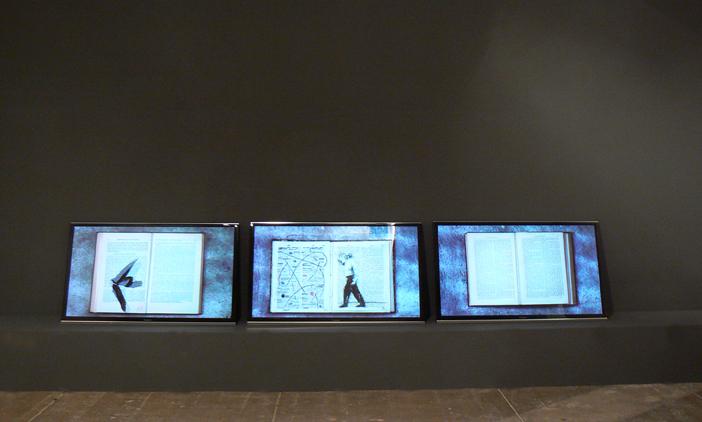
NO, IT IS, 2012. Triptych of three flipbook films; HD video shown on 3 flat screens. (c) William Kentridge

The South African artist William Kentridge prepared and delivered the Charles Eliot Norton lectures at Harvard University in 2012. They can be seen here: http://mahindrahumanities.fas.harvard.edu/content/norton-lectures  His exploration of various ongoing multimedia projects evolved into an exhibition, which just opened at the Marian Goodman Gallery in New York City.
http://vimeo.com/56083100

One segment of the show involves the translation of Kentridge’s 2012 flip book NO, IT IS, into a triptych of flip-book films shown on three flat screens, including Workshop Receipts, The Anatomy of Melancholy, and Practical Enquiries.

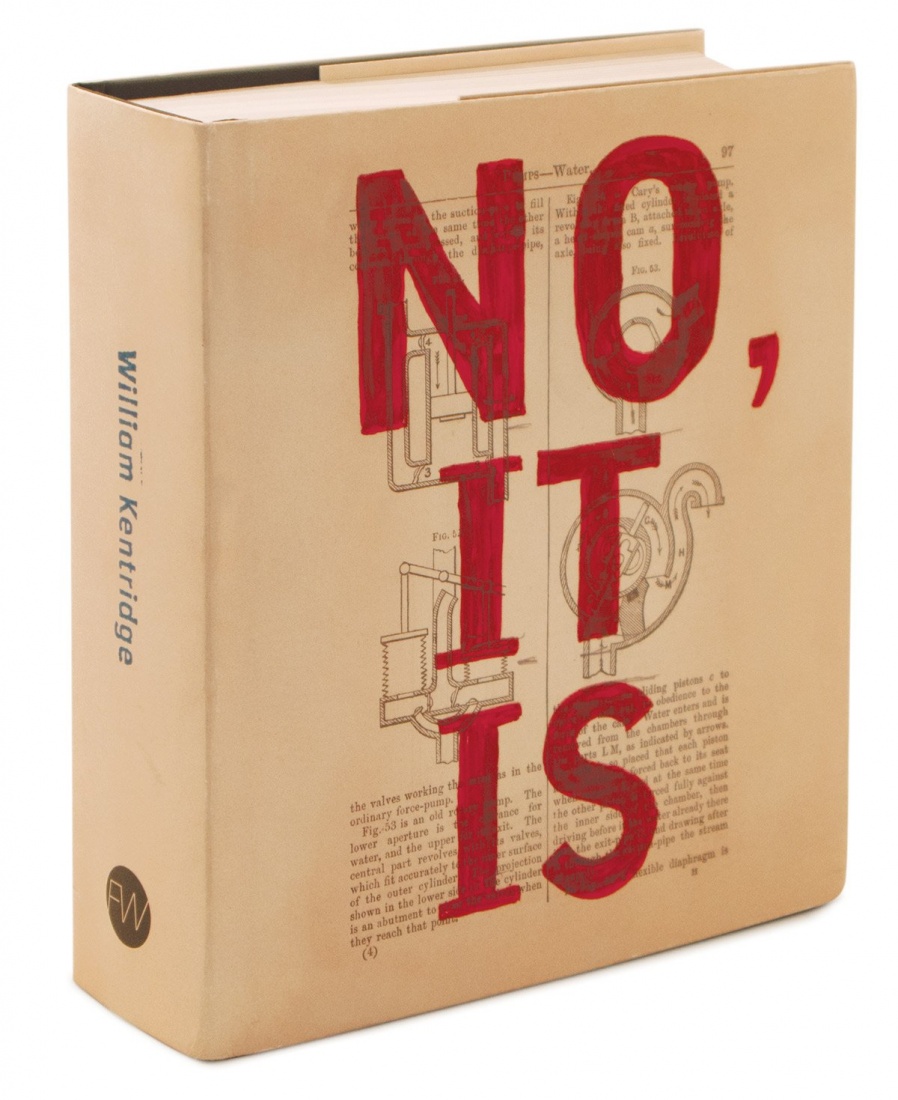
The Graphic Arts collection is fortunate to hold one of the sold out copies of NO, IT IS, published by Fourthwall Books, Johannesburg. The Refusal of Time, a documentation of the creative process for the work of the same title, shown at Documenta (13), 2012 and published by Xavier Barral, Paris, is available at Marquand Library (Oversize N7396.K46 A4 2012q).

71ms0gmMQZL

William Kentridge: No, It Is (Johannesburg: Fourthwall Books, 2012). Graphic Arts Collection GAX 2012- in process


Emil Rudolf Weiss

cinamon emil rudolf weiss6
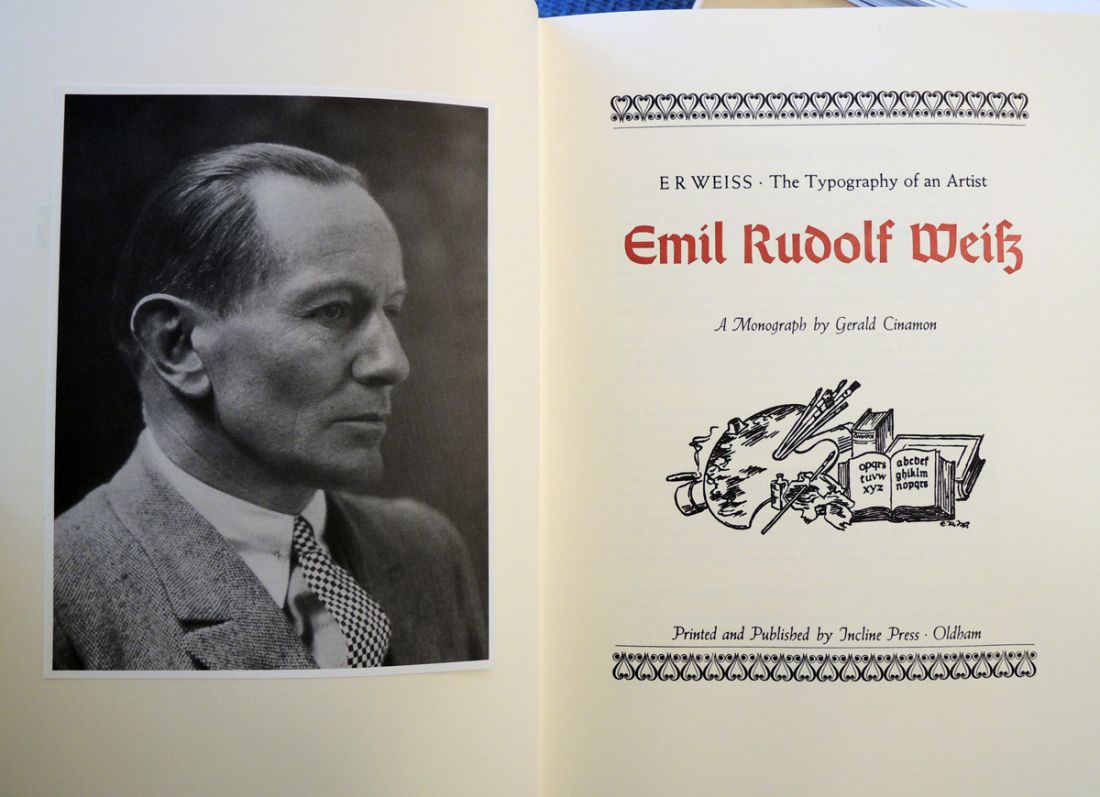
cinamon emil rudolf weiss1Gerald Cinamon, E R Weiss: the Typography of an Artist: Emil Rudolf Weiss: a Monograph (Oldham [England]: Incline Press, 2012. One of 250 copies. Graphic Arts Collection GAX 2013- in process

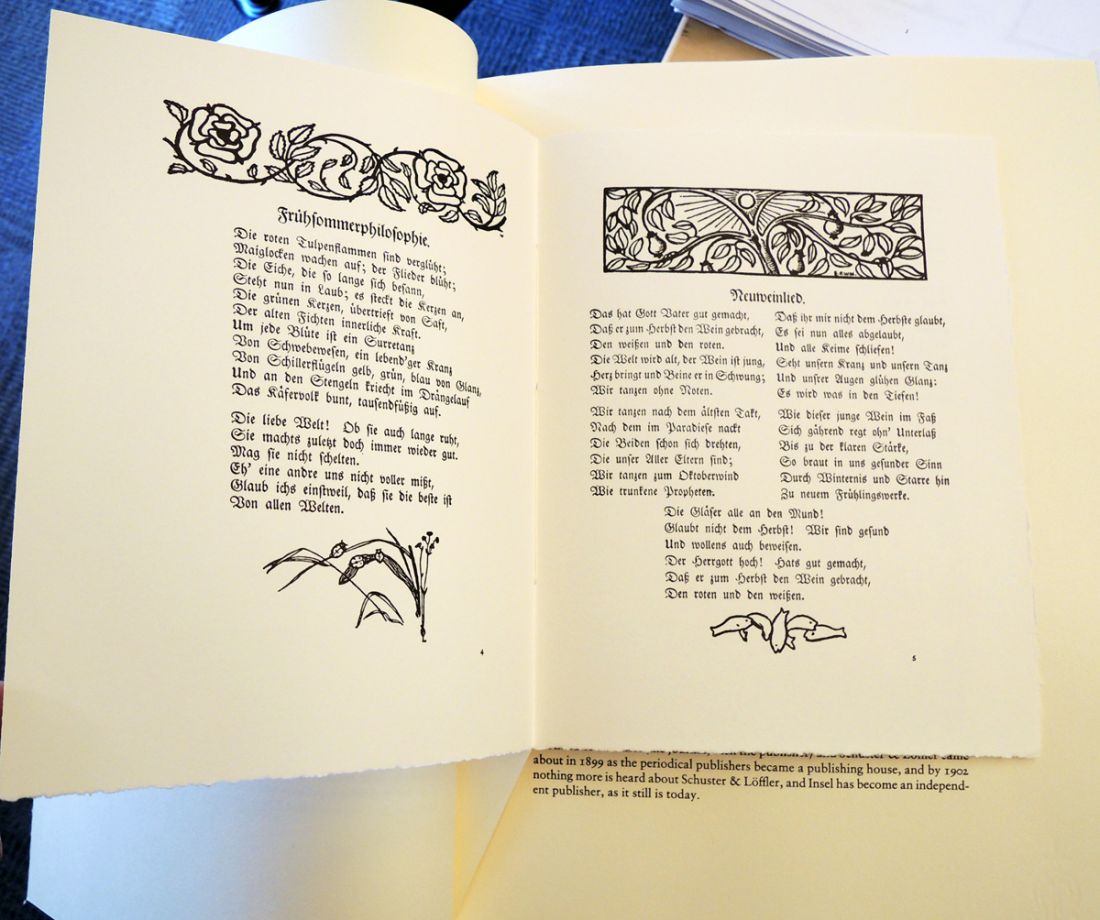
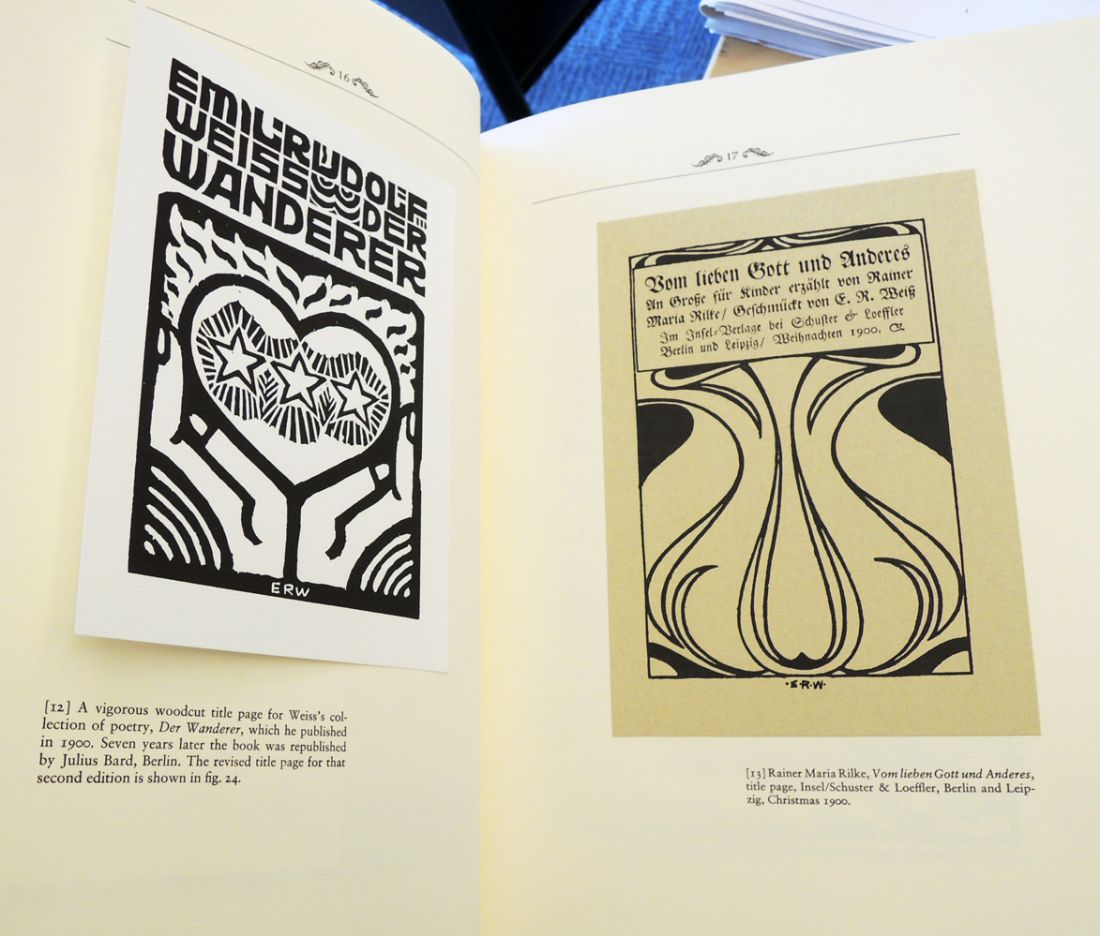
Graham Moss of Incline Press issued a wonderful survey of work of the German type designer Emil Rudolf Weiß (1875–1942) with a text by Gerald Cinamon. According to the prospectus, when Cinamon was approached to write about Weiss, he was provided with two suitcases full of research material and examples of Weiss’s work, all in German. The folio volume includes numerous tipped in facsimiles along with two small supplements: The Anagnostakis Pocket Guide to Austrian German and Swiss Antiquarian Bookdealers Terminology and E.R. Weiss In Memorium.
cinamon emil rudolf weiss5

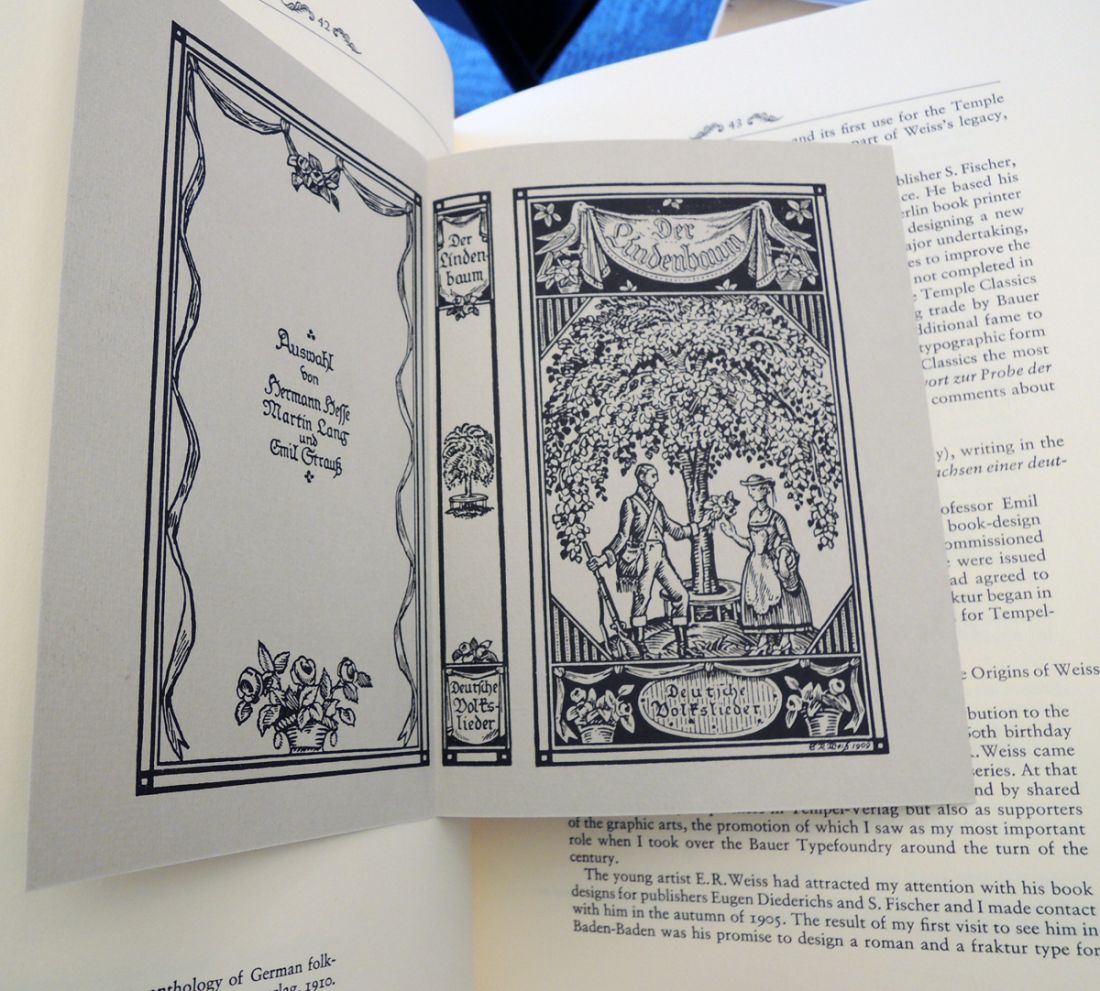
Weiss created Art Nouveau designs for books, textiles and furniture, theater sets and costumes, stained glass, and much more. His work came to prominence in 1895 when it was included in Pan magazine (SAX Oversize N3 .P25q) when he also began publishing small editions of his poetry, such as Die blassen Cantilenen (Recap 3496.23.396).
cinamon emil rudolf weiss4

In 1913, Bauersche Giesserei commissioned a font that became Weiss-Fraktur, which was published in a luxurious specimen book (GA Oversize 2006-0820Q). Two other fonts were designed and cast in metal type.

In the 1920s, Weiss was one of the designers selected by Stanley Morison for the binding and endpaper design of The Fleuron: a Journal of Typography (Weiss: no. 5; GAX Oversize Z119 .F62q).

cinamon emil rudolf weiss3

Isaiah Thomas, The Baskerville of America

kitty4
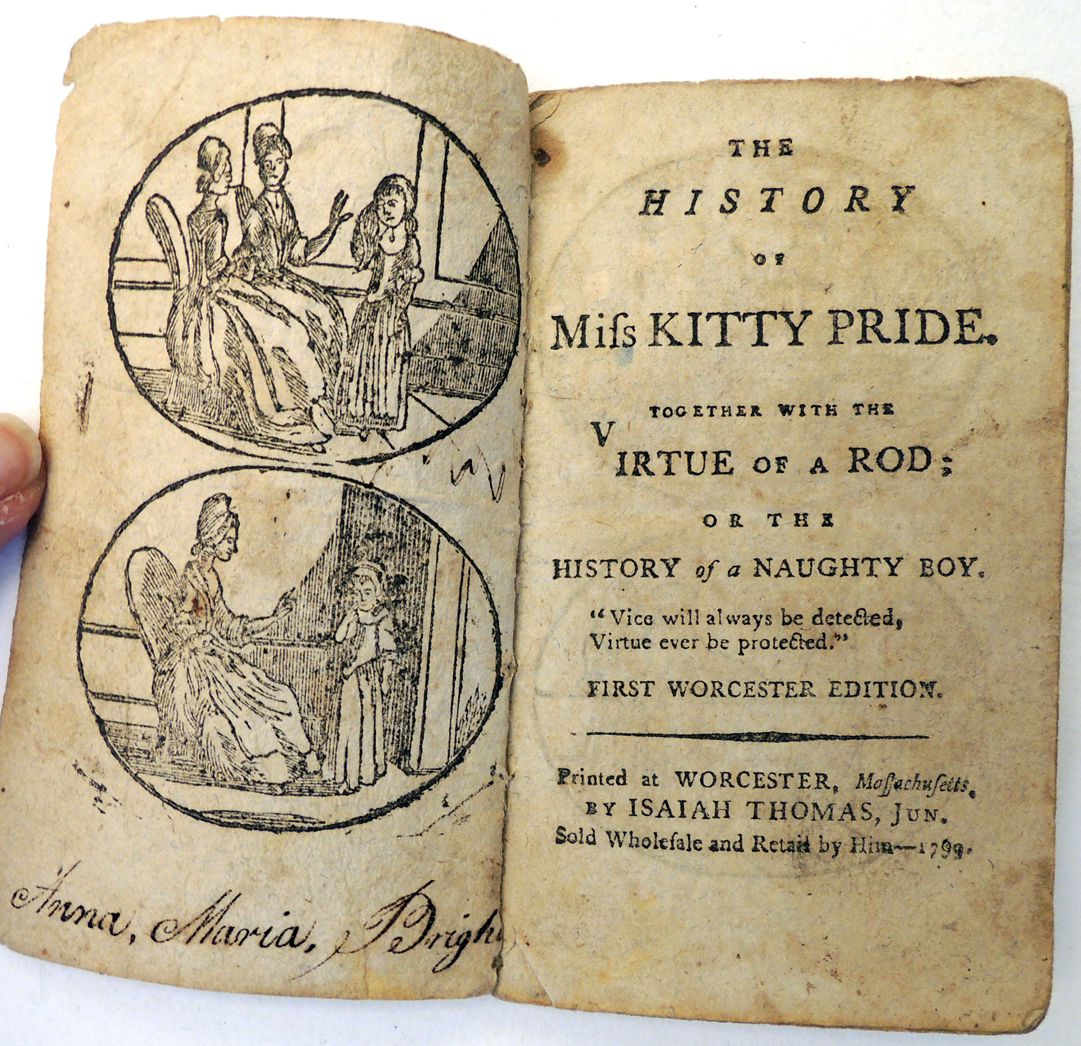
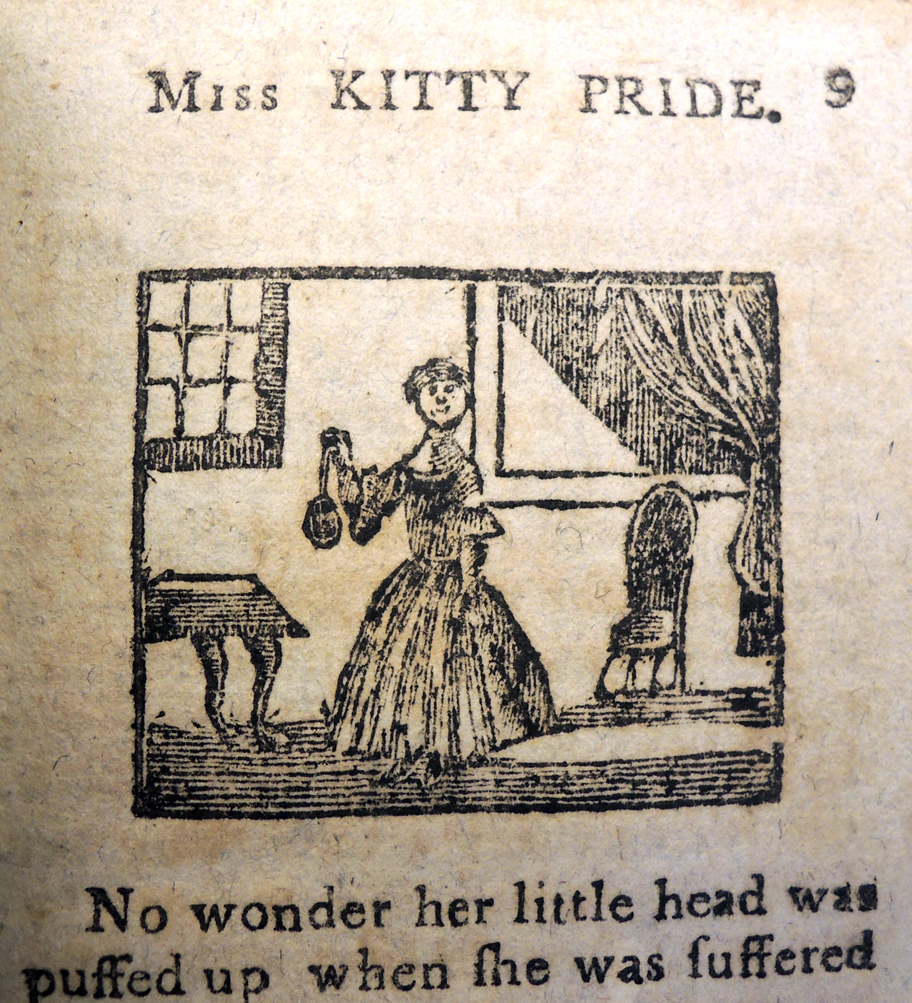
The History of Miss Kitty Pride: Together with The Virtue of a Rod; or The History of a Naughty Boy (Worcester, Massachusetts: Isaiah Thomas, Jun. sold wholesale and retail by him, 1799). Graphic Arts Collection GAX 2013- in process

“The Baskerville of America,” this is what Benjamin Franklin (1706-1790) called the Massachusetts printer Isaiah Thomas (1749-1831). “Thomas was the leading publisher of his day. His printing establishment in Worcester eventually employed 150 persons and included seven presses, a paper mill, and bindery . . . He is still famous for his more than a hundred children’s books of which he published tens of thousands of copies.”–Appletons’ Cyclopædia of American Biography.

kitty2

Princeton University Library holds over 100 volumes published and sold by Isaiah Thomas (1749–1831) and his son Isaiah Thomas Jr (1773-1819) from their shops in Worcester and Boston, Massachusetts. They also had branches in Walpole, Brookfield, Portsmouth, Windsor, Newburyport, Baltimore, and Albany.

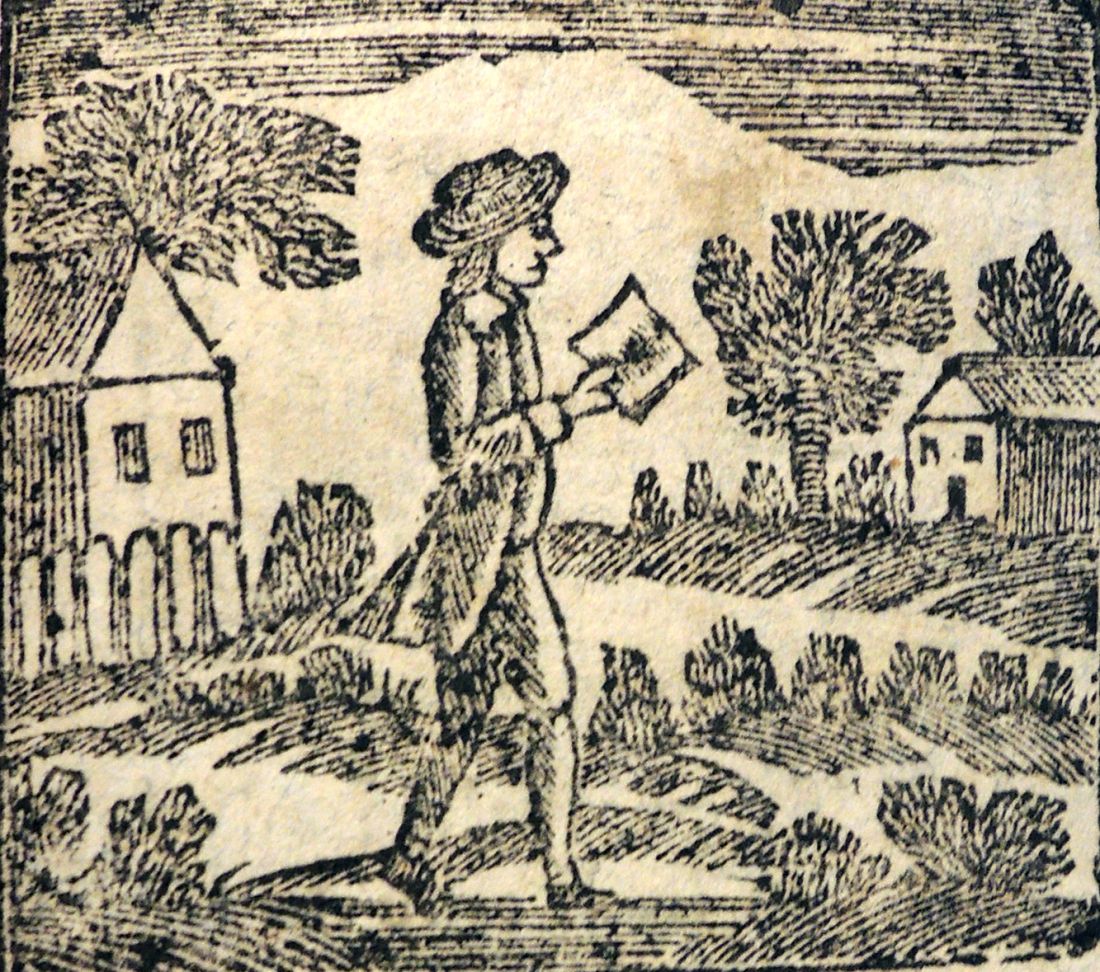
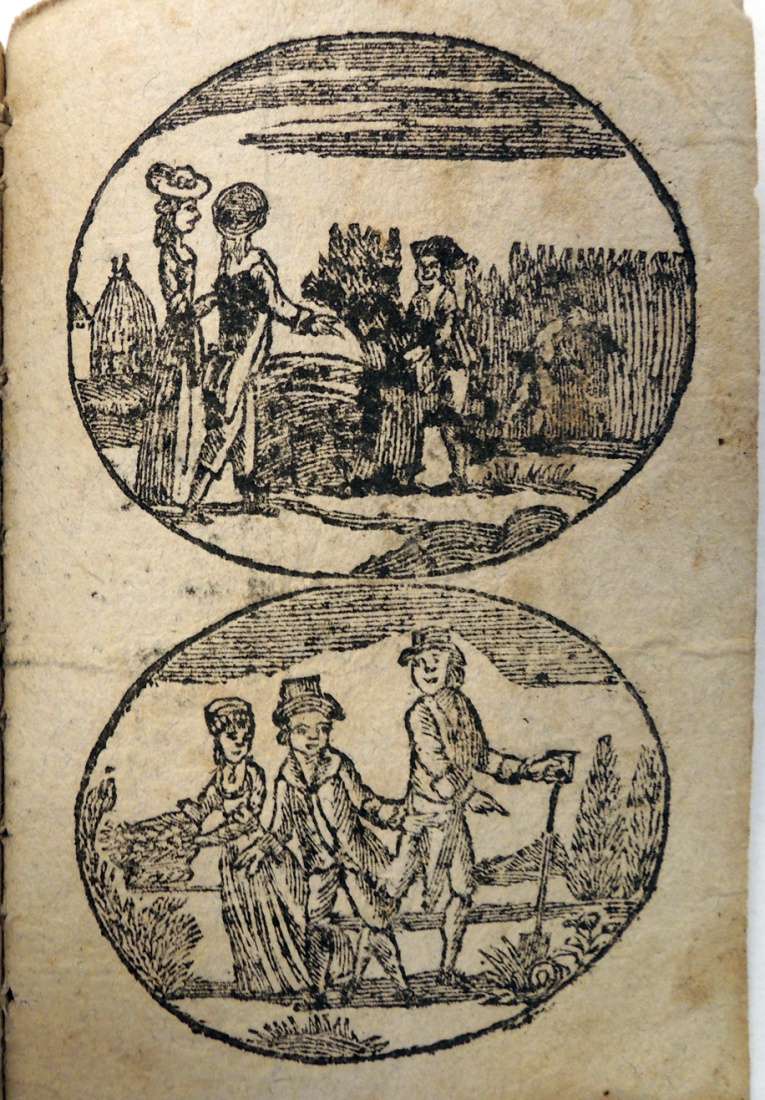
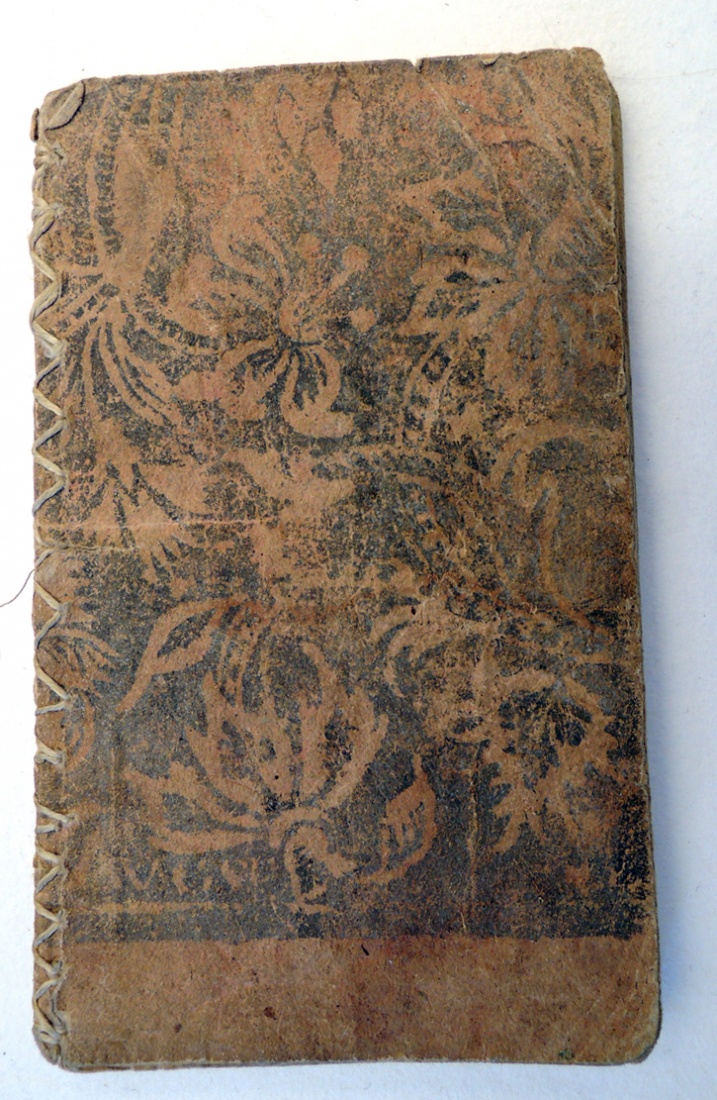
Sinclair Hamilton (1884-1978) alone collected and donated 49 book published by Thomas with woodcuts and wood engravings. Happily, we have now added Miss Kitty and Virtue of a Rod to our holdings (bound in a piece of decorative wallpaper). Each story is illustrated with a surprising number of cut, for such a tiny (11 cm.) volume. Here are a few examples.

kitty6             kitty1

kitty5

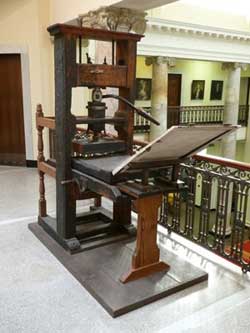
1 One of Isaiah Thomas’s original printing presses at the American Antiquarian Society.


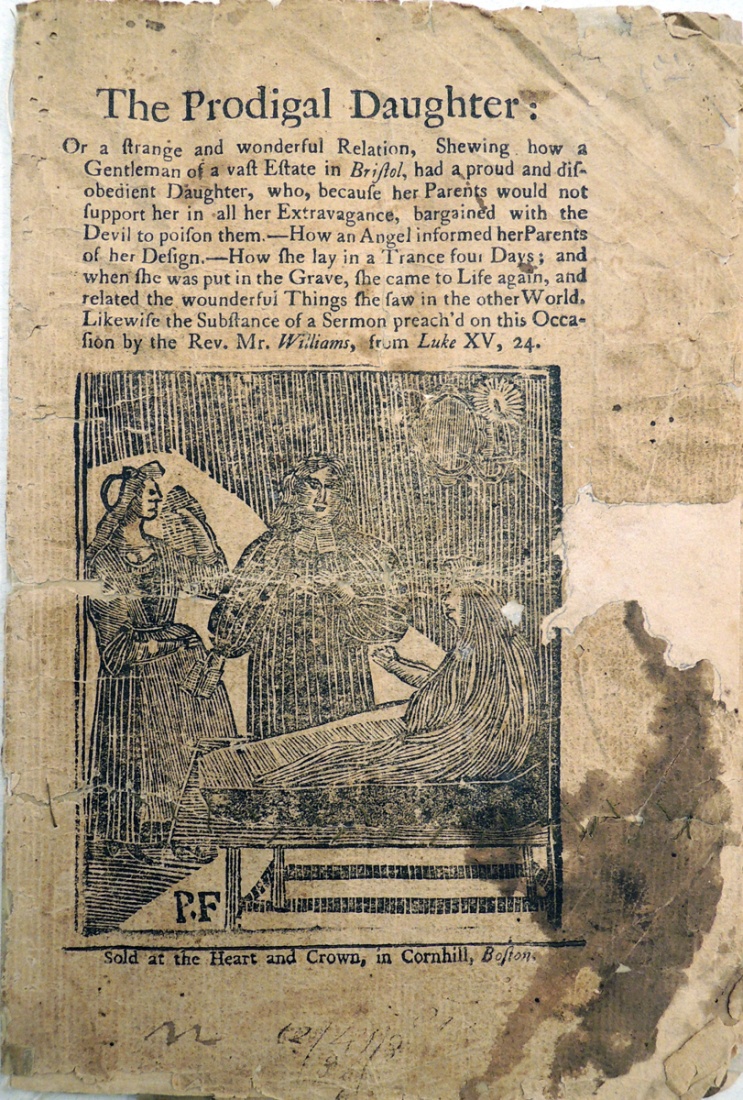
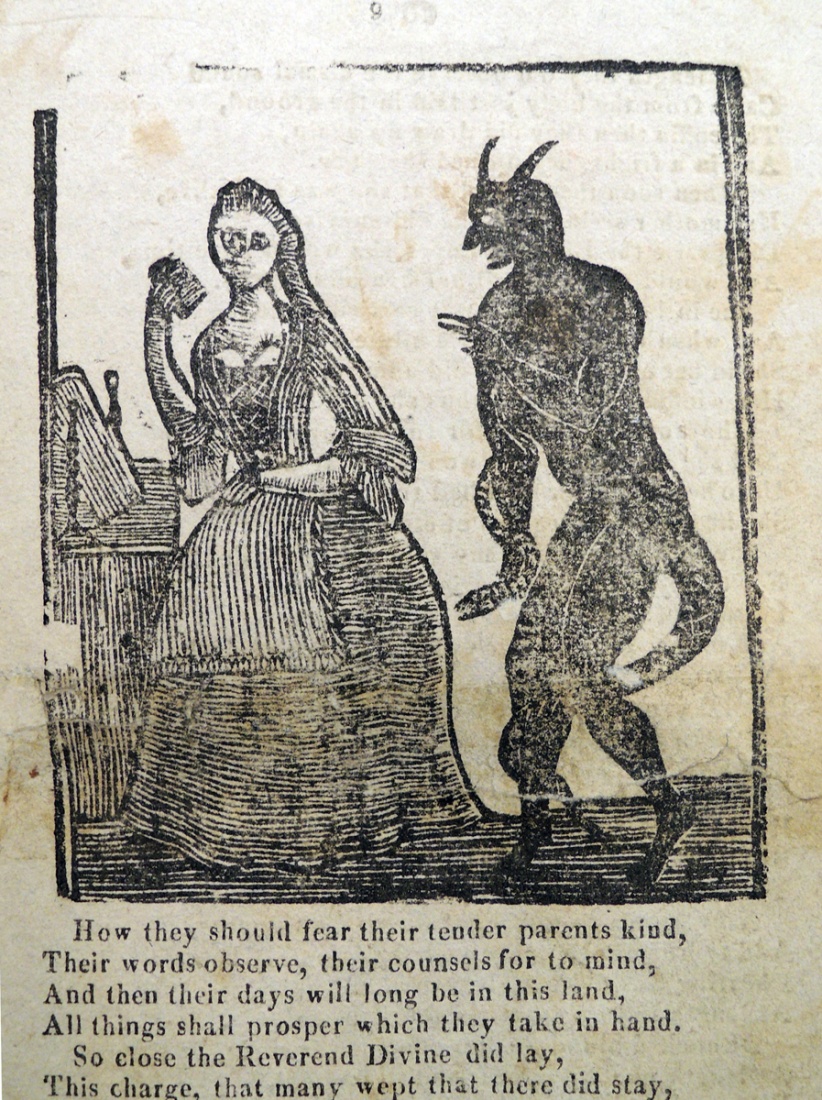
Was “The Prodigal Daughter” illustrated by Pompey Fleet?

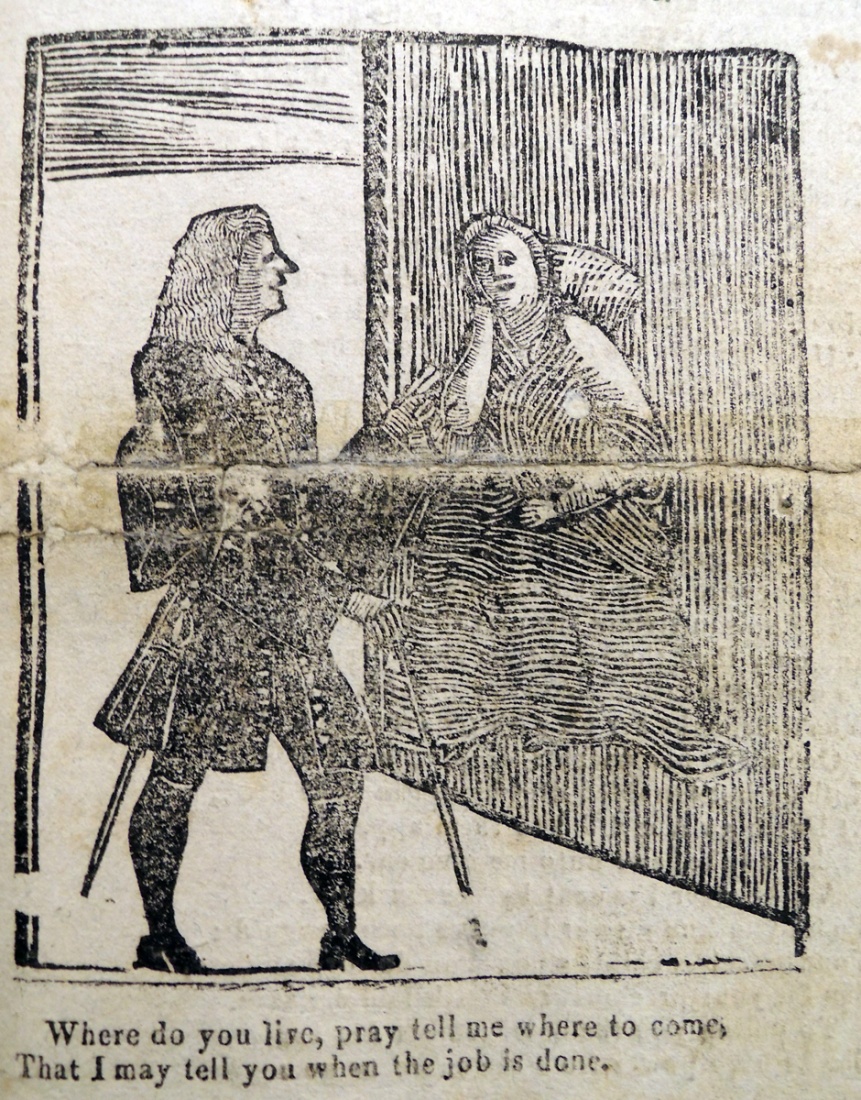
fleet prodigal1  fleet prodigal5  fleet prodigal7

Hamilton51(3) not later than 1810; Hamilton51(1) not later than 1769; Hamilton51(2) 1735-1769?

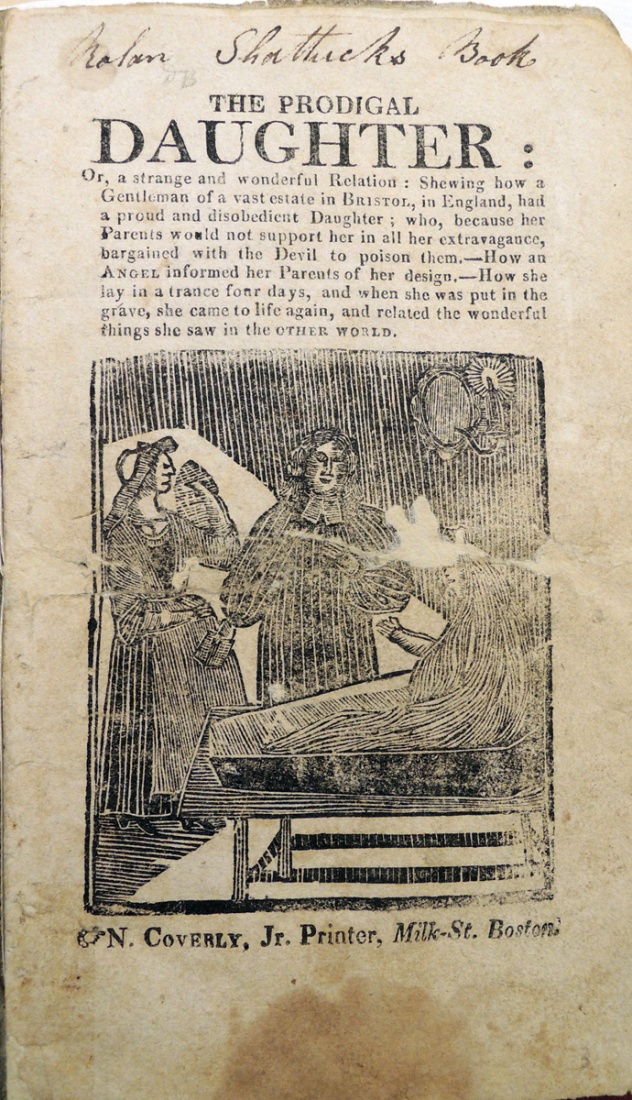
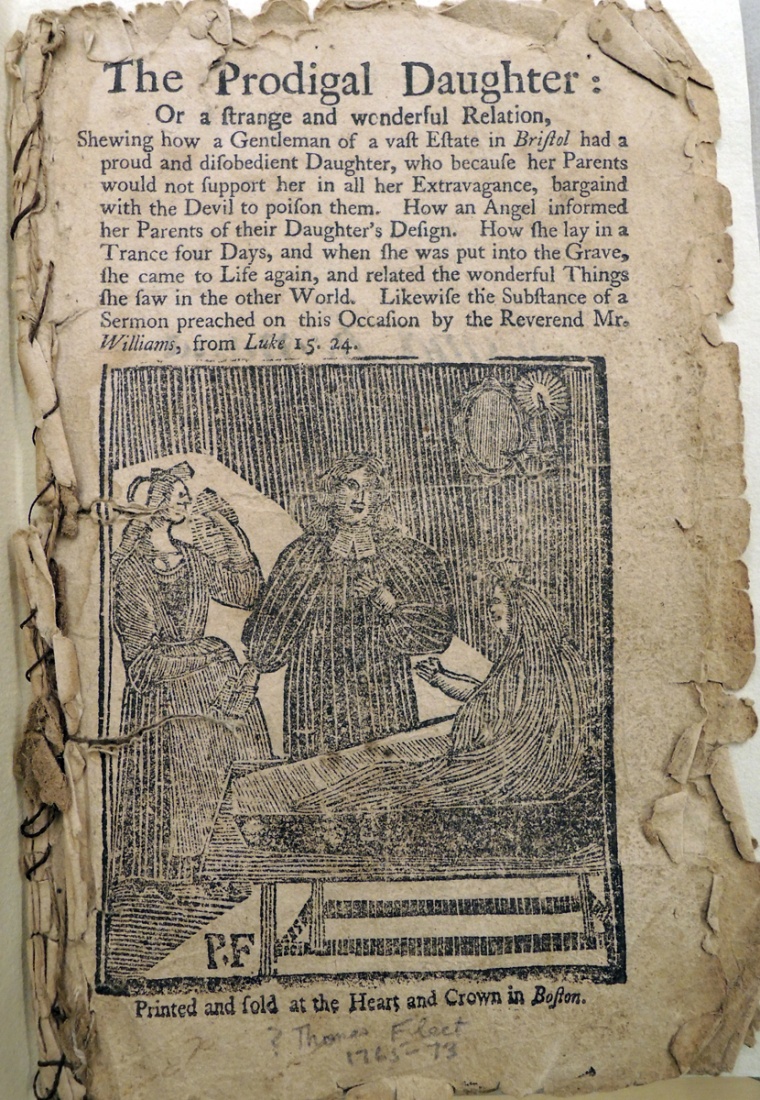
Princeton is fortunate to own three early American illustrated editions of The Prodigal Daughter, thanks to collector and donor Sinclair Hamilton. In the introduction to Early American Book Illustrators and Wood Engravers, Hamilton writes,

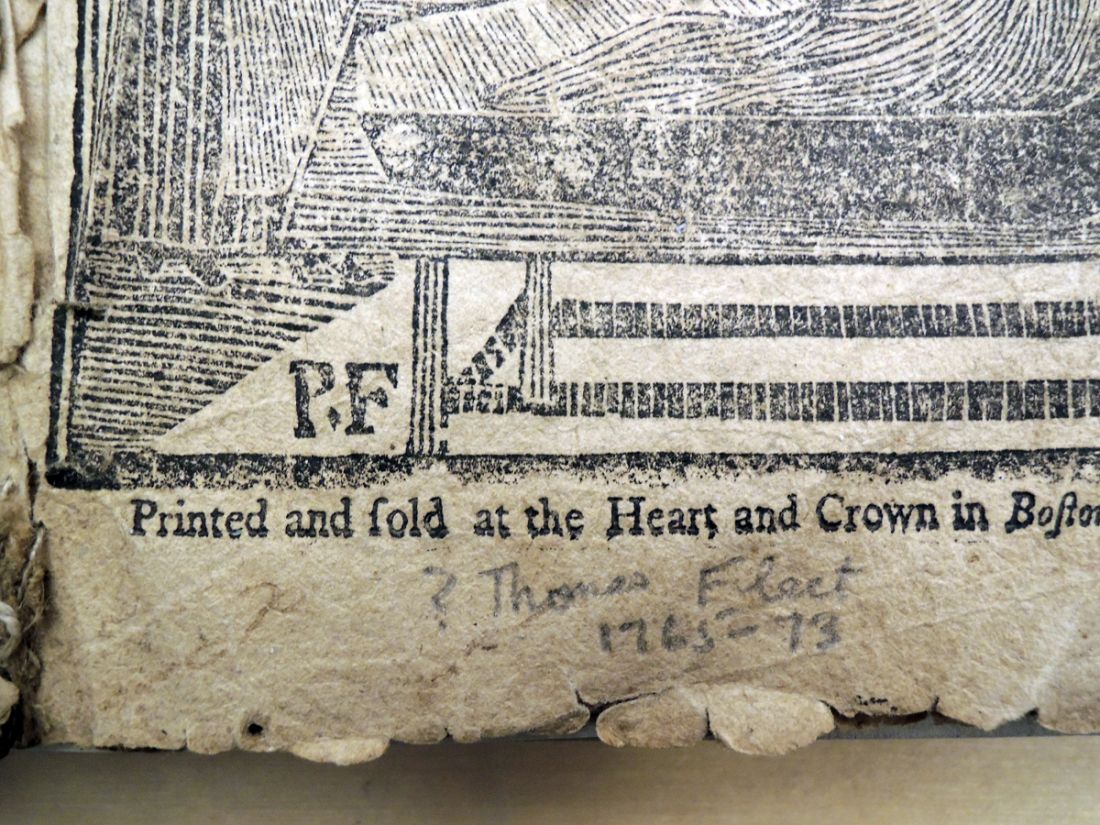
Thomas Fleet of Boston and, after him, his sons, Thomas Fleet, Jr. and John Fleet… owned several Negroes, one of whom was an ingenious man who cut on wooden blocks the pictures which Fleet published. Two sons of this ingenious Negro, named Pompey and Cesar, were also employed at the printing office. We find some editions of that well-known chapbook “The Prodigal Daughter” issued from the Heart and Crown certainly not later than 1769 with a woodcut bearing the initials “P.F.” and it is possible that this is the work of Pompey Fleet, or perhaps the work of that ingenious Negro himself, Pompey’s father, who may have borne a similar name.

fleet prodigal6


fleet prodigal5
The Prodigal Daughter; or a strange and wonderful Relation, Shewing how a Gentleman of a vast Estate in Bristol, had a proud and disobedient Daughter, who, because her Parents would not support her in all her Extravagance, bargained with the Devil to poison them. -How an Angel informed her parents of her Design.-How she lay in a trance four Days; and when she was put in the Grave, she came to Life again, and related the wonderful Things she saw in the other World. Likewise the Substance of a Sermon preach’d on this Occasion by the Rev. Mr. Williams, from Luke XV, 24. Sold at the Heart and Crown, in Cornhill, Boston. Graphic Arts Hamilton 51.1-3.
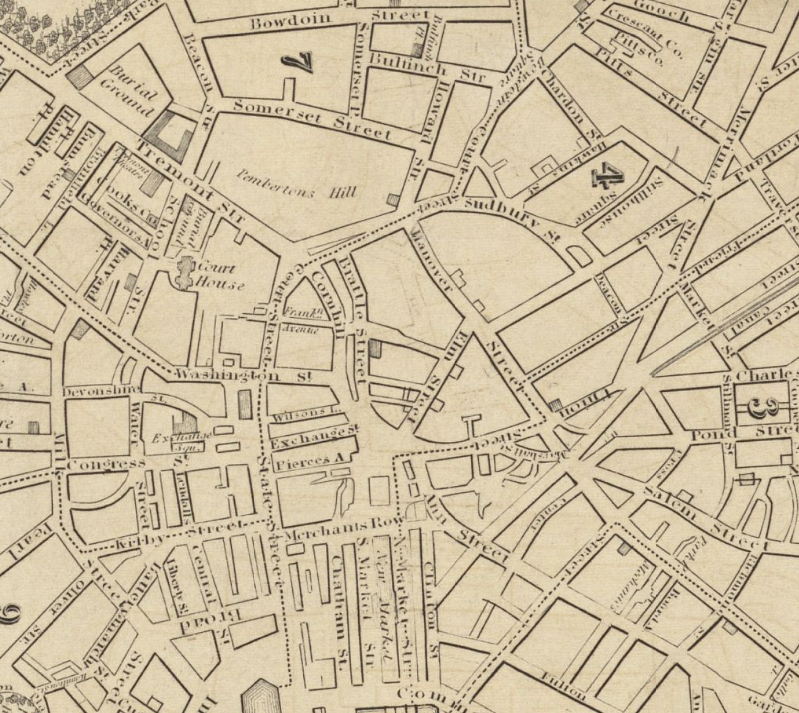
1832_ElmSt_map_Boston_Stimpson_BPL10944Thomas Fleet, Sr. had his printing and publishing house at the Heart and Crown, Cornhill, from 1731 to 1751 and thereafter Thomas Fleet, Jr. and John Fleet had their establishment at the Heart and Crown from 1757 to 1776. Cornhill ran from Water Street to Dock Square, laid out in 1708 as part of a winding road between Roxbury and Boston.

Evans lists an edition of The Prodigal Daughter with cuts, printed in Boston by T. Fleet in 1736, but locates no copy. Evans lists no other editions prior to 1770.

fleet prodigal3

fleet prodigal2


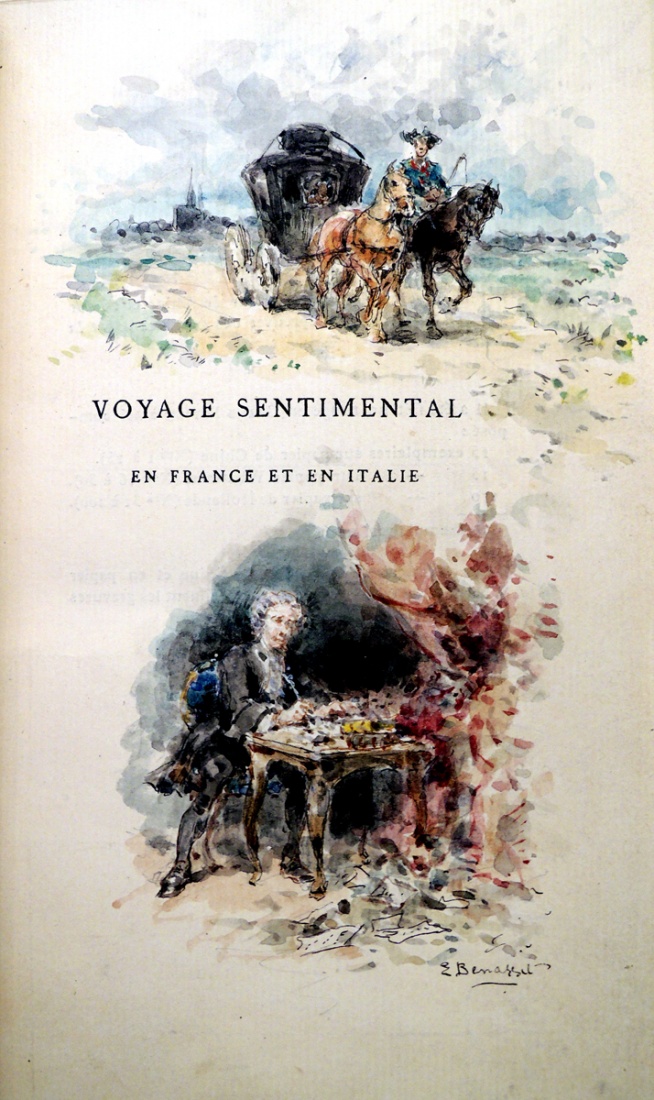
Picturing a Sentimental Journey

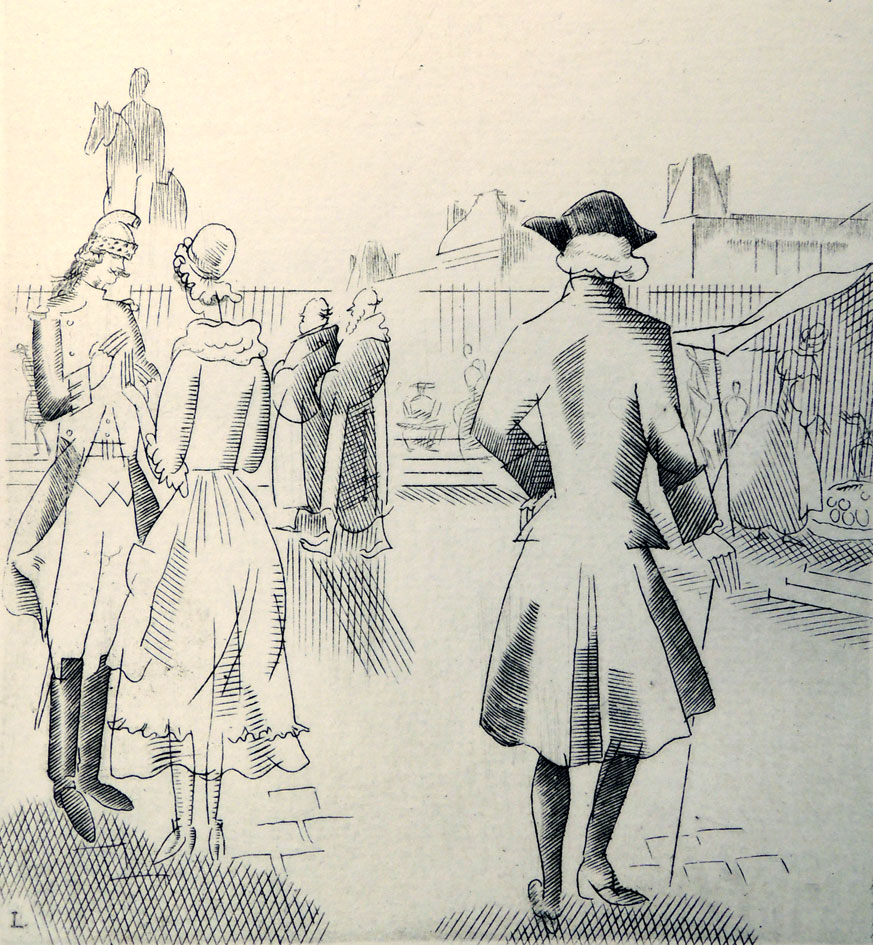
sterne-sentimental8Artist: Jean Emile Laboureur (1877-1943). Laurence Sterne (1713-1768), A Sentimental Journey through France and Italy (Waltham Saint Lawrence, Reading, Berkshire: Golden Cockerel Press, 1928). Copy 392 of 500. Graphic Arts Collection (GAX) 2007-0497N

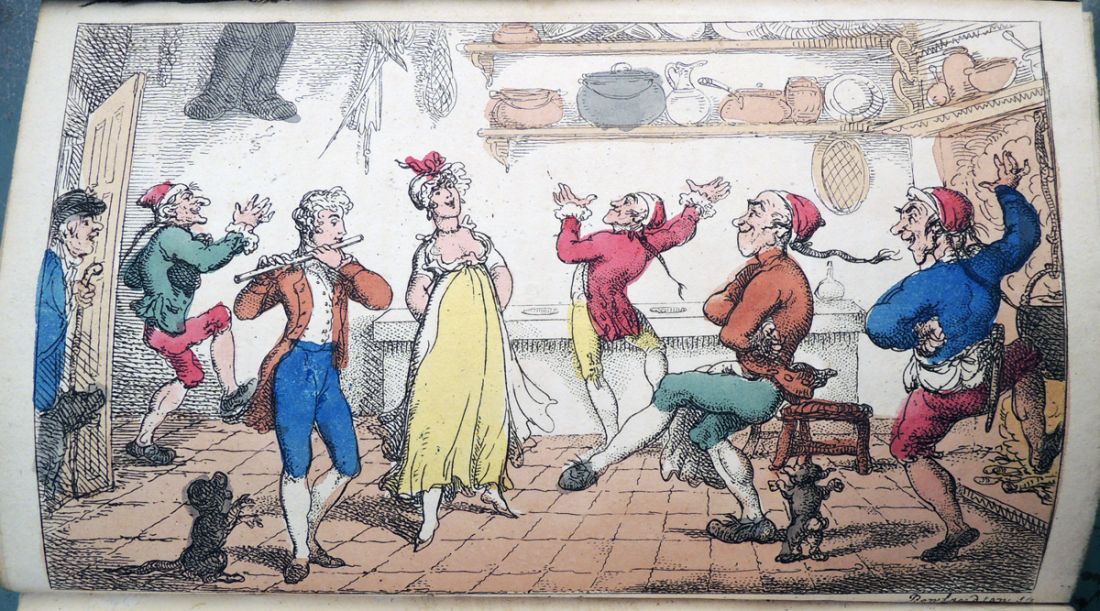
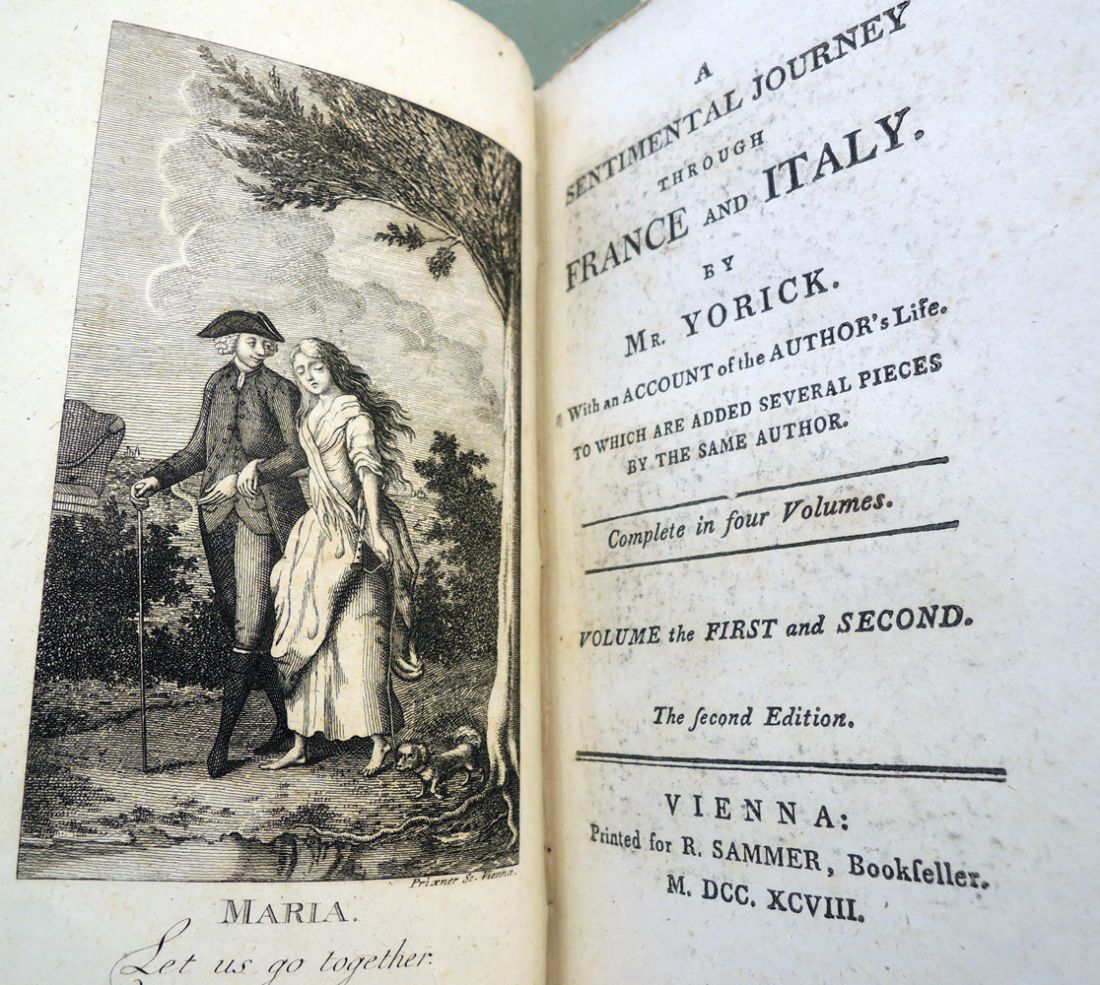
When Sentimental Journey was first published, there were no pictures. The first Dublin edition included decoration. Since then, many artists have been invited to embellish the novel. Here are a few examples.

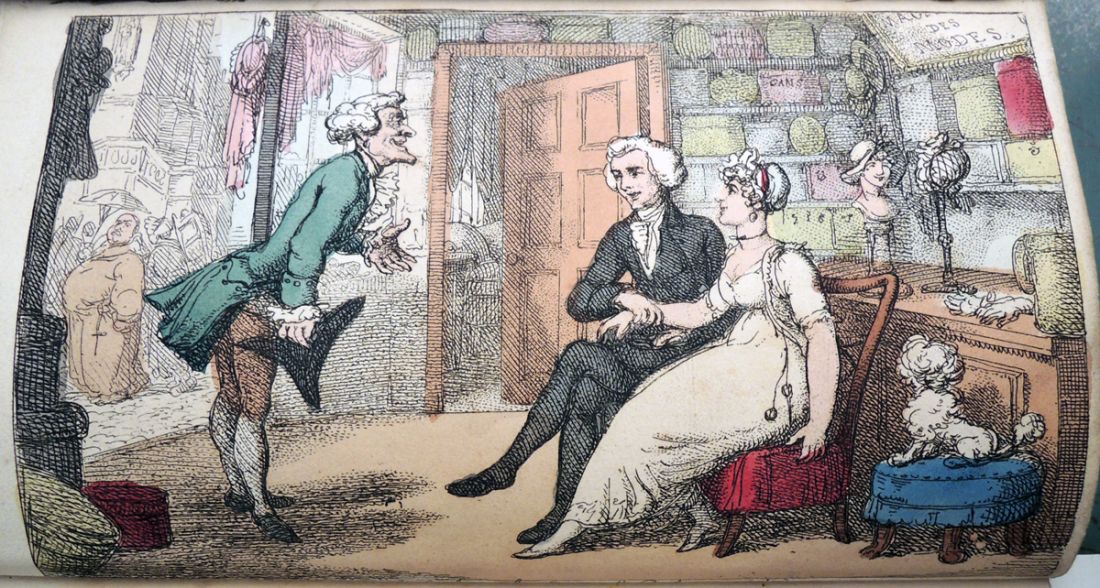
sterne sentimental 1Artist: Thomas Rowlandson (1756-1827). Laurence Sterne (1713-1768), A Sentimental Journey through France and Italy / by Mr. Yorick. A new ed. embellished with two caricature prints, by Rowlandson (London: T. Tegg, 1809). Graphic Arts Collection (GA) Rowlandson 1809.3
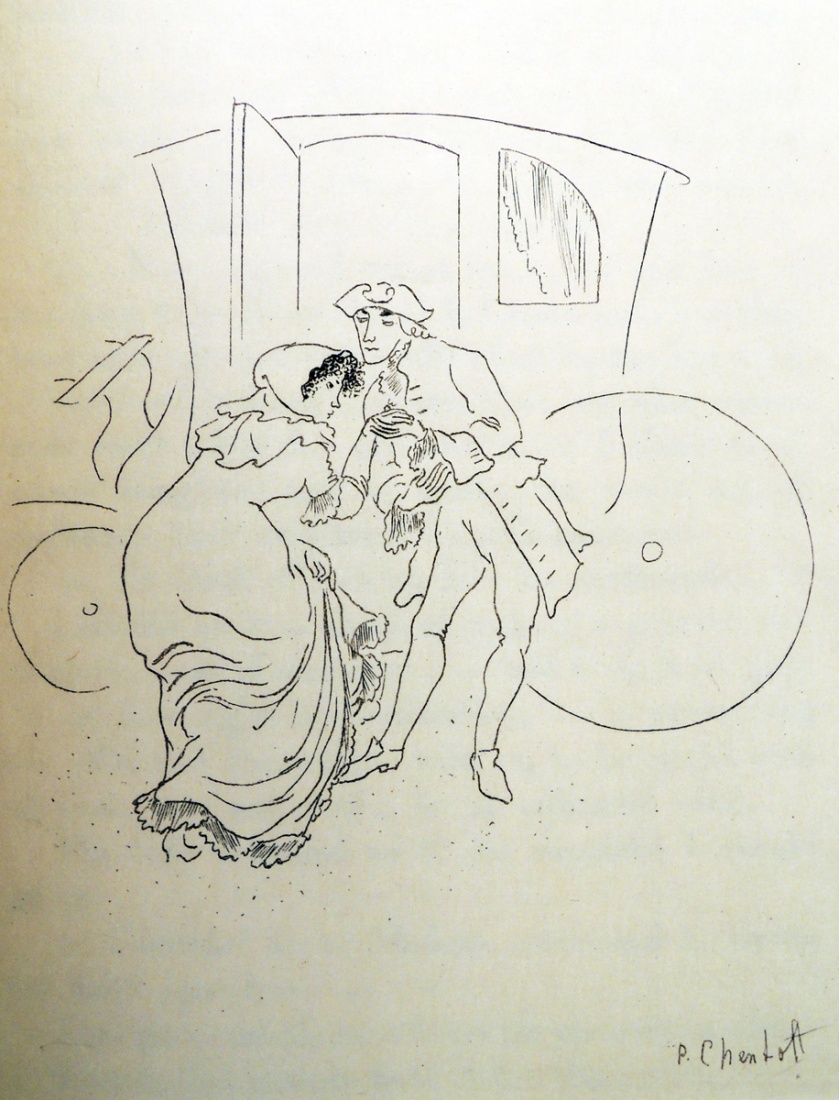
 

sterne sentimental 5Artist: Polia Chentoff (1896-1933). Laurence Sterne (1713-1768), A Sentimental Journey through France and Italy (Paris: Black Sun Press/Editions Narcisse; New York: Sold at Bookshop of Harry F. Marks, 1929). “15 special copies on Japan paper each copy supplemented by one of the fifteen original drawings and signed by the artist”–Colophon. Rare Books (Ex) 3943.7.385.1929


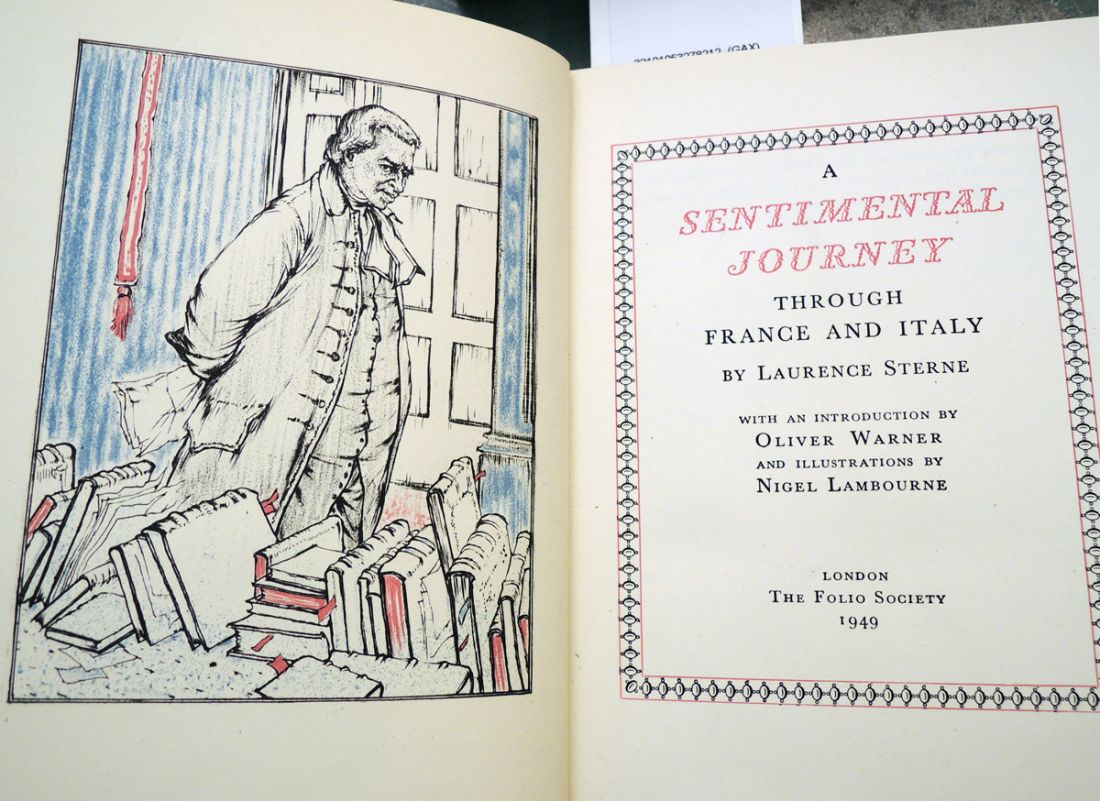
sterne sentimental 6Artist: Nigel Lambourne (1919-19??). Laurence Sterne (1713-1768), A Sentimental Journey through France and Italy. With an introduction by Oliver Warner (London: Folio Society, 1949). Graphic Arts Collection (GAX) 2007-0269N

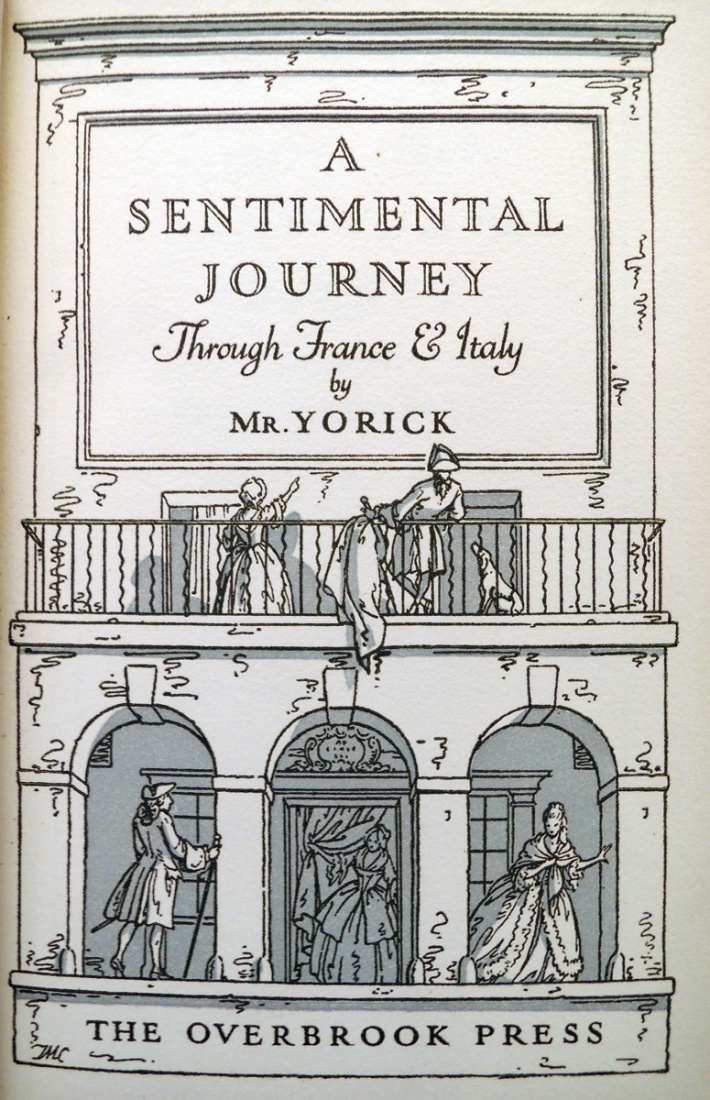
sterne sentimental 8Artist: T.M. Cleland (1880-1964). Laurence Sterne (1713-1768), A Sentimental Journey through France and Italy (Stamford [Conn.]: Overbrook Press, 1936). “175 copies have been printed on dampened hand-made paper.”–Colophon. Graphic Arts Collection (GAX) PR3714 .S468 1936

sterne sentimental 2Artist: Thomas Rowlandson (1756-1827). Laurence Sterne (1713-1768), A Sentimental Journey through France and Italy / by Mr. Yorick. A new ed. embellished with two caricature prints (London: T. Tegg, 1809). Graphic Arts Collection (GA) Rowlandson 1809.3
sterne sentimental 3Artist: Unidentified. Laurence Sterne (1713-1768), A Sentimental Journey through France and Italy (Vienna: printed for Sammer, 1798). Rare Books (Ex) 3943.7.385.125

sterne sentimental 4Artist: Émile Benassit (1833-1902). Laurence Sterne (1713-1768), Voyage sentimental en France et en Italie, traduction nouvelle par Alfred Hédouin (Paris: Librairie des bibliophiles, 1875). Graphic Arts Collection (GAX) 2011-0811N

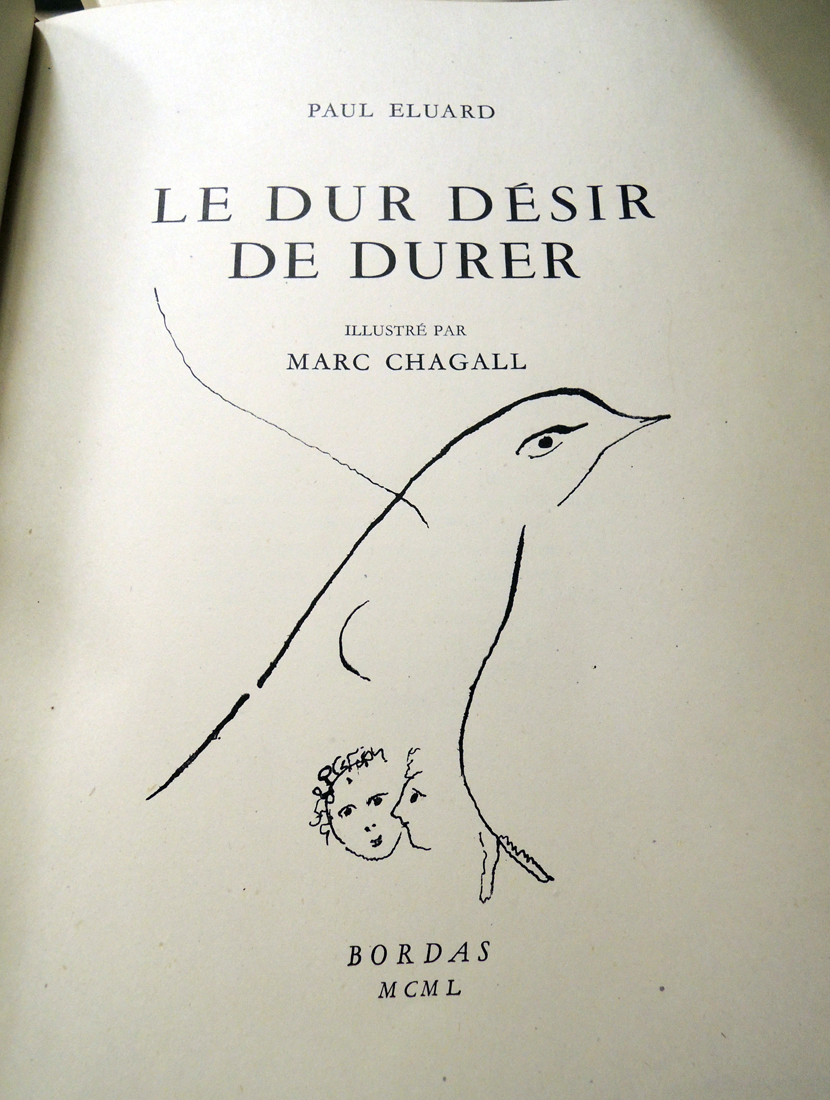
Le dur désir de durer

eluard chagall1

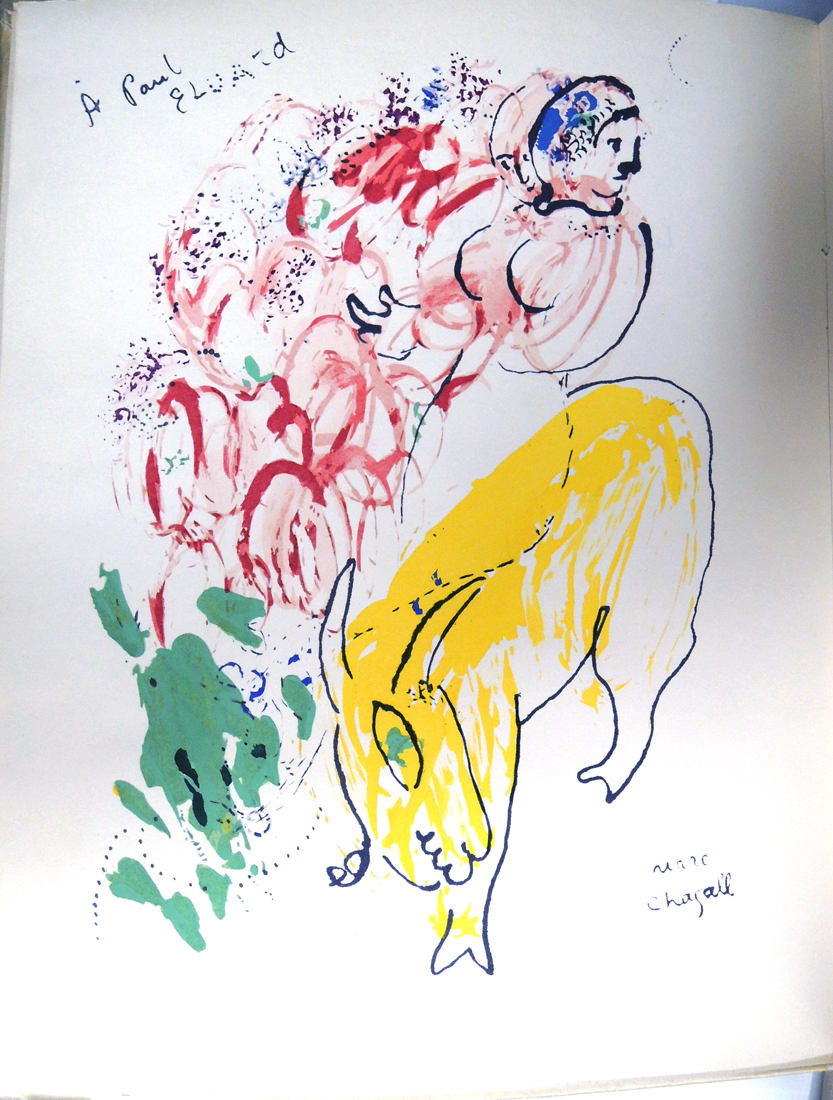
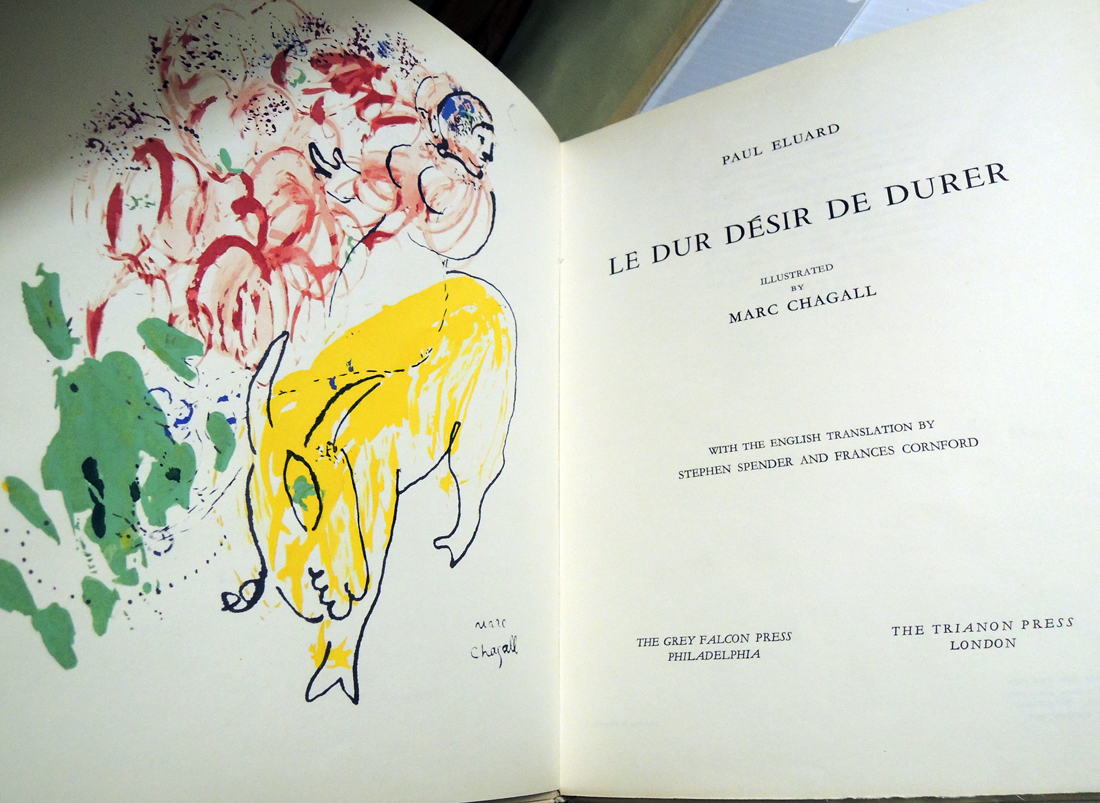
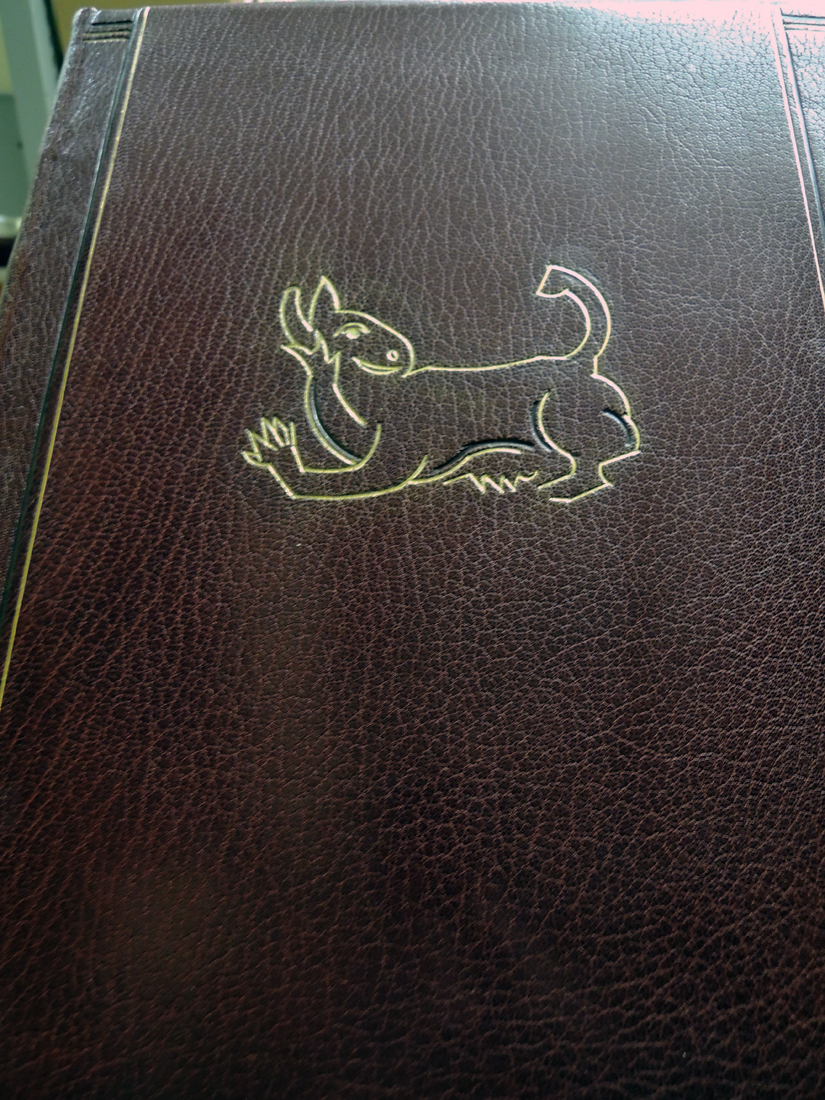
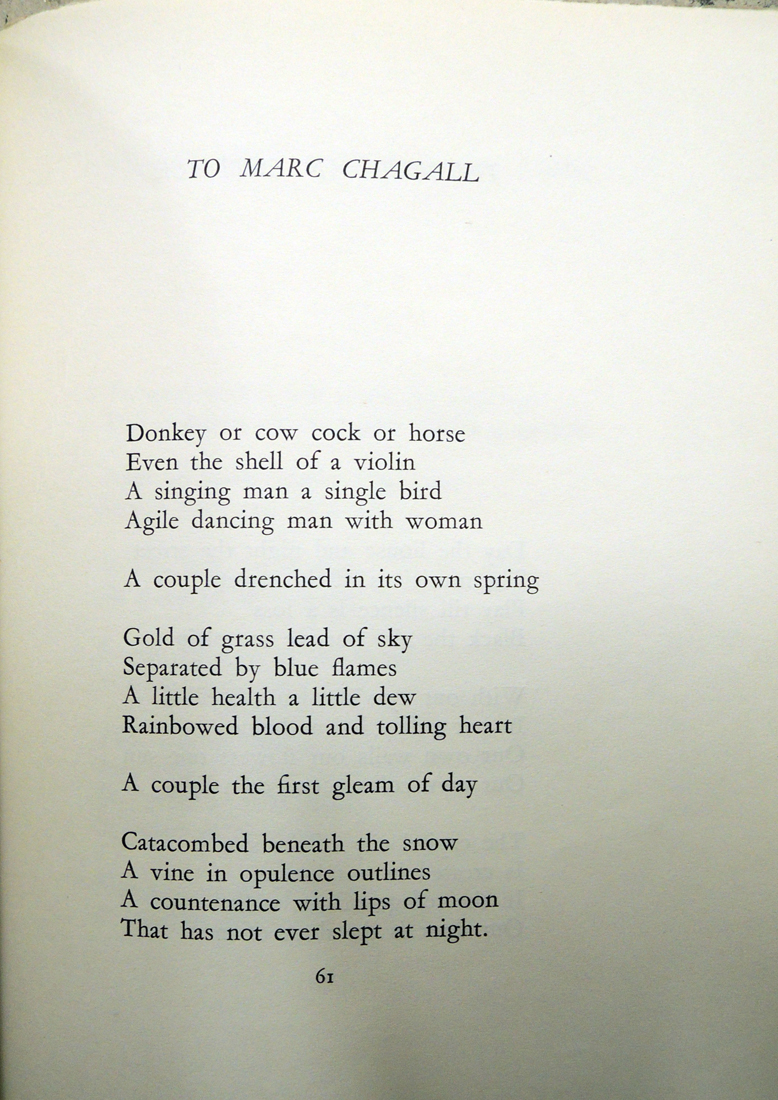
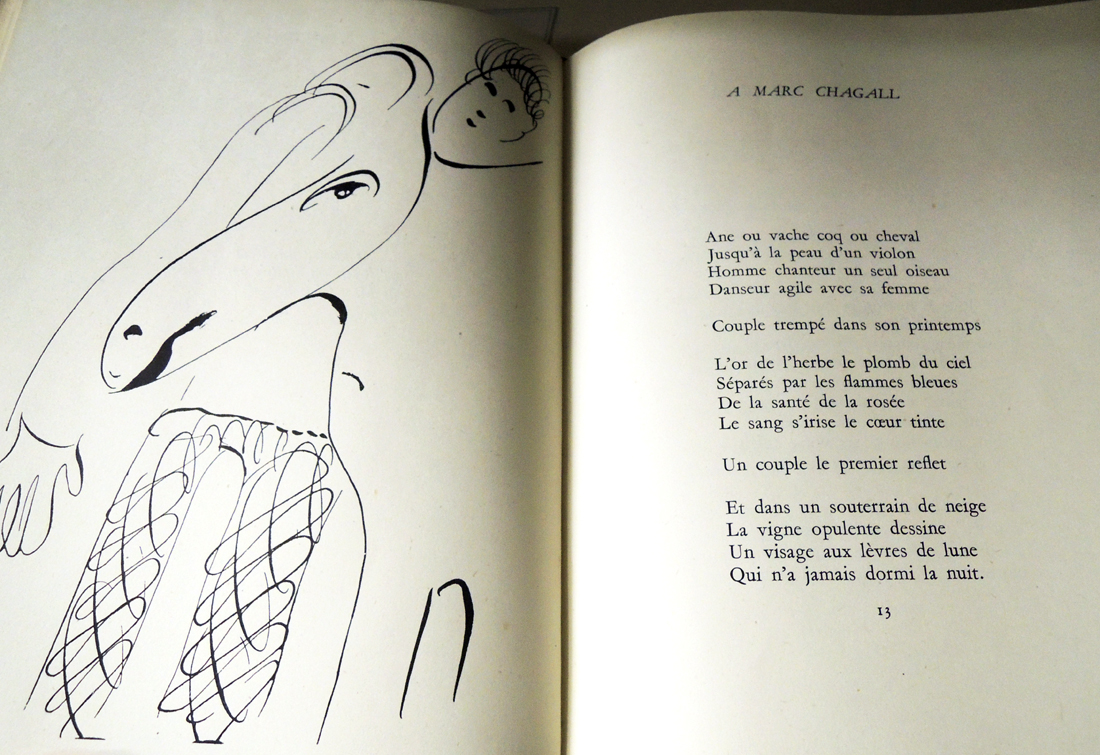
The 1946 Paris partnership of Arnold Fawcus (1917-1979) and Pierre Bordas (1913-2000) led to only one Arnold-Bordas Edition, a livre d’artiste pairing Paul Eluard (1895-1952) poetry with drawings by Marc Chagall (1887-1985) entitled Le dur désir de durer (The Hard Desire to Endure). When Bordas left the following year, Fawcus established the Trianon Press in London and to increase distribution, several American companies including Grey Falcon Press in Philadelphia. By 1950, a second larger edition of Le dur désir de durer was released with an English translation.

eluard chagall2
eluard chagall5        eluard chagall7

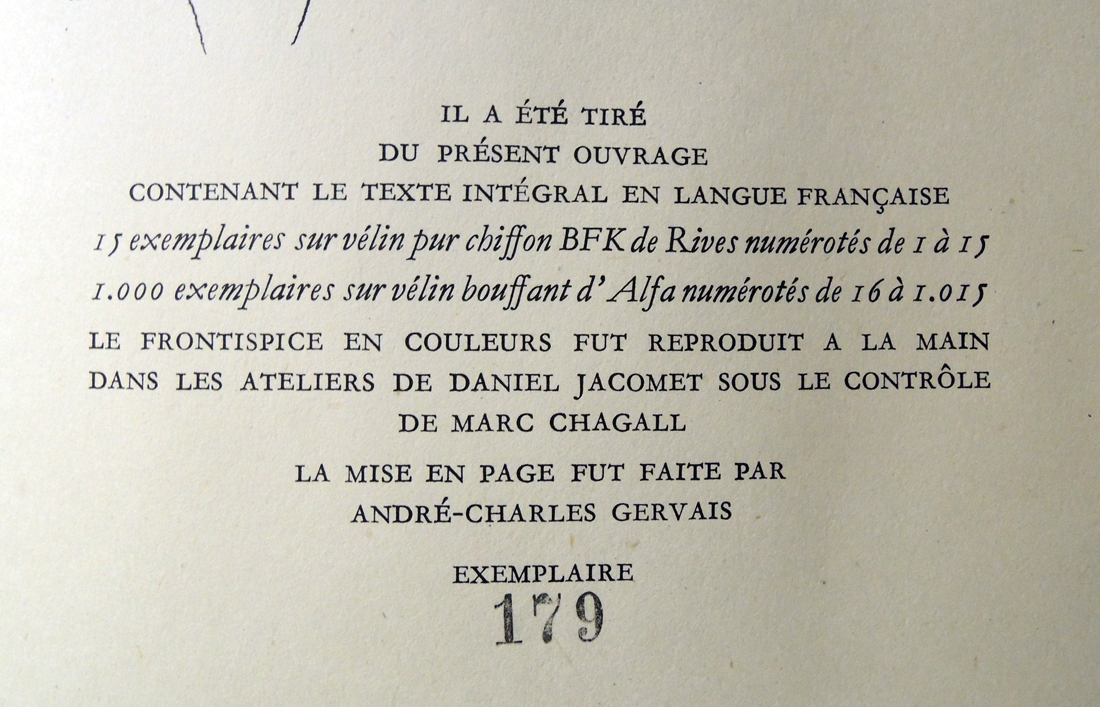
Both editions include one pochoir (stencil) colored plate created at the studio of Daniel Jacomet (1894-1966), under Chagall’s supervision. Jacomet worked primarily on fine art reproductions for museums, preparing a collotype of the original painting or watercolor, which was then hand colored through a series of stencils to replicate the original. Editions were usually 300-500 and Jacomet had a large studio of women who did the cutting and coloring once he designed the stencils. The studio continues to operate under Jacomet’s son Bruno.

To get both Chagall prints, one needs to have both editions of the book.

eluard chagall4

For more information, read Sebastian Carter “Arnold Fawcus and the Trianon Press,” in Matrix 3 (GAX Oversize Z119 .M38q) and Emily Anderson, The Pursuit of Happy Results (Boston: David R. Godine, Published for members of Hoc Volo, [1991]) (Graphic Arts Collection (GA) NC139.S635 A54 1991)


eluard chagall10    eluard chagall9 eluard chagall8

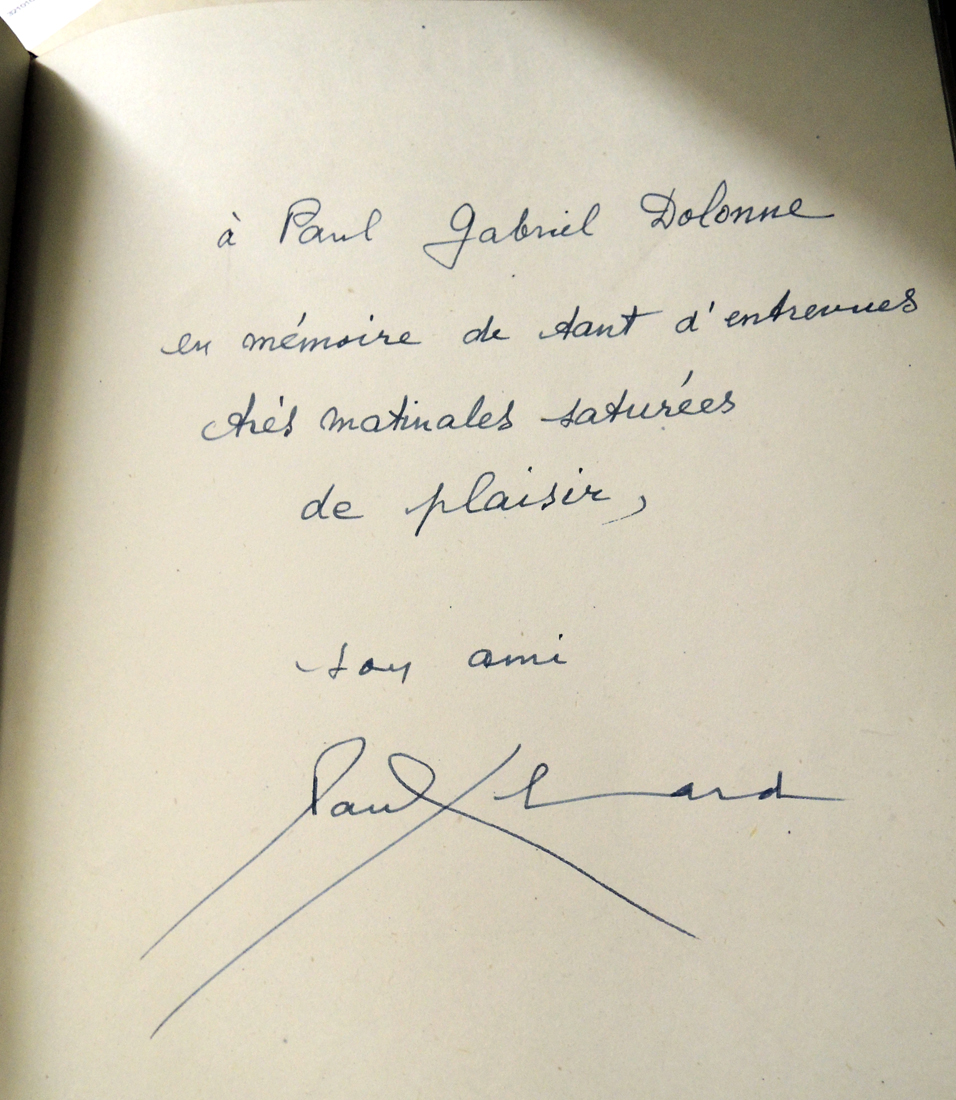
Paul Éluard (1895-1952), Le dur désir de durer. Illustré par Marc Chagall ([Paris] Bordas, 1946, 1950). “Il a été tiré du présent ouvrage … 1.000 exemplaies sur vélin bouffant d’Alfa numérotés de 16 à 1.015 … Le frontispice en couleurs fut reproduit à la main dans les ateliers de Daniel Jacomet sous le contrôle de Marc Chagall”–P. [9]. Copy 179 or 1000. Inscribed by the author to Paul Gabriel Dolonne. Full red crushed morocco with gilt and blind tooling and block-printed endpapers, by Christine Hamilton.  Graphic Arts Collection (GAX) Oversize PQ2609.L75 D78q

Paul Eluard (1895-1952), Le dur désir de durer; illustrated by Marc Chagall ; with the English translation by Stephen Spender and Frances Cornford (Philadelphia: Grey Falcon Press; London: Trianon Press, 1950). “750 copies, numbered 1 to 750, reserved for the Trianon Press … 750 copies, numbered 751 to 1500, reserved for the Grey Falcon Press … The color frontispieces … were reproduced by hand in the workshops of Daniel Jacomet, Paris, under the supervision of Marc Chagall.” Copy 420 or 1500. Graphic Arts Collection (GAX) Oversize PQ2609.L75 D7813q

eluard chagall6