Watercolor Lessons 1811


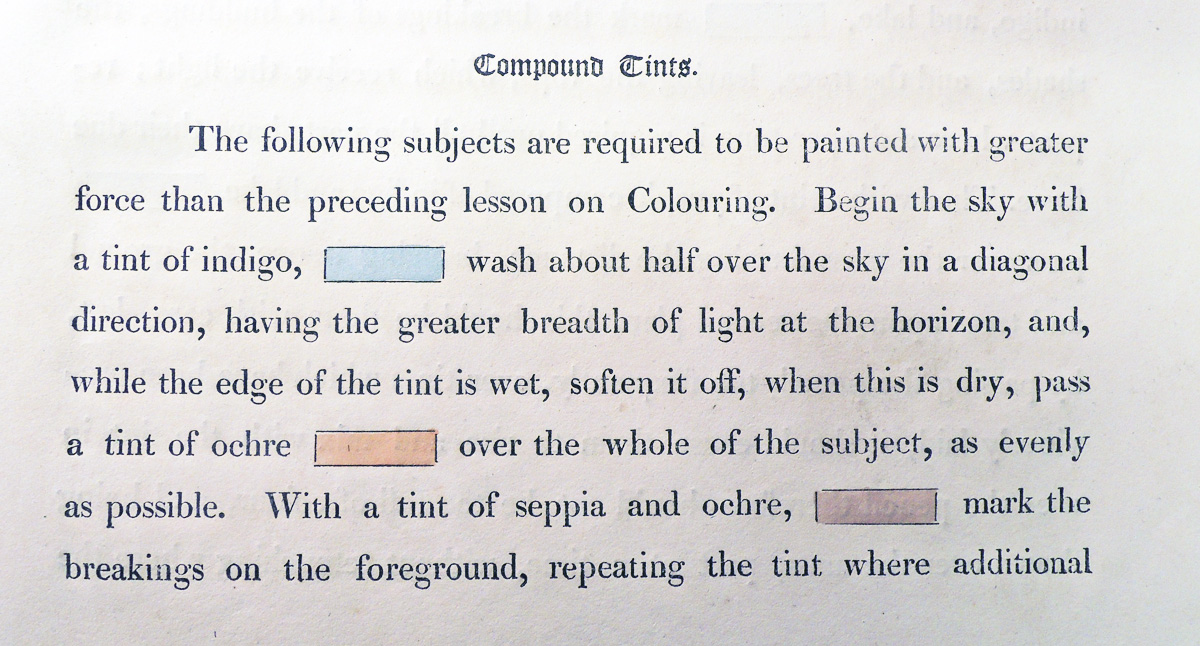
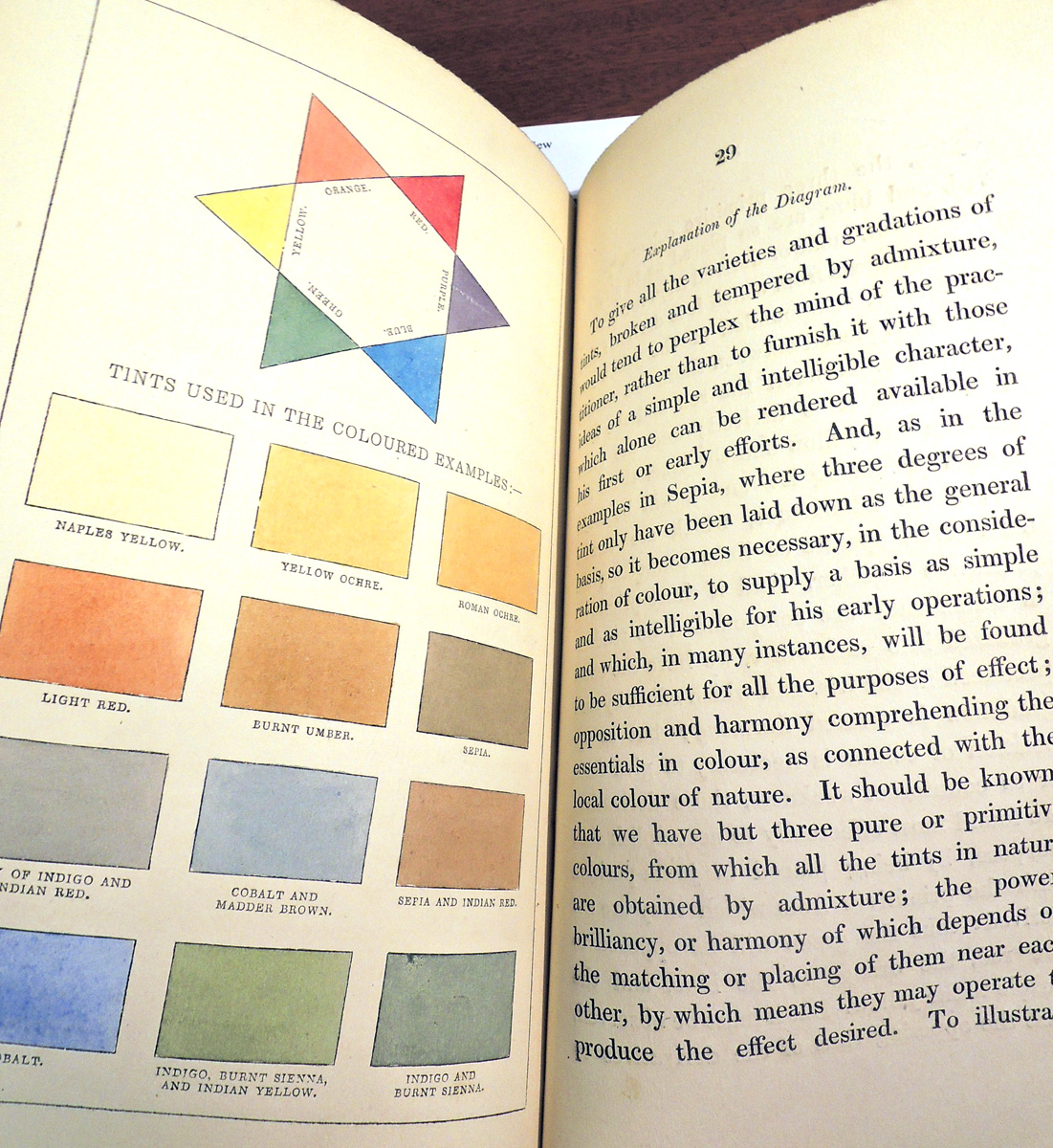
The Graphic Arts Collection recently acquired two drawing and coloring manuals, including one of the first English manuals to include actual color samples, only predated by Mary Gartside’s Essay on Light and Shade (1805) Ex 2013-0074Q.

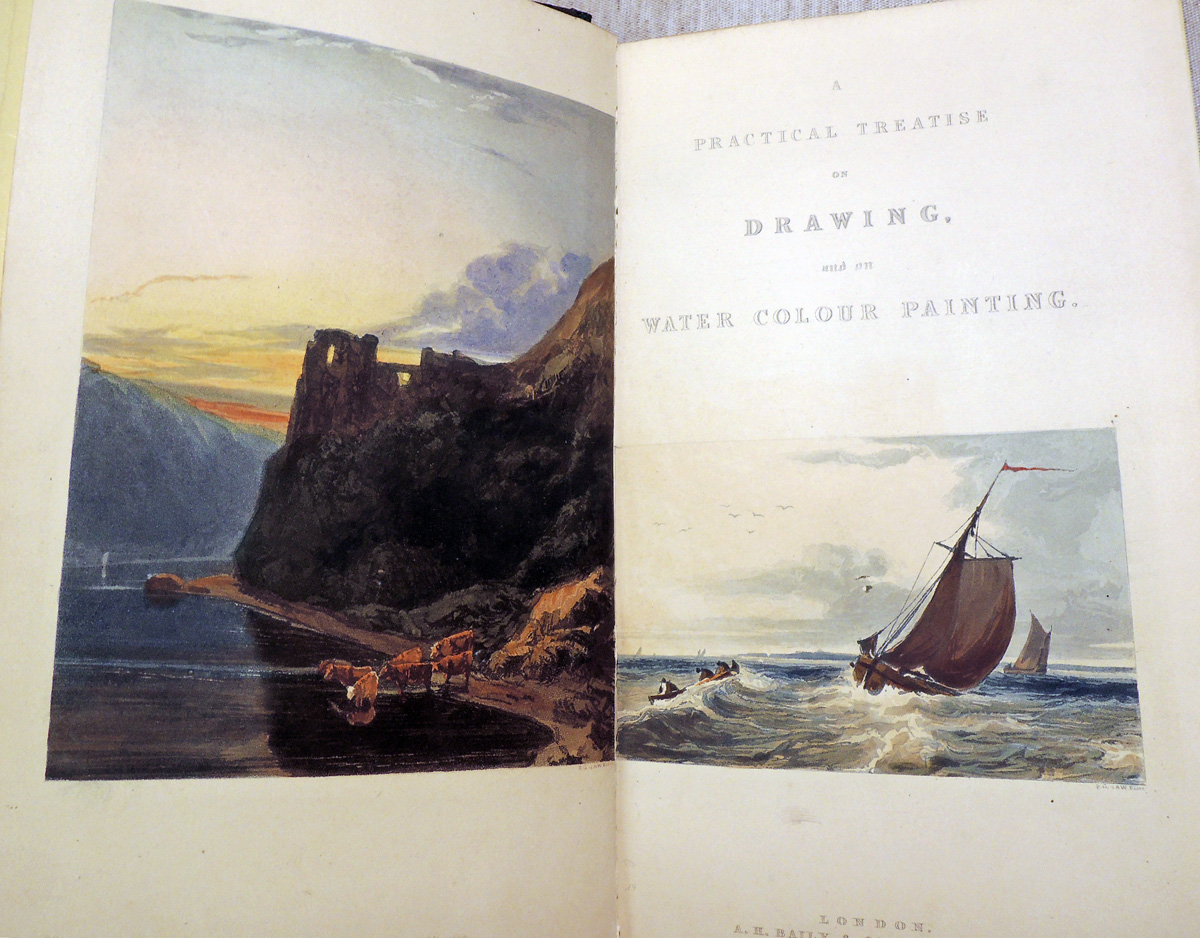
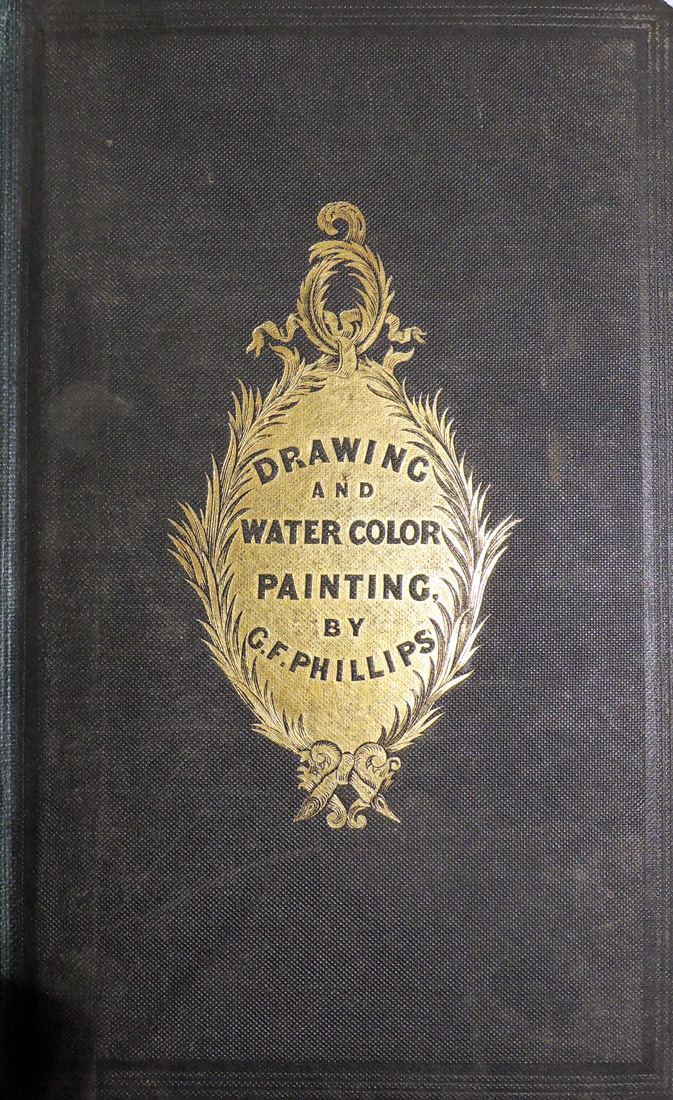
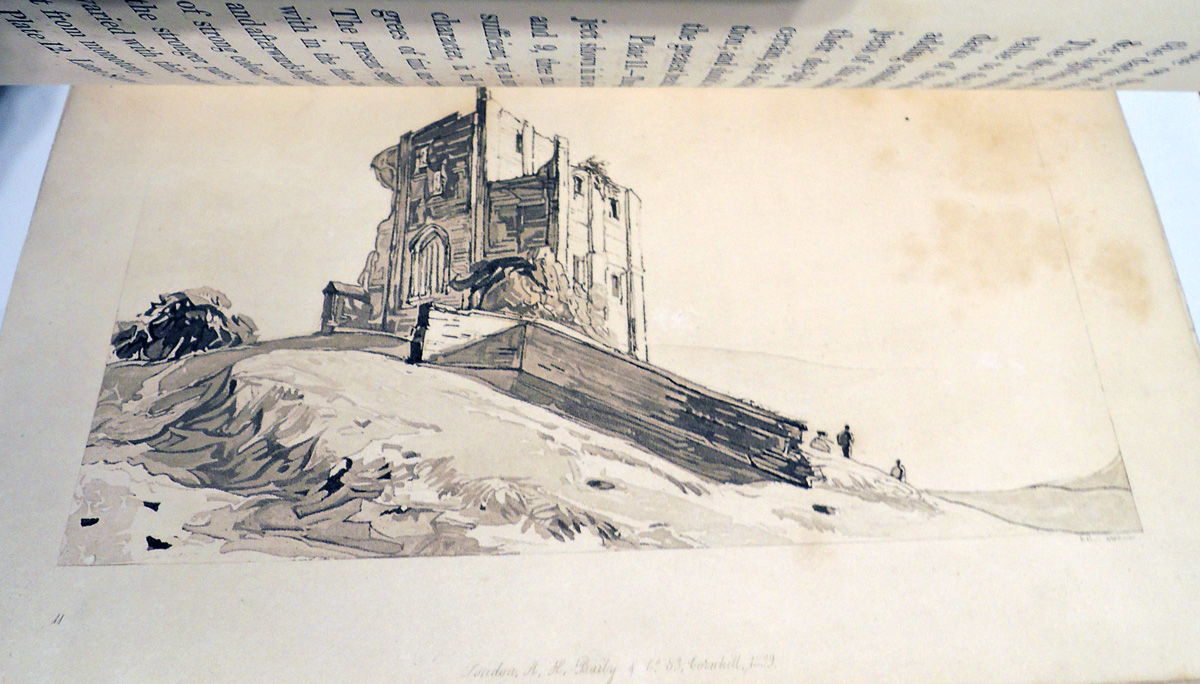
Giles Firmin Phillips, A Practical Treatise on Drawing and on Painting in Water Colours, with Illustrative Examples in Pencil, in Sepia, and in Water Colours, Leading the Artist Progressively, from the First Rudiments, to the Completion of Works of Art in Their Finished State; Comprehending the Treatment of Coast Scenery, River Scenery, and General Landscape (London: A. & H. Bailey and Co., 1839). Graphic Arts Collection GAX 2017- in process

Engraved title with hand colored aquatint vignette, 14 soft-ground etchings with monochrome aquatint added, (one view in three progressive stages), 5 colored aquatints, and a color chart. Abbey Life 166.

David Cox, A Series of Progressive Lessons Intended to Elucidate the Art of Painting in Water Colours. (London: T. Clay, 1811). Graphic Arts Collection GAX 2017- in process

Illustrated with 13 plates (2 soft-ground etchings and 11 aquatints including 6 with hand coloring), and 8 color squares in the text.


Live Dog / Evil God

Born in Minnesota, Fritz Scholder (1937-2005) moved with his family to Sacramento, California, where he began studying painting with Wayne Thiebaud. Although Scholder was one-quarter Luseino, a California Mission tribe, he grew up outside the native American community and only later began to explore this cultural heritage, bringing to it a unique perspective.

In 1970, Tamarind Institute invited Scholder to Albuquerque to create a suite of lithographs he called, Indians Forever. From that time on, Scholder would be a major influence for his generation of native American artists.

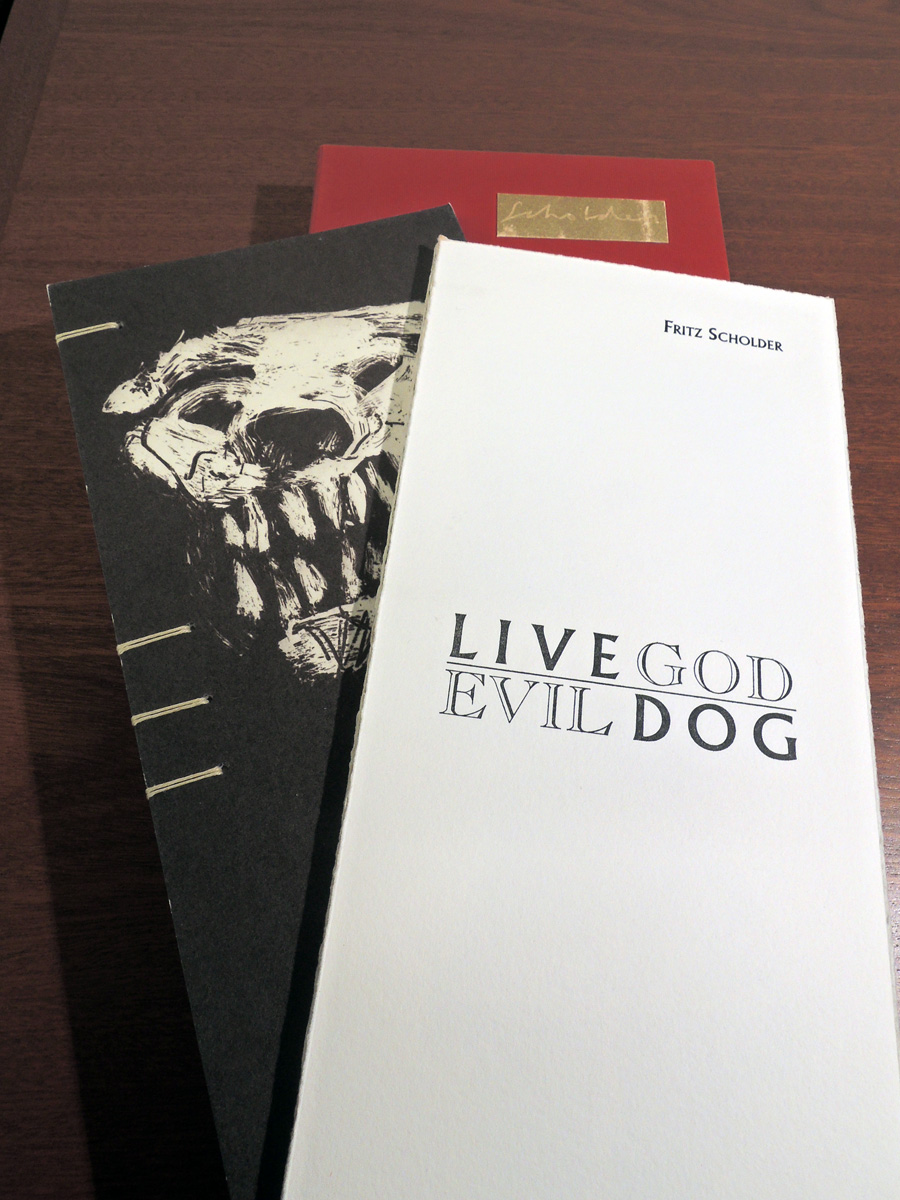
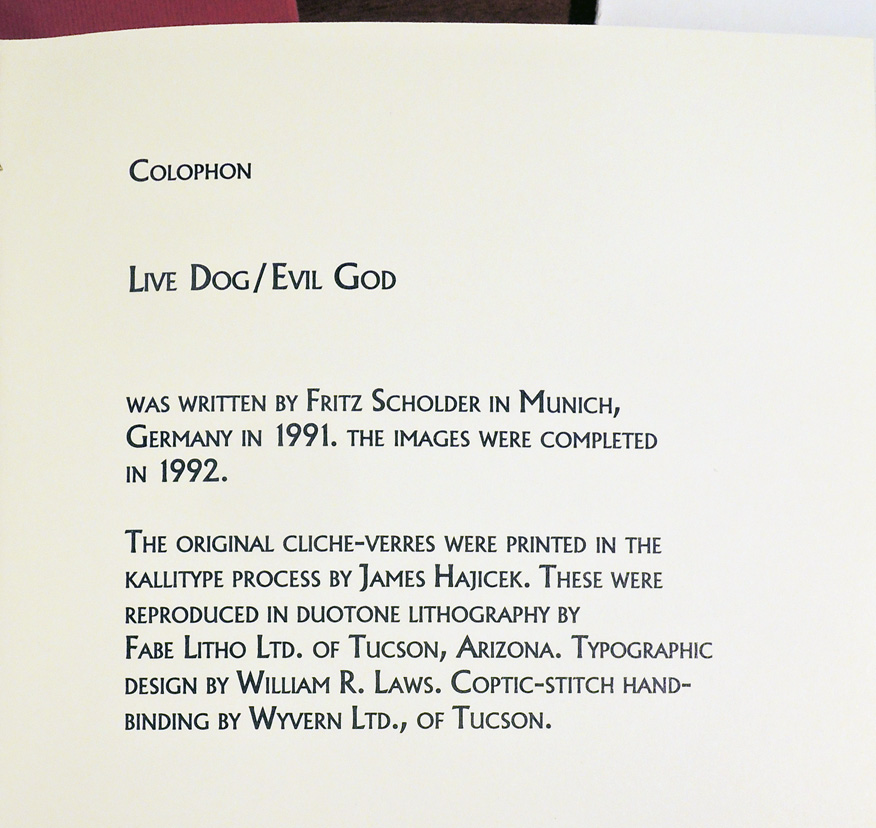
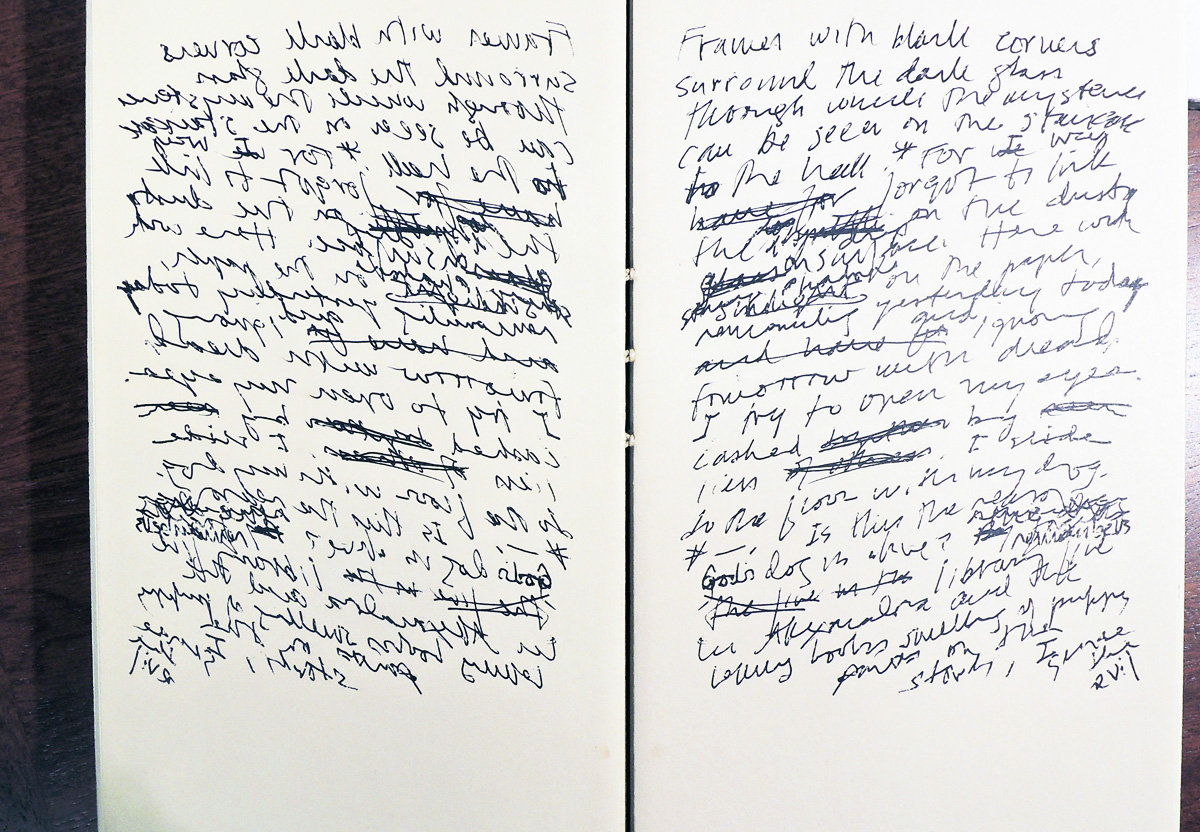
Afternoon Nap was published in 1991, the first in a series of book projects by Nazraeli Press, Munich, followed in 1992 with Live Dog / Evil God in a limited edition of 50 copies. Nazraeli was founded in 1989 by Chris Pichler, specializing in books of photography. Scholder created ten cliche-verres or glass plate negatives for the book that were printed as kallitypes by James Hajicek. These were reproduced in duotone lithograph by Fabe Litho in Tucson, Arizona.

Pichler also published Scholder’s 1993 exhibition catalogue with an essay by Edward Lucie-Smith for the Riva Yares Gallery (SA ND237.S31 L824 1993). http://www.smithsonianmag.com/arts-culture/fritz-scholder-native-american-artist-art-world-180957655/ This review of Scholder’s 2015 exhibition at the Denver Art Museum brings the artist’s work up to date.

Fritz Scholder (1937-2005), Live Dog / Evil God (Munich and Tucson: Nazraeli Press, 1992). Copy 44 of 50. Includes a suite of ten original prints. Graphic Arts Collection GAX 2017- in process

In the Fabled Fragrant East


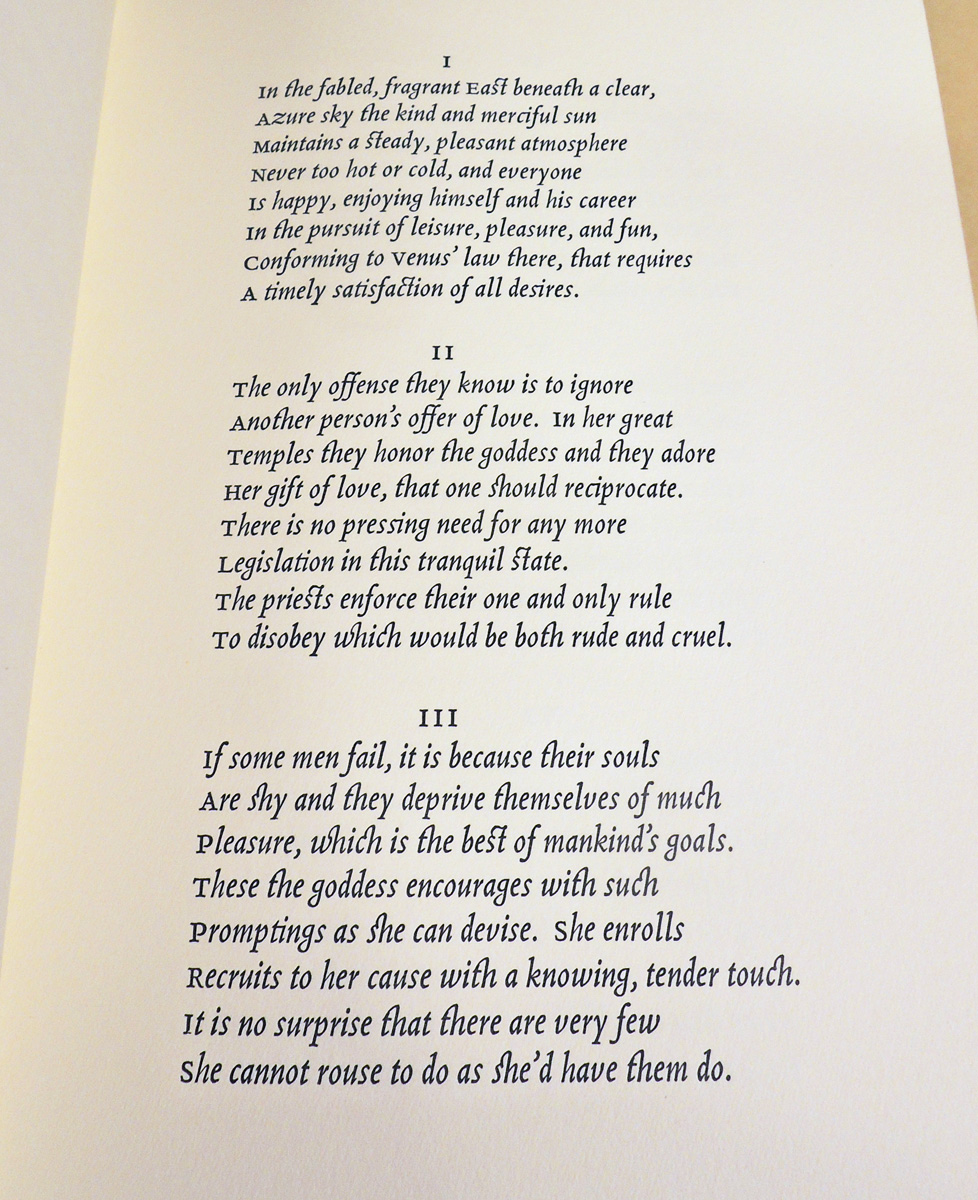
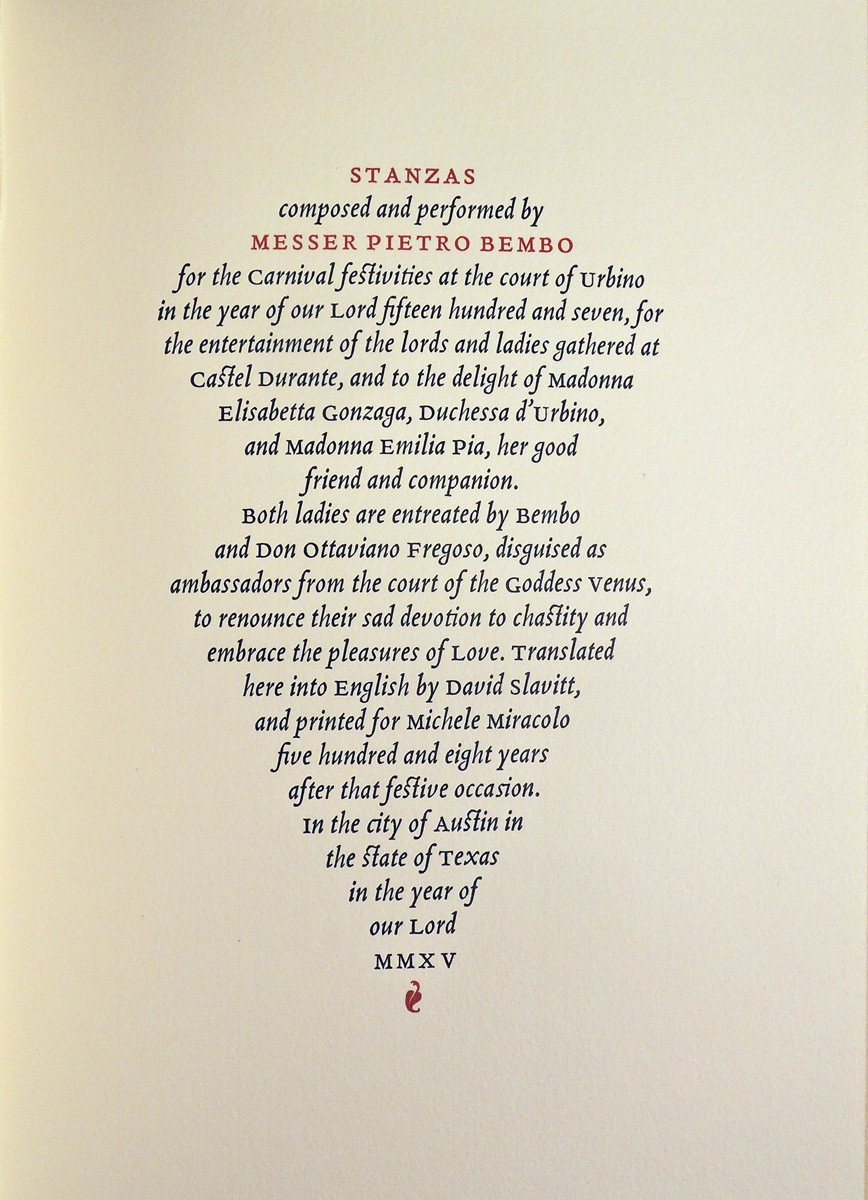
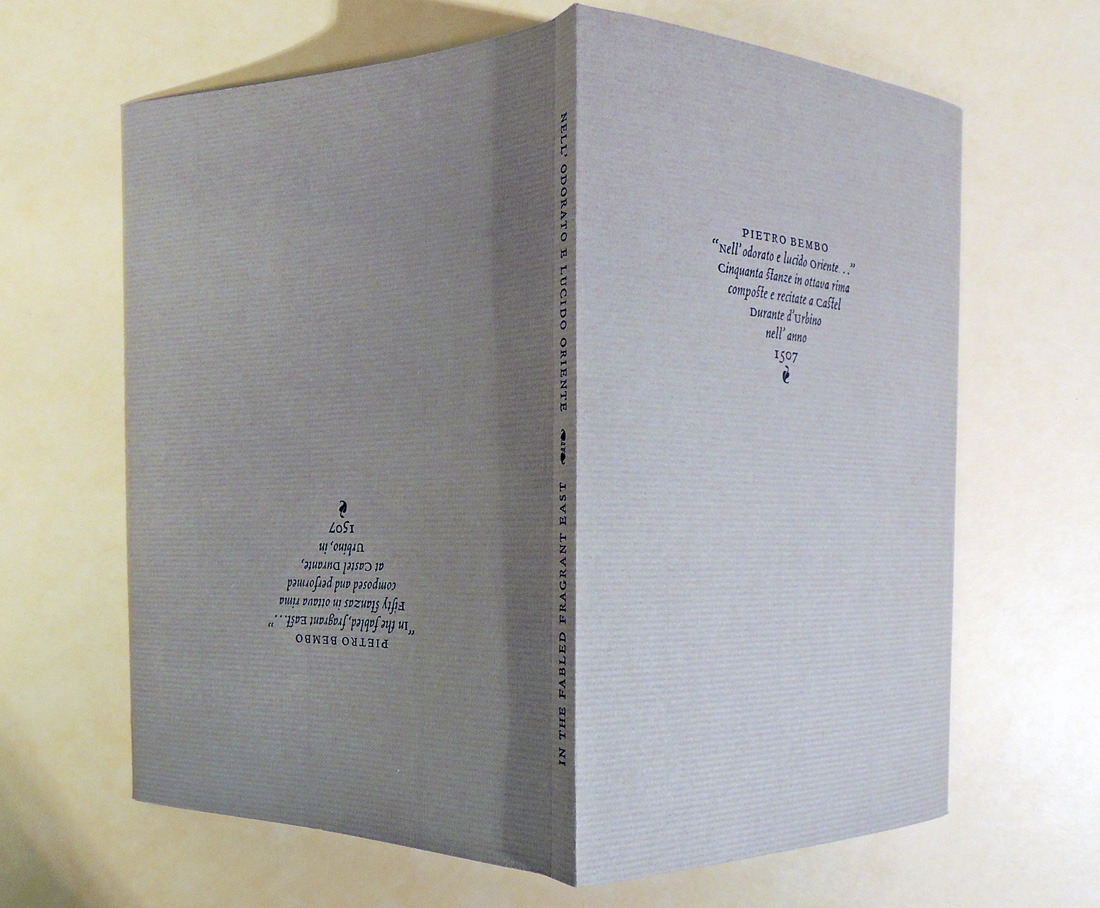
Pietro Bembo (1470-1547), Stanzas. Spine title: In the fabled, fragrant East; Nell’ odorato e lucido oriente. Translation by David R. Slavitt, edited by Michele Miracolo (Austin: Michele Miracolo Press; printed by Bradley Hutchinson, 2015). Dos-à-dos binding. Graphic Arts Collection GAX 2017- in process


Pietro Bembo was a well-known Vienna poet and humanist who composed this 50 stanza poem as part of the Carnival festivities for the court of Urbino in 1507: “For the entertainment of the lords and ladies gathered at Castel Durante, and to the delight of Madonna Elisabetta Gonzaga, Duchessa d’Urbino, and Madonna Emilia Pia, her good friend and companion. Both ladies are entreated by Bembo and Don Ottaviano Fregoso, disguised as ambassadors from the court of the Goddess Venus, to renounce their sad devotion to chastity and embrace the pleasures of Love.”

The Graphic Arts Collection recently acquired the inaugural publication from Austin’s Michele Miracolo Press. Bembo’s text has been newly translated into English by David Slavitt and printed by Bradley Hutchinson from Blado types cast at his letterpress workshop in Texas.

“Approximately 100 copies of this bilingual edition were printed and bound in an unusual “tête bêche” [a.k.a., dos à dos] style, with each language having its own front cover but meeting in the middle, one text upside down in relation to the other.

The printing was executed on a Heidelberg flat-bed cylinder letterpress by Bradley Hutchinson. The paper is a scarce mouldmade sheet from the 1980’s, no longer manufactured, from the Magnani mill in Pescia, Italy.

The text is smythe sewn and bound into stiff wrappers, with a soft grey dust jacket and enclosed in a handsome slipcase made by Jace Graf at Cloverleaf Studio in Austin, Texas.”–prospectus.


See also:

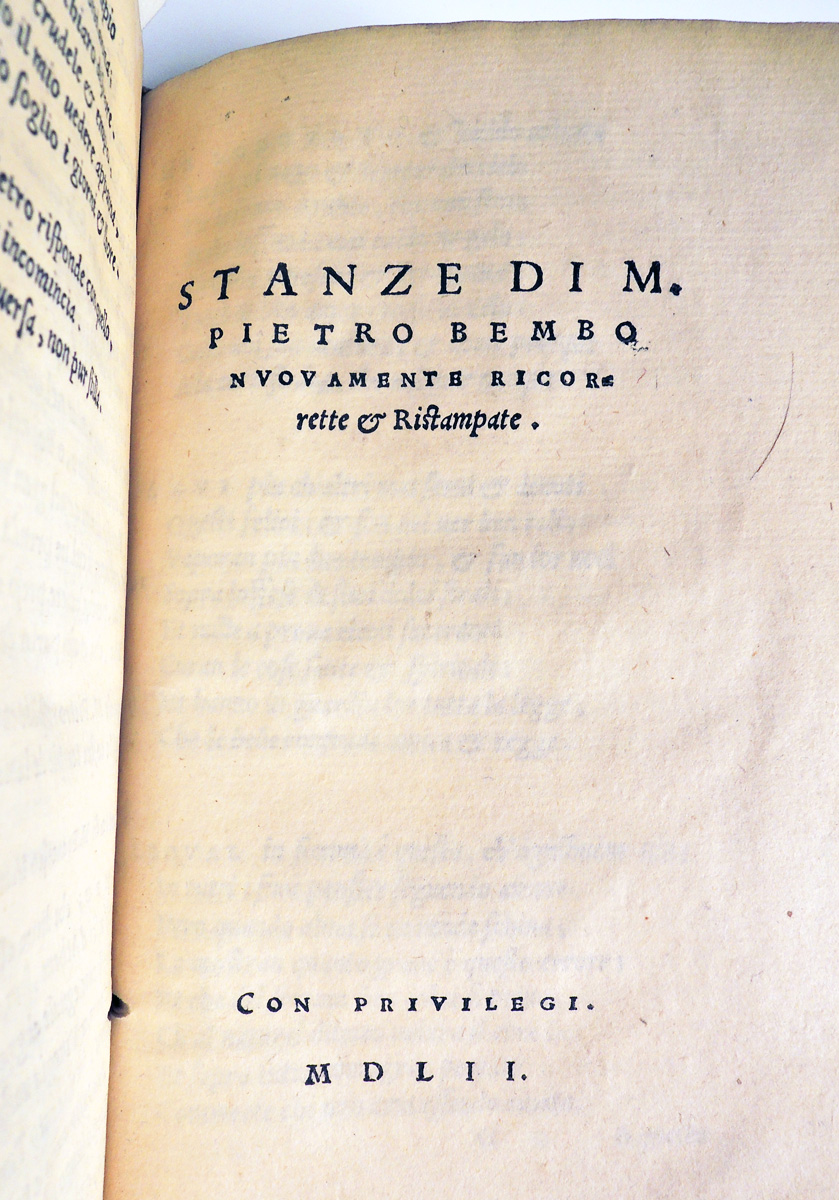
Pietro Bembo (1470-1547), Le rime di m. Pietro Bembo, nvovamente ricorrette et ristampate In Vinegia [G. Scotto] (1552). “Stanze di m. Pietro Bembo nvovamente ricorrette & ristampate.” with separate t.p.: 10 l. at end. Rare Books (Ex) 3122.68.1552

and Pietro Bembo (1470-1547), Gliasolani de Messer Pietro Bembo (Venetia, Aldo Romano, 1505). Rare Books (Ex) 3122.68.313

A slate book with “noiseless” slate pencils


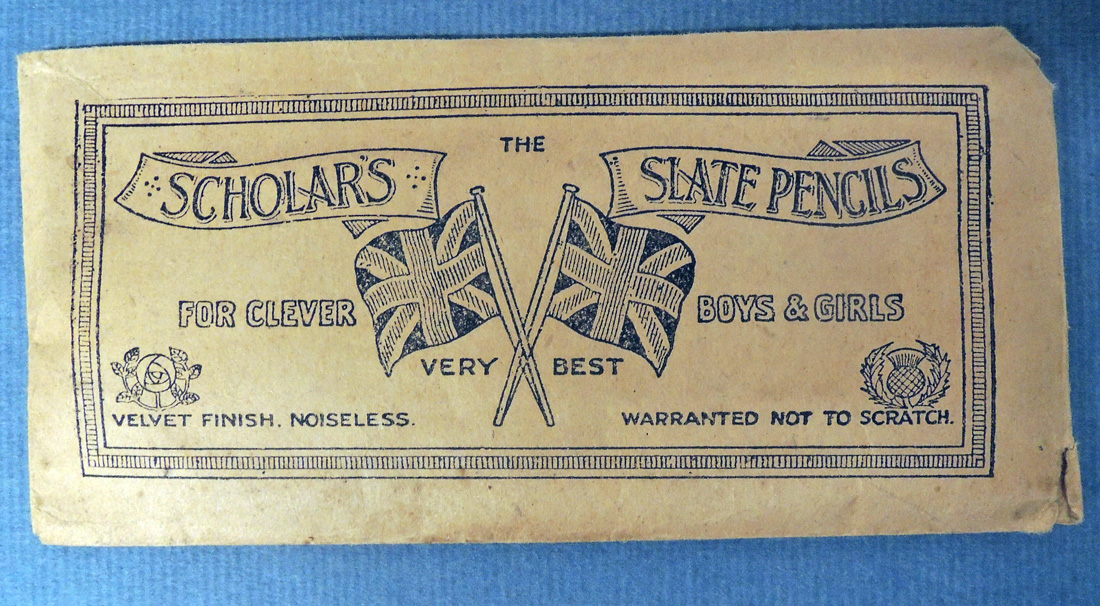
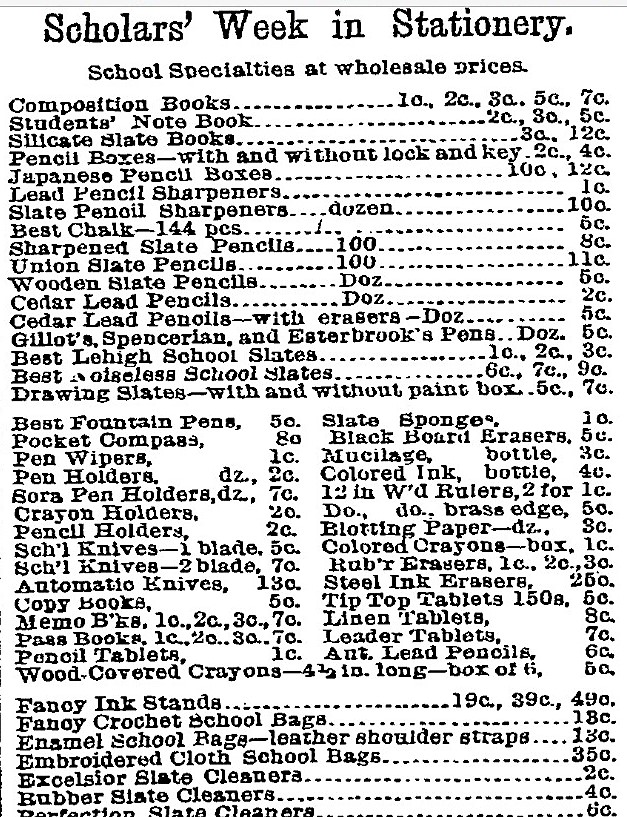
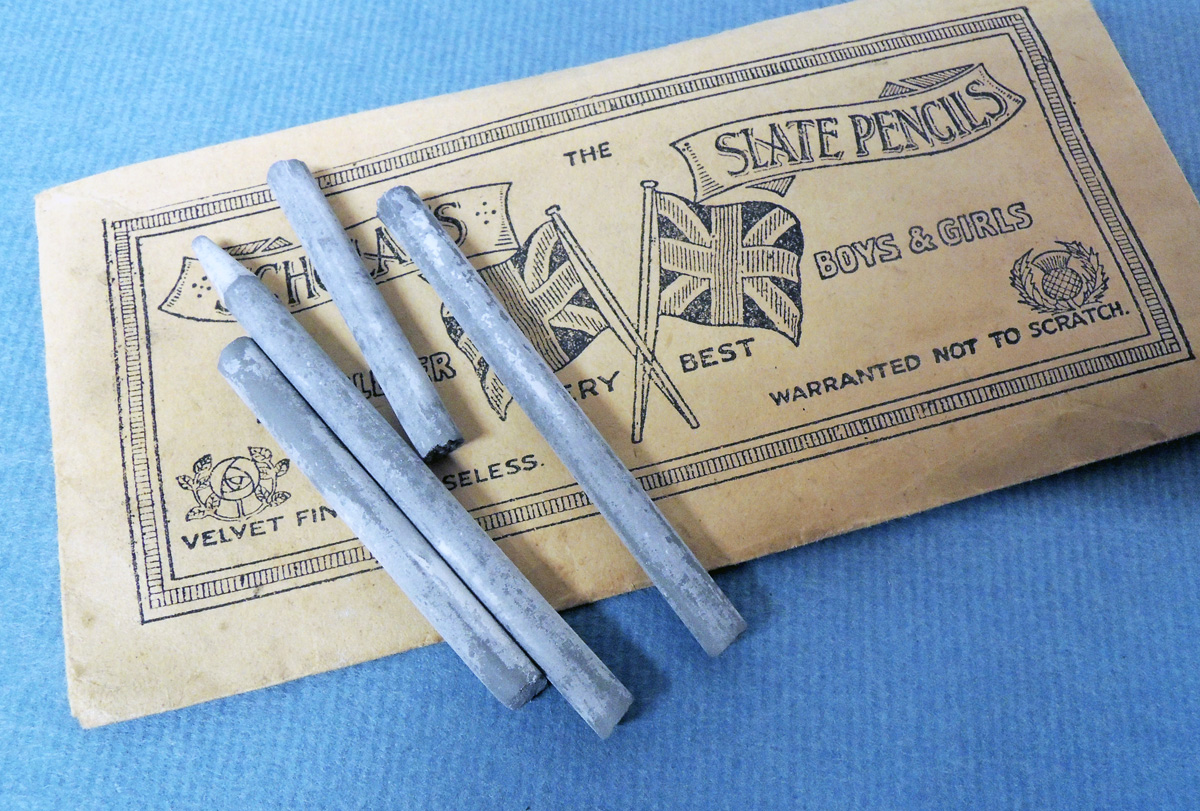
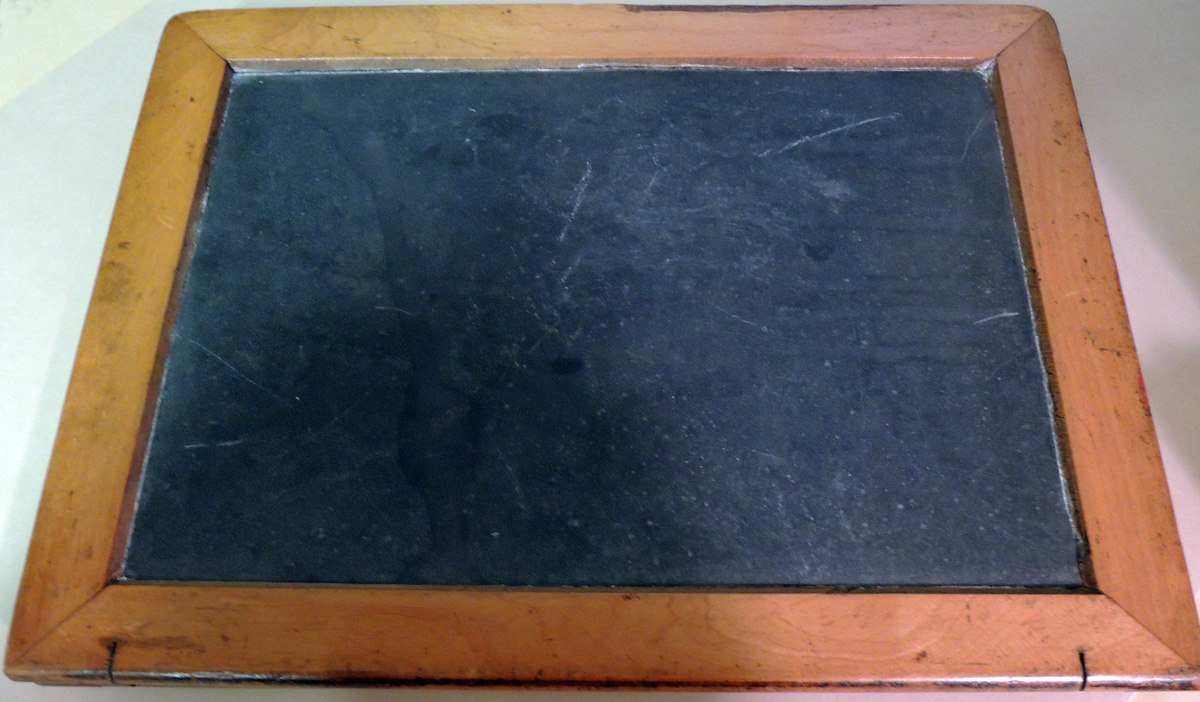
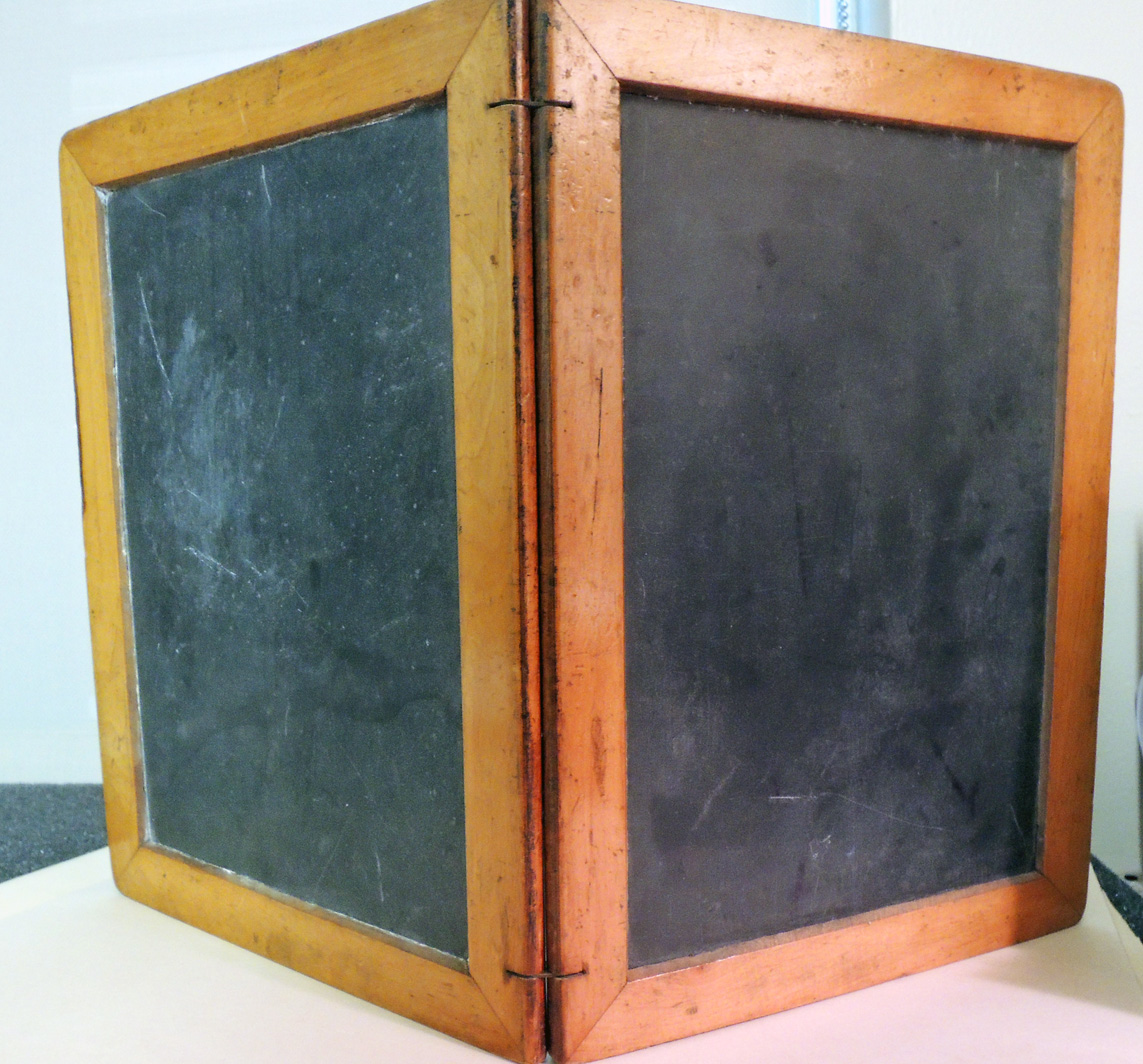
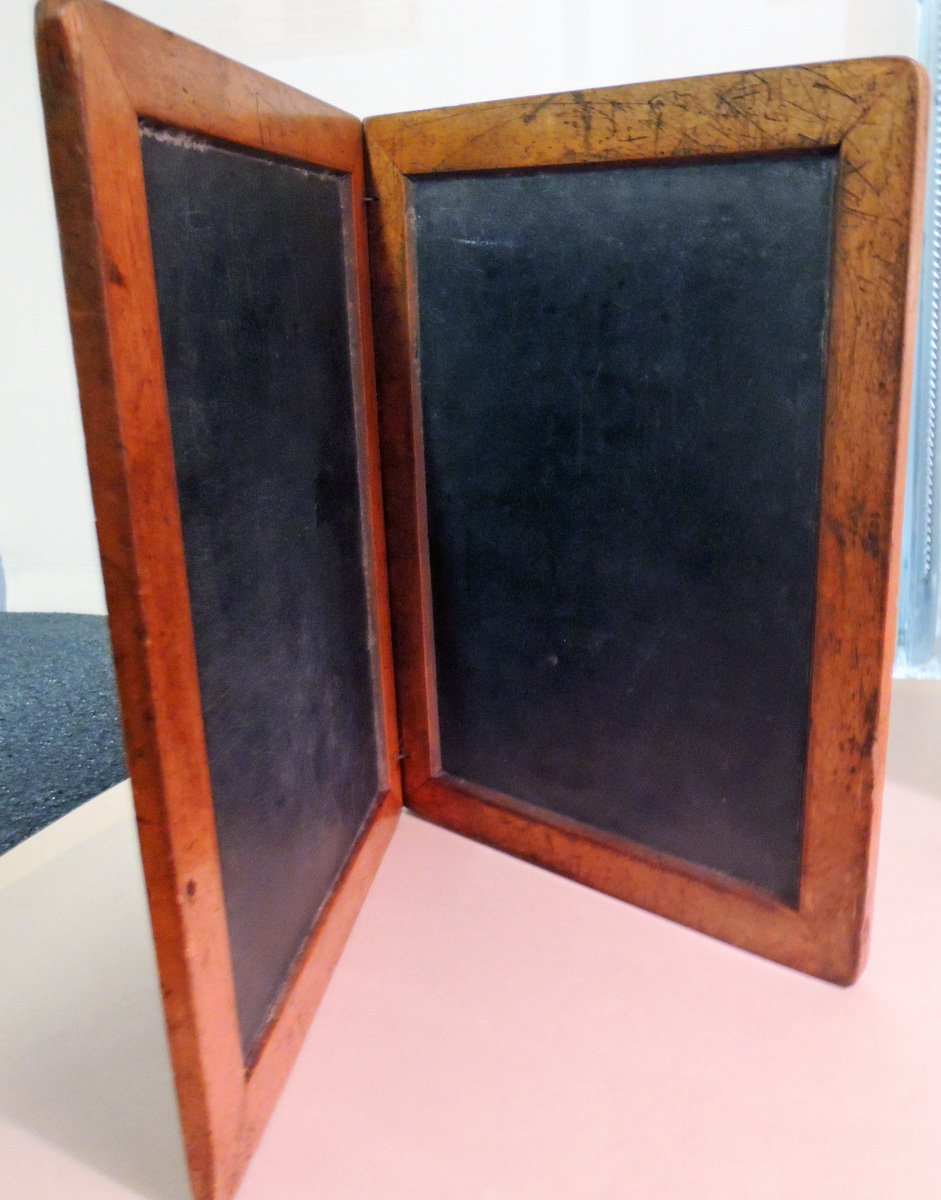
The Graphic Arts Collection recently acquired a slate book–two wooden framed slates hinged with the original cord–together with a pack of noiseless Scholar’s Slate Pencils “for clever boys and girls.” A listing in the New York Times from 1893 gives the cost of slate pencils VS lead (graphite) pencils.

According to Stone magazine, v.10 (1895) “Only one firm in the United States is making slate pencils from native slate. There are imported many slate pencils—that is, pencils made of slate—from Germany, and also some soapstone pencils from abroad. The native soapstone pencil industry languishes, according to those interested, because of the recent reduction in the tariff upon imported soapstone pencils.

Millions of pencils made of slate are turned out at a quarry in Pennsylvania. The rough slate is sawn into suitable pieces by machinery, and from each piece a special machine cuts six pencils of standard length, 5 1/2 inches. These pencils come out rounded, but not pointed. Deft boys take them by twos and threes and quickly point them at an emery wheel rapidly revolved by machinery.

The pencils are then put up in pasteboard boxes of 100 each, and these boxes are placed in wooden cases containing 10,000 pencils. The wholesale price of slate pencils is only $6.75 per case. Pencils that break in the making are made up into “shorts,” measuring 3 1/2 or 4 1/2 inches, and the shorter pencils are made also from small fragments of slate.

Pencils wrapped in the American flag printed on paper cost about $2 a case more than the ordinary standard bare pencil, and pencils wrapped in gilt paper come somewhat higher. It is an easy bit of ciphering to make out that pencils at $6.75 a case of 10,000 are worth about two-thirds of a mill or one-fifteenth of a cent each.”


Housing Piazzetta’s Studi di Pittura

The following is a guest post by Lindsey Hobbs, Collections Conservator in our Preservation Office:

A newly acquired rare edition of Giambatista Piazzetta’s Studi di Pittura, a series of engravings to guide aspiring artists printed in 18th-century Venice, presented some handling and storage concerns for the library. [original post: https://graphicarts.princeton.edu/2017/02/16/one-of-the-finest-venetian-illustrated-books-of-the-settecento/ ]  The book’s value alone merited a custom drop spine box for protection, however, the binding also created challenges.

Although the binding is well in tact, the soft, worn cover boards flex and bow in dramatic fashion when lifted. Since the delicate nature of the boards is not apparent upon visual inspection, we needed a means of signaling to future researchers that this book requires special care before it’s handled.

The solution I landed on is a drop spine box with an integral, or built-in cradle. When opened, the user must lift and prop the first platform of a cradle via a ribbon in order to access the book. One can then prop the second platform in the same manner on the right to support the book while in use. When finished, the cradle platforms fold back around the book to allow the box to close.

This was my first attempt at building this type of enclosure and I have already thought of ways to improve it. My initial thought was to build two separate cradle “wings” to attach beneath the right and left box trays but this made the opening and closing action of the box a bit awkward. Building the cradle in a wrap-around style for the book was necessary to create a more fluid movement.

Of course, the best feature of this style is the intuitiveness of its use. I think the ribbon placement provides a clear indicator of what to do when opening the box, and once pulled, the rest of the structure guides the cradle into place. While the cradle adds a bit of construction time over a standard drop spine, it offers a relatively simple solution for showing users how to use this special book.

Remarks on Prints

The Grove Dictionary of Art declares Richard Dalton (1715?-1791) one of the most influential figures in the sphere of collecting in England for some four decades.

In 1749, at the age of thirty-nine, Dalton visited Calabria and Sicily and then, Egypt, Turkey and Greece. He was possibly the first English artist to record the ancient monuments of these places.

In 1755 he was appointed librarian to the Prince of Wales (later George III) but after only three years was back in Italy with commissions to buy drawings and medals. Both loved and hated, Dalton remains a powerful figure in the world of art and antiquities.

His major work evolved from a selection of drawings executed during his 1749 tour, which was finally published in 1791 as: Antiquities and views in Greece and Egypt; with the manners and customs of the inhabitants: … Engraved on 79 copper-plates by Chatelain [and others] ([London]: T. King and H. Chapman, 1791). (SAX) Oversize N5330 .D17e

Before that publication appeared, Dalton prepared a commentary without the plates about the places and cultures he visited, released as: Remarks on Prints, That Were Published in the Year 1781, Relative to the Manners, Customs, &C. of the Present Inhabitants of Egypt. from Drawings Made on the Spot, A.D. 1749 (London: printed by J. Nichols for J. Robson and W. Clarke, 1790). The Graphic Arts Collection is pleased to add this rare volume  to augment both the story of Dalton and the history of collecting.

See also: John Dalton (1709-1763), Remarks on XII Historical Designs of Raphael, and the Museum Græcum et Ægyptiacum, or, Antiquities of Greece and Egypt, illustrated by prints (London: Printed for M. Cooper …, 1752). (Ex) 2008-0382N

The Trial of Elizabeth Canning 1754

The Trial of Elizabeth Canning, Spinster, for Willful and Corrupt Perjury; at Justice Hall in the Old-Bailey, held by Adjournment, on Monday the 29th of April, Wednesday the 1st, Friday the 3d, Saturday the 4th, Monday the 6th… (London: printed by the authority and appointment of the Right Honourable Thomas Rawlinson Esq; Lord Mayor, for John Clarke under the Royal Exchange, and sold also by M. Cooper in Pater-Noster Row, [1754]).

Bound with Crisp Gascoyne, An Address to the Liverymen of the City of London, from Sir Crisp Gascoyne, Knt. Late Lord-Mayor, relative to his conduct in the cases of Elizabeth Canning and Mary Squires (London: printed for James Hodges at London-Bridge, [1754]).

Bound with additional trials. Graphic Arts Collection 2017- in process

The Graphic Arts Collection recently acquired this volume of several trial transcripts bound together and extra illustrated with a hand colored etching entitled The Gypsy’s Triumph, a satire on the Elizabeth Canning affair. The print depicts Crisp Gascoyne and Mary Squires (the old gypsy) carried in triumph by four old gypsies with broomsticks and wearing pointed hats.


There are many versions of this curious story. A brief description was posted on The Londonist’s site:

“It’s 1 January 1753, in the City of London. An 18 year old maidservant disappears on the way back to her mother’s house near St Mary Aldermanbury. She wasn’t seen or heard from until nearly a month later, when she reappeared, dirty and bloodied, in ripped clothing. The maidservant was Elizabeth Canning. She claimed to have been kidnapped from near Bedlam Hospital and taken to a house on Hertford Road in Enfield. Here, a woman tried to force her into prostitution. When she refused, she was kept prisoner until she escaped through a window and managed to return home. Her disappearance has been the source of speculation and theories ever since. She identified Enfield woman Mary Wells and Romany woman Mary Squires as her captors. They both went to trial — despite Squires having an alibi, she was sentenced to hanging, while Wells was sentenced to branding on the thumb and six months in prison. Sir Crisp Gascoyne, who was Lord Mayor of London and Chief Magistrate, opened his own inquiry which led to the King granting a pardon. Canning herself was then indicted for perjury, found guilty and sentenced to one month imprisonment, after which she was sent to America. The truth about the case was never revealed.” http://londonist.com/2016/03/the-curious-case-of-elizabeth-canning


See also: Sir Crisp Gascoyne (1700-1761), An address to the liverymen of the city of London: from Sir Crisp Gascoyne … relative to his conduct in the cases of Elizabeth Canning and Mary Squires (London: Printed for James Hodges, 1754). Rare Books (Ex) Oversize HV6248.C15 G3q

“I dare do all that may become a man, Who dares do more is none.”

“Sweet Mercy is Nobility’s true Badge.”


Air Ink

Graviky Labs co-founders Anirudh Sharma and Nikhil Kaushik have come up with an ink made from air pollution, which they call Air Ink. Each 30-milliliter Graviky pen contains 30 to 50 minutes’ worth of air pollution generated by a single car.

“If that [soot] was in the air, it could give you cancer,” says Sharma, co-founder and director of Graviky, who graduated from the Fluid Interfaces Group at the Massachusetts Institute of Technology (MIT) Media Lab in the United States.

“Taking particles captured by a cylindrical device on a car’s exhaust pipe, Graviky has developed Air Ink, oil-based paints, spray paints, and pens that contain pigments derived from carbon soot. In August, Graviky teamed up with Tiger Beer to provide local Hong Kong artists with 150 liters of Air Ink—from 2,500 hours’ worth of pollution—to create street murals. Their products aren’t currently sold commercially. They hope cities will use Graviky’s devices to revamp public transportation.” –Graviky Labs

Sharma, Kaushik, and two others have been refining their technology for more than a year and recently soft-launched their Air-Ink product as a Kickstarter project with a nearly $10,000 goal. They also hope to make black-ink production more sustainable and environmentally friendly. “We are replacing the consumption of fossil fuels to make carbon black [inks],” they say.

Pledges to kickstarter have far outreached the original goal but it is still possible to order your own bottle of air [pollution] ink. https://www.kickstarter.com/projects/1295587226/air-ink-the-worlds-first-ink-made-out-of-air-pollu

Loggie di Rafaele nel Vaticano

Giovanni Ottaviani (1735-1808), “Pharaonis filia cum vidisset fiscellam in papyrione Aperiens, cernensque in ea parvulum vagienlem, miserta ejus, ….vocavit nomen ejus Moyses” (Exodus, Chapter 2) [When the Pharaoh’s daughter saw the ark among the reeds, she opened it and seeing an infant inside and having compassion for it, she called him Moses], from Raphael (1483-1520), Seconde Parte delle Logge di Rafaele nel Vaticano che contiene XIII. Volte ed i loro respettivi Quadri (Rome: Stamperia di Marco Pagliarini, 1776). Engraving with gouache hand coloring. Graphic Arts Collection GAX in process

This hand colored print in the Graphic Arts Collection was recently identified as one of the thirteen plates published in the second of the three-part Loggie di Rafaele by Ottaviani, engraved after drawings by Gaetano Savorelli and Pietro Camporesi, after the Vatican decoration by Raphael.

The second section of Ottaviani’s great work concentrates on the quadrants above the windows and doors in the Vatican Logge. Raphael’s decoration took place between 1518 and 1519, while this volume of prints was accomplished more than two hundred years later, between 1774 and 1776.

“The project was carried out by the painter Gaetano Savorelli, the draughtsman Ludovico Teseo, the architect Pietro Camporesi and the engravers Giovanni Ottaviani and Giovanni Volpato. The plates were remarkable not just for their size and magnificent colouring, but also because of the influence they had on contemporary taste. The decision was made to borrow elements from Raphael’s Vatican tapestries and insert them where the original frescoes were in too poor a state to be legible. The finished plates therefore represented an amalgam of design elements presented with a crisp freshness of colour that held enormous appeal and did much to stimulate taste in the neo-classical period.”
Istituto nazionale per la grafica (Italy), Raphael invenit: stampe da Raffaello nelle collezioni dell’Istituto nazionale per la grafica (Roma: Quasar, 1985). Marquand Library (SA) ND623.R2 I77.  Ottaviani 18, 21-33

1917: Anniversary of the Espionage Act

From January 1911 to December 1917, the Socialist monthly, The Masses, published articles, essays, and cartoons commenting on American political conservativism. Its artists included some of the leading American painters and printmakers of the era. “For the Masses, beauty and the revolution were the same thing, or rather parts of the same thing. The Revolution was beautiful and beauty was revolutionary.”–William L. O’Neill

On June 15, 1917, two months after America’s entrance into World War I, the United States Congress passed the Espionage Act. Enforced largely by A. Mitchell Palmer, the United States attorney general under President Woodrow Wilson, “the Espionage Act essentially made it a crime for any person to convey information intended to interfere with the U.S. armed forces prosecution of the war effort or to promote the success of the country’s enemies.”

The following month, the Espionage Act was enforced for the first time when the U.S. Post Office banned The Masses from mailing their August issue citing anti-war cartoons and poems. While many issues contained radical ideas over the years, four plates in the August issue were said to violate the Act specifically:

Art Young’s “War Plans”

Boardman Robinson’s “Making the World Safe for Capitalism”

H.J. Glintenkamp’s “Conscription”

H.J. Glintenkamp’s untitled drawing known as The Liberty Bell.

 The U.S. District Court overturned the ban on July 24, 1917, but the Court of Appeals upheld the government’s ban on November 2, 1917. The final trial in 1918 ended in a hung jury. http://todayinclh.com/?event=hung-jury-the-masses-editors-not-convicted

Geoffrey R. Stone, an American law professor and noted First Amendment scholar, elaborated on the prosecution of The Masses:

“In the summer of 1917, Postmaster General Burleson ordered the August issue of The Masses to be excluded from the mail, exercising his authority under the Espionage Act of 1917. The Masses sought an injunction to forbid the local postmaster from refusing to accept the August issue for mailing. The postmaster argued that four cartoons and four pieces of text violated the Act, thus justifying the order of exclusion.”

“The postmaster argued that the cartoons and text violated section 3 of the Espionage Act, in that they willfully caused or attempted ‘to cause insubordination, disloyalty, mutiny or refusal of duty in the military or naval forces’ and obstructed ‘the recruiting or enlistment service of the United States.’”

“…Judge Learned Hand conceded the postmaster’s claim that ‘to arouse discontent and disaffection among the people with the prosecution of the war and with the draft tends to promote a mutinous and insubordinate temper among the troops.’ But he argued that to read to word ‘cause’ so ‘broadly would … involve necessarily as a consequence the suppression of all hostile criticism, and of all opinion except what encouraged and supported the existing policies.’”

–Geoffrey R. Stone, “Judge Learned Hand and the Espionage Act of 1917: A Mystery Unraveled,” University of Chicago Law Review 335 (2003).

Echoes of Revolt: The Masses, 1911-1917 (Chicago, Quadrangle Books [1966]). Recap Oversize HX1 .M21q

Caricature of artists from Art Young (1866-1943), On my way: being the book of Art Young in text and picture (New York: H. Liveright, 1928). Graphic Arts Collection (GAX) NE910.U5 Y8 1928

The Masses (New York: Masses Pub. Co., 1911-1917). Recap Oversize HX1 .M2q