Category Archives: Books

books

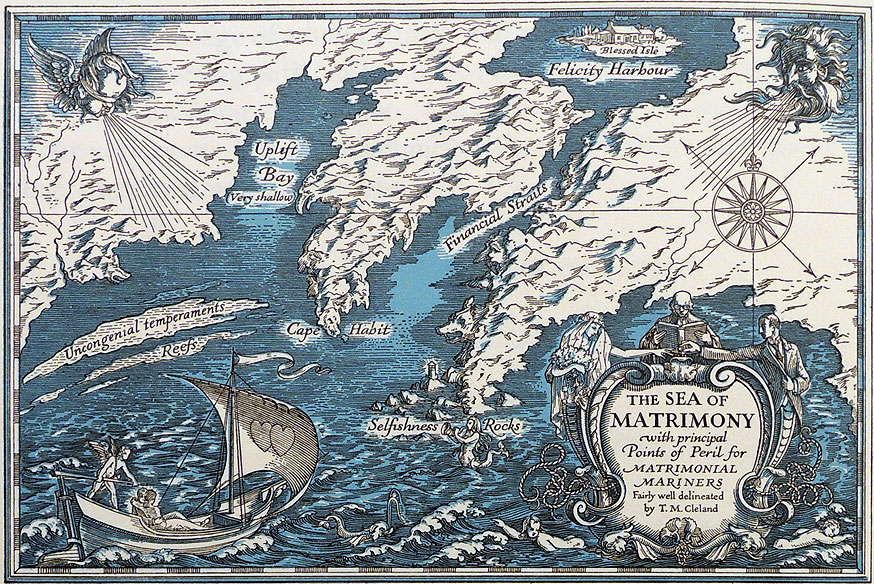
The Sea of Matrimony

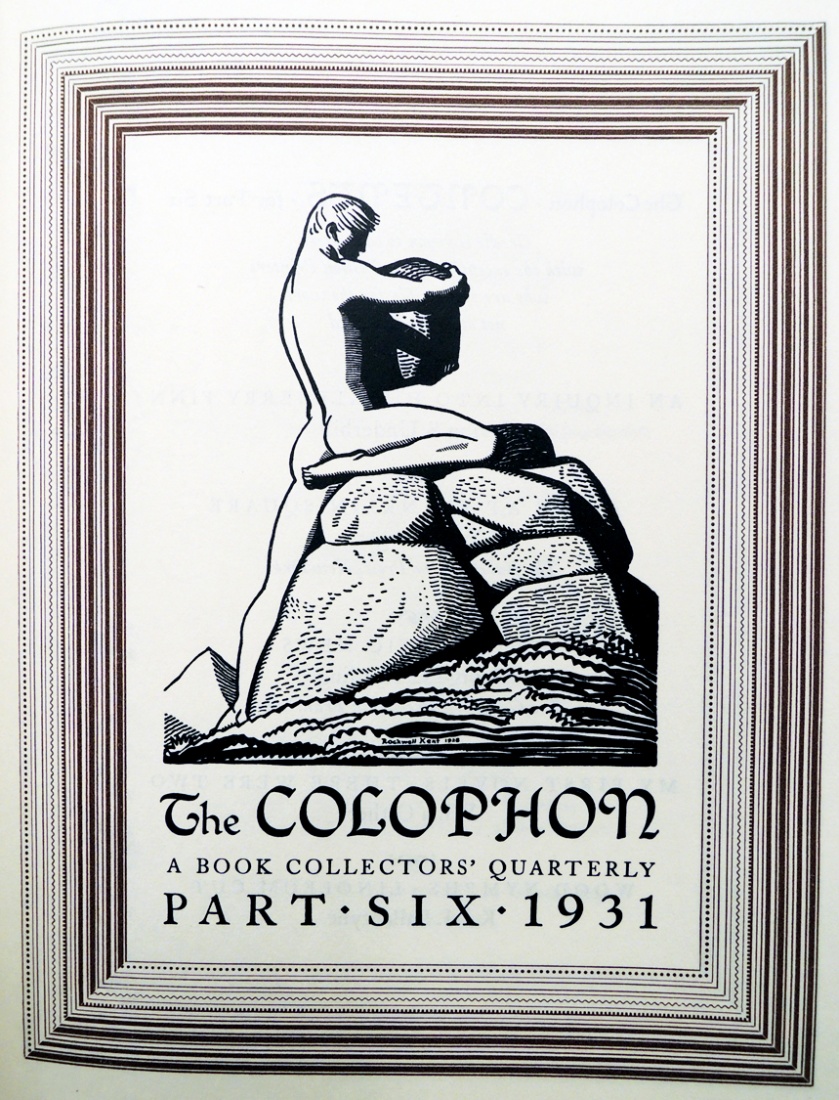
On June 10, 1931, Elmer Adler (1884-1962) wrote to the artist Tom Cleland (1880-1964) to say Harvey T. White, of R. Tyson White’s Sons, manufacturers of paper boxes, had contacted him. White was confirming a previous conversation in which Adler, acting as Cleland agent,  “authorized us to reproduce the The Sea of Matrimony by Wm [sic] Cleland for use on trays, waste baskets, lamp shades, cigarette boxes, etc., on the conditions. . . Print royalty is 3-7 cents each up to a total of $300. Depending on size.”

cleland-colophon-six4

The Colophon (New York: Pynson Printers: The Colophon, 1930-1940). Graphic Arts Collection (GAX) Z1007 .C71

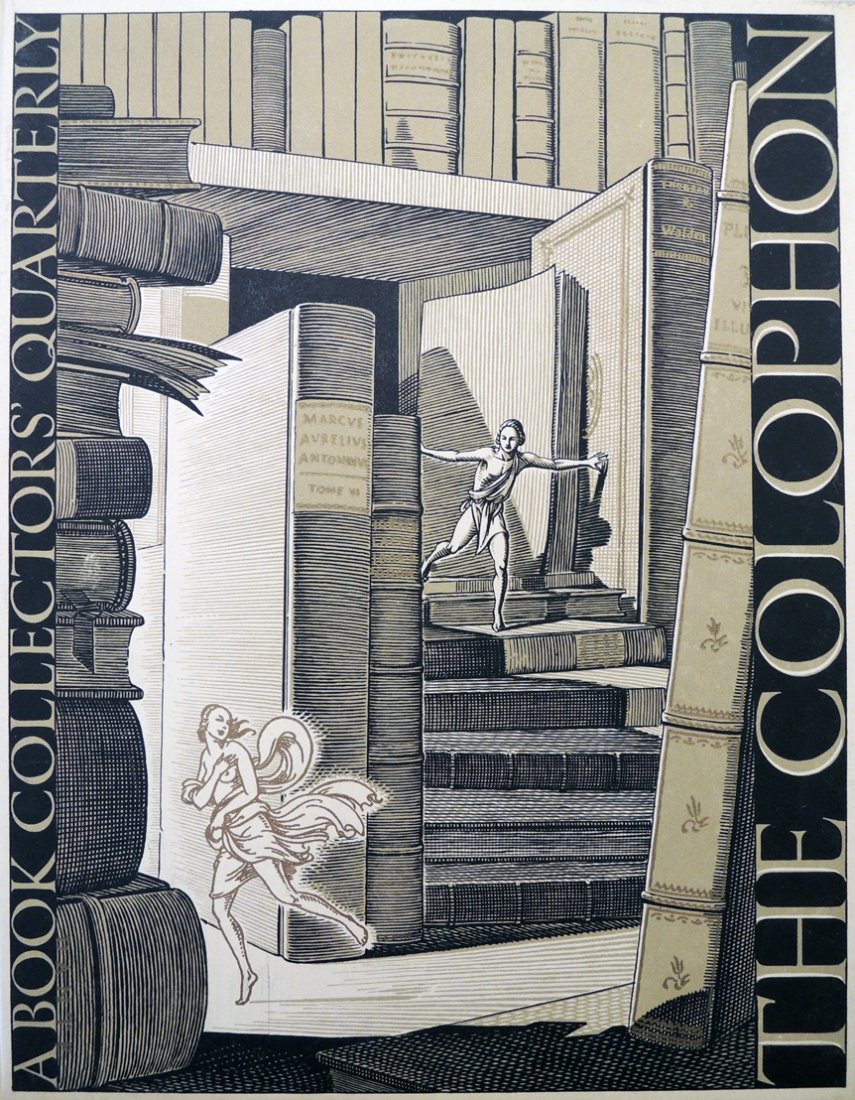
The image was published on the colophon page of vol. 2, part six (1931) of The Colophon and proved much more popular than the cover image, also by Cleland.

cleland colophon six2 cleland colophon six

This was the middle of the Great Depression in the United States but Cleland had a good job as art director for Fortune Magazine.  He went on to design for Cadillac; Newsweek; and the newspaper PM.

The artist would not agree to Adler’s arrangement with White, but not because Cleland objected to seeing his art on waste baskets and lamp shades. He felt that so many people would want to license the image that $300 was not an appropriate price ceiling. Cleland would only agree if the company either bought the design for $300 or continue to pay royalties forever.

It is unfortunate that the response from White is not in the Cleland papers at the Library of Congress or Adler papers at Princeton University. If anyone has a lampshade with The Sea of Matrimony, please contact us. Thanks.


Charlize Brakely, Colorist and Stenciler

stencil 009

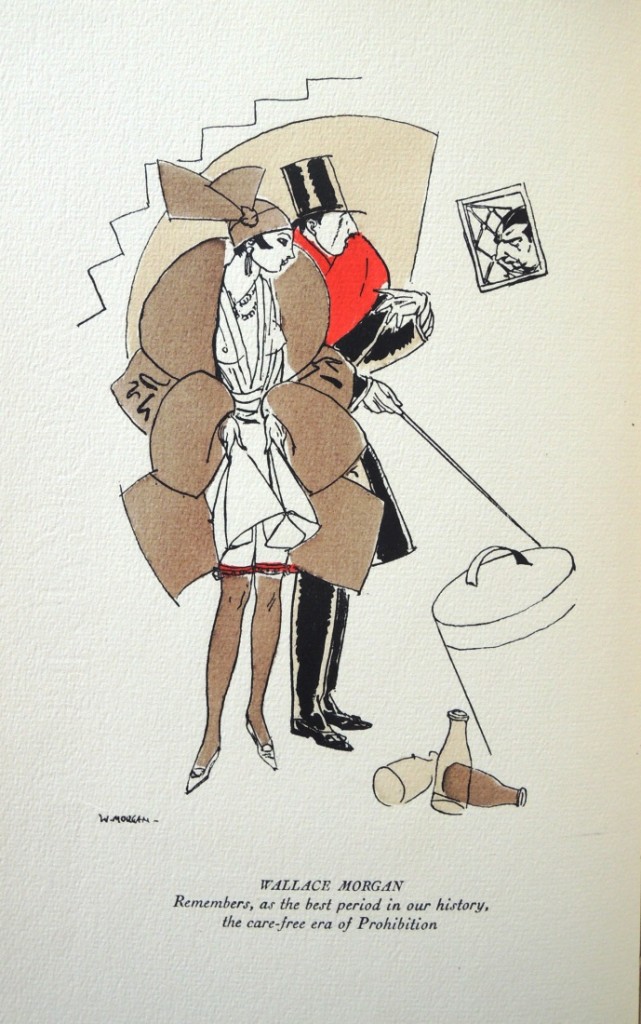
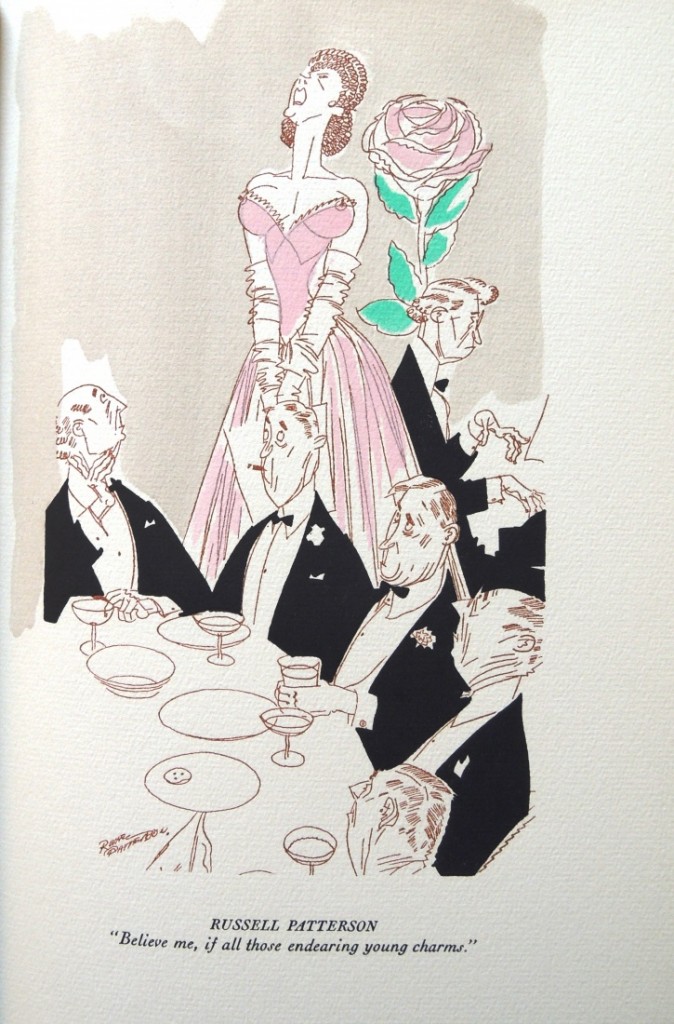
When we talk about pochoir or stencil coloring, the artist who usually comes to mind is Jean Saudé, a French printmaker who colored the work of the Parisian fashion world. The same technique was practiced in the United States, primarily at the studio of Charlize Brakely (1898-196?). The commercial artist supported herself hand-coloring the plates for limited-edition fine-press publications from her studio at 1674 Broadway between 52 and 53 street.
stencil 010

Firestone PS 2725.N5D82

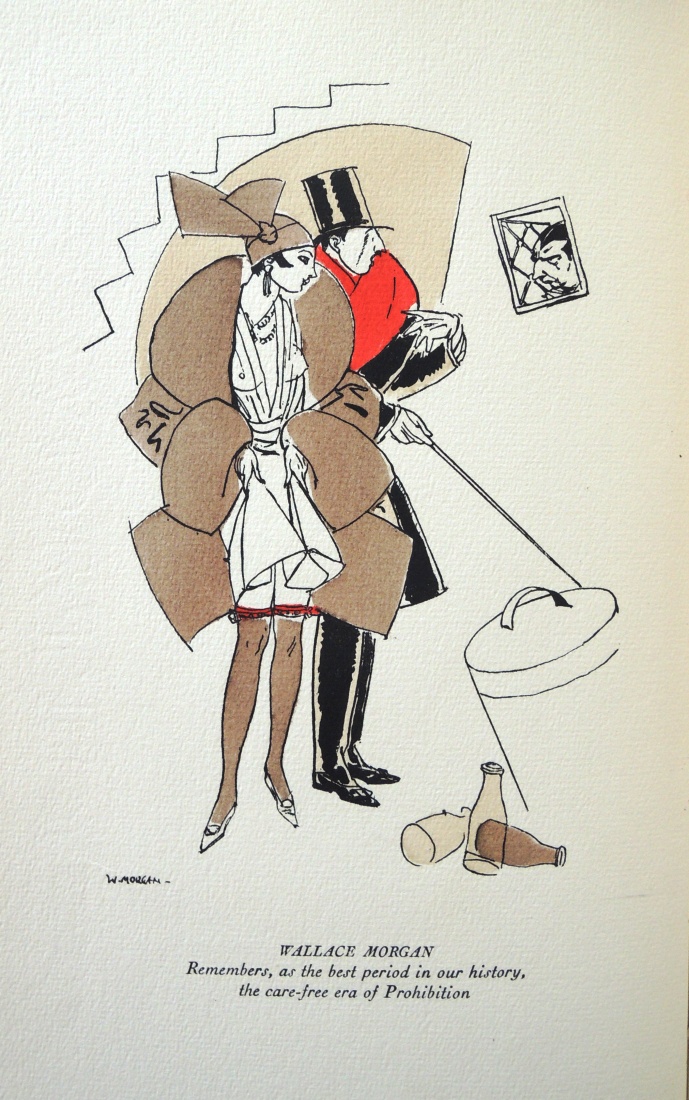
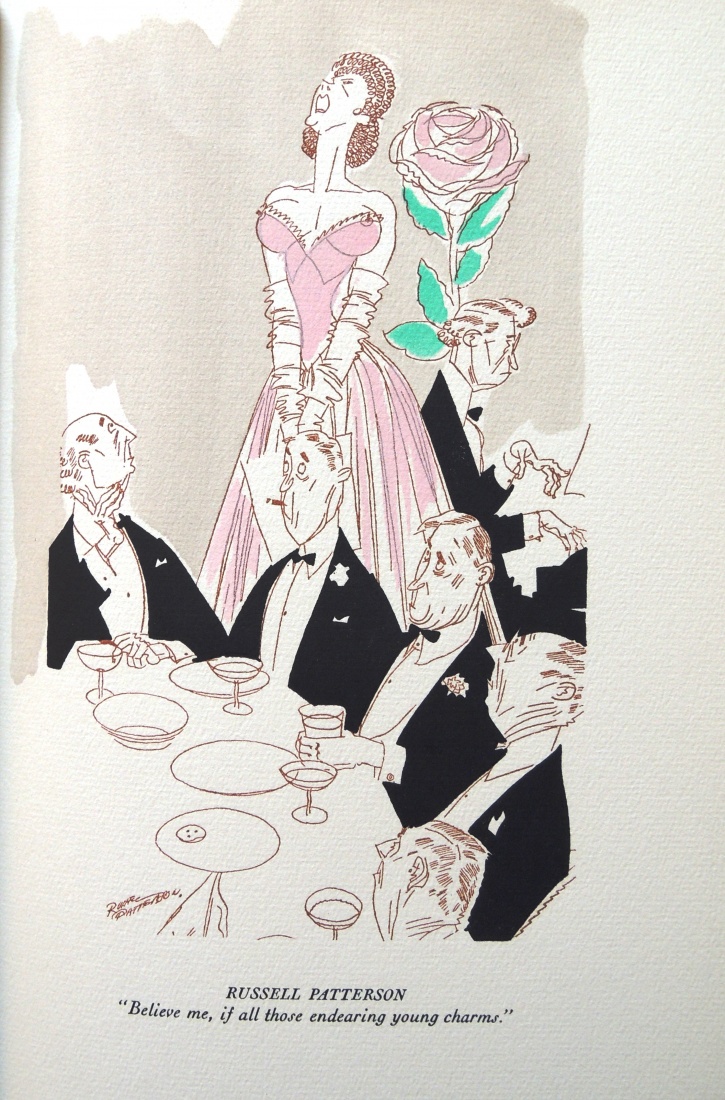
In 1943, The Dutch Treat Club, a group of men involved in advertising, illustration, and writing, decided to celebrate their 38th “war time” anniversary with a special publication. Texts were provided by Rube Goldberg, Paul Gallico, and others, a play with a moral by Westbrook Pegler, and portraits of nine club functionaries. Brakely was commissioned by hand-color twelve of the illustrations.

For his “History of the Dutch Treat Club,” Will Irwin writes that the Club “was conceived in 1905 on a day coach of a Lackawanna suburban train by an unknown sire out of the Cloister Club. …The Cloister was a luncheon or dinner club pure and simple, which, according to George B. Mallon, sprang to life in the late 1880’s, when the men sported very tight trousers in glaring checks and the women protected their rear approaches with jutting bustles; when the telephone was an exotic luxury and the unmarried lived in boarding-houses.”

He continues, “Uptown in Union Square, or midtown in Franklin Square under the new Brooklyn Bridge, Harper’s, Scribner’s, and Century reigned … over the business of manufacturing periodicals and … book publishing. If the aspiring man of letters wrote poetry that approximated Edmund Clarence Stedman’s, if the young illustrator drew like Abbey or Du Maurier, he might in time enter the charmed circle; if not, he groped in outer darkness, writing or drawing for venturesome new book houses or for what the editors of the Century called to the very end the “upstart periodicals.”
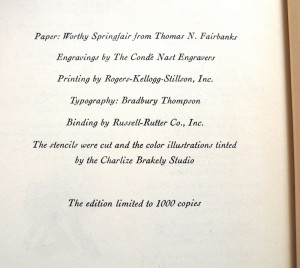
stencil 007Although Blakely was not allowed to join The Dutch Treat Club, she hand cut approximately 30 stencils and colored 12,000 sheets for the privately printed edition.  Other books with pochoir color by Brakely include:

Kidnapped by Robert Louis Stevenson and wood engravings by Hans Alexander Mueller (New York; Limited Editions Club, 1938). GAX PR5484 .K5 1938b;

Soldiers of the American Army, with designs by Fritz Kredel (New York: Bittner and company, 1941) Ex Oversize GT1950 .K87q

Treasure Island by Robert Louis Stevenson, with designs by Edward A. Wilson (New York: Limited Editions Club, 1941) ExParrish Oversize PR5486 .A1 1941q

The Gods Are A-Thirst, with designs by Jean Oberle (London: Nonesuch Press, 1942)

The Rose and The Ring with designs by Fritz Kredel (New York: Limited Editions Club, 1942) GAX Oversize 2005-0170Q

A Woman’s Life, designs by Edy Legrand (London: Nonesuch Press, 1942) Firestone PQ2349.V4 E6 1942

The History of the Life of the Late Mr. Jonathan Wild the Great by Henry Fielding, illustrations by T.M. Cleland (New York: Limited Editions Club, 1943) GAX PR3454 .J663 1943

A Child’s Garden of Verses by Robert Louis Stevenson and illustrated by Roger Duvoisin (New York: Limited Editions Club, 1944). ExParrish PR5489 .C5 1944
Effigies

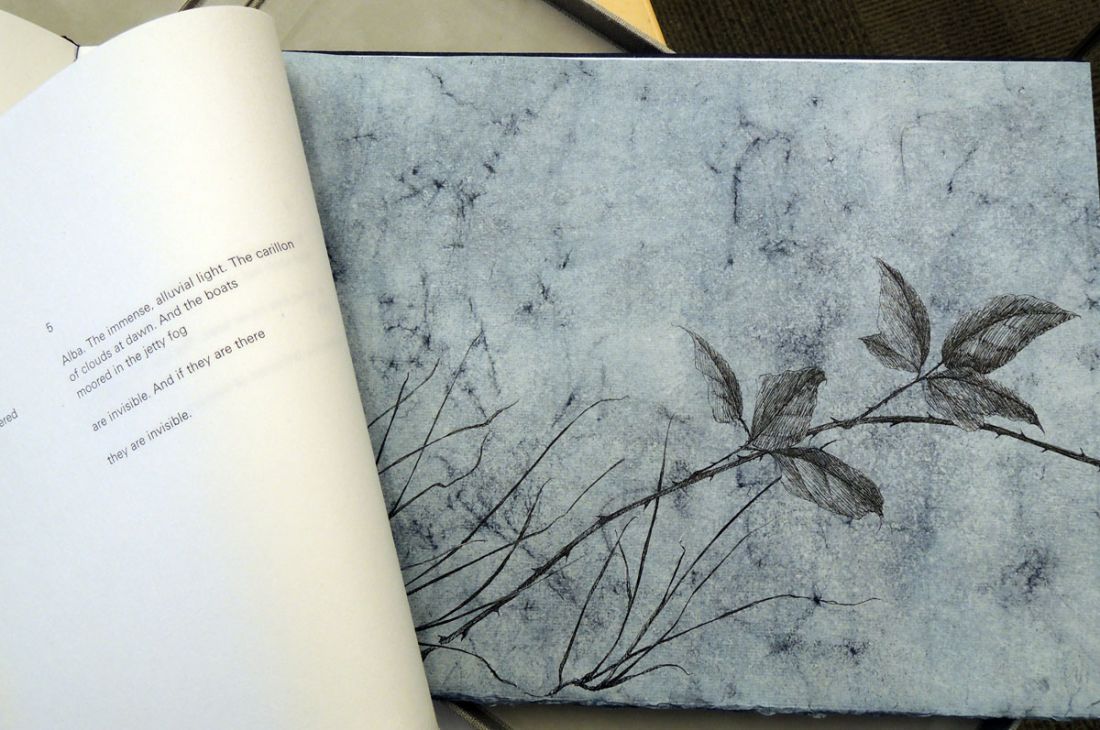
auster-effigies3 Paul Auster and Sarah Horowitz, Effigies ([Portland, Or.]: Wiesedruck, 2012). Copy 14 of 20.
Graphic Arts Collection GAX 2013- in process. auster-effigies1

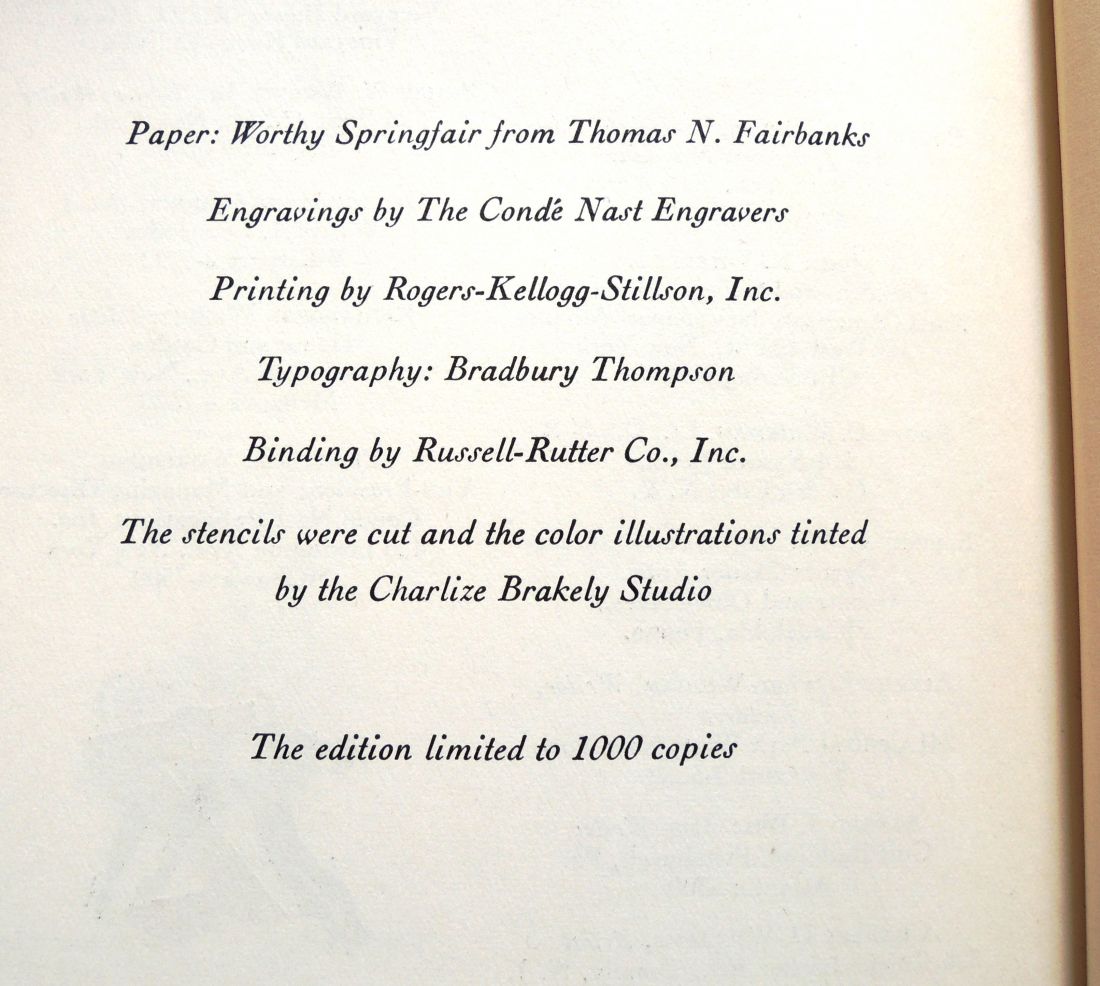
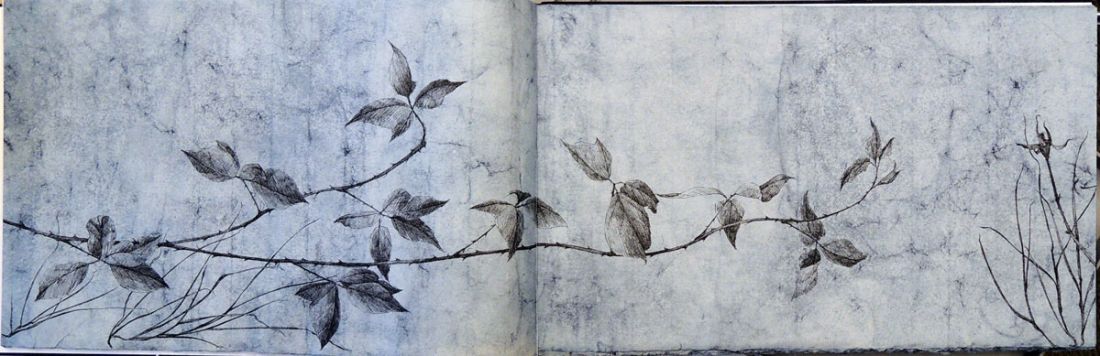
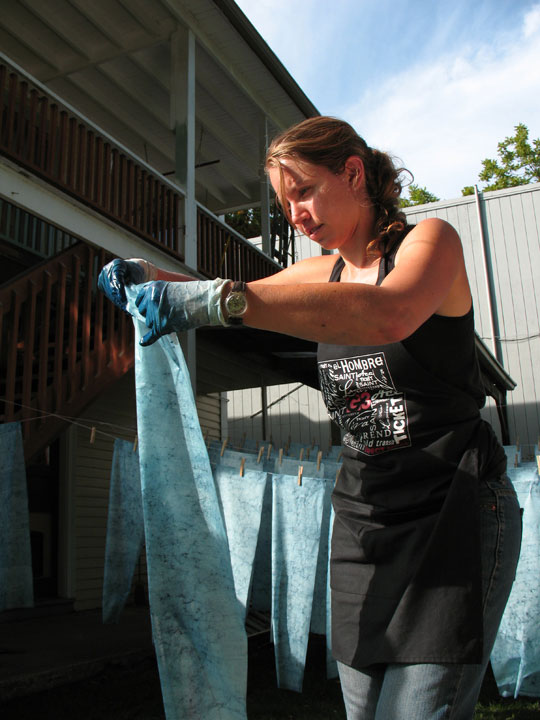
“For the creation of this book handmade kozo paper was dyed in an indigo vat, hung on laundry lines in the sun, gelatin sized, and pressed flat over the course of a year. … the printing and drawing commenced in early 2012. Each image was re-drawn by hand for the edition with sumi ink … Art Larson of Horton Tank Graphics in Hadley, Massachusetts printed the letterpress on un-dyed sheets of kozo. Claudia Cohen bound the edition in indigo-dyed flax paper made by Cave Paper.”–Colophon.
auster-effigies4

auster-effigies2
Artist Sarah Horowitz writes, “Effigies is a hand-drawn limited edition artist book featuring Paul Auster’s namesake poem from 1976. My design for the book centers around a long sumi ink drawing of a bramble fence that extends over several indigo-dyed pages. For each of the 20 books in the edition, I re-drew the image by hand, resulting in 20 unique pieces. Meaning a likeness or resemblance of, effigies straddle the threshold of existence, that which is illusory or real, forgotten or remembered. The ink-drawn weeds and brambles that cross the landscape pages are part of the edges of fields, the forgotten spaces between tilled lands that grow tangled with rusting fencing. I could not be more pleased that Mr. Auster has signed the colophon!
dyeing

As a book artist, I am continually creating a dialog between language and image. As a Jew—the people of the book—I have learned that my ancestors’ story is my story and its documentation is my cultural imperative. With this new book, the thorny fence represents the line on the edge of reality and forgetting. Remembering history is critical to finding balance in the world.”

Former Princeton Instructor Thomas B. Cornell, 1937-2012


cornell                                                       cornell

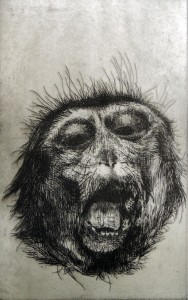
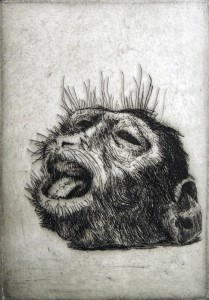
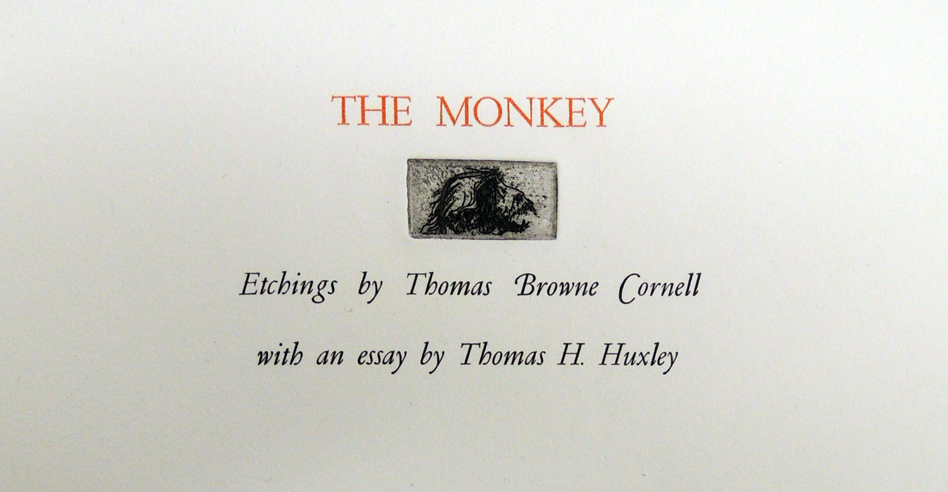
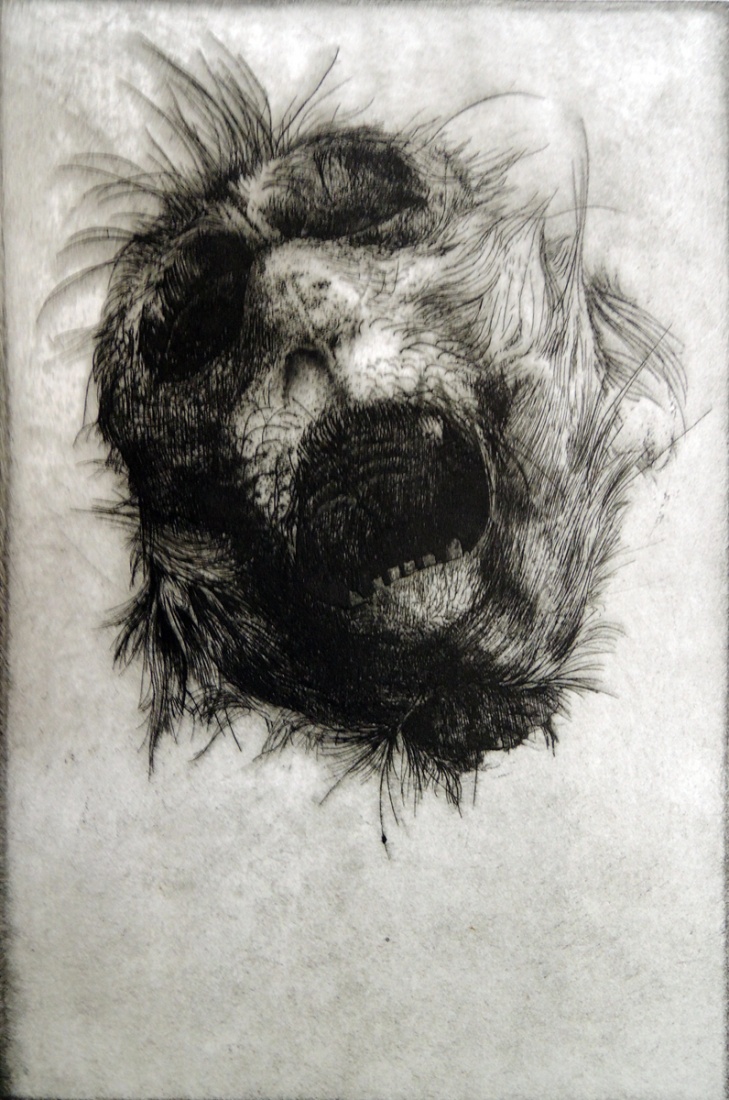
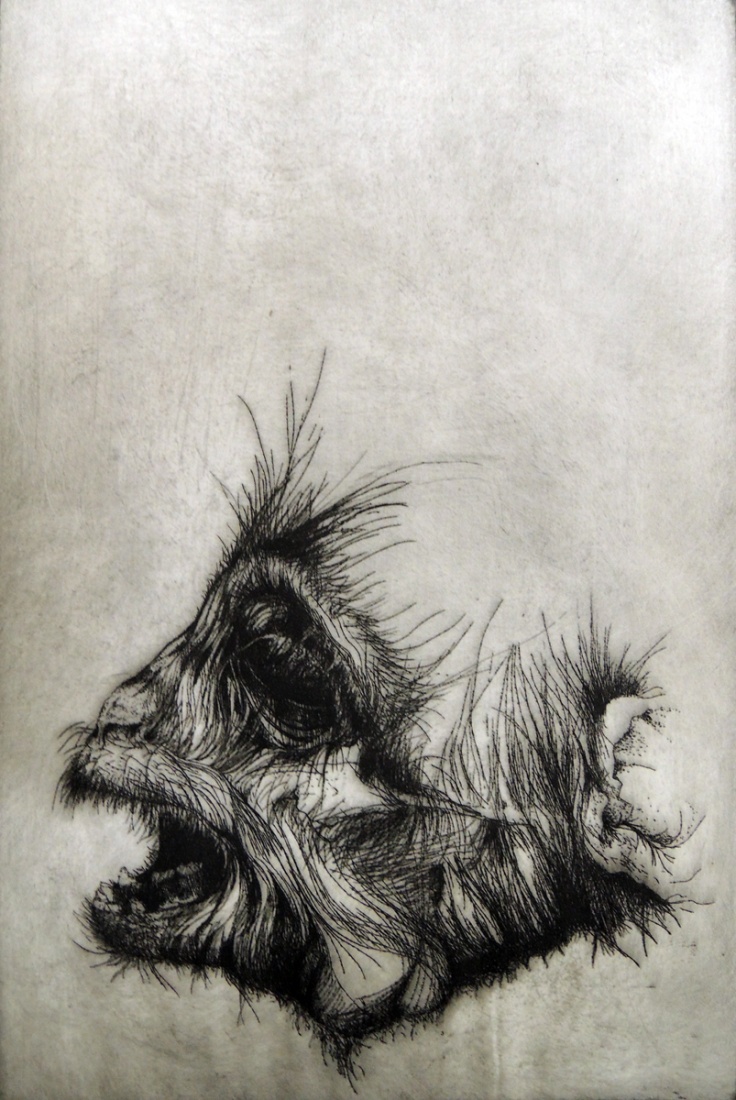
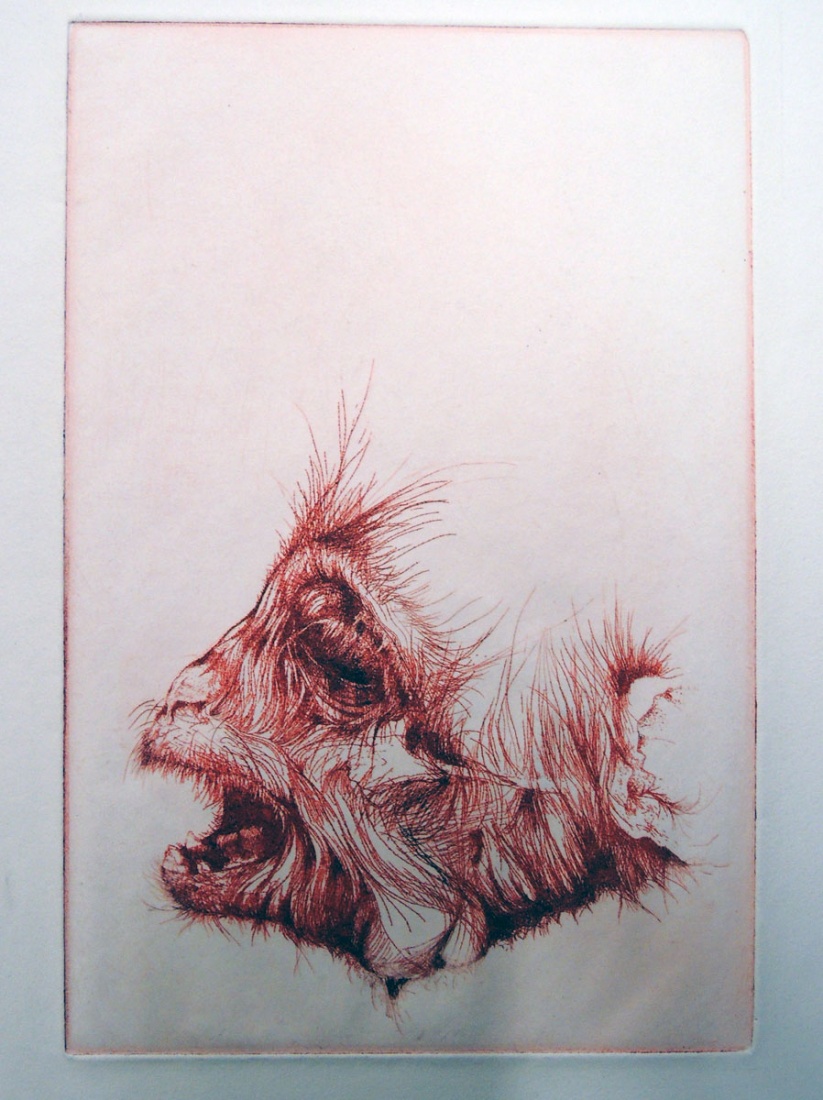
Thomas Browne Cornell, the Richard E. Steele Artist-in-Residence Emeritus at Bowdoin College and former Princeton Instructor, passed away on December 7, 2012. We hold a number of books with original prints by the artist, as well as a dozen proofs for The Monkey (Northampton, Mass.: Apiary Press, 1959). Graphic Arts Collection Oversize NE 2210.C6 M6 1959Q.

cornell monkey6

From 1969 to 1971, Cornell taught in the Visual Arts Program at Princeton University and then, transferred to Bowdoin where he established their studio arts program. While at Princeton, Cornell was one of the first instructors to teach from the newly established classrooms at 185 Nassau.

cornellIn the Daily Princetonian Special Class of 1974 Issue, (20 June 1970), Andrew Wilson noted that, “Princeton’s Creative Arts Program is in the ascending mode, both in terms of student interest and instruction offered. Created in 1939, the Program has only come into its own in the last few years. Now, it has its own building — 185 Nassau Street, a converted elementary school — a full range of courses, and cooperative programs with the English and Art and Archaeology departments.”

“The Program is graced with an outstanding staff; writers-in-residence of recent years have been Phillip Portnoy’s Complaint Roth, Elizabeth Bowen, and National Book Award winner Jerzy Kosinski. This year’s writers include: one of England’s most noted men of letters, Anthony Burgess, author of The Long Day Wanes, A Clockwork Orange, and many more novels and critical works; …The Program’s staff in other fields is equally impressive. It includes artists Esteban Vicente, Lennart Anderson and Thomas Cornell.”

cornell monkey5
Although he later focused on painting, Cornell’s early work was in printmaking. According to the Bowdoin obituary, “his  first publication, The Monkey, examined the process of evolution.  His next publication by the Gehenna Press was The Defense of Gracchus Babeuf, including twenty-one portraits of French revolutionary figures.  In the 1960’s, he established the Tragos Press, and the first editions focused on Frederick Douglass and Bayard Rustin. Responding to the Vietnam War, Cornell painted a triptych, The Dance of Death, in 1969.  In the 1970s, he returned to the exploration of images of nature, using them to address modern social and environmental ethical concerns.”

cornell-monkey7Printer’s proof

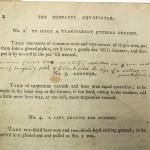
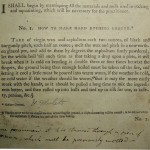
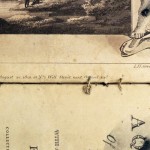
Fifty of the Best Receipts for the Aquatinter 1801

aquatinter4

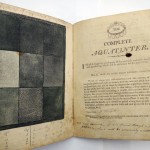
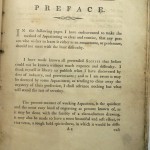
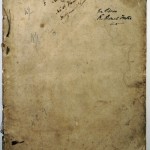
John Hippisley Green, The Complete Aquatinter: being the whole process of etching and engraving in aquatinta: the method of using the aquafortis, with all the necessary tools: to which are added upwards of fifty of the best receipts for grounds, varnishes, &c.: collected from near a hundred that are most in use: the difficulties which may possibly occur, are point out, and the method of obviating them: the whole rendered clear and practical (London: Printed for J.H. Green, book and printseller…, 1801). Graphic Arts Collection GAX 2013- in process

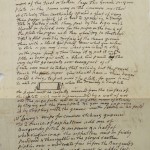
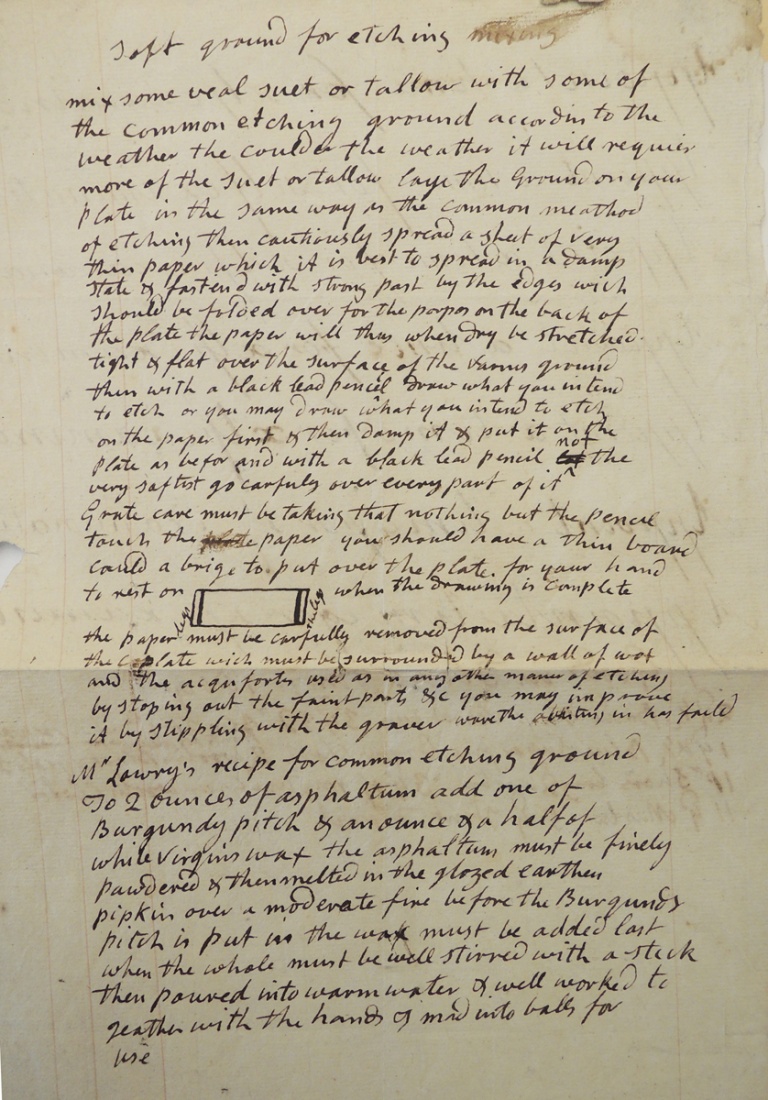
This printing manual includes two plates drawn and engraved by John Hippisley Green along with his recipes (using the modern word) for soft and hard ground aquatint. The frontispiece is after a landscape engraving by Joseph Jeakes. The Princeton copy of this first edition includes various annotations and a hand written description of the soft ground process.

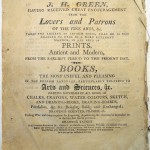
Green advertises his services as:

J.H. Green, having received great encouragement from the lovers and patrons of the fine arts, &c. takes the liberty to inform them, that he is now enabled to deal in a more extensive manner, in all kind of prints, ancient and modern, from the earliest period to the present day. Books, the most useful and pleasing in the English language, particularly relating to Arts and Sciences, &c. drawing materials of all kinds, as chalks, crayons, water-colours, sketch, and drawing-books, drawing-boards, portfolios, &c. &c. bought, sold, and exchanged; drawings mounted, framed, &c. Etching Wax and every requisite for engraving, aquatinting, &c. that may be depended on as the best that can be procured. Drawing taught in all its various Branches at Mr. Green’s Academy every Tuesday, Thursday, and Saturday after-noon. Ladies and Gentlemen attended at their residences, and schools taught on moderate terms. Drawings and designs made, portraits taken and executed in all the various methods of drawing.

aquatinter5

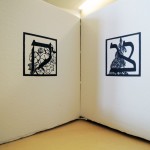
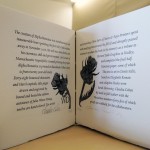
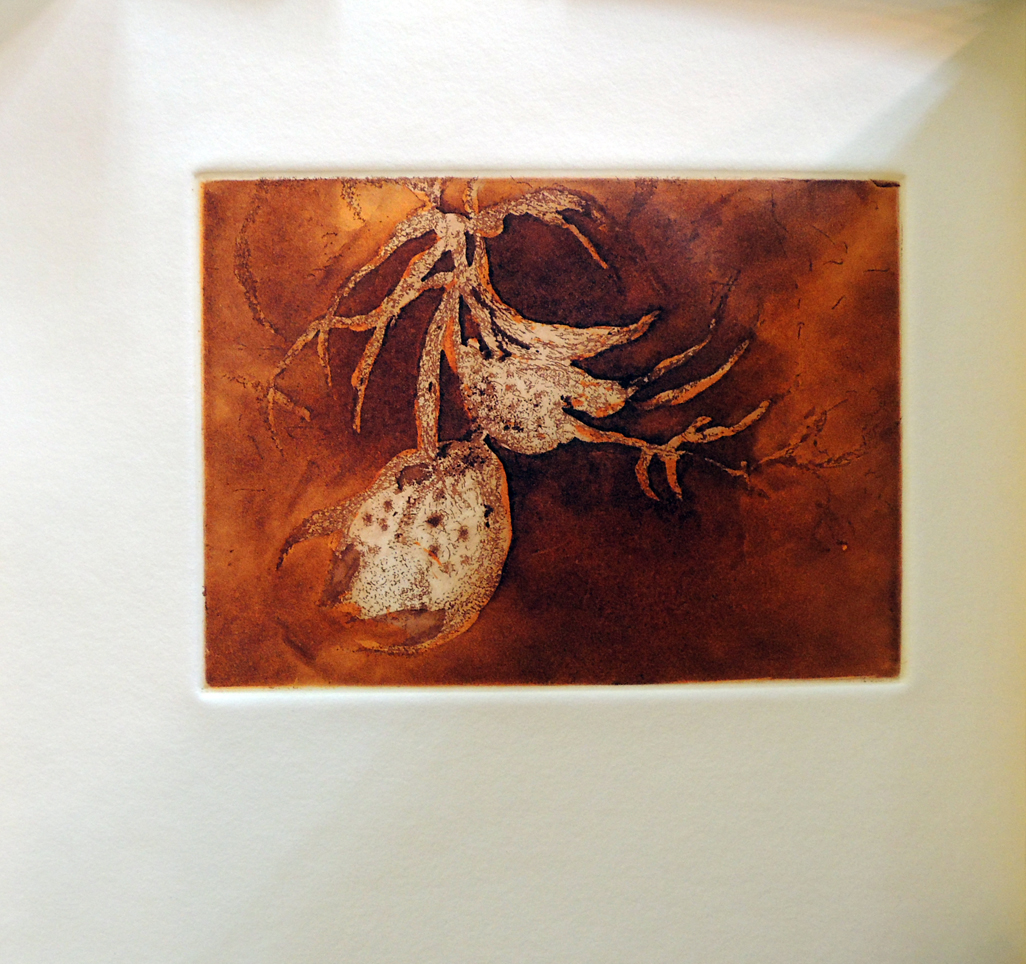
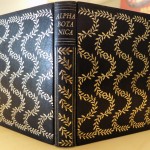
Alpha Botanica

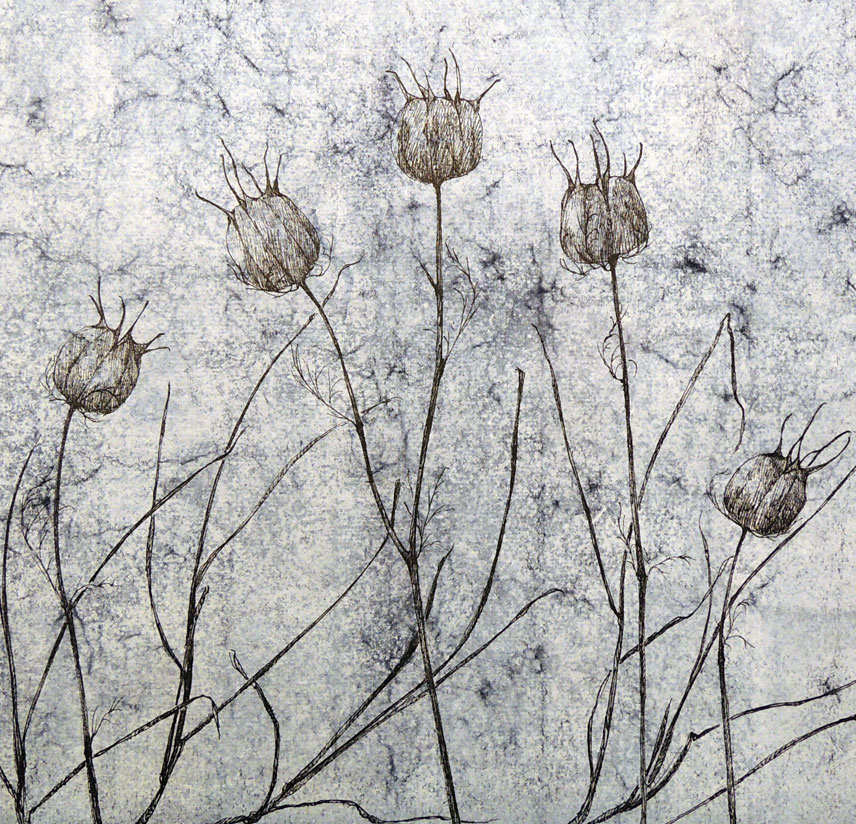
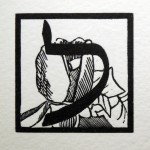
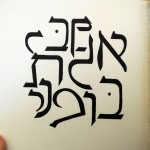
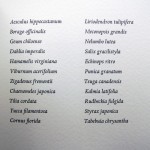
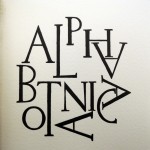
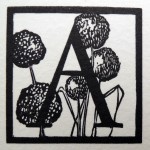
According to Sarah Horowitz, Alpha Botanica “began in the fall of 2004 with a few trial capitals and many sketches to ascertain the viability of a Yiddish-English book of poems illustrated with engraved images and capitals. From this grew designs for two sets of botanical alphabets, one Roman and one Hebrew.”

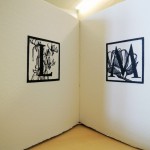
The printing of the first half was accomplished in 2006 by Chris Stern of Stern & Faye Printers, who unfortunately passed away before it could be completed. Arthur Larson of Horton Tank Graphics finished the book and Claudia Cohen bound the edition of 45 copies. Depicted behind each letter is a plant whose name begins with that letter. The list of plants and the colophon are found in the center of the volume.

Alpha Botanica, engravings by Sarah Horowitz ([Portland]: Wiesedruck, 2007). Copy 32 of 45. Graphic Arts Collection GAX 2013- in process

http://wiesedruck.com/about/

Figures Made Visible in the Sadness of Time

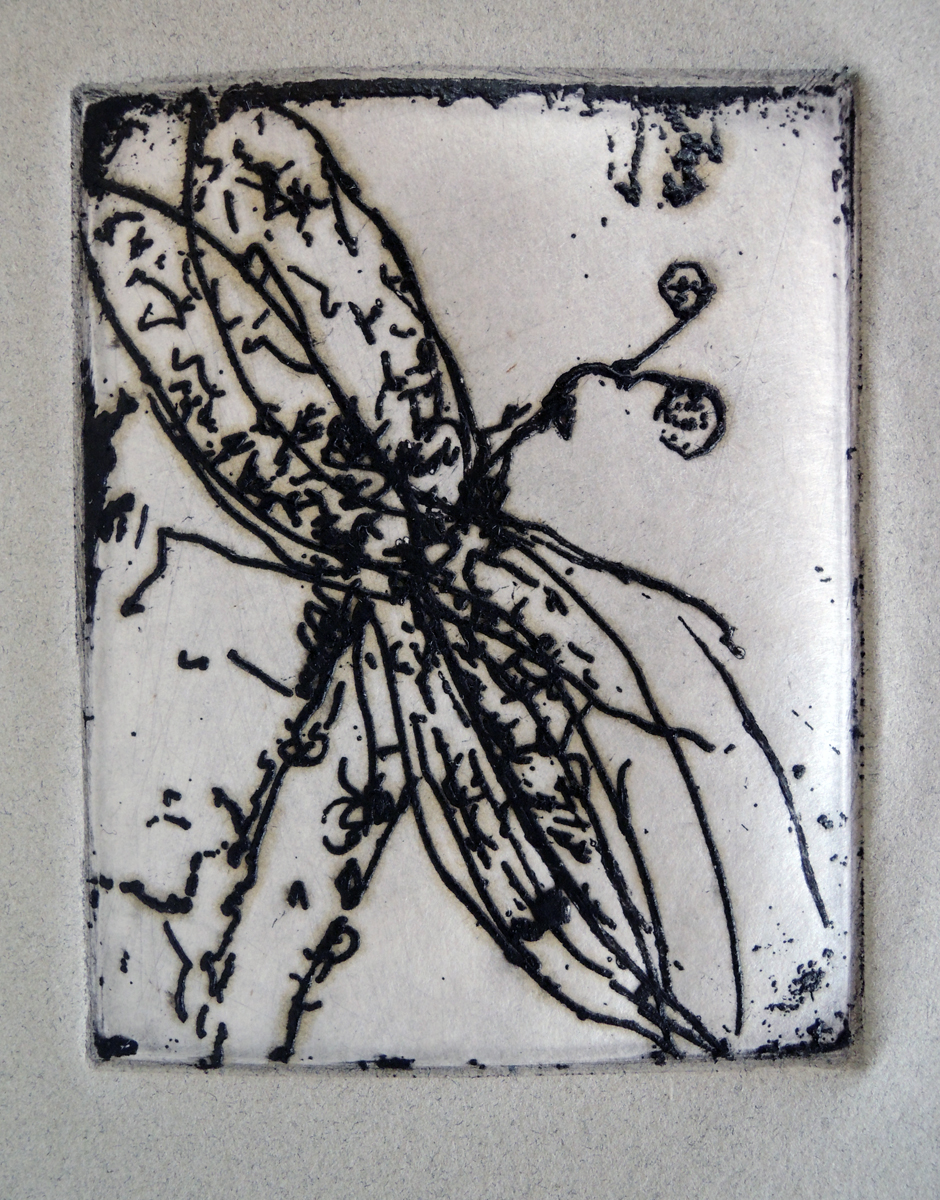
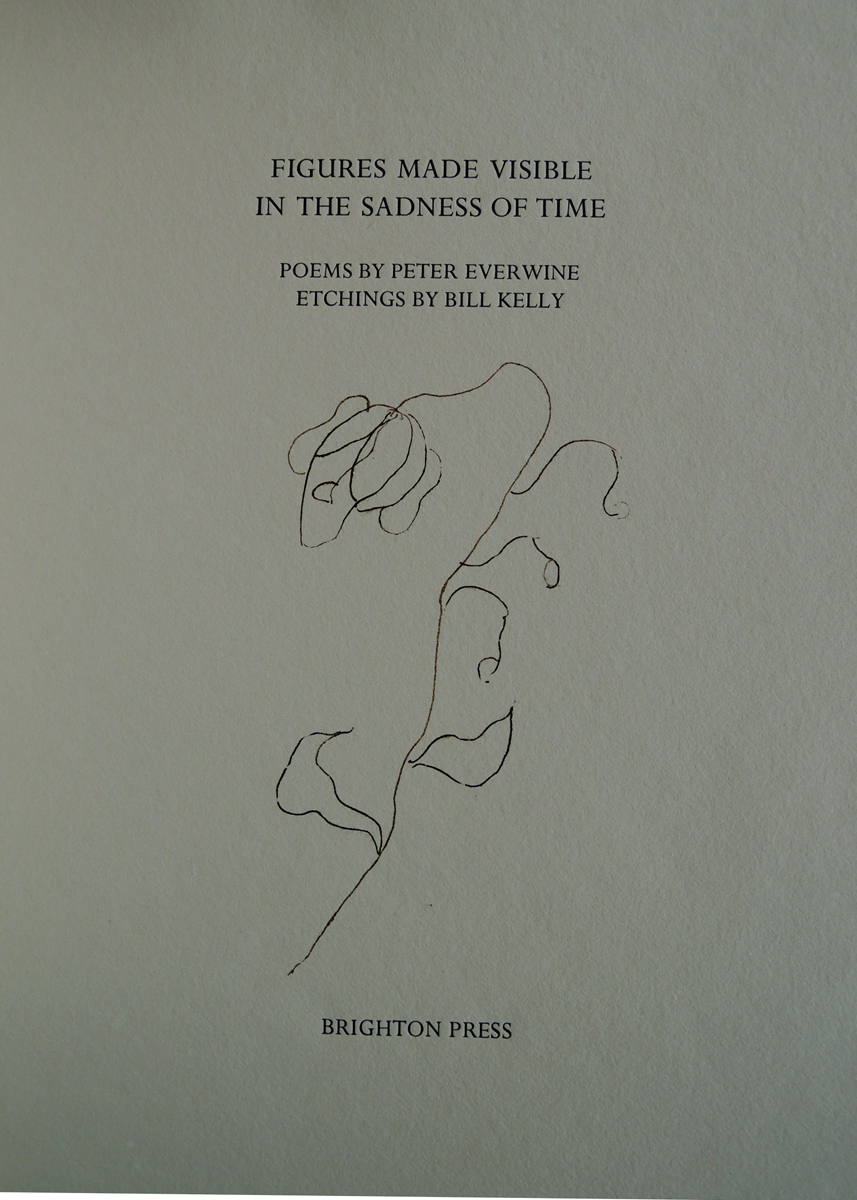
everwine coverFigures Made Visible in the Sadness of Time. Designed by Michele Burgess, poetry by Peter Everwine, etching by Bill Kelly (San Diego: Brighton Press, 2003). Copy 8 of 40. Graphic Arts Collection GAX Oversize 2004-0236Q

“This book was designed by the artists in close collaboration with the poet and Michele Burgess. The poems were printed letterpress by Nelle Martin and the etchings were hand wiped by the artists and printed with the assistance of Alvin Buenaventura. The tea-dyed linen cover bears a stencil that was hand cut by the artists and hand stamped through twelve templates by Sonja Jones. An original pochoir appears on the title page.” –Colophon


“Kelly has everwine4collaborated with the poetry of Peter Everwine to illustrate “Figures Made Visible in the Sadness of Time,” writes Marcia Manna. “The shape of a dragonfly is embedded as an etching on one page and also displayed on a long scroll, embellished with sparkles and vibrant shades of blue. Kelly said the image represents the fleeting moments when something is recognized and then disappears. ‘To be very literal about something means you are just seeing, and Peter operates in a world of transcendent beauty,’ Kelly said. ‘He’s one of the few poets I’ve worked with who understands art in a deep physical sort of way. The great thing about these books and art is that one doesn’t illustrate the other. One broadens the view of the other and it becomes something bigger.’”– “These books are also works of art,” by Marcia Manna (2004)

There is in me, always,
you and the absence of you.

There is in me, always,
that road that leads to a fieldeverwine 3
of flowers we once knew

in that place where you were young,
there, where Memory keeps a life
of its own in the dark,

like a plant that waits patiently
year after year, asleep and folded inward
until the appointed night arrives

when it stirs and wakes
and opens out—Oh dream flowering!
Darkness flowering into darkness!—

forms, figures made visible
in the sadness of Time.

everwine 1