Monthly Archives: July 2013

The Ragged School

cruikshank ragged school9

cruikshank-ragged-school4

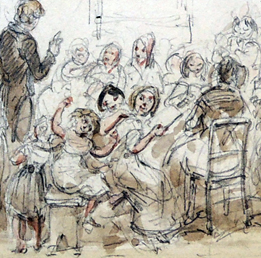
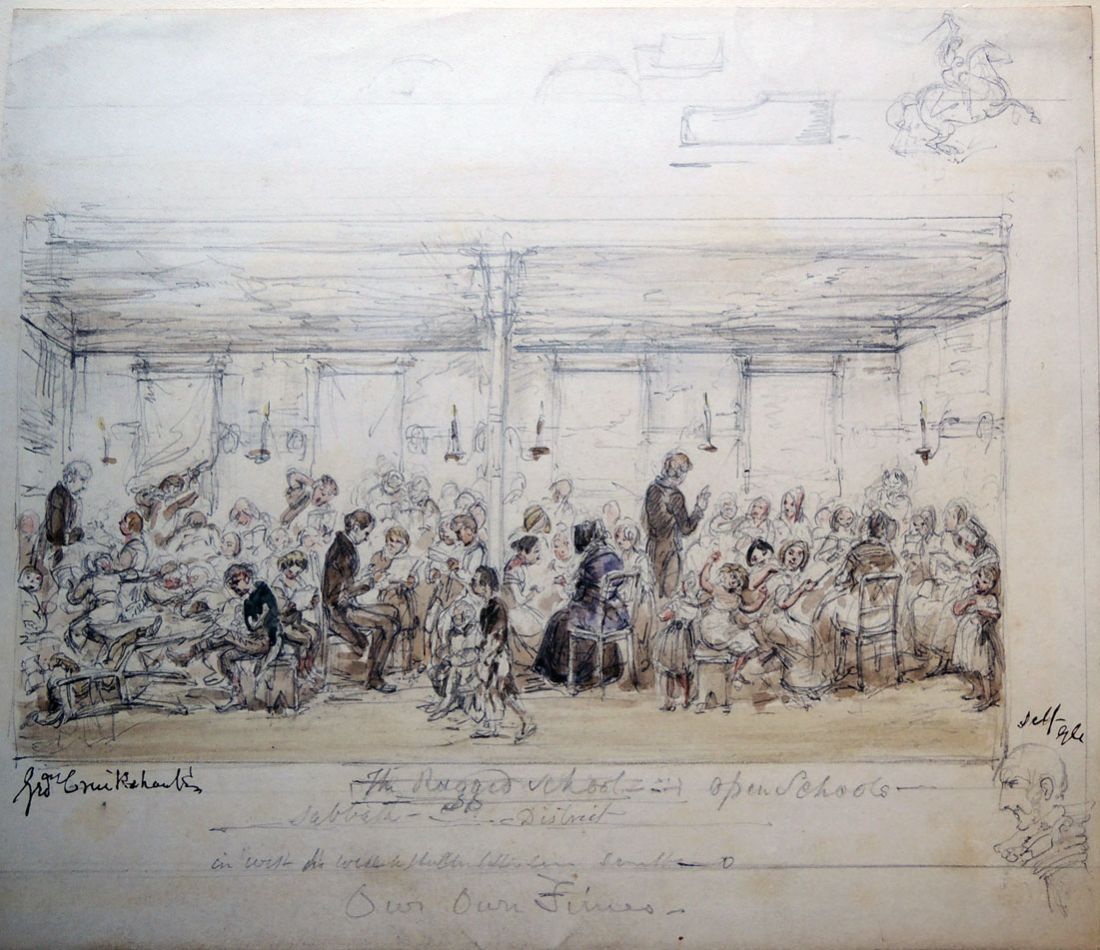
George Cruikshank (1792-1878), The Ragged School In West Street (late Chick Lane) Smithfield, [1846]. Pencil, ink, and watercolor. Original design for an etching published in Our Own Times, 1846. Graphic Arts Collection GA2013- in process
ragged school2

When in London, you can visit the Ragged School Museum, housed in three canalside buildings that once formed one of the largest ragged or free schools. According to the museum’s history site, “when Thomas Barnardo came to London from his home city of Dublin in 1866 … he was confronted by a city where disease was rife, poverty and overcrowding endemic and educational opportunities for the poor were non-existent. He watched helplessly as a cholera epidemic swept through the East End…. He gave up his medical training to pursue his local missionary works and in 1867 opened his first “ragged school” where children could gain a free basic education.”
cruikshank-ragged-school-8

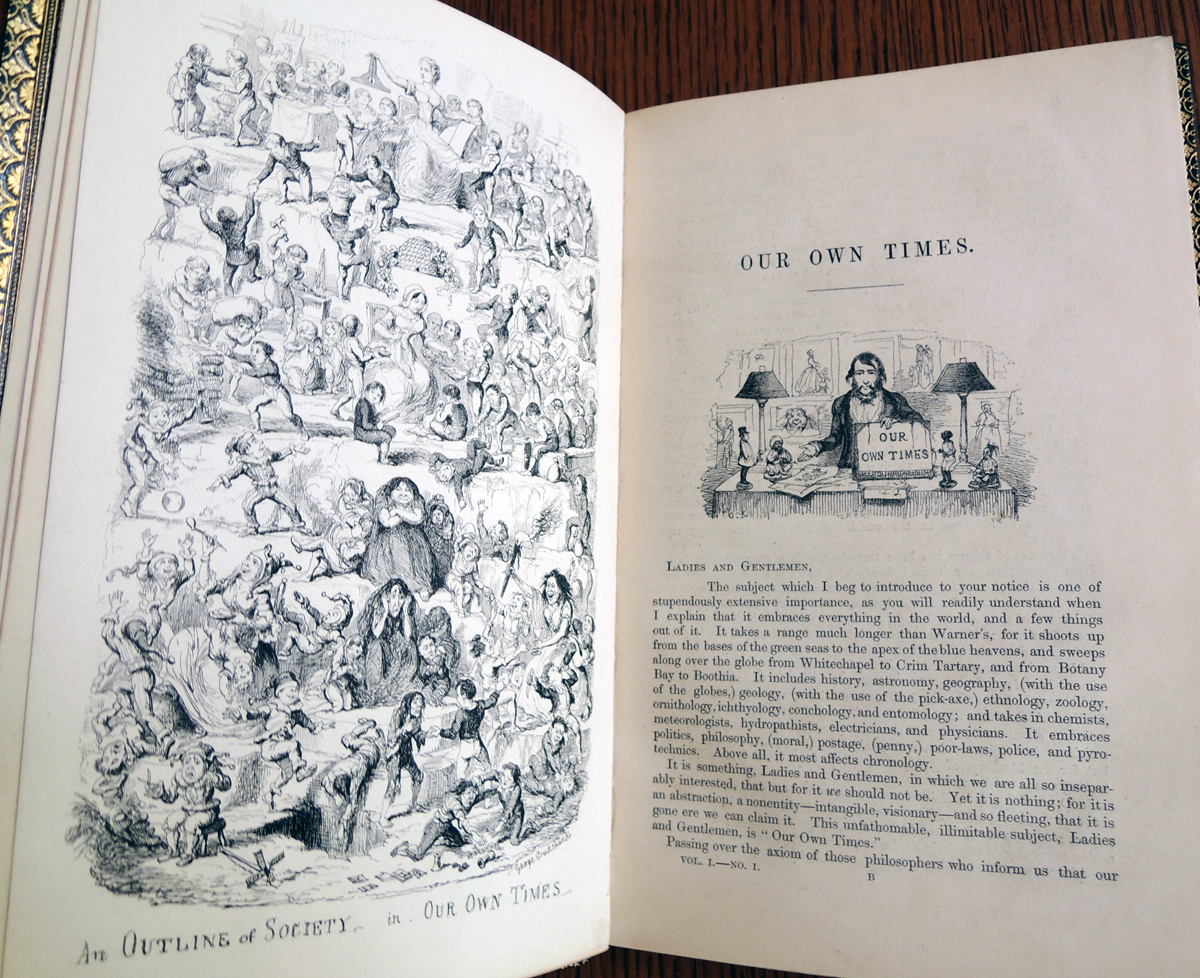
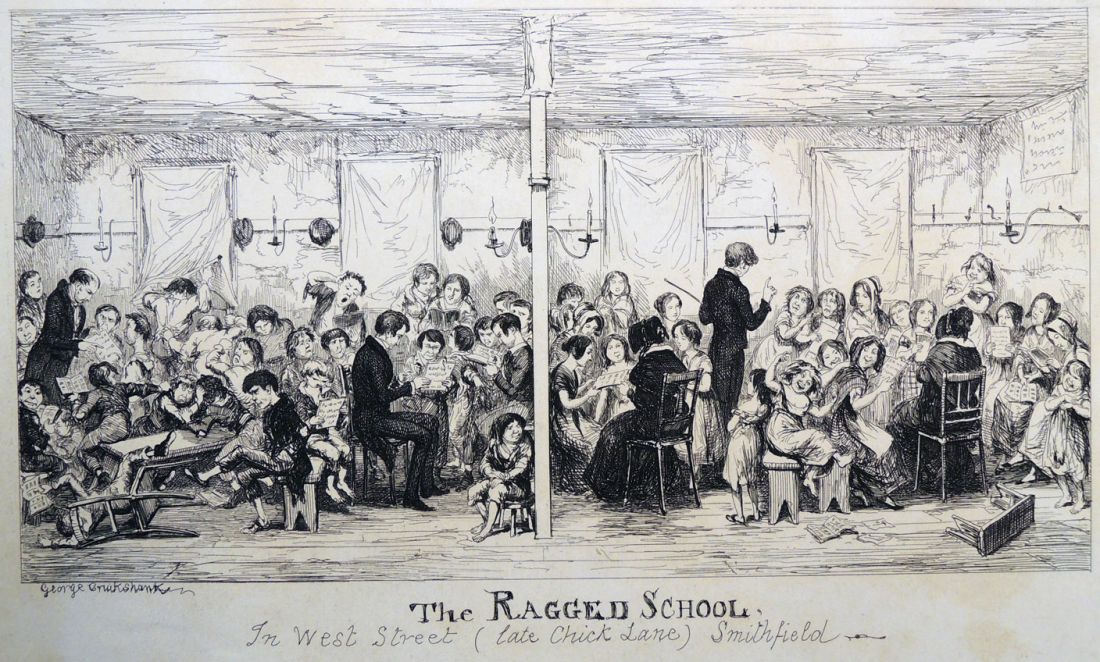
Ragged or free schools for London’s poor children existed long before Barnardo’s, usually set up in one room of a house. George Cruikshank (1792-1878) designed a view of such a classroom to illustrate his book Our Own Times, (Cohn 193). Published monthly from April to July 1846, each part had one original etching along with a total of 41 other illustrations.
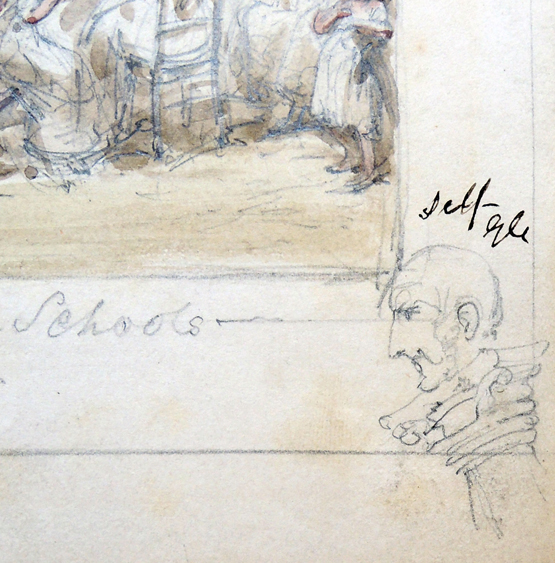
Cruikshank’s scene divides the school into two sections, one for girls on the right and one for boys on the left. Note the self-portrait at the bottom right corner, signed “self, GC.”
cruikshank ragged school6

Goethe remarked, “One cannot have a sense of humour unless one be without conscience or responsibility.” By the end of the year, Cruikshank’s moral conscience had overtaken his interest in caricature and frivolous entertainment. He gave up drinking and smoking, joined the temperance movement, and in 1847 began the 8 plates for The Bottle.
 

James Stewart is moving again

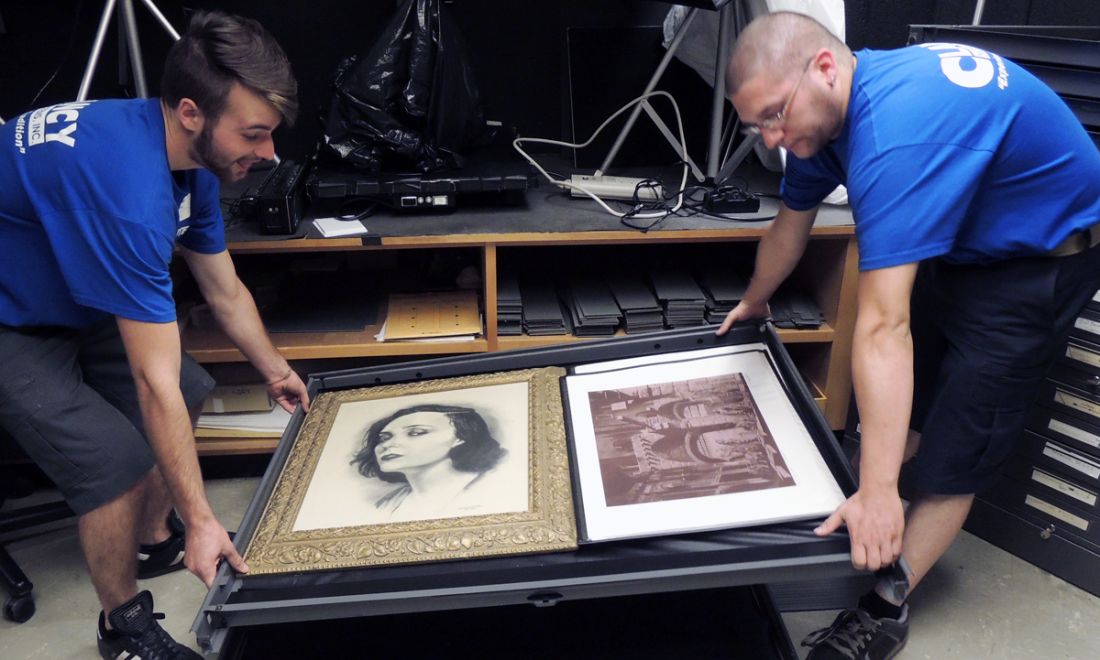
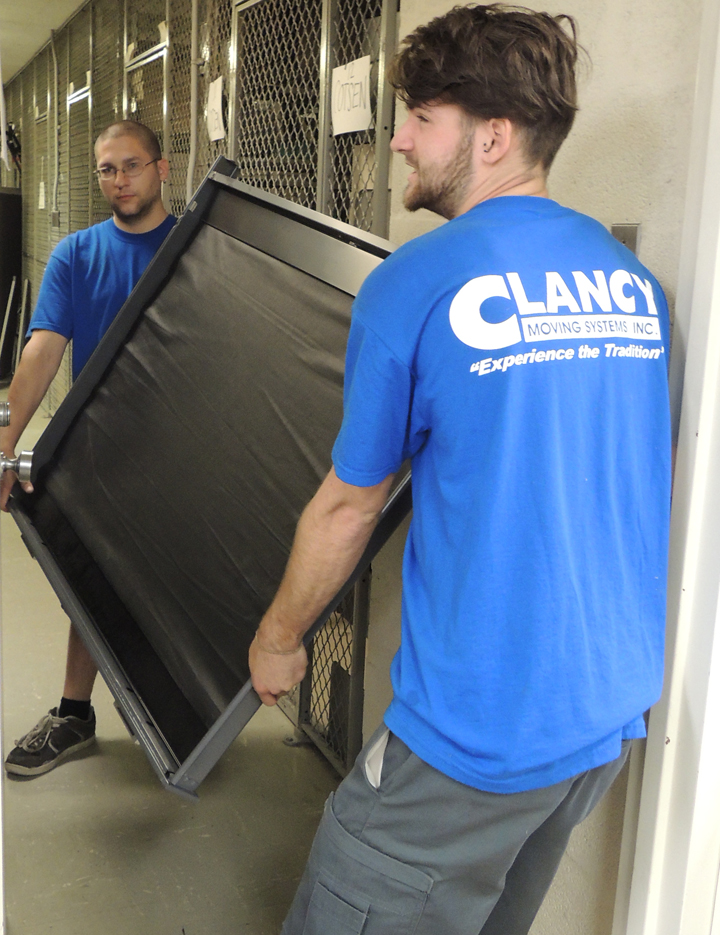
How do you get a three foot flat file through a two and a half foot door? This is one of the many challenges we are facing with the renovation of Firestone Library. Here are a few shots from this morning. Special thanks to the men of Clancy-Cullen moving company.

moving5

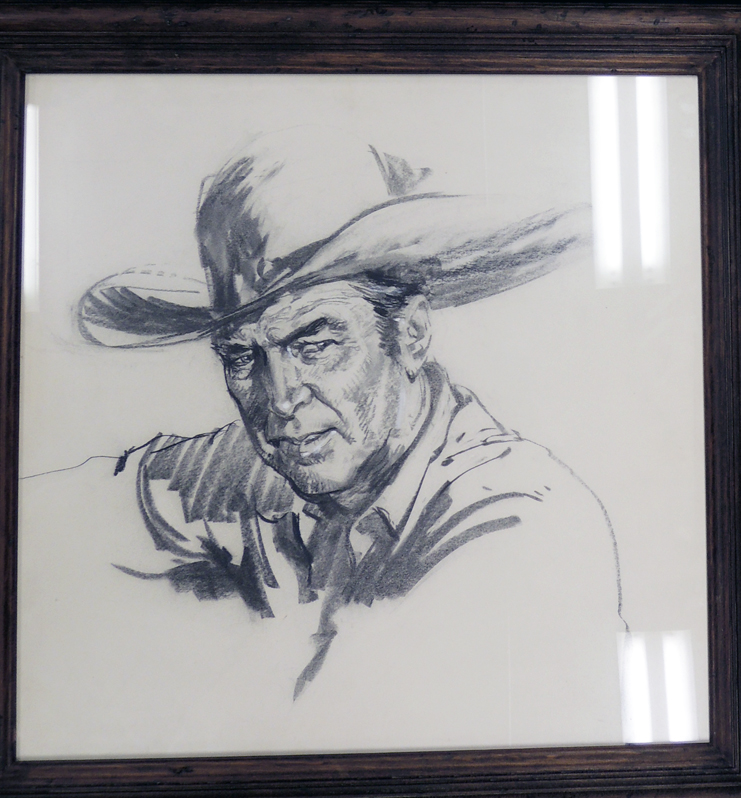
What is in this file drawer? See below.


moving3

James Stewart in Cowboy Hat

moving4 moving

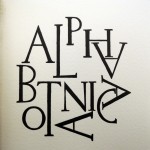
Alpha Botanica

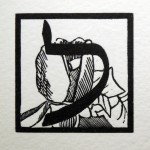
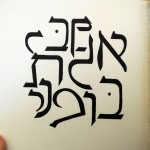
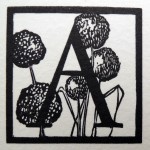
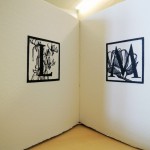
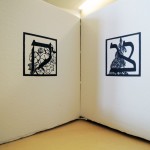
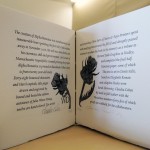
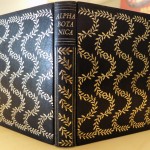
According to Sarah Horowitz, Alpha Botanica “began in the fall of 2004 with a few trial capitals and many sketches to ascertain the viability of a Yiddish-English book of poems illustrated with engraved images and capitals. From this grew designs for two sets of botanical alphabets, one Roman and one Hebrew.”

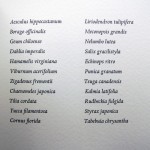
The printing of the first half was accomplished in 2006 by Chris Stern of Stern & Faye Printers, who unfortunately passed away before it could be completed. Arthur Larson of Horton Tank Graphics finished the book and Claudia Cohen bound the edition of 45 copies. Depicted behind each letter is a plant whose name begins with that letter. The list of plants and the colophon are found in the center of the volume.

Alpha Botanica, engravings by Sarah Horowitz ([Portland]: Wiesedruck, 2007). Copy 32 of 45. Graphic Arts Collection GAX 2013- in process

http://wiesedruck.com/about/

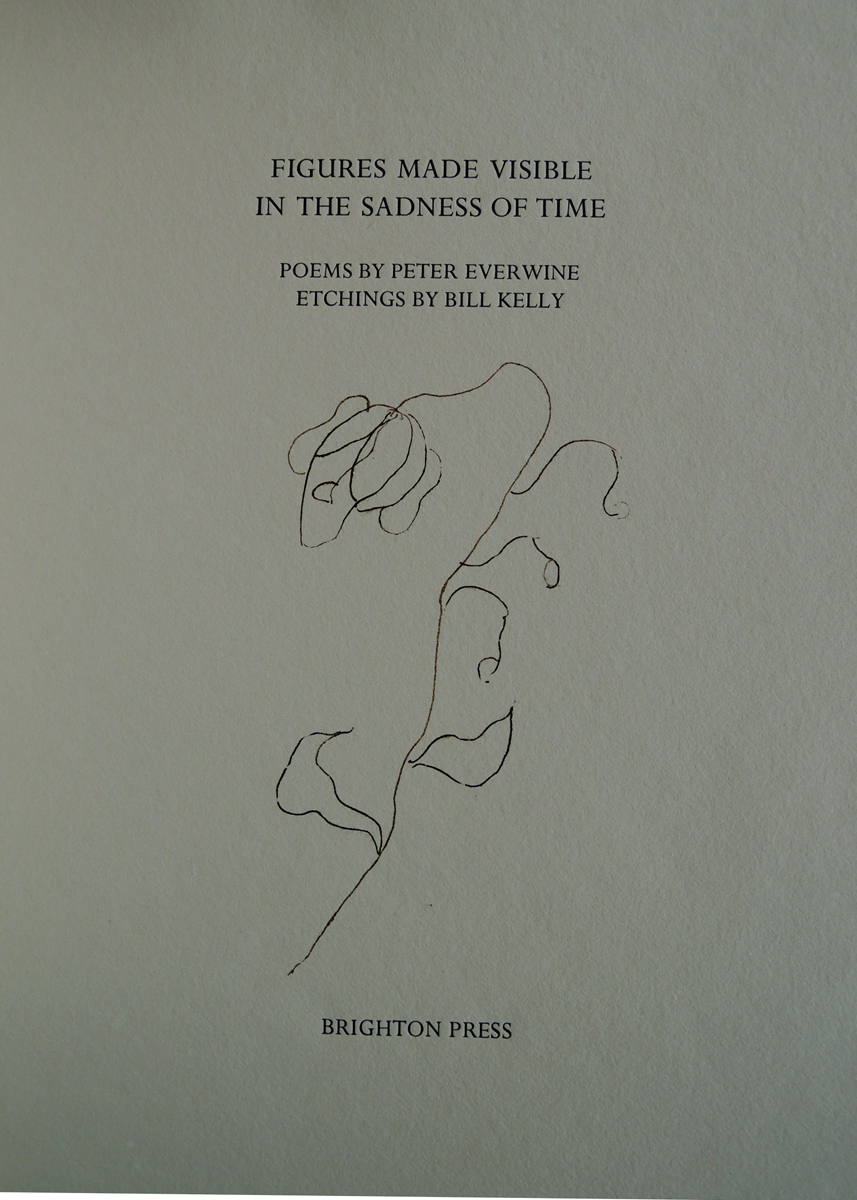
Figures Made Visible in the Sadness of Time

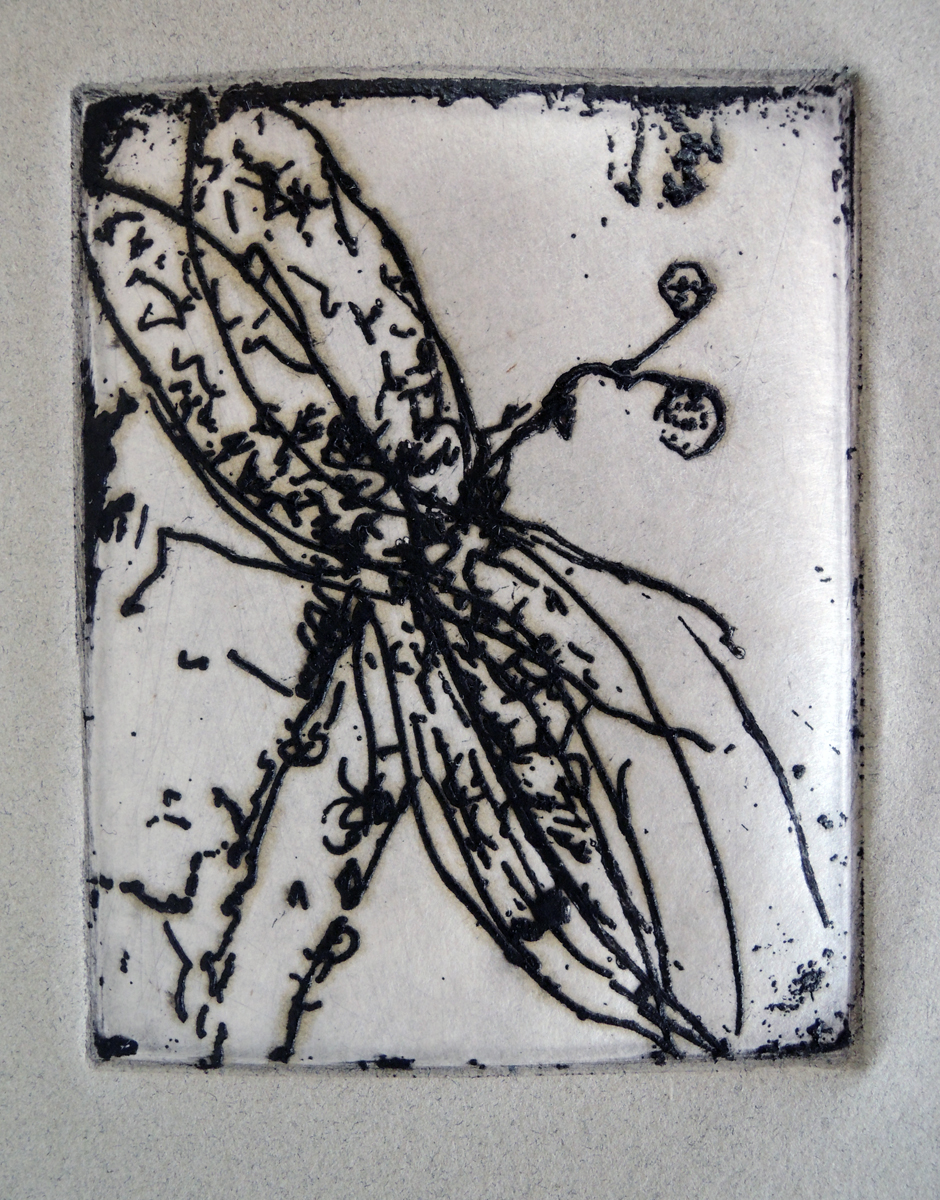
everwine coverFigures Made Visible in the Sadness of Time. Designed by Michele Burgess, poetry by Peter Everwine, etching by Bill Kelly (San Diego: Brighton Press, 2003). Copy 8 of 40. Graphic Arts Collection GAX Oversize 2004-0236Q

“This book was designed by the artists in close collaboration with the poet and Michele Burgess. The poems were printed letterpress by Nelle Martin and the etchings were hand wiped by the artists and printed with the assistance of Alvin Buenaventura. The tea-dyed linen cover bears a stencil that was hand cut by the artists and hand stamped through twelve templates by Sonja Jones. An original pochoir appears on the title page.” –Colophon


“Kelly has everwine4collaborated with the poetry of Peter Everwine to illustrate “Figures Made Visible in the Sadness of Time,” writes Marcia Manna. “The shape of a dragonfly is embedded as an etching on one page and also displayed on a long scroll, embellished with sparkles and vibrant shades of blue. Kelly said the image represents the fleeting moments when something is recognized and then disappears. ‘To be very literal about something means you are just seeing, and Peter operates in a world of transcendent beauty,’ Kelly said. ‘He’s one of the few poets I’ve worked with who understands art in a deep physical sort of way. The great thing about these books and art is that one doesn’t illustrate the other. One broadens the view of the other and it becomes something bigger.’”– “These books are also works of art,” by Marcia Manna (2004)

There is in me, always,
you and the absence of you.

There is in me, always,
that road that leads to a fieldeverwine 3
of flowers we once knew

in that place where you were young,
there, where Memory keeps a life
of its own in the dark,

like a plant that waits patiently
year after year, asleep and folded inward
until the appointed night arrives

when it stirs and wakes
and opens out—Oh dream flowering!
Darkness flowering into darkness!—

forms, figures made visible
in the sadness of Time.

everwine 1

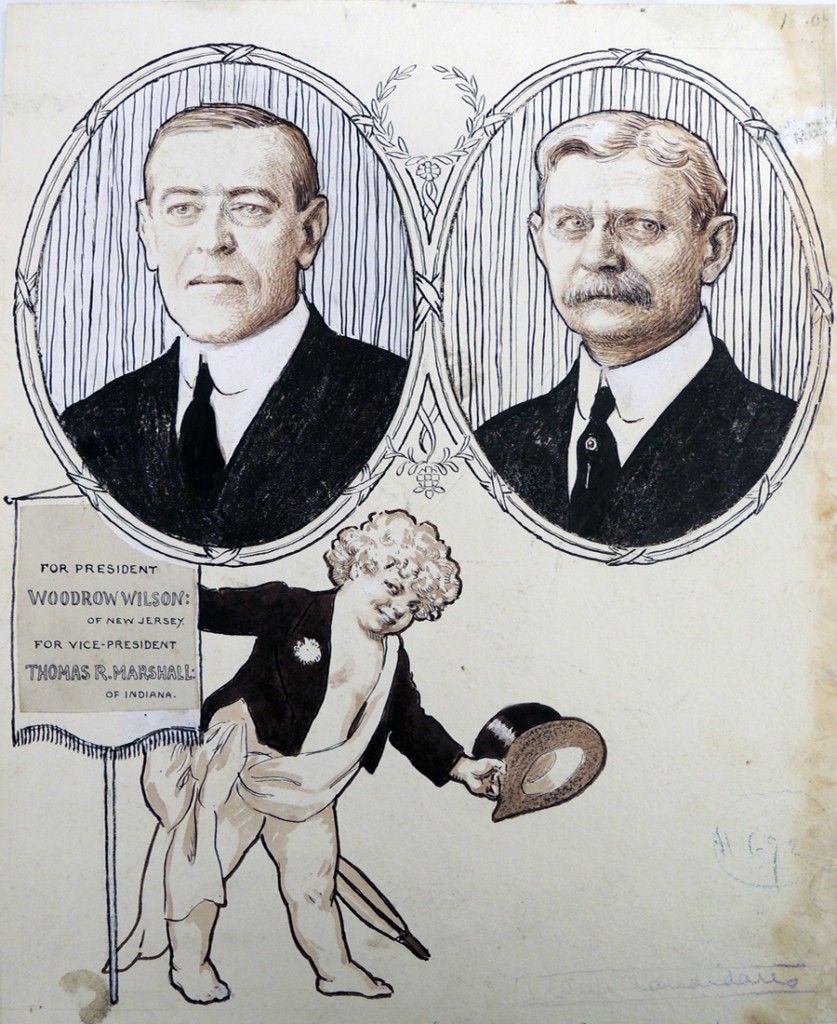
Woodrow Wilson of New Jersey

woodrow wilson 3 Drawing for On to Washington (New York: Puck magazine, 1912). Pen and ink, watercolor on board. Graphic Arts Collection GA 2009.00472
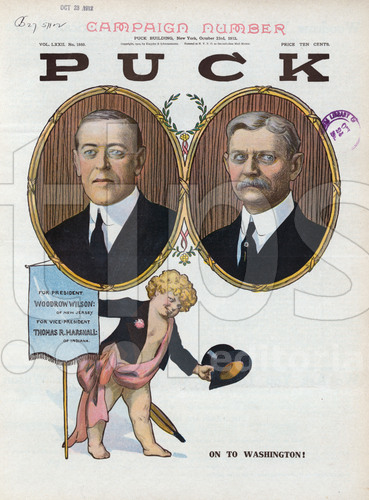
The Graphic Arts Collection holds a preliminary drawing for the cover of Puck magazine’s special campaign number of October 23, 1912. It features the classic Puck cherub and vignettes of Woodrow Wilson and Thomas Marshal. Unfortunately, Princeton’s copies of Puck do not include the 1912 issue and the digital version is in black and white. Happily, the Italian site “tipsimages” offers a thumbnail of the issue’s cover, seen below.

Wilson won the election with 41.9 percent of the vote to Roosevelt’s 27.4 percent and Taft’s 23 percent. Socialist Party candidate Eugene Debs won 6 percent. In the electoral college count, Wilson won in forty states, giving him 435 votes. Roosevelt carried only six states, earning 88 votes.

On to Washington!http://www.tipsimages.it/

Here’s is a campaign film made by the Democratic National Committee for Wilson in 1912, making fun of Taft.

Hoe’s Eight Cylinder Printing Press

public ledger1

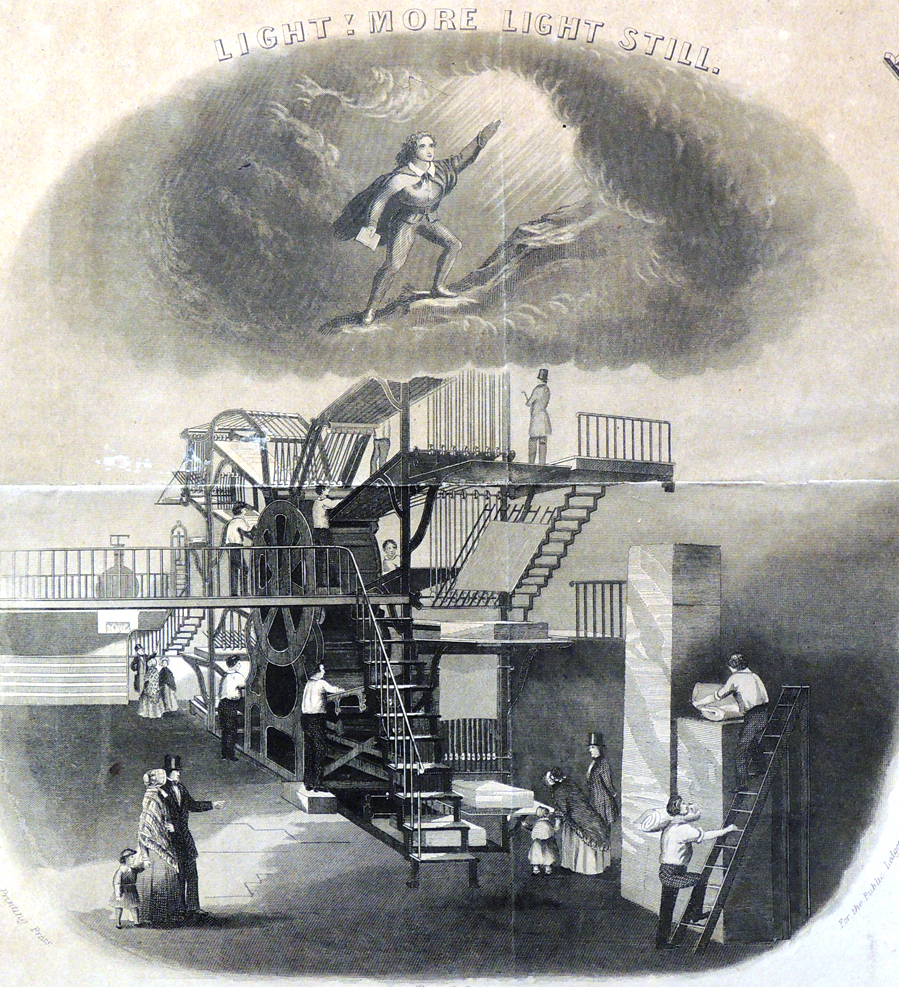
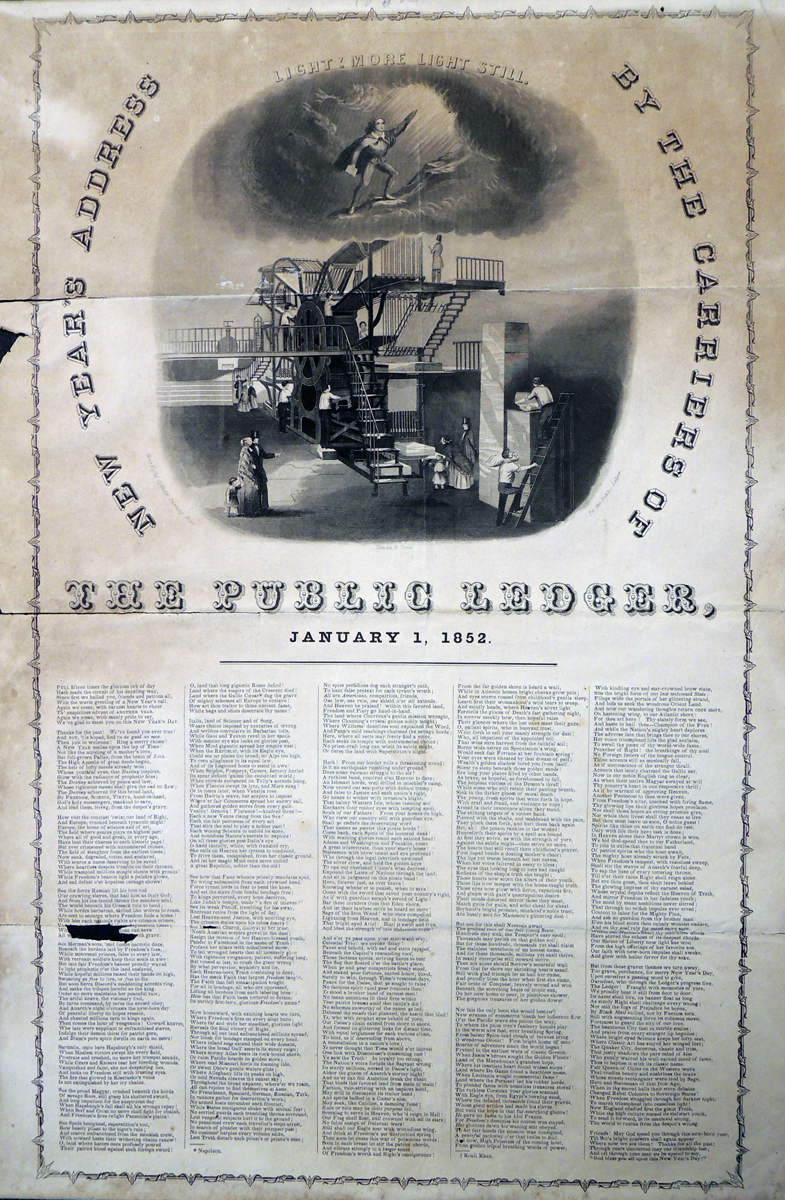
The New Year’s Address by the Carriers of the Public Ledger, January 1, 1852 ([Philadelphia: Public Ledger, 1851]). Broadside. Graphic Arts Collection GA2013- in process. Gift of Garrett Scott, in honor of Dale Roylance, with special thanks to Donald Farren, Class of 1958, for his assistance.

After leaving school at the age of fifteen, Richard March Hoe (1812-1886) joined his father’s New York printing business and went on to transform the entire printing industry.

Henry Lewis Bullen wrote a history of Richard Hoe for The Inland Printer:  “In 1834 the firm of R. Hoe & Co. consisted of Richard March Hoe and Matthew Smith, cousins, both twenty-two years of age, and Sereno Newton. The business was carried on in Gold Street, between Fulton and John streets, and in Ryder’s alley, leading off Gold Street, eastward. They were then the only makers of cylinder presses in America, and, in addition to making four kinds of cylinder presses, they made cases, chases and almost everything then used in printing except types and inks.” public ledger 3

“…The first record we have of the inventive genius of Richard March Hoe is the patent issued in 1843 for the first application of air springs to cylinder presses. …In 1844 he was the first to place type-high adjustable bearers on each side of the beds of cylinder presses. In 1845 he patented the first automatic sheet flier. Prior to this invention the sheets were taken from the cylinders by hand. In the same year the galley proof press was first put on the market by R. Hoe & Co., the idea coming to them from a printer in Boston. All these inventions are in common use today.”

“In 1846 Richard March Hoe patented a “steam inking apparatus” for automatically inking forms on Washington hand presses, and a number were sold. This apparatus displaced one operator on a hand press. It had two rollers. Notwithstanding the gradual increase of cylinder presses and their improvement, in 1846 the bulk of the printing was still done on hand presses.”

“The year 1847 saw the advent of fast cylinder presses. In that year, on July 24, Richard March Hoe patented his type revolving newspaper press, of which in its largest development we present a picture. The English patent was issued on May 4 of the same year. The first of these presses had four impression cylinders, and was installed in the plant of the Philadelphia Public Ledger in 1847. This press made 10,000 impressions an hour. It worked so satisfactorily that the proprietor of the Ledger accepted it immediately and ordered a second press. From that time until the present America has held the foremost place in the development of printing presses.”

In 1851, to celebrate the end of a successful year, the Public Ledger printed this New Year’s broadside featuring a large wood engraving by Illman & sons of the paper’s eight cylinder press.

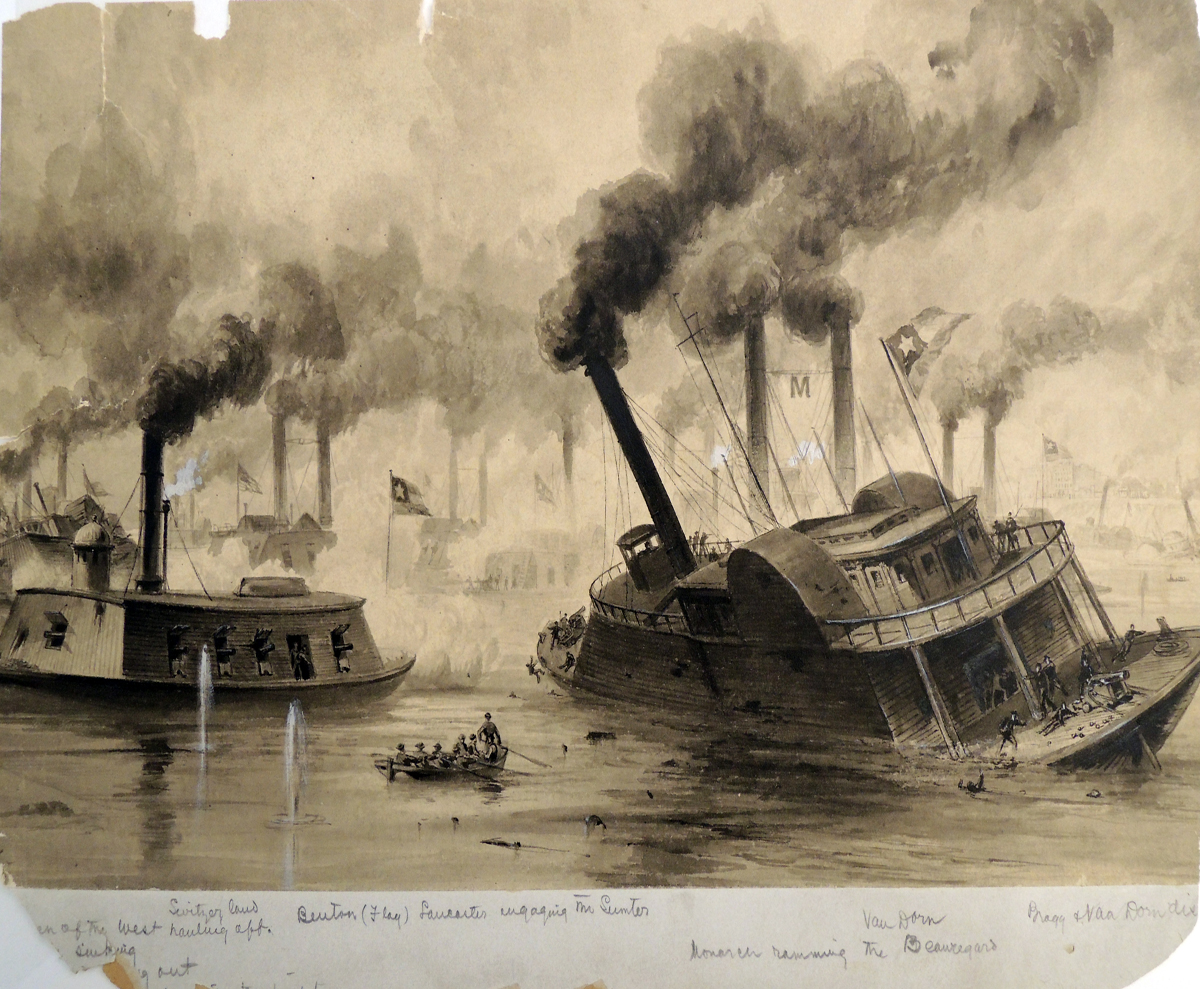
Waud draws the Battle of Memphis

monarch

According to the Naval Historical Center under the Department of the Navy, “the CSS General Beauregard, a 454-ton side-wheel river steamer, was built at Algiers, Louisiana in 1847 as a towboat. Under the name Ocean, she was taken over by the Confederacy in January 1862 and converted a “cottonclad” ram.

Renamed General Beauregard, she was commissioned as part of the River Defense Fleet in April 1862 and sent up the Mississippi to Tennessee. She took part in the naval actions off Fort Pillow on 10 May 1862 and Memphis on 6 June. In the latter action, General Beauregard closely engaged the Federal ram Monarch and ironclad Benton before being disabled and sunk.”

Londwaudon-born Alfred Rudolph Waud (1828-1891) was one of 30 soldier/sketch artists documenting the American Civil War. Often incorrectly listed as Ward, the artist immigrated to Boston in 1850, went to work for the New York Illustrated News in 1860, and transferred to Harper’s Weekly a year later.

Waud was present for the Battle of Memphis or Battle of the Rams on June 6. Three weeks later, a series of his sketches had been translated into wood engravings and published in Harper’s Weekly June 28 issue. Although this image was not included in the magazine, it was engraved and prints of the scene are held in public collections.

Alfred Rudolph Waud (1828-1891), Monarch Ramming the Beauregard, [1862]. Pencil, ink and wash sketch. Graphic Arts Collection GA 2006.02563

Ex libris of Laurence Hutton

hutton

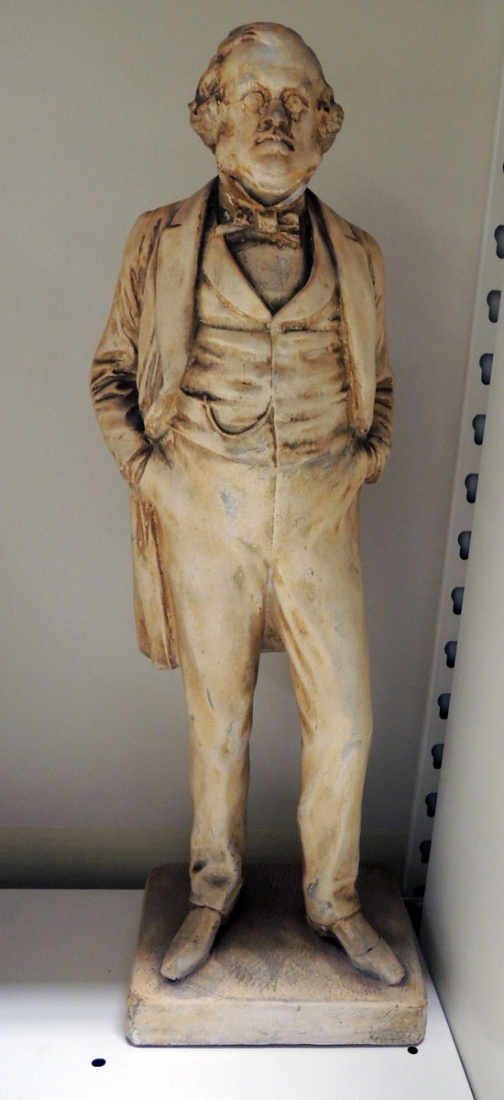
One of several bookplates used by Laurence Hutton (1843–1904) was drawn by his friend and colleague at Charles Scribners’s Sons, Edwin Howland Blashfield (1848-1936). The plate shows Hutton’s library with the theatrical mask of tragedy and a statue of William Makepeace Thackeray (1811-1863), who Hutton met as a young boy. The graphic arts collection is fortunate to hold the original drawing for this ex libris.

Together, Blashfield and his wife, Evangeline Wilbour Blashfield (ca.1859-1918), wrote and illustrated a number of magazine articles for Scribners, as well as six monographs. A copy of their Italian Cities (1902), was inscribed to Hutton as follows: “To the dear Huttons, with Xmas greetings from their friends, Evangeline Wilbour Blashfield, Edwin Howland Blashfield.” [Rare Books: Laurence Hutton Collection (HTN) N6911 .B6]

Edwin Howland Blashfield (1848-1936), Laurence Hutton bookplate, ca. 1900. Pen and ink drawing. Graphic Arts Collection GA 2006.02562
thackeray-figurineHutton’s figure of Thackeray, once on his bookshelf, is held in Princeton’s collection as well.

The European Race

mosley european4
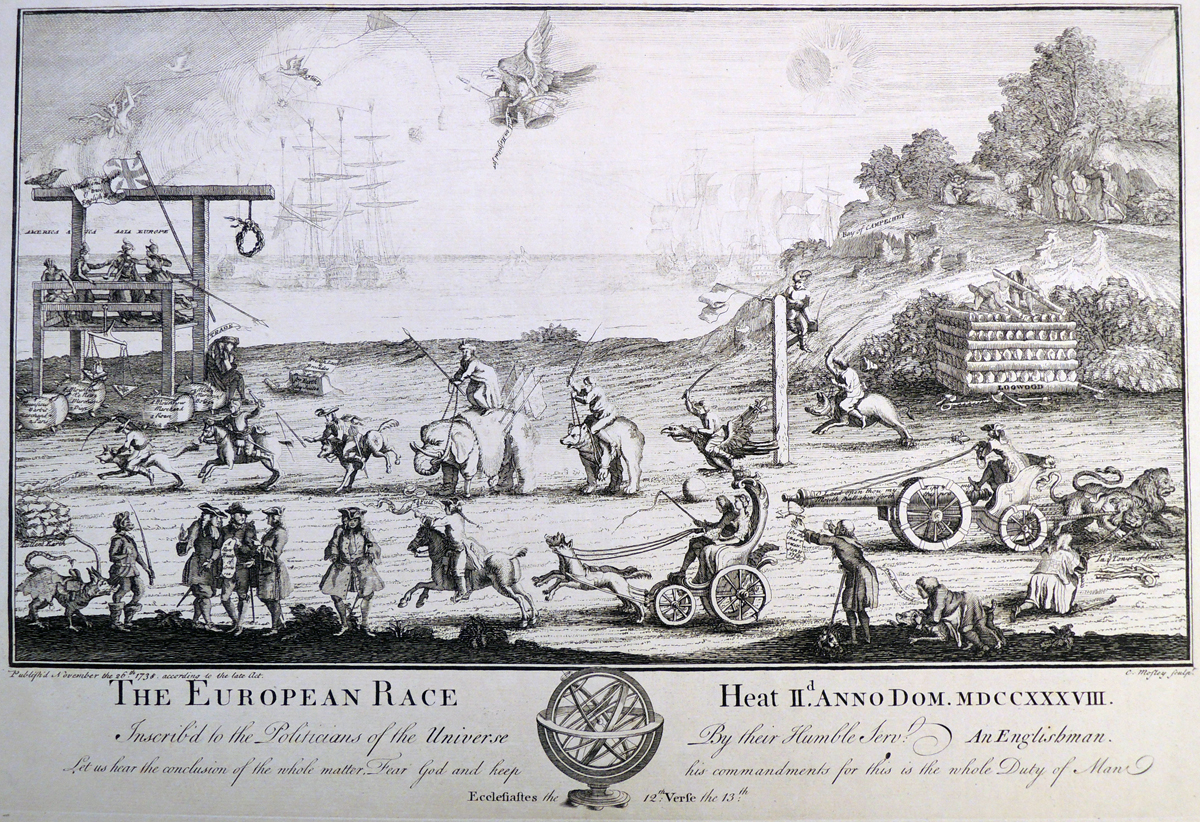
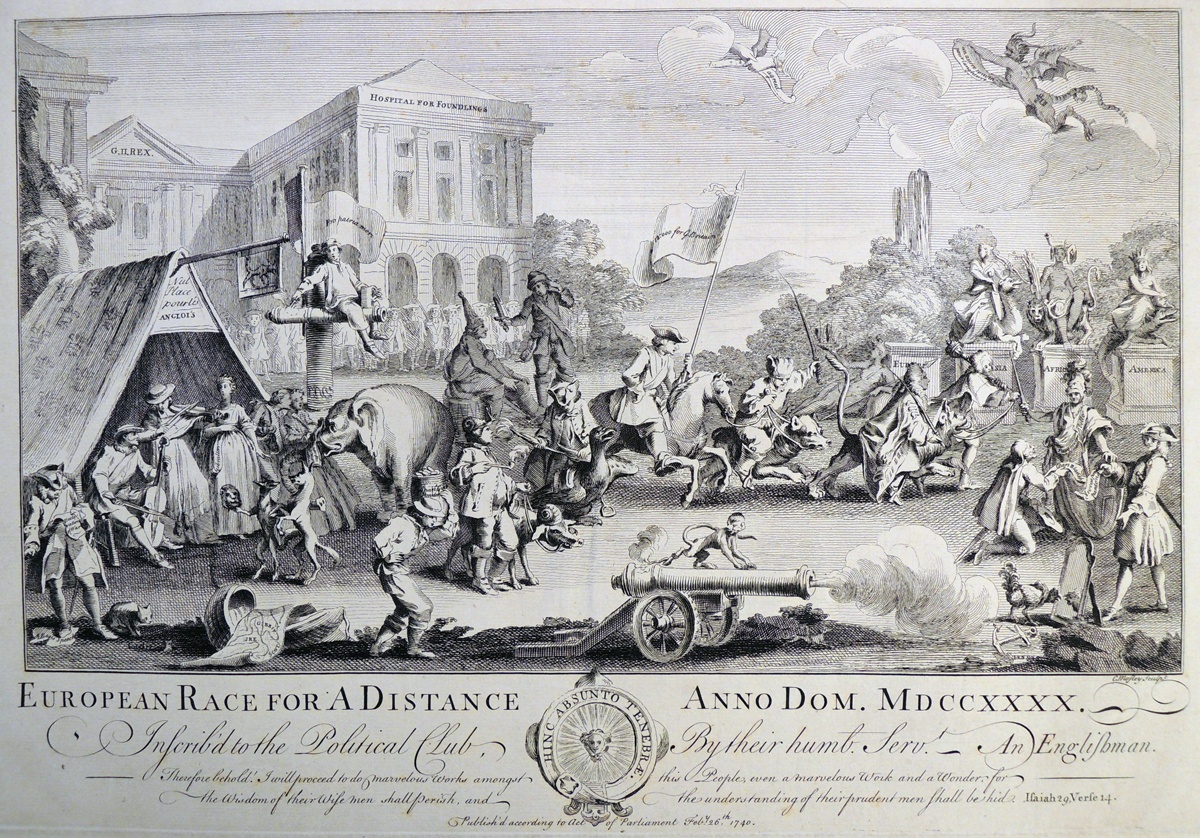
London engraver Charles Mosley published four satirical prints, 1737 to 1740, on the ‘European race’ between nations. The Graphic Arts Collection is fortunate to have acquired two of the rare set in honor of it former curator, Dale Roylance.

euo raceCharles Mosley (ca.1720-ca.1756), The European Race Heat IId Anno Dom. MDCCXXXVIII, November 26, 1738. Graphic Arts Collection. Purchased in honor of Dale Roylance with the support of the Friends of the Princeton University Library.

mosley european6Sir Robert Walpole (1676–1745) figures in each scene, as he struggles to prevent war, against the wishes of the King and the House of Commons. In 1739 Walpole gave in and sent British forces into what became known as the War of Jenkins’ Ear.

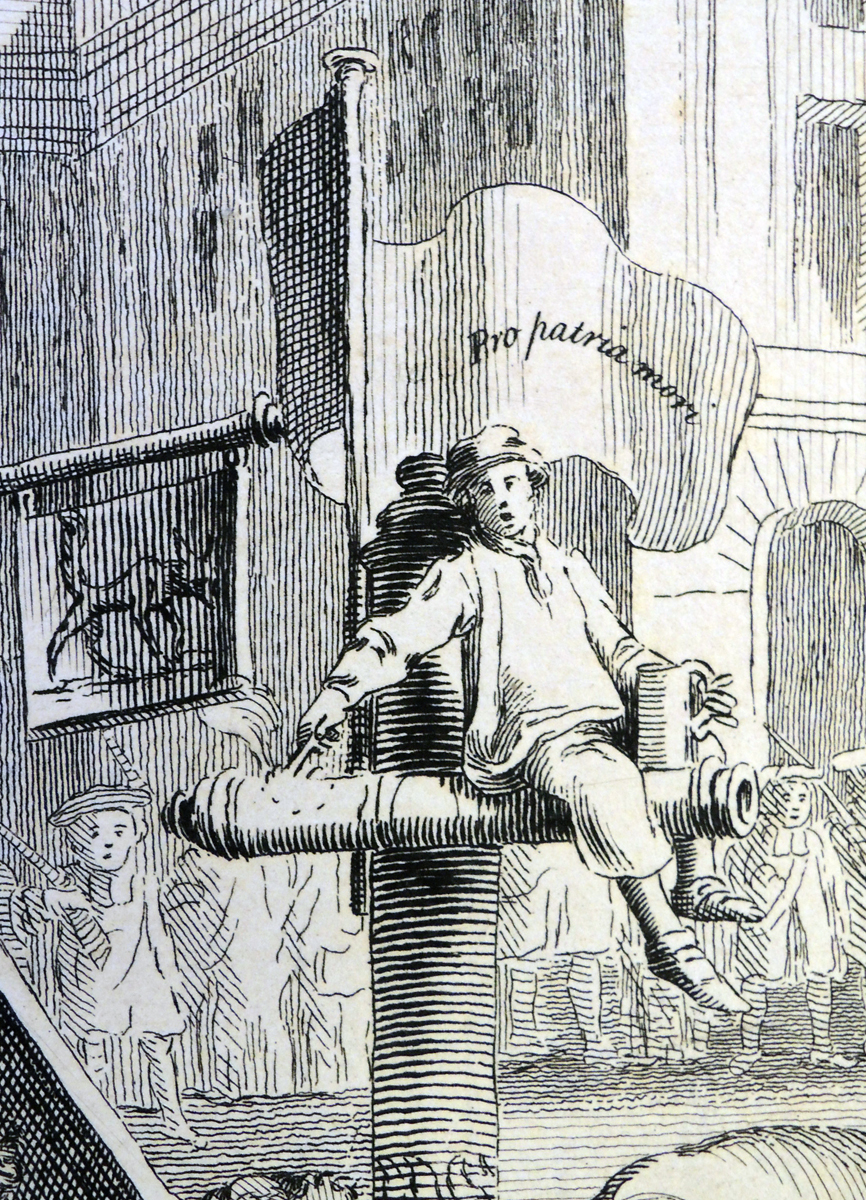
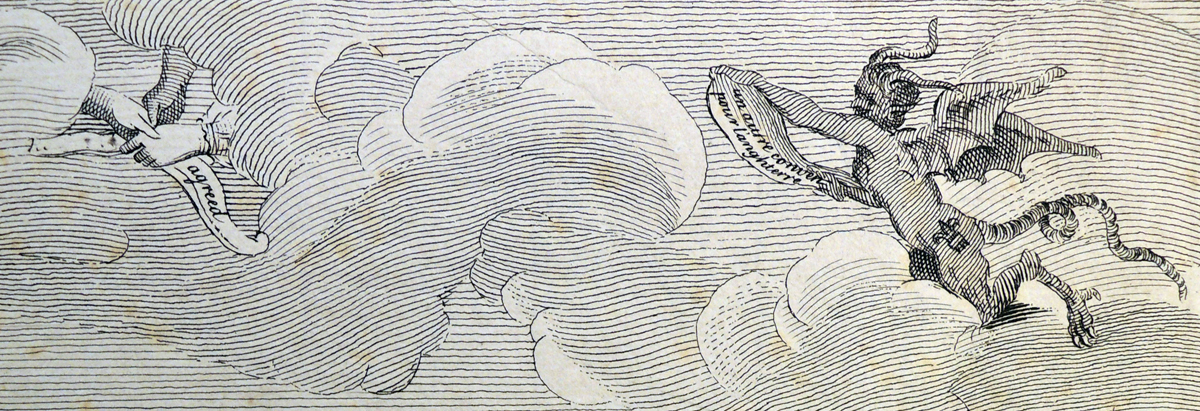
Many animals and riders are competing, including the Turkish elephant, the Dutch boar, the French Fox, the Austrian eagle, and the Russian bear, among others. The skies are full of iconography, with a partial eclipse in 1738 along with cobwebs forming around the doves. By 1740, the devil has given up flying a kite and holds a small banner reading “un autre conven pour l’angleterre” [another convention for England].

euro raceCharles Mosley (ca.1720-ca.1756), European Race for a Distance Anno dom. MDCCXXXX, Inscrib’d to the Political Club, by their humb. servt. An Englishman, February 26, 1740. Engraving. Graphic Arts Collection. Purchased in honor of Dale Roylance with the support of the Friend of the Princeton University Library.

mosley european8

The Graphic Arts Collection also holds a pirated edition of Mosley’s 1738 engraving, laterally reversed, revealing that an unidentified artist copied Mosley’s positive image onto a copper plate, resulting in a flipped copy.

As I was saying…

march of intellect 7heath march of intellect 2

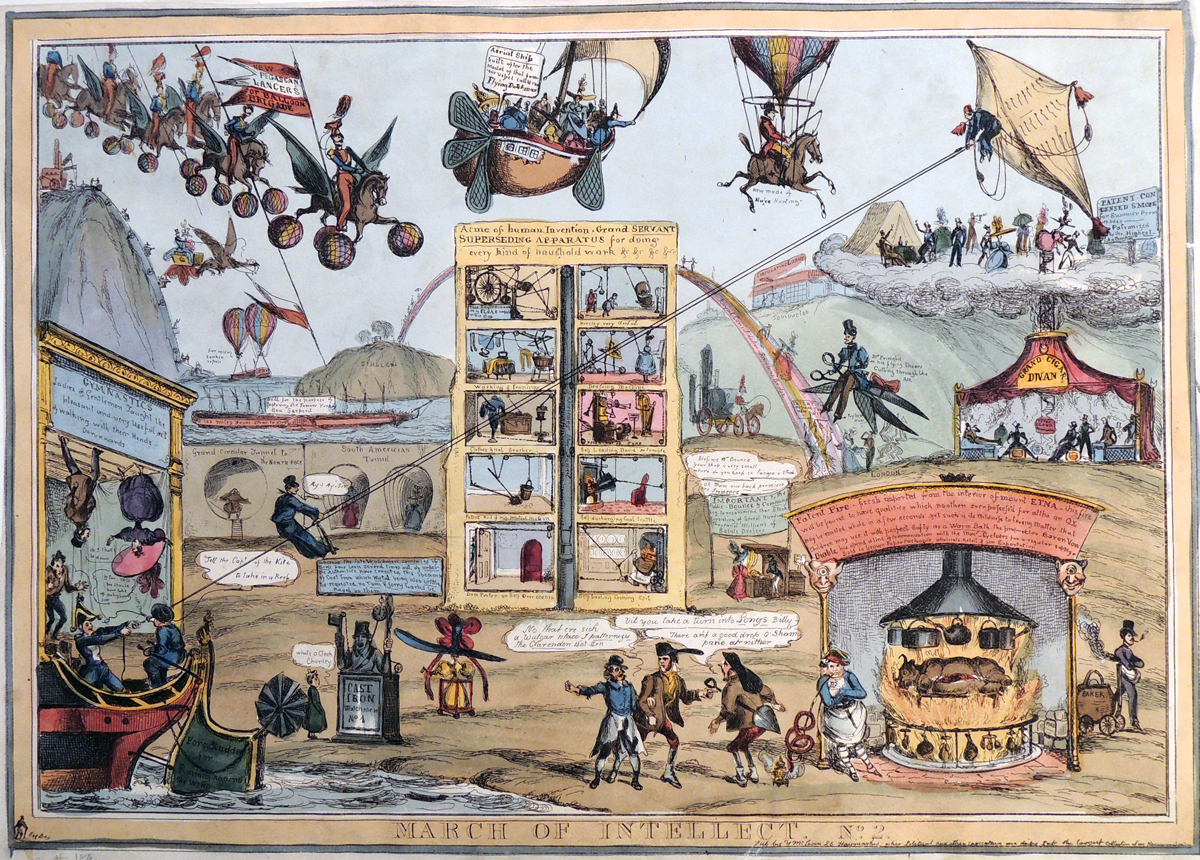
William Heath (1794/95-1840), March of Intellect No. 2, 1829. Etching with hand coloring. Graphic Arts Collection. Purchased in honor of Dale Roylance with the generous support of the Friends of the Princeton University Library

heath march of intellect 3

William Heath created three large, multifaceted satires of the Society for the Diffusion of Useful Knowledge (SDUK). The first and third can be found in most collections of British caricature, including ours, but the second is very rare. Thanks to the Friends of the Princeton University Library, the Graphic Arts Collection has now acquired this plate in honor of Dale Roylance.

heath march of intellect4

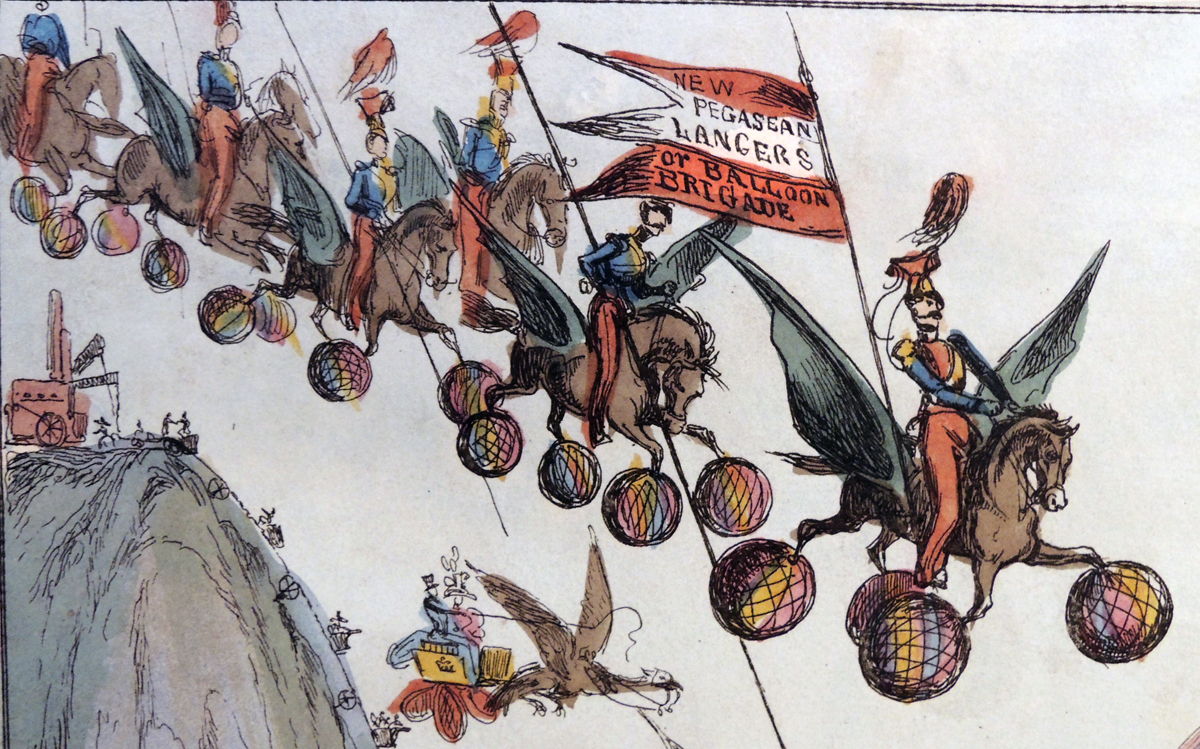
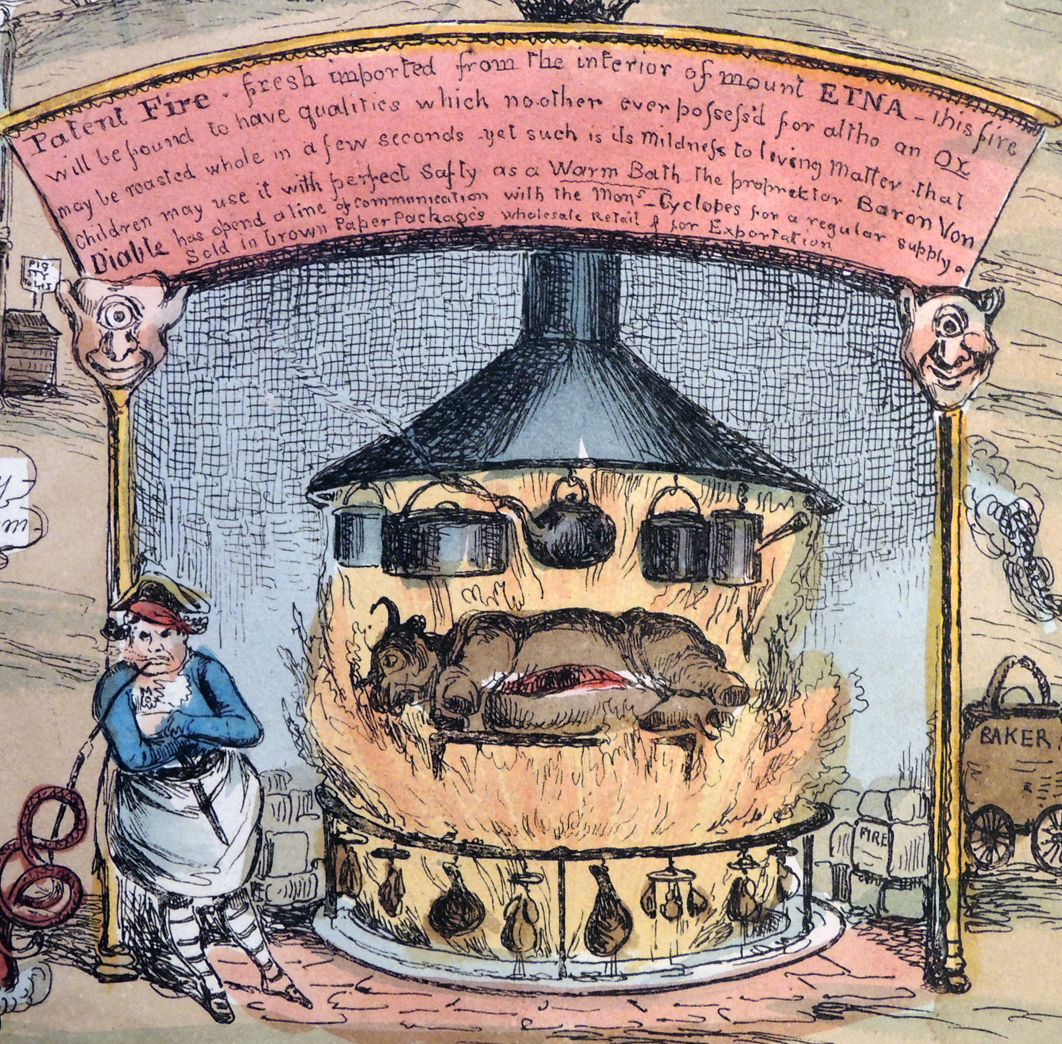
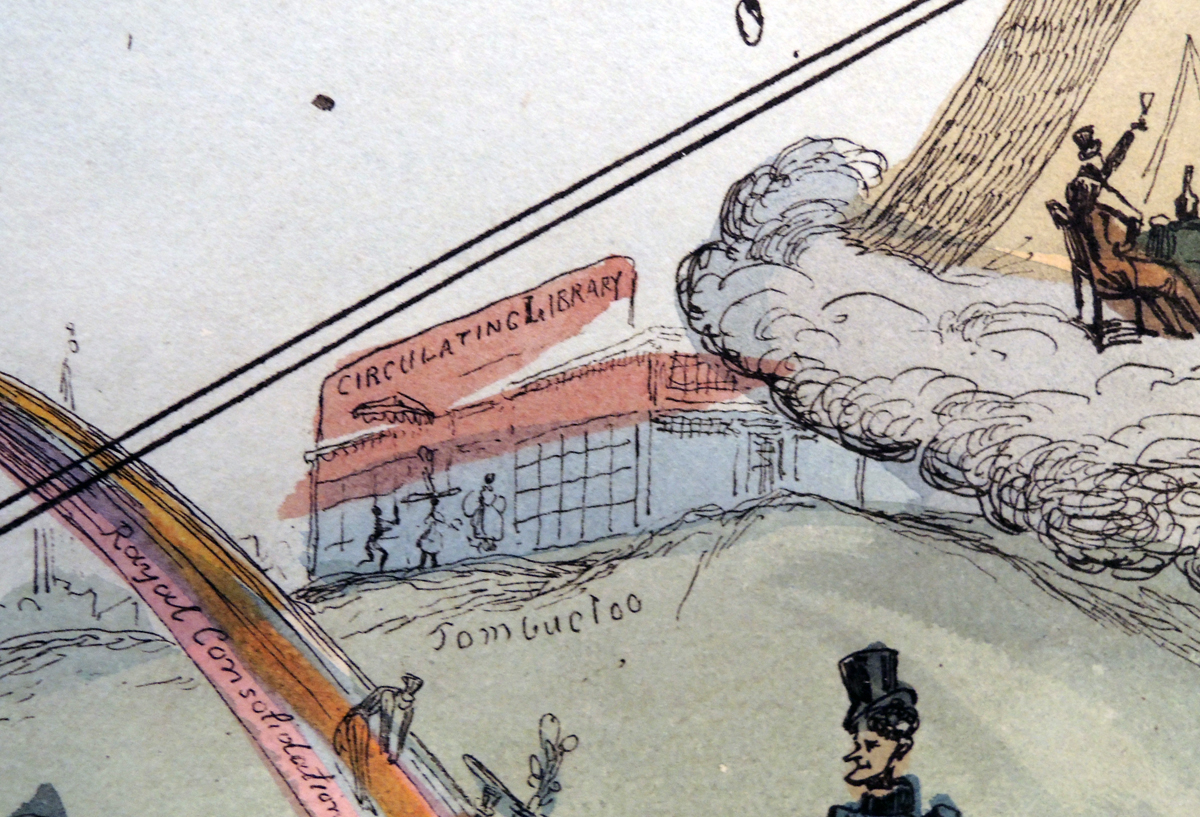
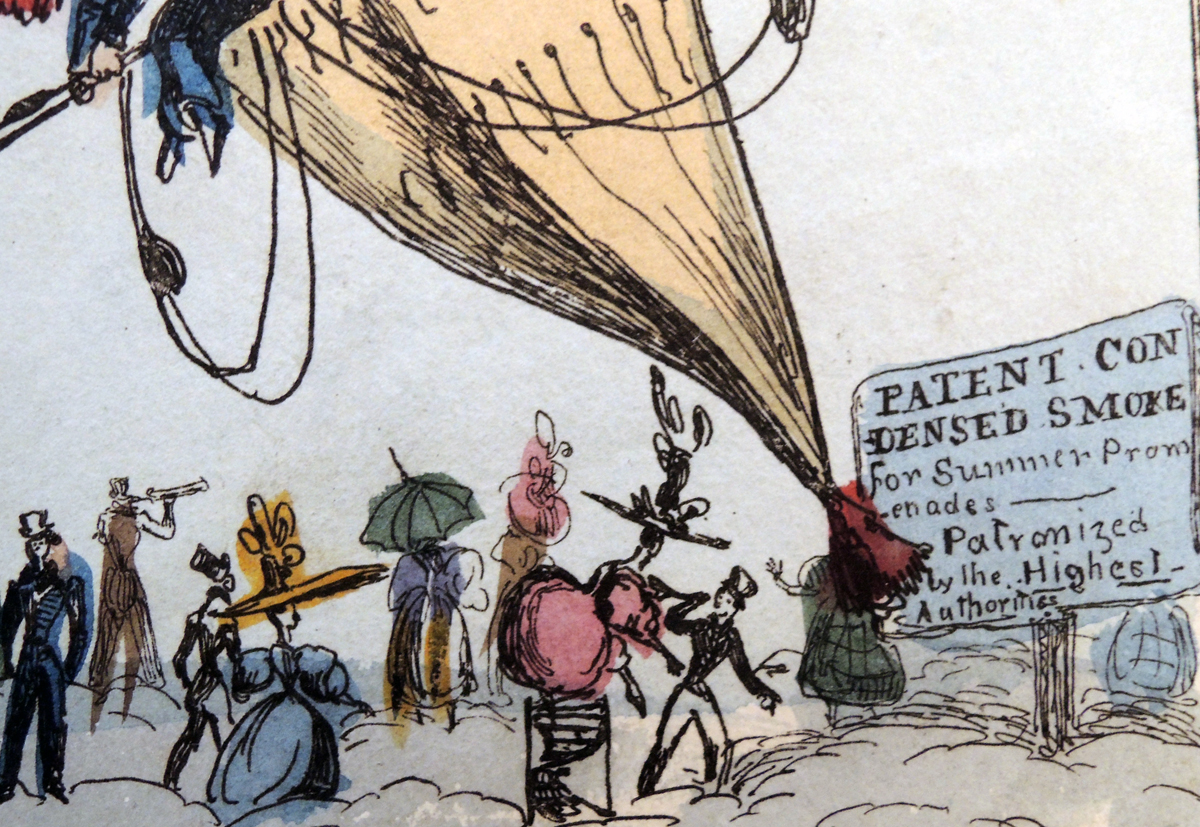
The complexity of the scene reflects the cacophony of inventions and intellectual pursuits raging at that time. Heath begins the group in January 1828, following an accident in the Thames Tunnel, and each feature tunnels to locations around the world. Although they are all varied, the first features accidents due to reading and study; the second focuses on inventions and patents; and the third includes fantastical travel machines.


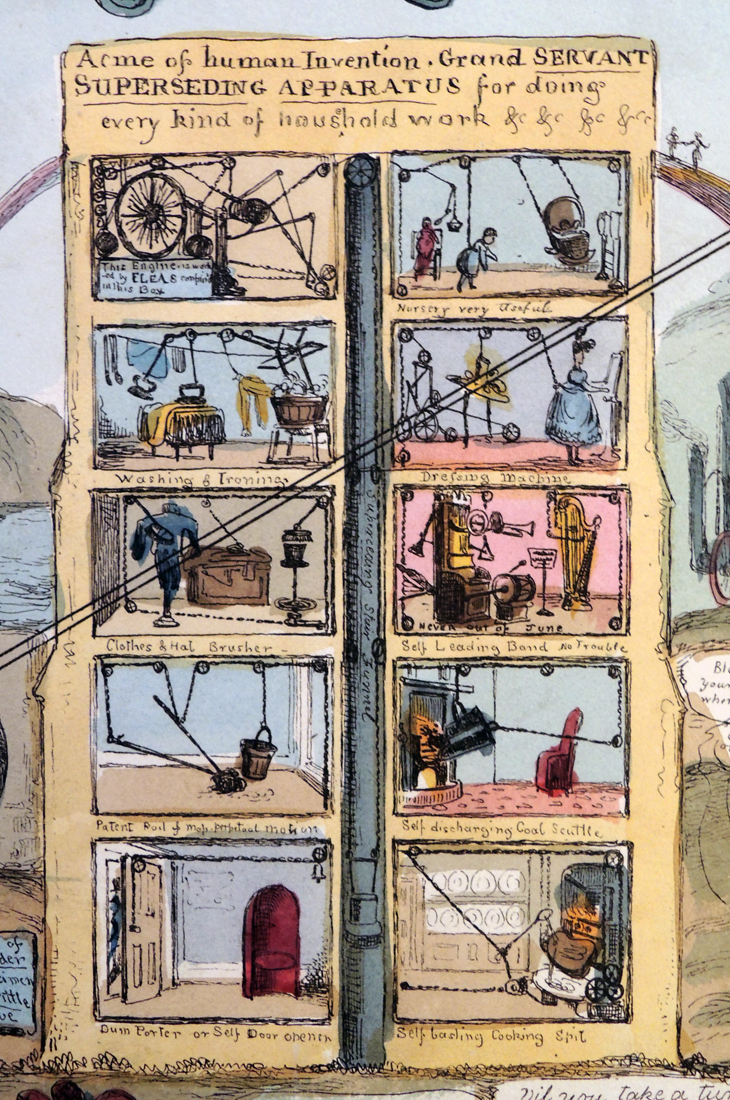
A five-story structure stands at the center of our new print, with ten windows labeled ‘Acme of Human Invention. Grand Servant Superseding Apparatus for Doing Every Kind of Household Work &c, &c, &c.’ Inside each window are different steam-powered machines with elaborate systems of ropes and pulleys for rocking the baby or ironing the clothes or turning the cooking spit. A ‘superseding stair tunnel’ runs up the center.march of intellect 2

An exploding volcano shoots travelers from Saint Helena in the South Atlantic Ocean and multiple flying machines fill the sky while at the bottom right, a chef cooks on ‘Patent Fire: Fresh imported from the interior of Mount Etna.’

heath march of intellect5