Le tombeau des secrets


1929/1930 marked an important moment in the history of Surrealism and for the French poet René Char (1907-1988) in particular. Early in 1929 while still living in L’Isle sur la Sorgue, Char began writing and publishing, founding the journal Méridiens (complete in three issues Marquand PQ 1141 .M47).

In August 1929, he sent copies of his book Arsenal to Paul Éluard (1895-1952) in Paris, who responded immediately and came to visit him in the south of France. They formed a bond that became a lifelong friendship and in late November Char moved to Paris where Éluard introduced him to André Breton (1896-1966) and the other surrealists.

Char’s Profession de foi du sujet was published in December 1929 in Breton’s journal La Révolution surréaliste, (Marquand NX600.S9 R3) along with Luis Buñuel’s script for Un Chien Andalou, written with Salvador Dalí. Also in December, Buñuel’s new film L’Age d’or was shown in a Paris cinema and Breton published his Second Manifesto of Surréalism, marking a new era for the movement. La Révolution surréaliste is renamed Le Surréalisme au service de la Révolution (special collections Oversize 0904.891) with the two first editions appearing early in 1930.
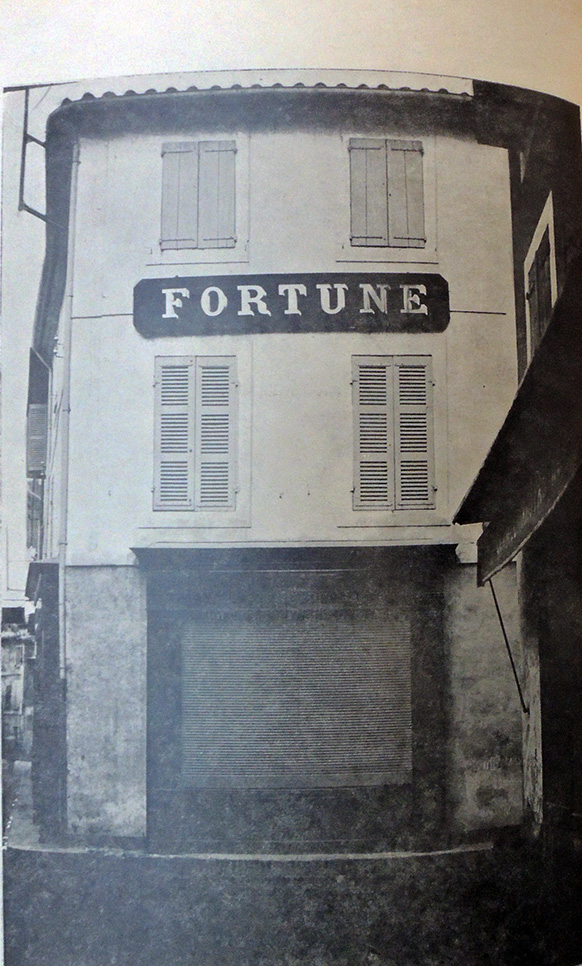
In the spring of 1930, Char, Breton, and Éluard went on a driving tour of Vaucluse in Southeastern France (located in the Provence-Alpes-Côte d’Azur region). It was on this trip the men collaborate on the small volume Ralentir Travaux (Slow Down Construction, Marquand PQ2603.R35 R313 1990), the title taken from a road sign. In addition, they played with photo-montage constructions using Char’s family photographs.

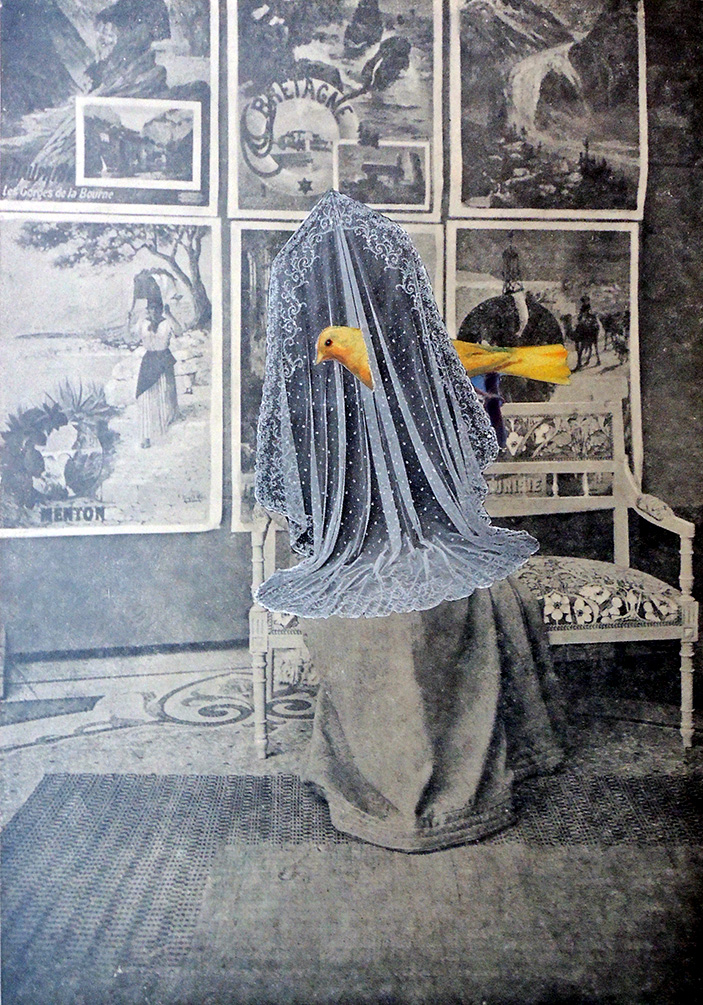
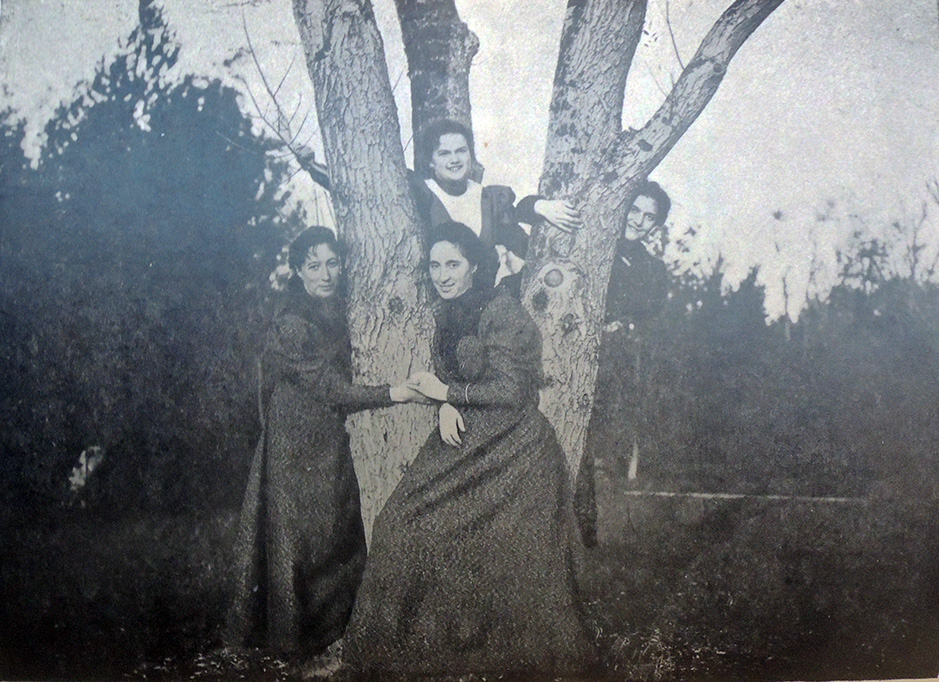
In April, Char published Le Tombeau des secrets (The Tomb of Secrets) and in each copy of the limited edition included an original collage [see ours at the top], using a photograph of Char’s godmother, Louise Roze but (on Char’s insistence), hiding her face in various ways.

Because of this unique element and Char’s beautiful writing at this pivotal moment in 1930, Le Tombeau des secrets is a rare treasure, now for the first time acquired by the Graphic Arts Collection. This major acquisition was made with the assistance of colleagues in French Literature, Art and Archeology, and European History, for which we are extremely grateful.
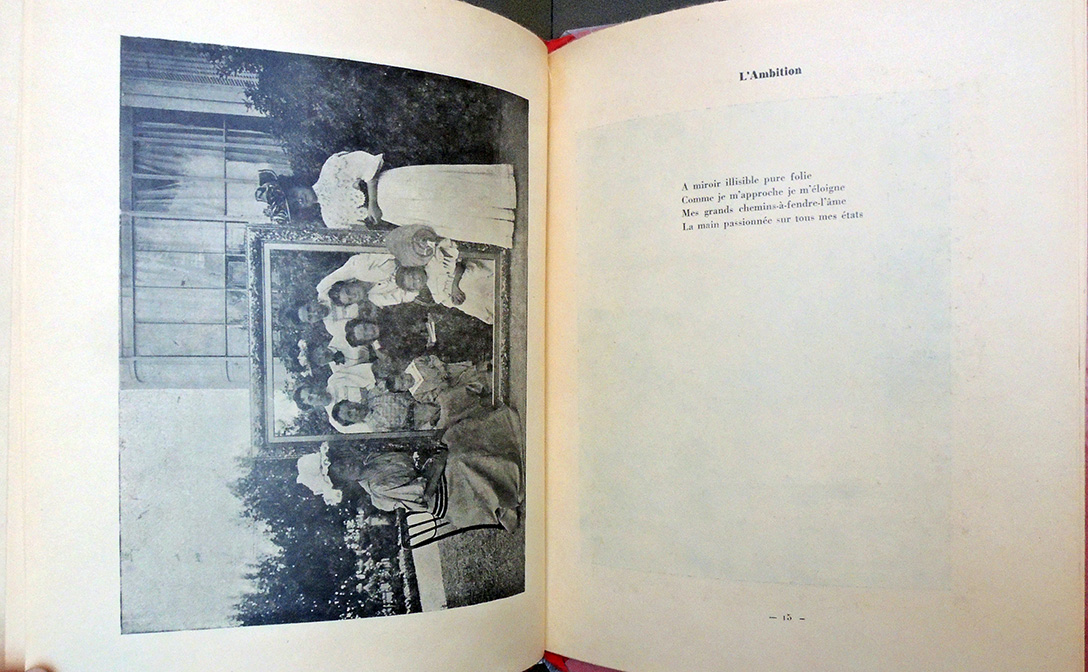
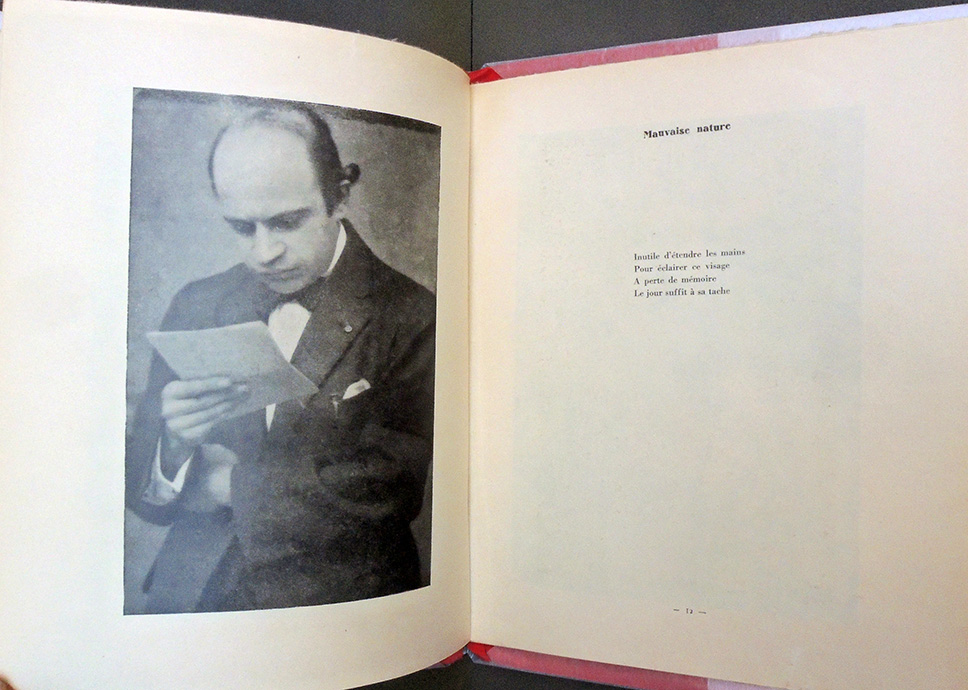
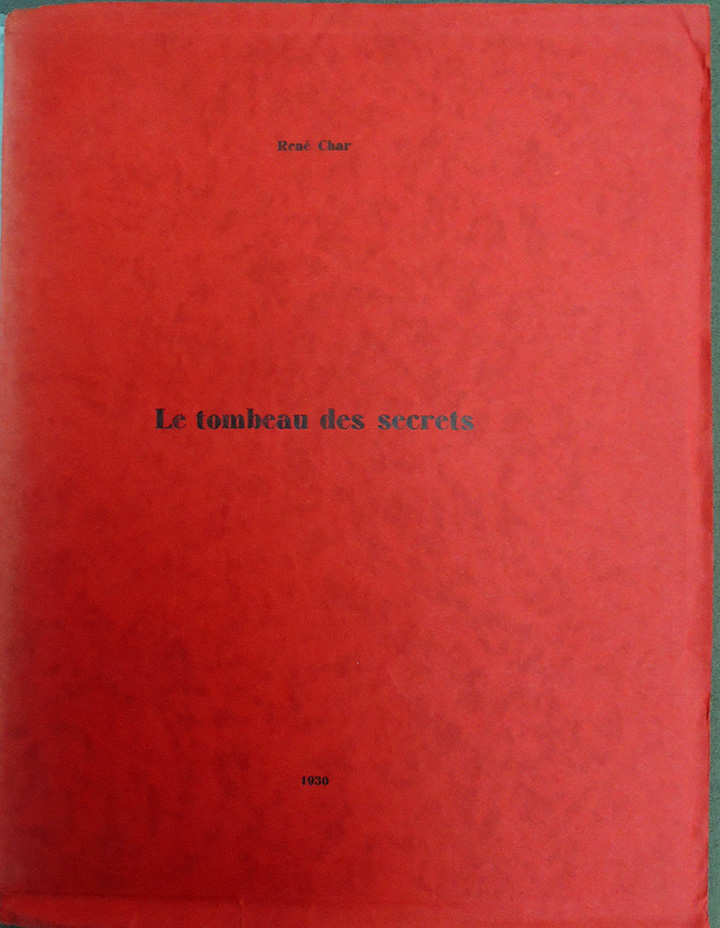
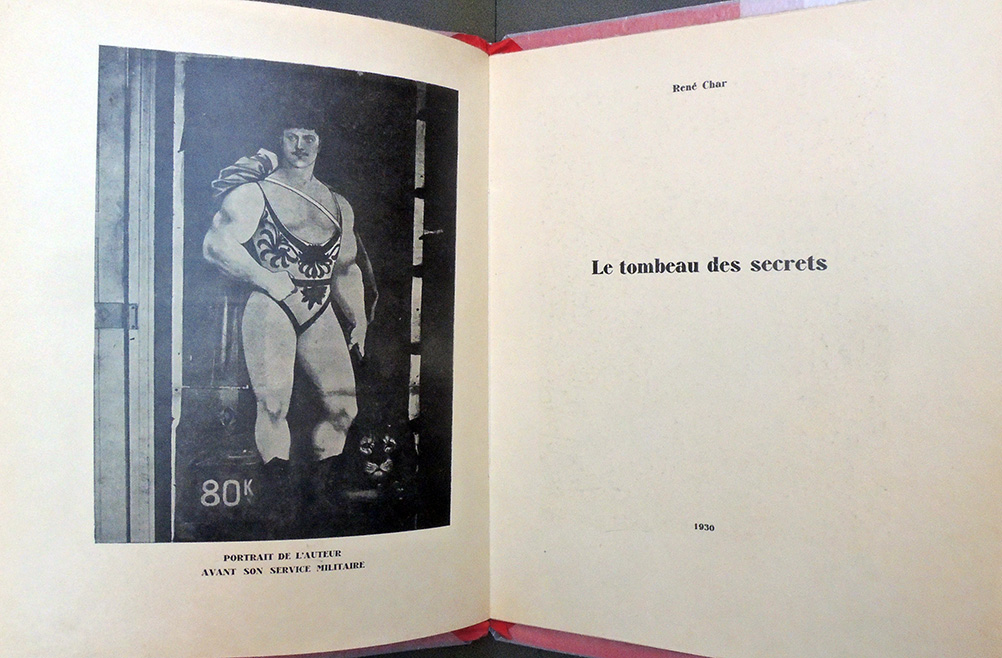
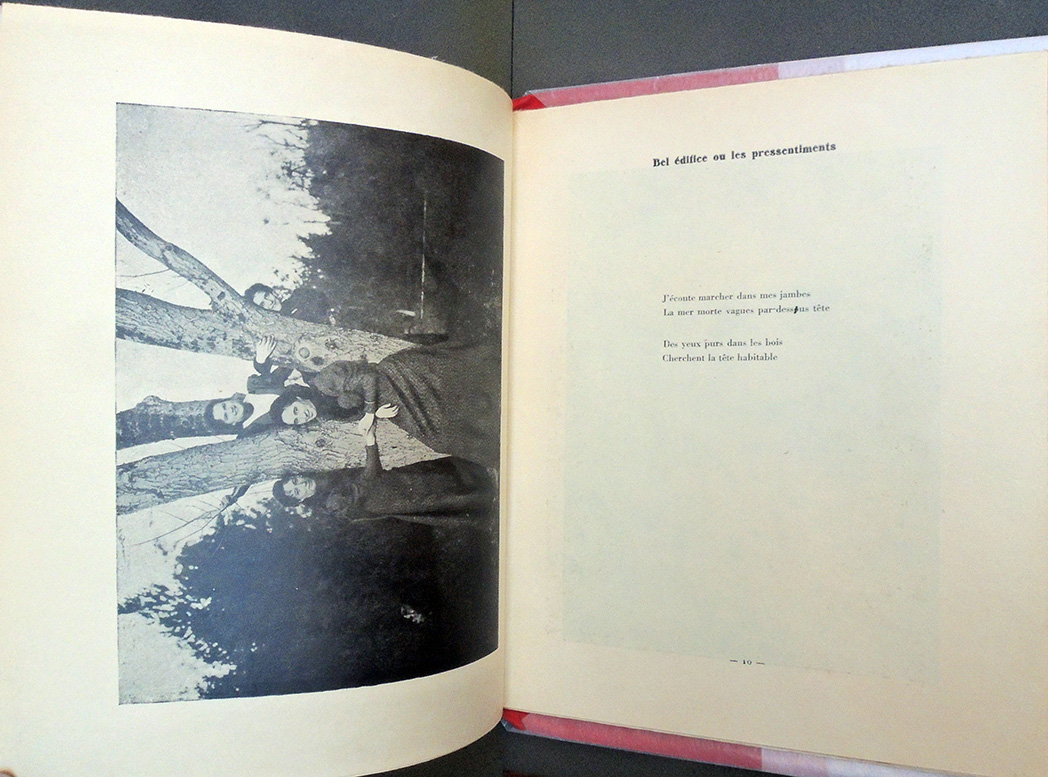
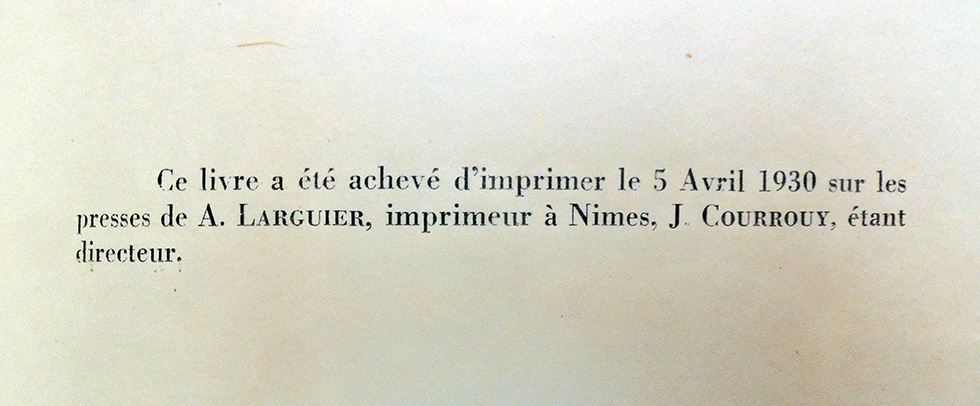
René Char (1907-1988), Le tombeau des secrets (The Tomb of Secrets) (Nîmes: Imprimerie A. Larguier, 1930). 12 photographic illustrations reproduced on full pages including the frontispiece. The last is an original collage with added hand color by Paul Éluard and André Breton hiding the face of Char’s godmother, Louise Roze. Our volume has a printed red cover with a modern case. It is copy no.10 of 10 on Japon Imperial paper, with a correction (probably by René Char) on page 11 [see below]. Graphic Arts Collection GAX 2020- in process

Le Tombeau des secrets had a single publication in 1930; as a separate volume of poems, this work is neglected by the critics, perhaps because six of the ten poems of this edition were revised for the 1934 edition of Le Marteau sans maitre in which they were included as a part of Arsenal. …The importance of Le Tombeau des secrets in Char’s poetic formation lies in the fact that, while Surrealism is further praised and explored, there is an indication that the unreal has no value unless it is firmly rooted in the concrete world of man. The quest for poetic truth is continued, but now for the first time Char recognizes that poetry must be joined to the cause of man.–Virginia A. La Charité, The Poetics and the Poetry of René Char (University of North Carolina Press, University of North Carolina at Chapel Hill for its Department of Romance Studies, 1968)


The decision to purchase this volume was made during “René Char: Poetry and War,” a colloquium at Princeton University February 27-28, 2015. It took a few years but we are now ready for the upcoming Char conference next February 2021 being organized by Prof. Bearman.
Pre-Digital Humanities

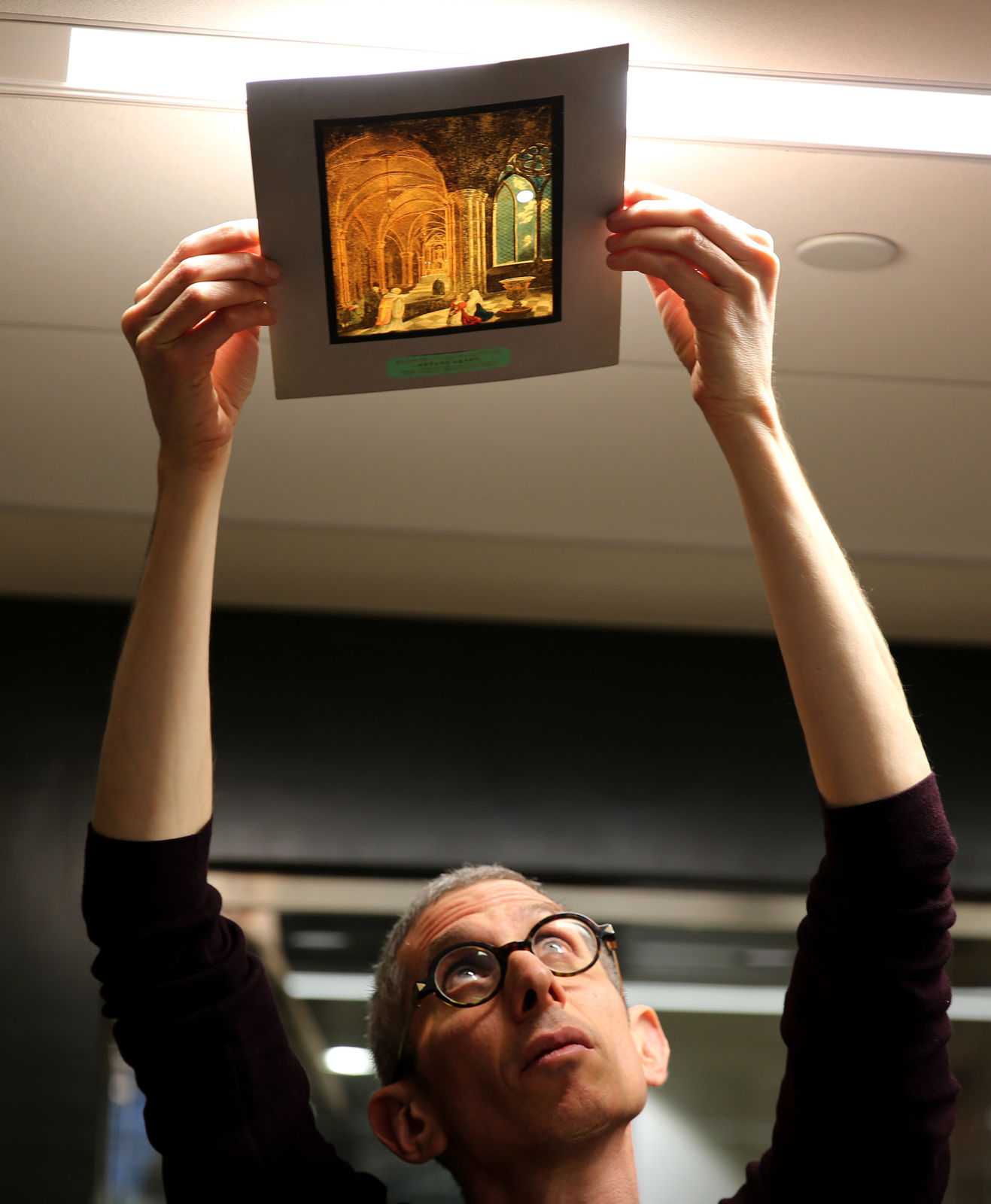
Checking out Spooner’s protean views and other ‘hold-to-light’ prints


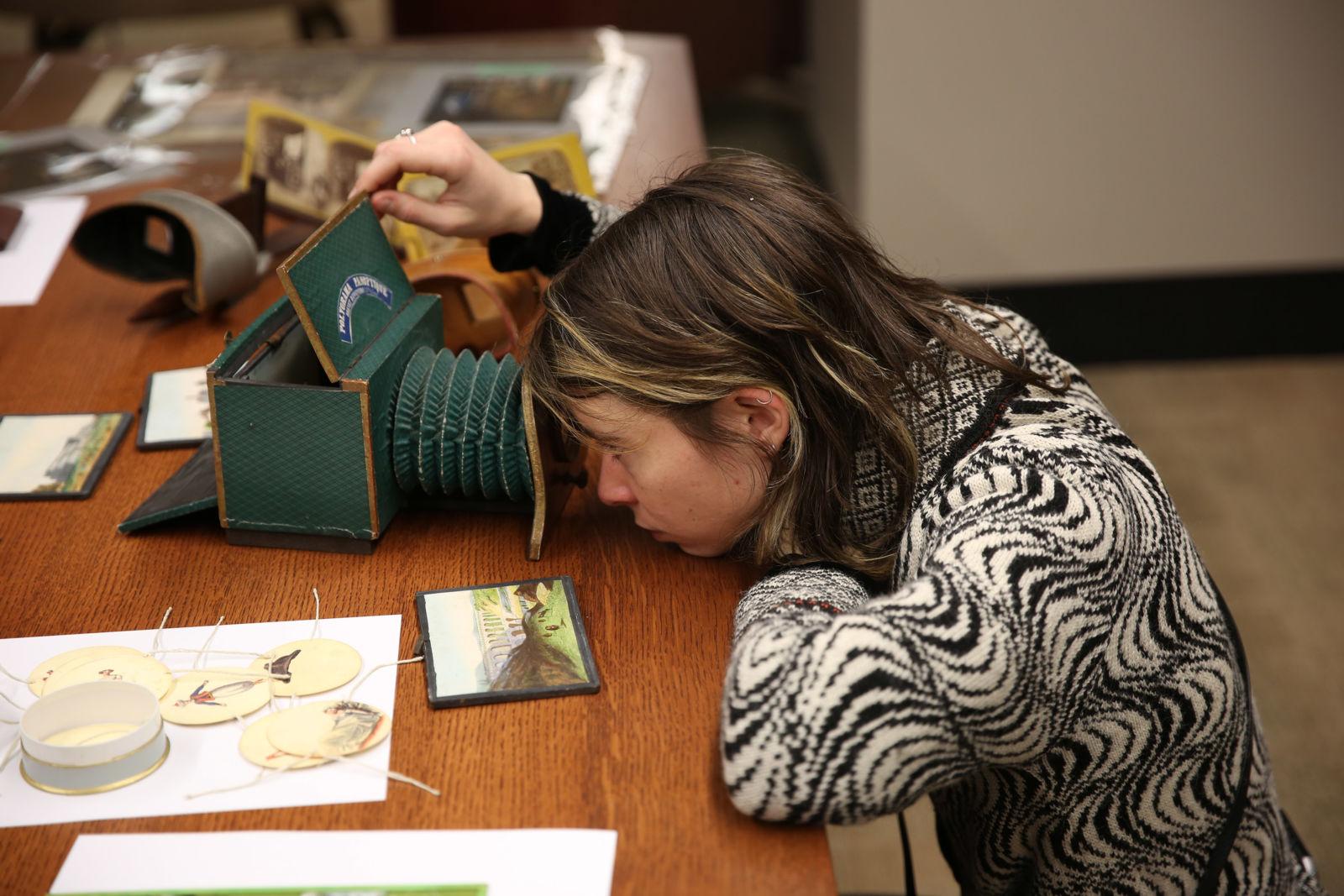
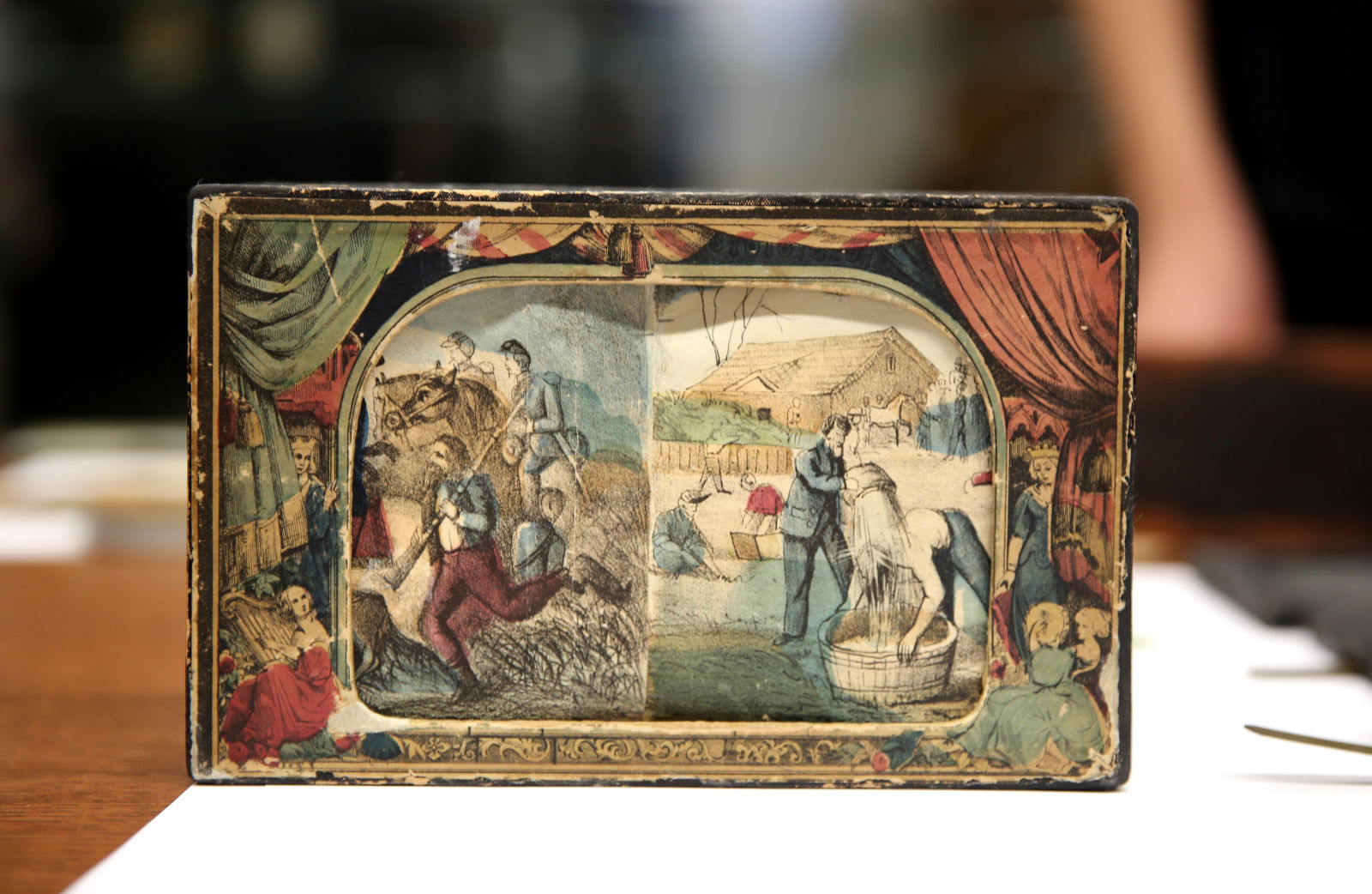
Another way to appreciate protean views is by using a Polyorama Panoptique, popular from the 1820s through to the 1850s (and today). The portable, collapsible viewer was invented by Pierre Seguin, often given away as a souvenir during popular events or exhibitions. It is a miniature version of the megalethoscope.


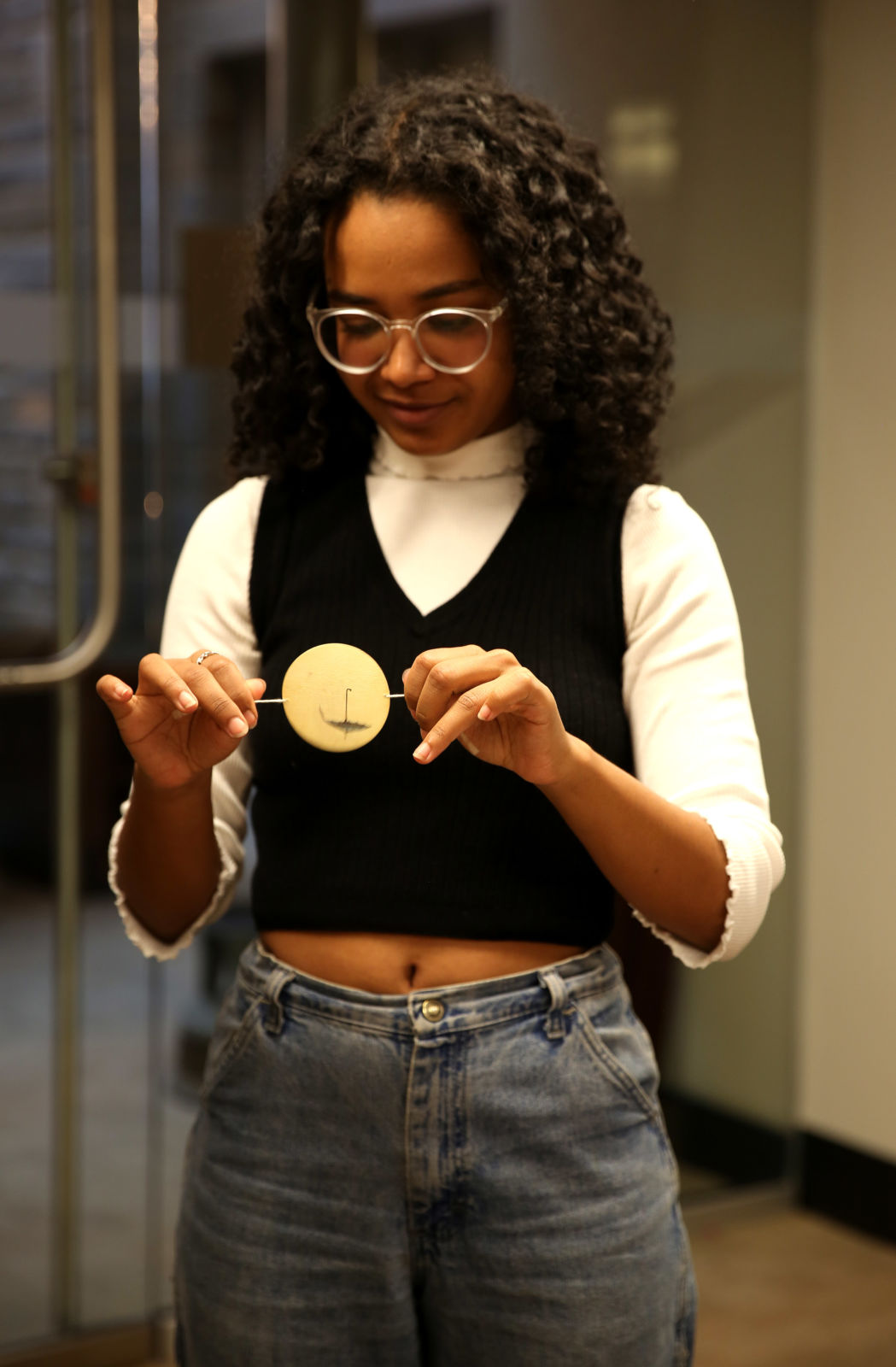
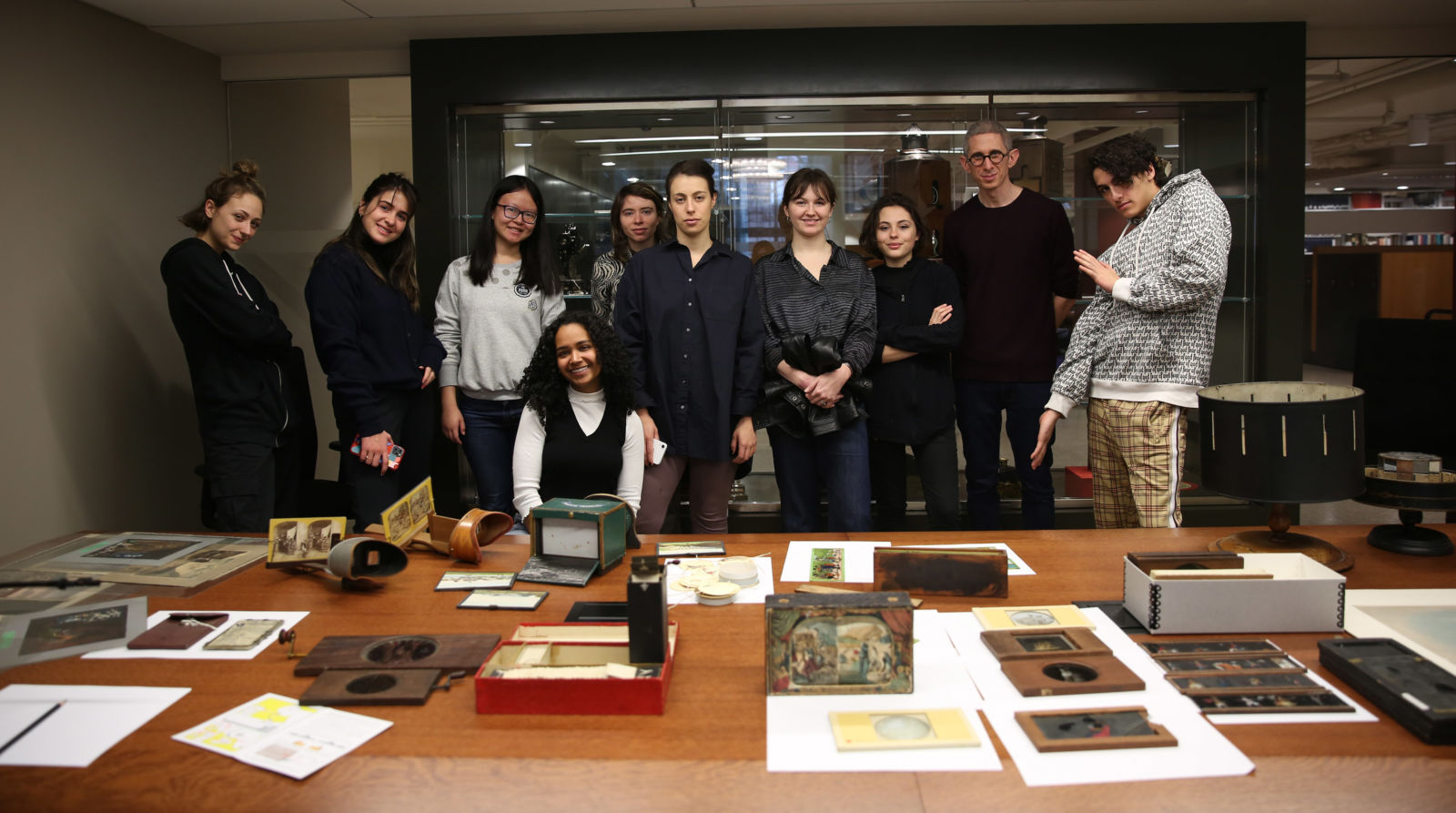
John Ayston Paris, a London physician, is often credited with 19th century ‘persistence of vision’ devices. Many of the students made their own. https://graphicarts.princeton.edu/2013/10/28/thaumatrope/

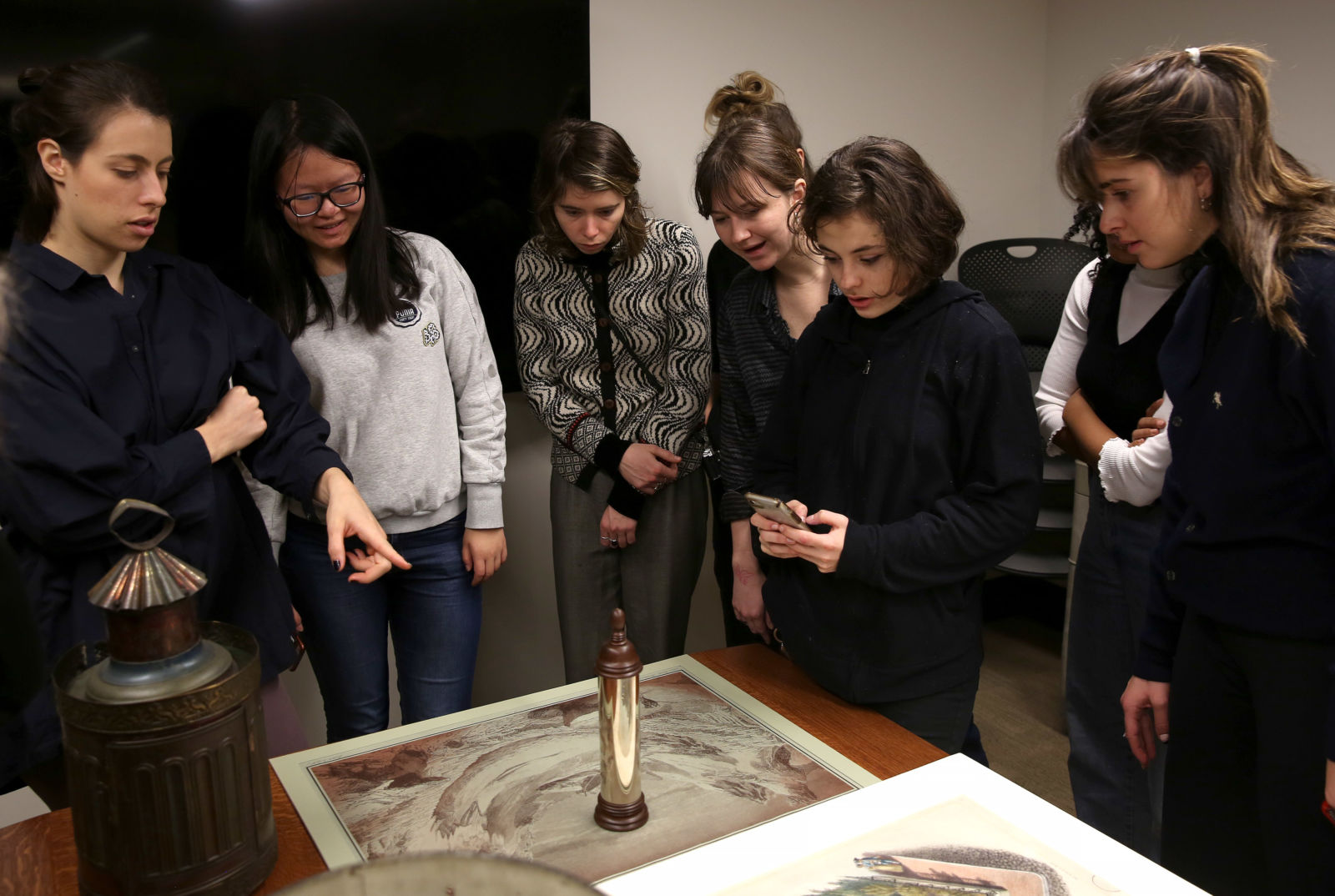
A portrait of Jules Verne https://graphicarts.princeton.edu/2015/03/25/anamorphic-images/

https://graphicarts.princeton.edu/2017/01/03/horizontorium-3d-views-in-1832/


https://neolucida.com/history

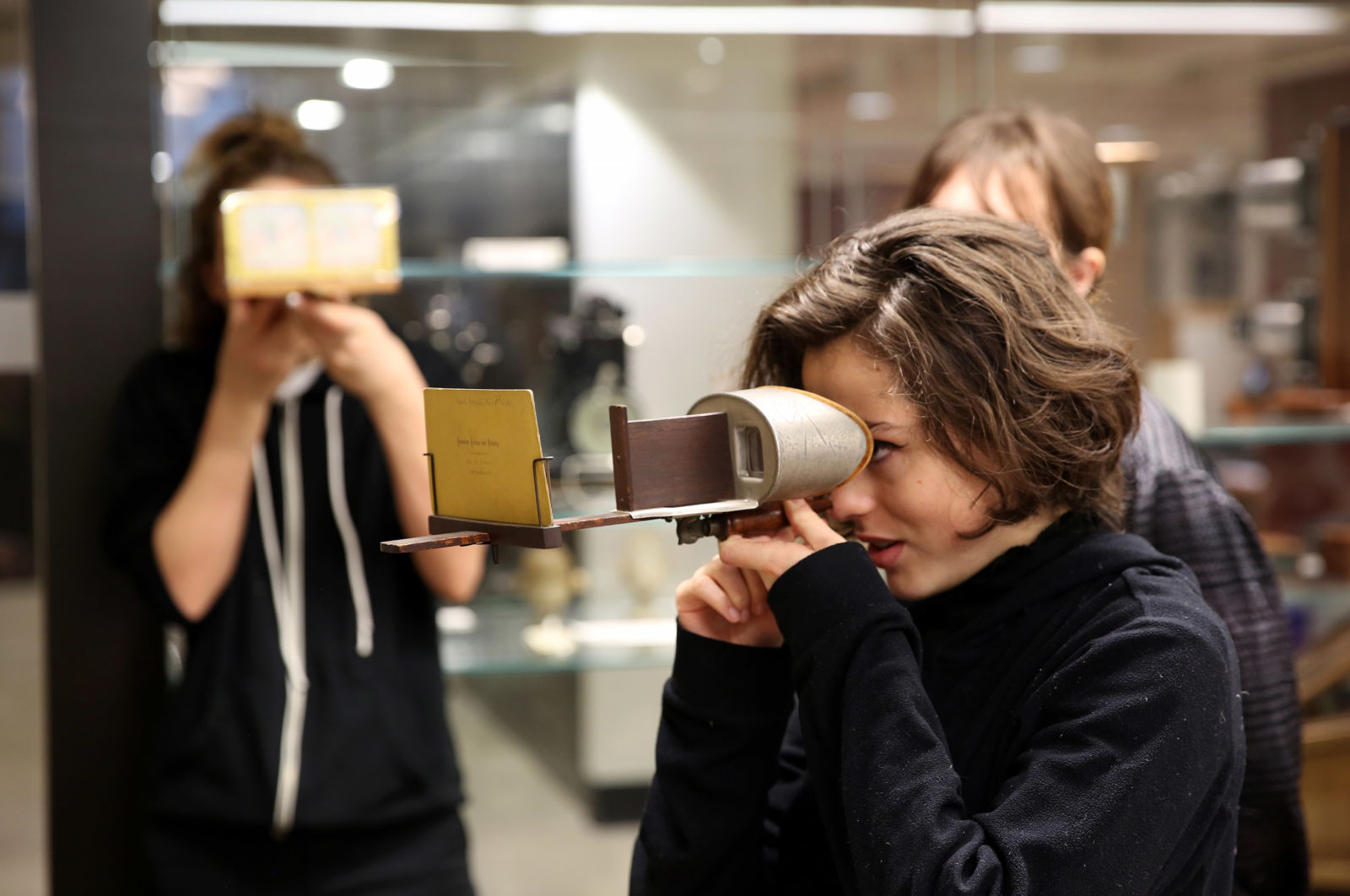
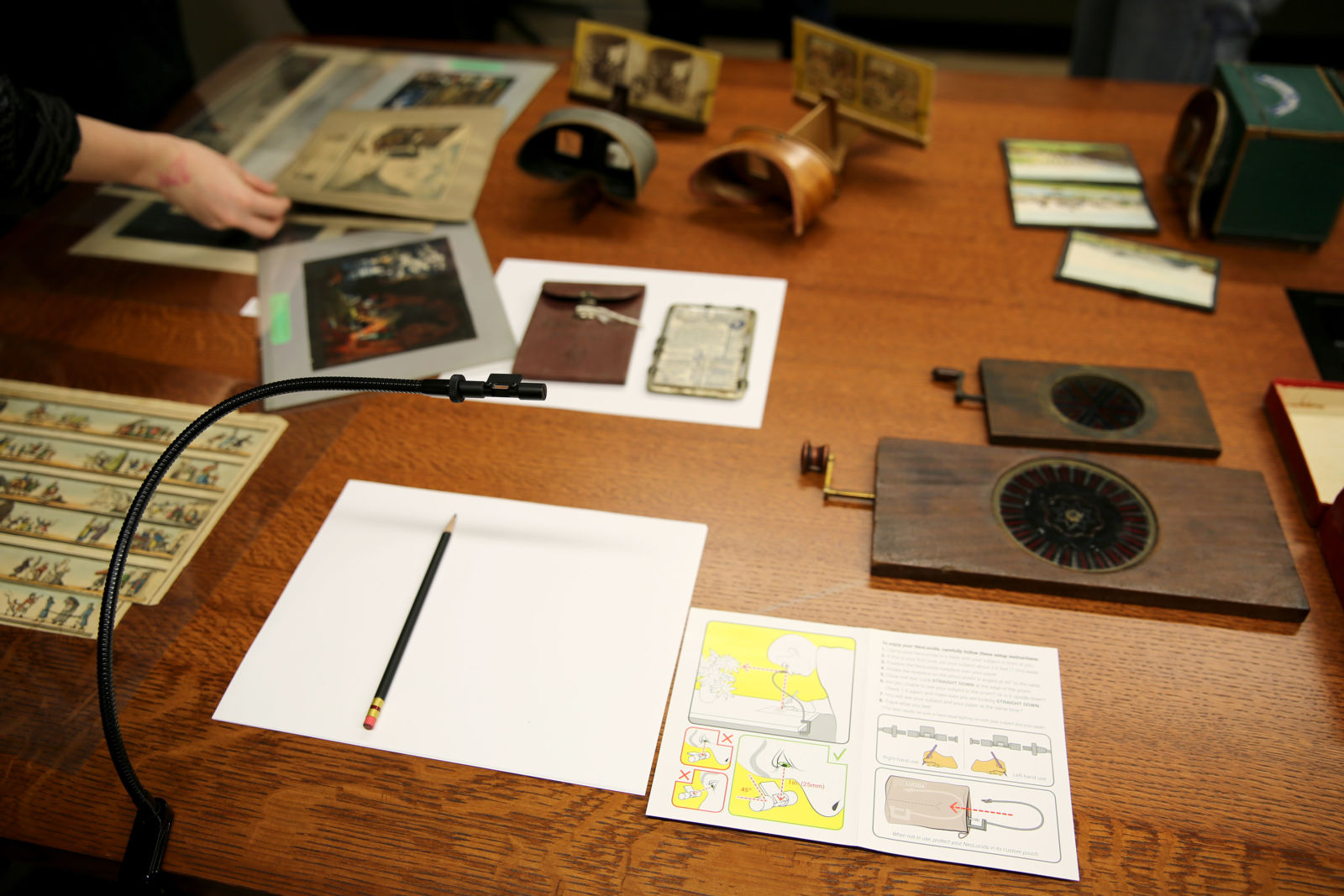
The Neo-Lucida is much easier to use than the original 19th-century device patented by Sir William Hyde Wollaston. That’s not just because it was invented by a Princeton graduate.


Madder Carmine

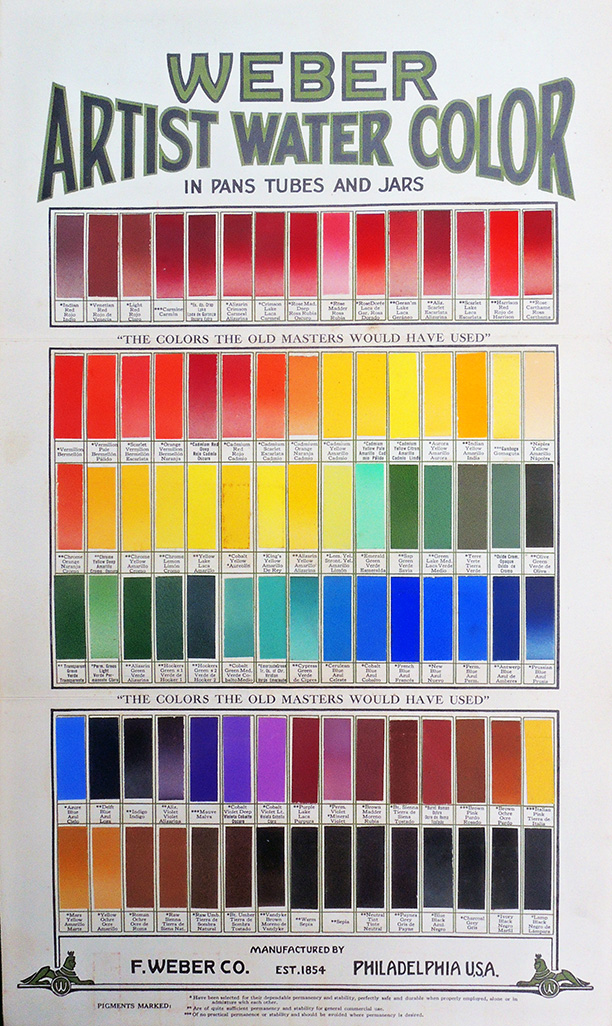
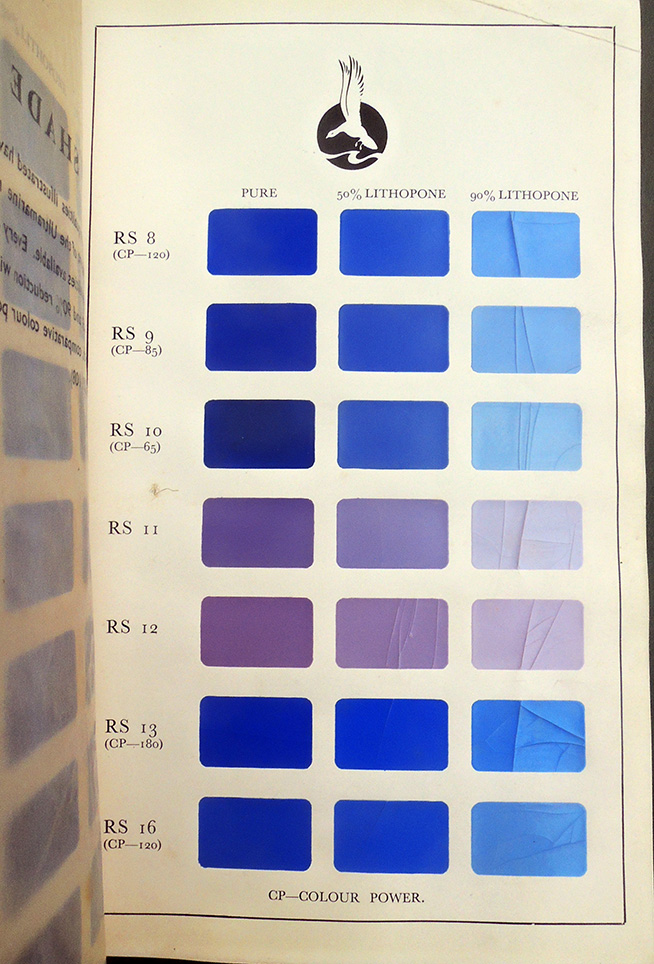
Preparing for a visit from Basile Baudez’s spring class: Color and Technology in the Arts ART 540, several new color manuals and sample books have been added to the Graphic Arts collection.

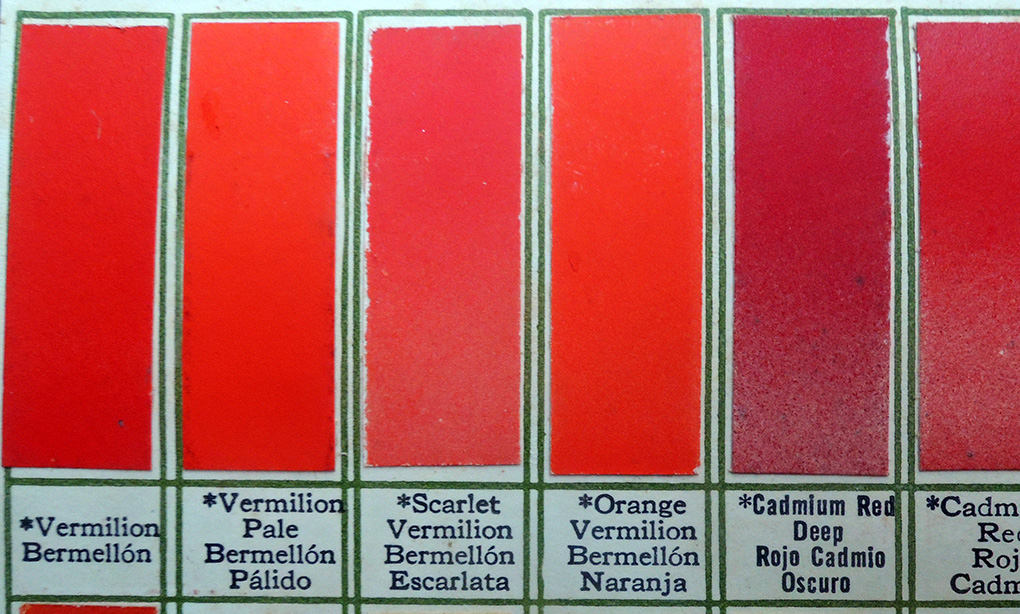
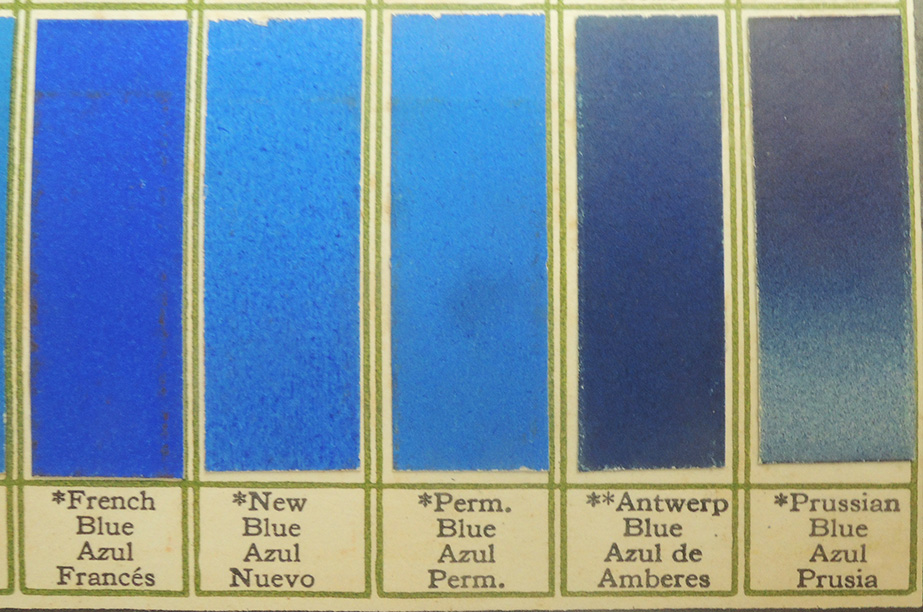
This early 20th-century color chart, in English and Spanish, has today been replaced with Weber’s online color guide http://www.weberart.com/permalba%c2%ae-oil-color-chart.html, where they also explain: “For over 150 years, the name Weber has been synonymous with quality art materials. Established in 1853 in Philadelphia, Pennsylvania, Martin F. Weber is one of the largest manufacturers of art materials in the United States. Originating in 1853 as Scholz & Company, a sales agency, the company evolved through a series of growth partnerships to become F. Weber & Company in 1887 under the leadership of its owner, Frederick Weber. Throughout the late 19th imported and manufactured products with a significant number of patents awarded to the company for innovation. After the death of Frederick Weber Sr. in 1919, his sons Frederick (Fred Jr.) and Ernest incorporated the company and renamed it F. Weber Co., Inc. Fred, along with other significant responsibilities in the organization, became Technical Director and continued to serve in this role until his retirement in 1967.” Given the change in names, this chart probably dates in the early 1920s.


https://babel.hathitrust.org/cgi/pt?id=gri.ark:/13960/t35204z6z&view=thumb&seq=1

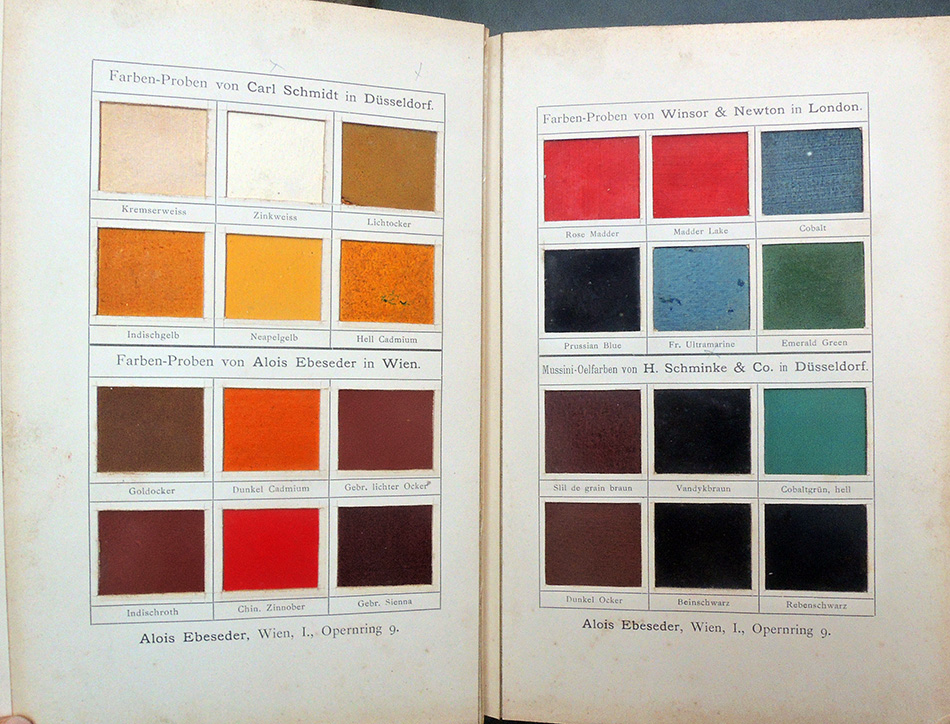
Although this manual on oil painting is also available online [above link], the mounted color samples are presented on canvas swatches with various weaves and weight, which do not translate well to a digital format. Both this and Fischer’s guide to watercolor painting went through numerous editions into the 1920s.


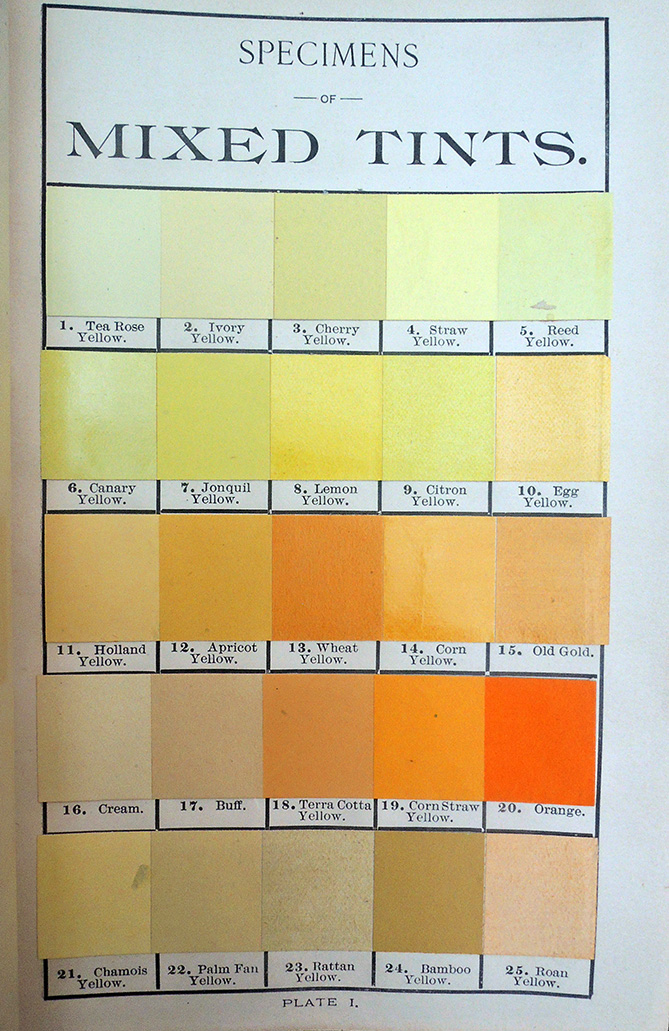
Below is just one plate of the 175 color samples offered in Leidel’s guide to mixing colors. These plates are followed with descriptions of each variation and how each will react over time in various conditions.


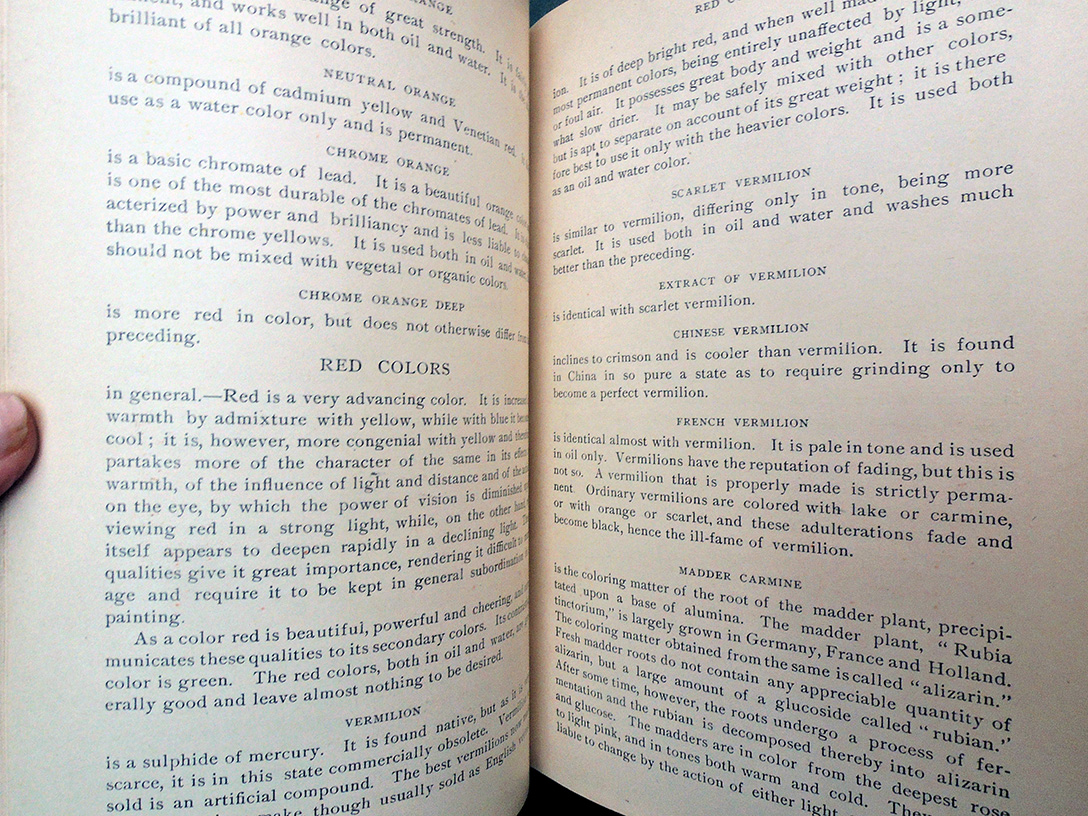
“Madder Carmine is the coloring matter of the root of the madder plant, precipitated upon a base of alumina. The madder plant, “rubia tinctorium,” is largely grown in Germany, France, and Holland. The coloring matter obtained from the same is called “alizarin.” After some time, however, the roots undergo a process of fermentation and the rubian is decomposed thereby into alizarin and glucose. The madders are in color from the deepest rose to light pink, and in tones both warm and cold. They are not liable to change by the action of either light or impure air nor by admixture with other colors. They are, however, slow driers, work well in both oil and water and improve in tone in time. Madder carmine is the richest, deepest and most transparent of the madders. It is the only permanent carmine, either in oil or water.”


Weber Artist Water Color in Pans Tubes and Jars [chart] (Philadelphia: F. Weber Co., ca.1920). Graphic Arts Collection GAX 2020- in process
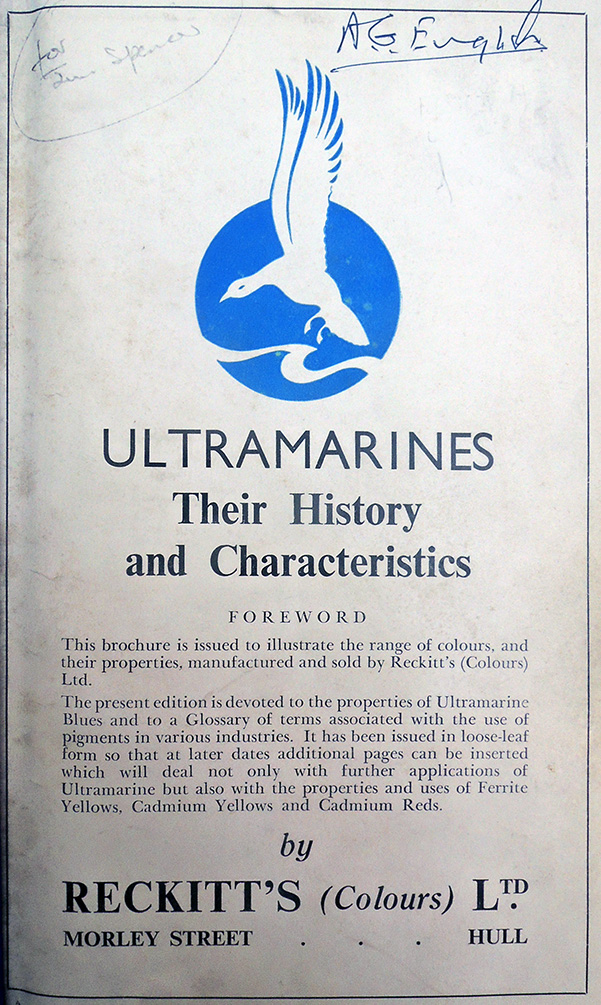
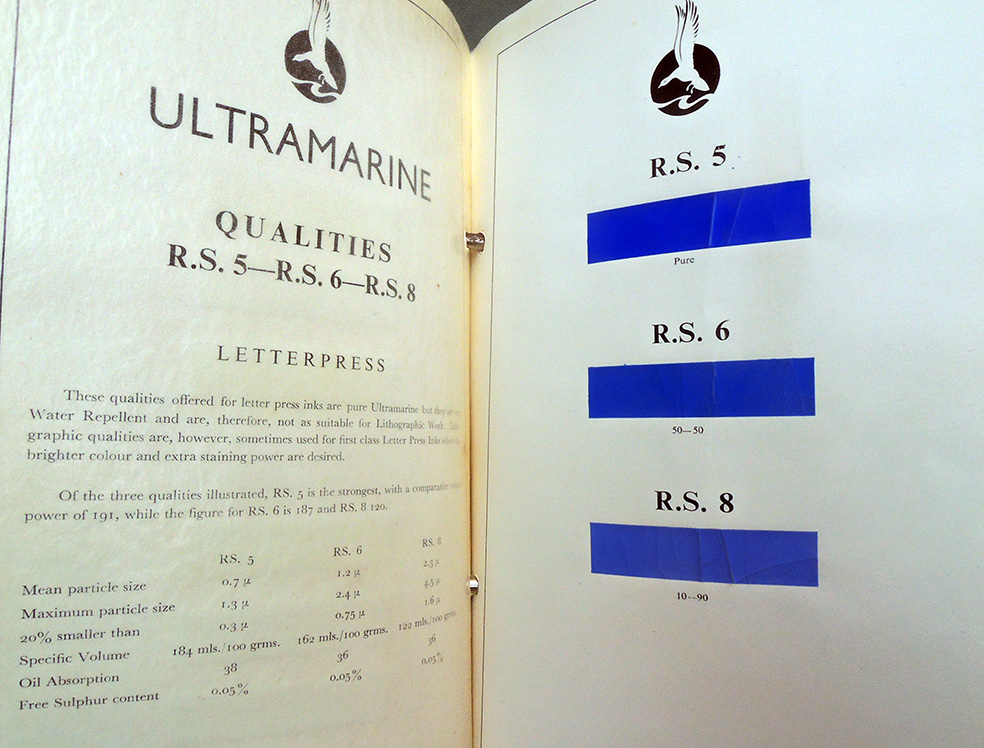
Ultramarines, Their History and Characteristics (Hull, UK: Reckett’s Colours ltd., ca. 1925). Graphic Arts Collection GAX 2020- in process
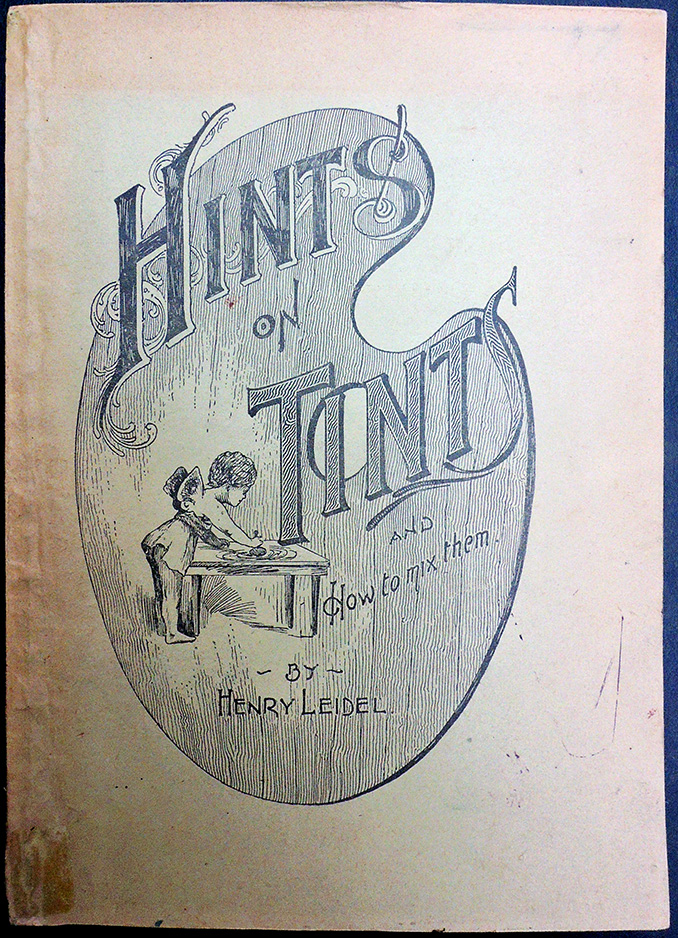
Henry Leidel, Hints on Tints and How to Mix Them Illustrated by One Hundred and Seventy-Five Specimens of Tints with an Introductory Essay on Color and Colors (New York: Henry Leidel, 1896). Graphic Arts Collection GAX 2020- in process
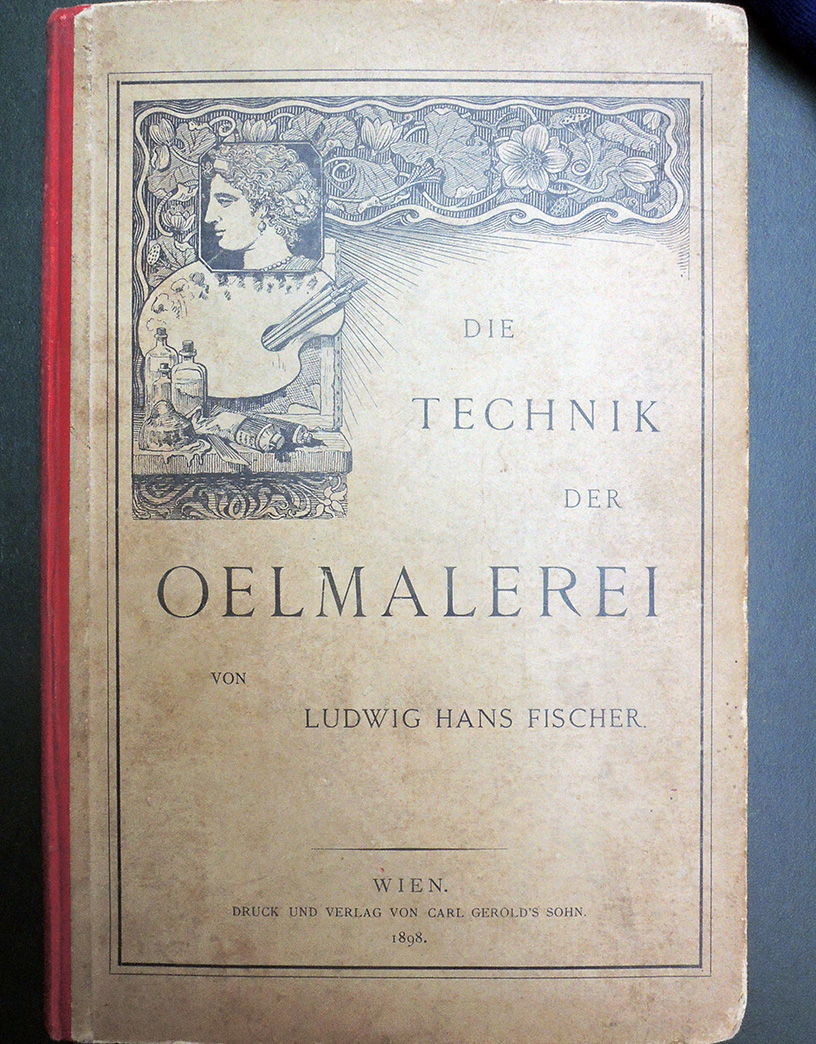
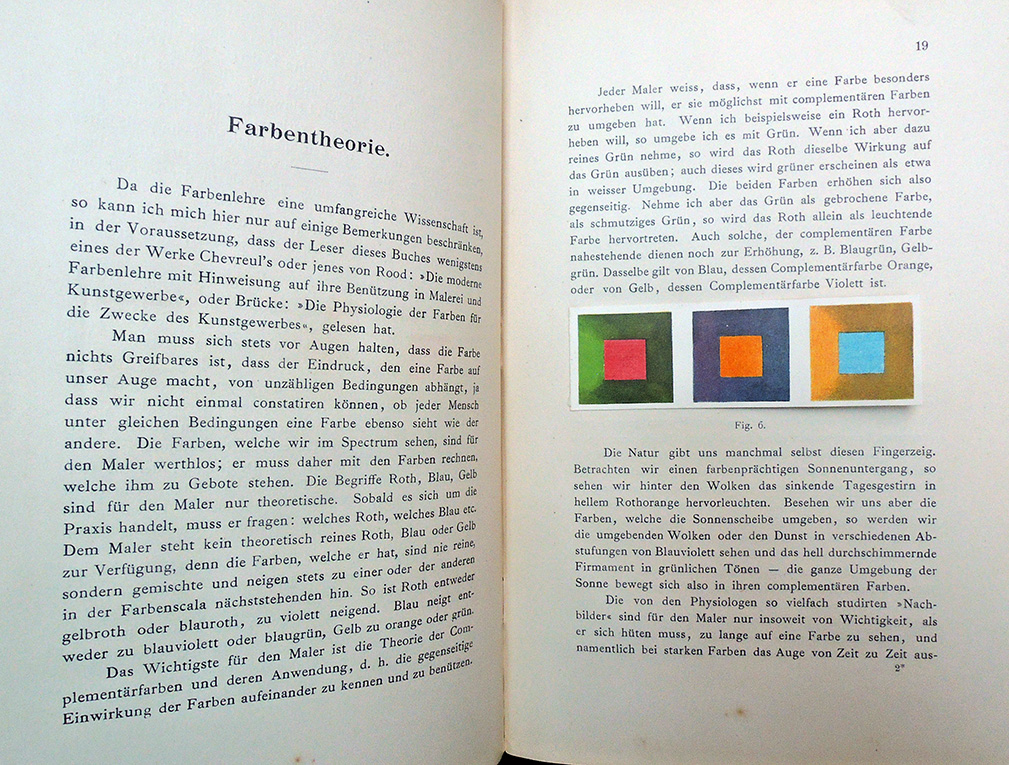
Ludwig Hans Fischer (1848-1915), Die Technik der Oelmalerei (Wien: Carl Gerold’s Sohn, 1898). Graphic Arts Collection GAX 2020- in process

Pairing Herbert Granville Fell with Annie S. MacDonald


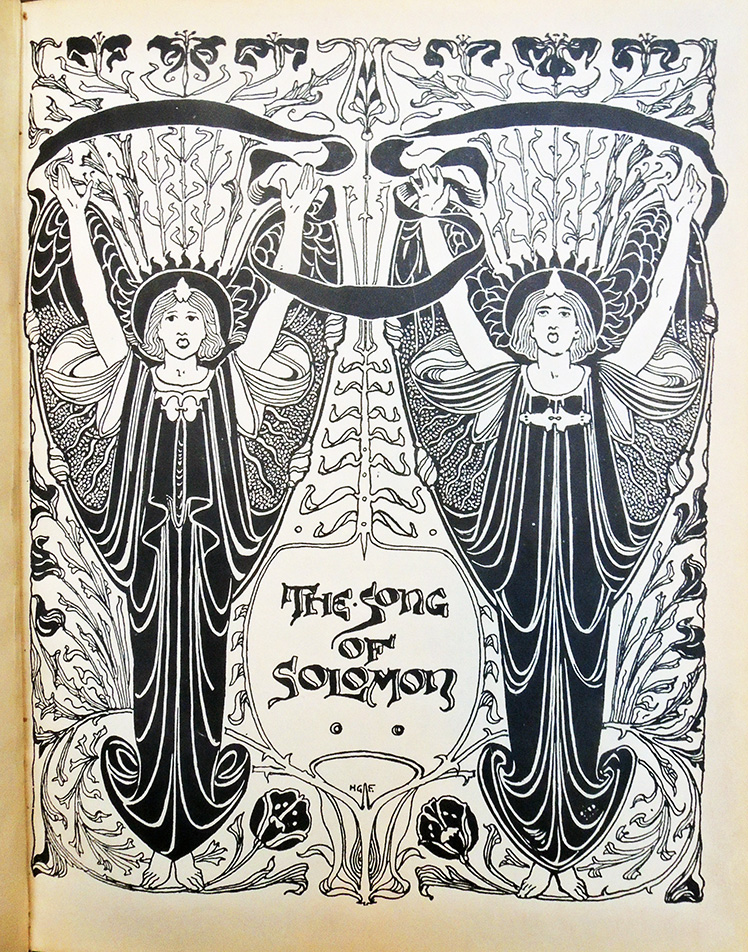
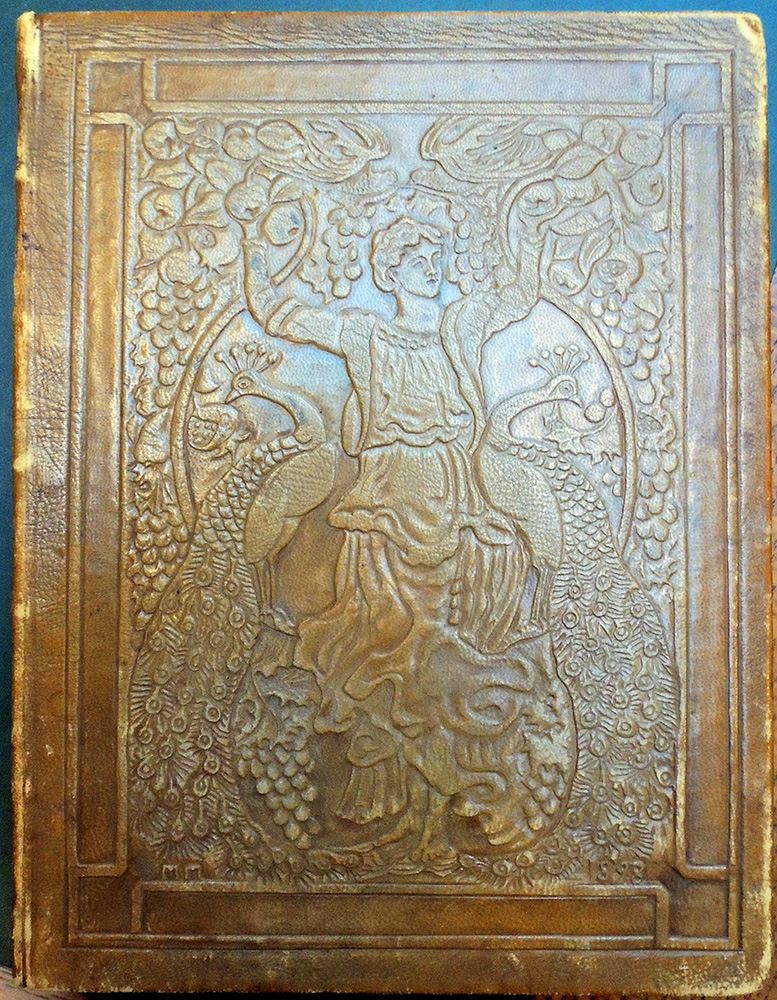
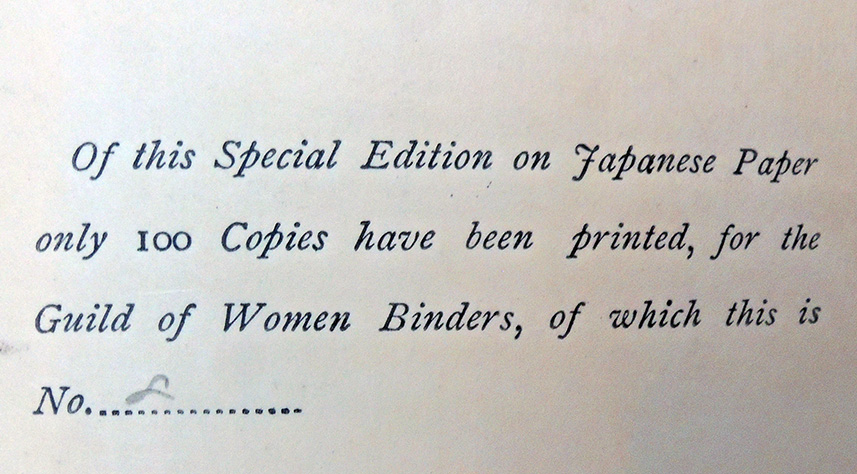
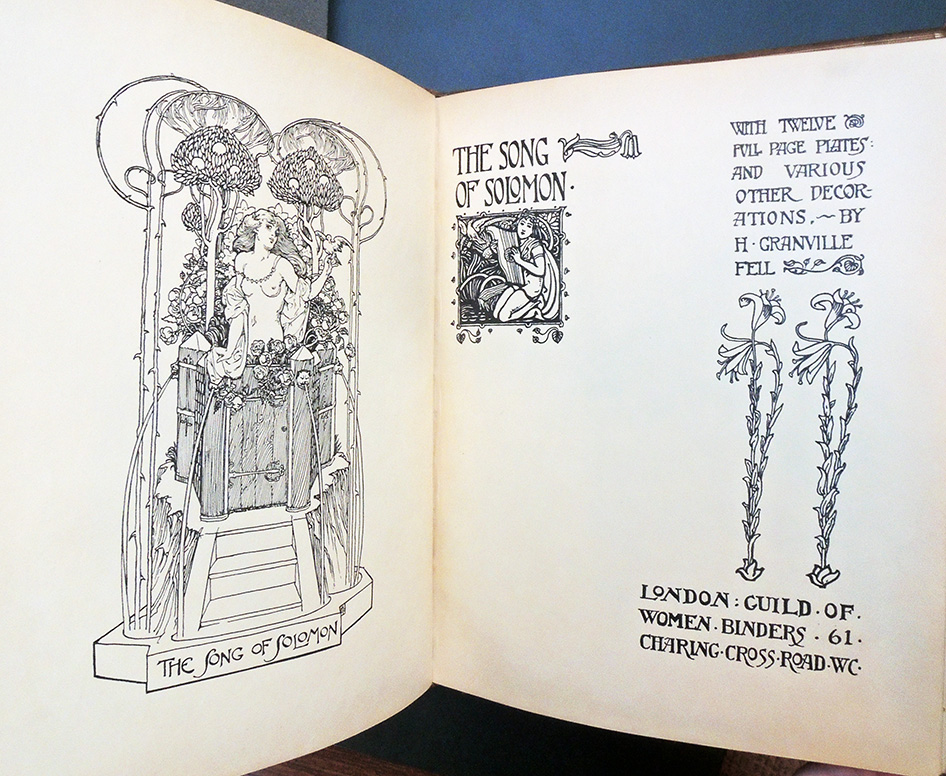
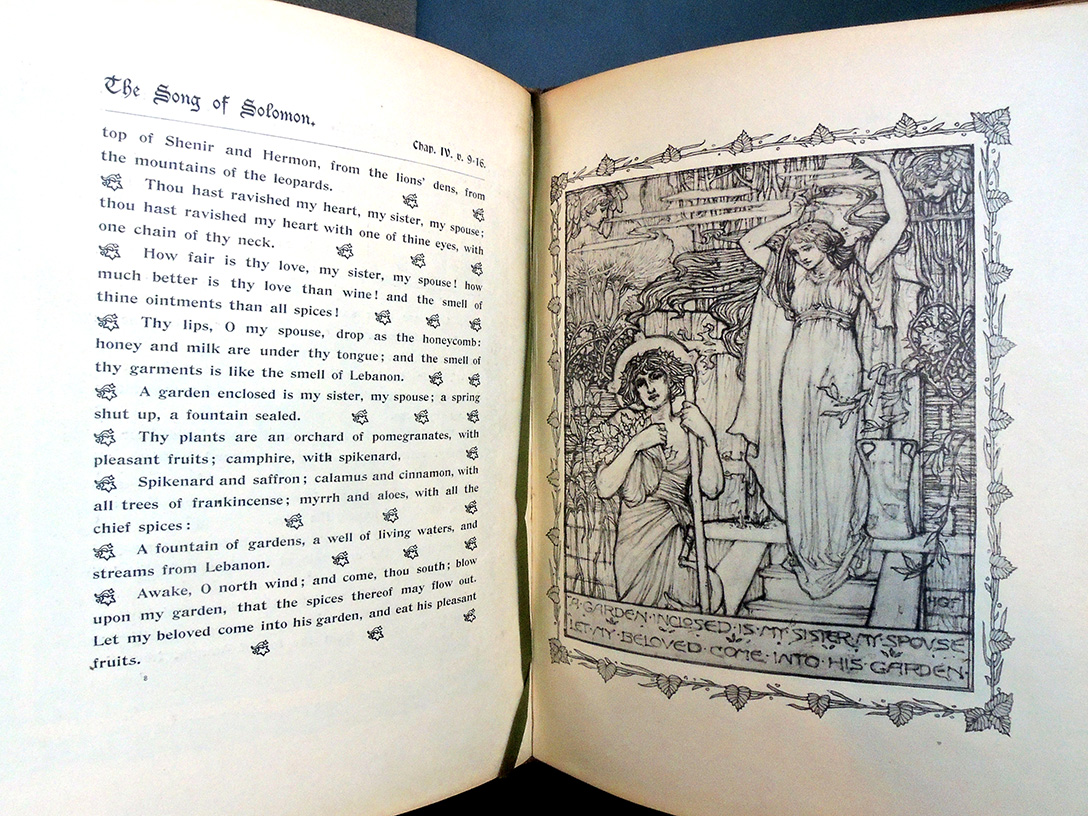
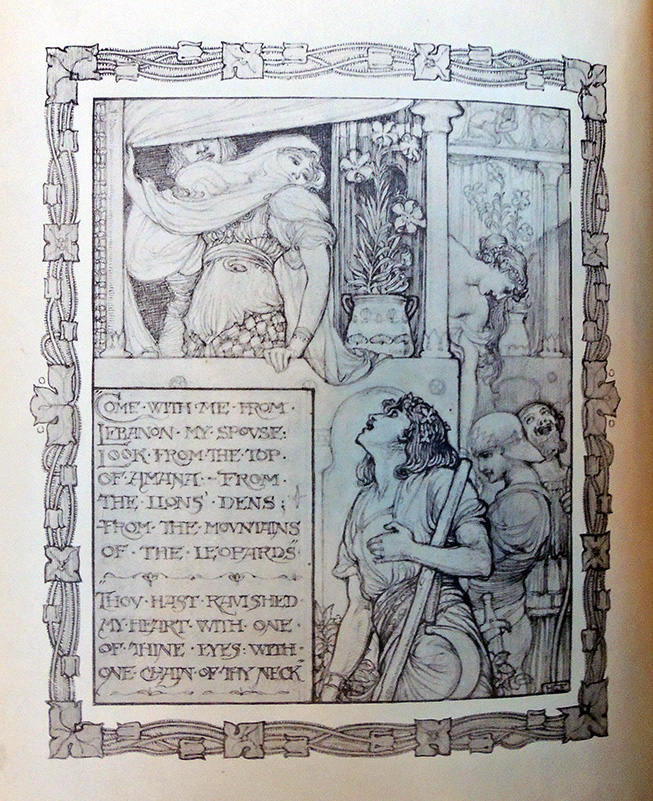
The Graphic Arts Collection recently acquire a copy of The Song of Solomon designed and illustrated by Herbert Granville Fell (1872-1951) with a binding by Annie S. MacDonald (1849-1924) (London: Guild of Women Binders, Chapman and Hall, printed by William Clowes and Sons, 1897). “Of this special edition on Japanese paper only 100 copies have been printed, for the Guild of Women Binders.”–Page 1. This is copy 8 of 100.


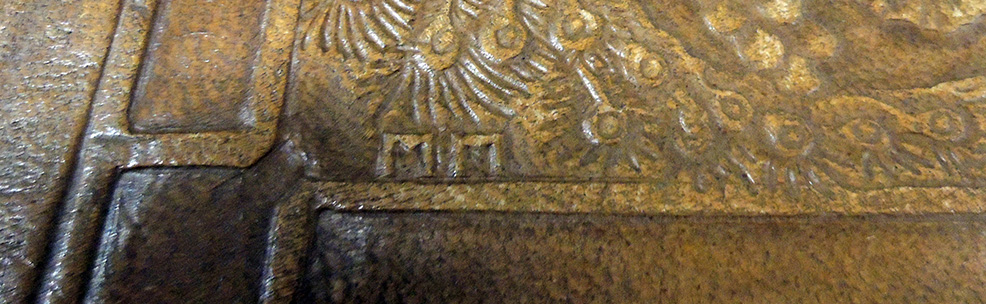
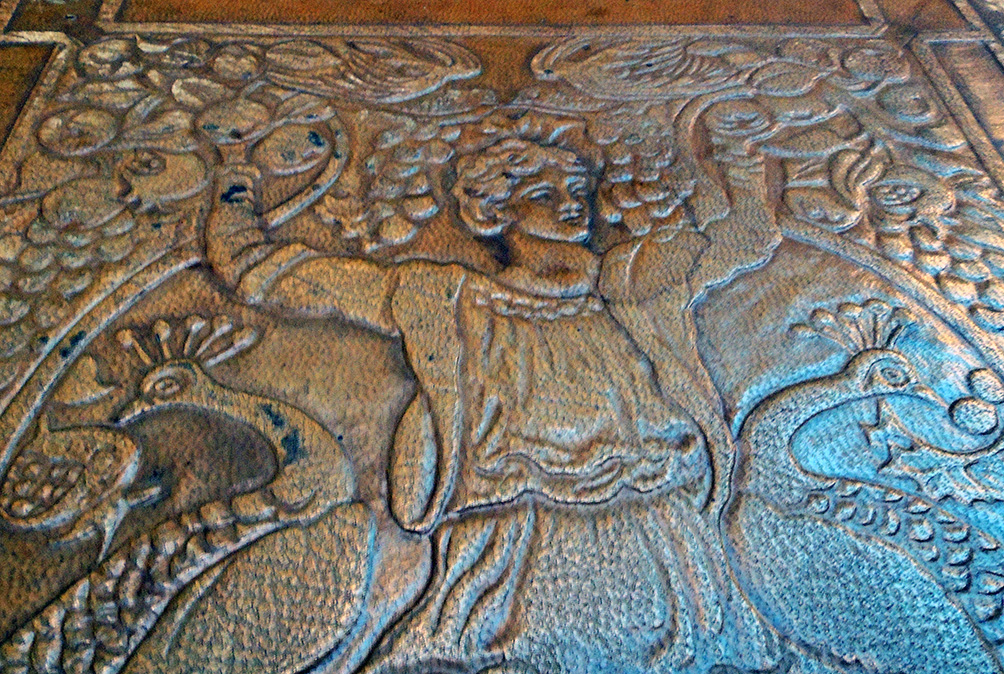
The binding is signed in embossed leather with an ‘M M’ at the lower edge of the front cover, with the date ‘1898’ in embossed leather at the opposite edge. ‘M M’ refers to ‘Mrs. MacDonald,’ a member of the Guild of Women-Binders.

The founding of the Guild of Women-Binders and Annie MacDonald’s part in the organization has been repeated on many webpages and catalogues. Here it is from the American Bookbinders Museum post “The Bindings of To-morrow”:

The Guild of Women Binders was founded by Frank Karslake, a London bookseller and also founder of the Hampstead Bindery. Karslake was a bit of a rogue, who dabbled in multiple professions ranging from acting to ranch management, before trying his hand at bookselling and bookbinding. His interest in women binders emerged from his admiration of bindings exhibited at the Victorian Era Exhibition in 1897. Soon after seeing these examples, he invited several of the women binders to exhibit in his shop.

This exhibit, Exhibition of Artistic Bookbinding by Women, confirmed to Karslake that maybe women really could distinguish themselves in this industry. Perhaps he saw an opportunity to profit from the novelty of women binders, but soon after, Karslake acted as agent to prominent binders like Constance Karslake, Edith de Rheims, Florence de Rheims, Mrs. Macdonald, Helen Schofield, Frances Knight, and Lilian Overton (to name a few). In 1899, Karslake’s vision evolved into the workshop and business venture that became the Guild of Women Binders. Women involved in the guild were typically middle class and had a background in artistic education.

When Karslake first conceived of the idea to compile a book, publishers refused it because books on bindings were said to be unprofitable. A warning which Karslake ignored when he published The Bindings of To-morrow himself in 1902, with the assistance of W. Griggs who printed an edition of 500 copies. [Graphic Arts Collection 2008-2402N] This book provides a unique historical insight into the binding process and a glimpse into the under-represented work of women binders. A year after publication, Karslake was forced to offer the remaining 150 copies of the book to booksellers at a fraction of the original price.

In the catalog, The Bindings of To-morrow, Annie MacDonald’s entry includes autobiographical text: “Mrs. Macdonald writing in 1897, when her work was shewn at the “First exhibition of Bookbinding by Women”, said: ‘It began about six years ago, with myself and the late John M. Gray, curator of the Scottish National Portrait gallery. We took great pleasure in searching out and enjoying old bindings in libraries, both at home and abroad and felt that it was a beautiful art, but now fallen to be only a trade. Then we wishes to try it ourselves. . . . The embossed leather in which most of the work is done is an idea of my own. It is not cut, or raised by padding, but is quite solid leather, and is worked on the book after it is covered, with one small tool. It allows of great freedom of design, no two people work it alike.’”
https://archive.org/details/bindingsmorrow00Guil/page/n89/mode/2up

Thanks to Sarah Hovde, not only for the Folger Shakespeare Library post on MacDonald but the Wikipedia page she wrote to introduce MacDonald to the contemporary world. Read: https://collation.folger.edu/2017/03/guild-women-binders/

https://doi.org/10.1093/benz/9780199773787.article.B00062735
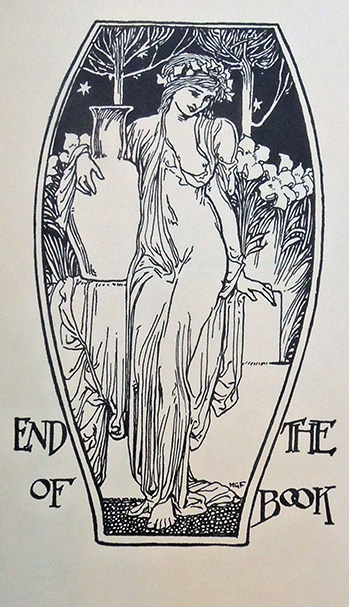
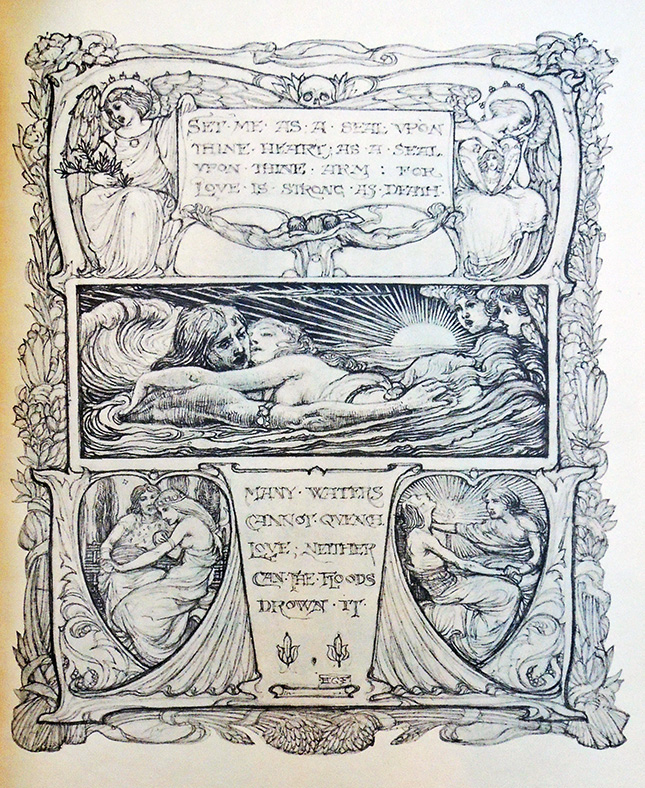
The Oxford Art Online describes Herbert Granville Fell as a painter first, then illustrator and stained glass painters. “Fell studied in London at Heatherley’s, in Brussels and in towns in Germany. He produced drawings for the Pall Mall Magazine, The Ludgate Monthly, The Windmill, the English Illustrated, the Ladies Field (of which he was artistic director) and other magazines.” The Song of Solomon is only one of many elaborately illustrated books by Fell.


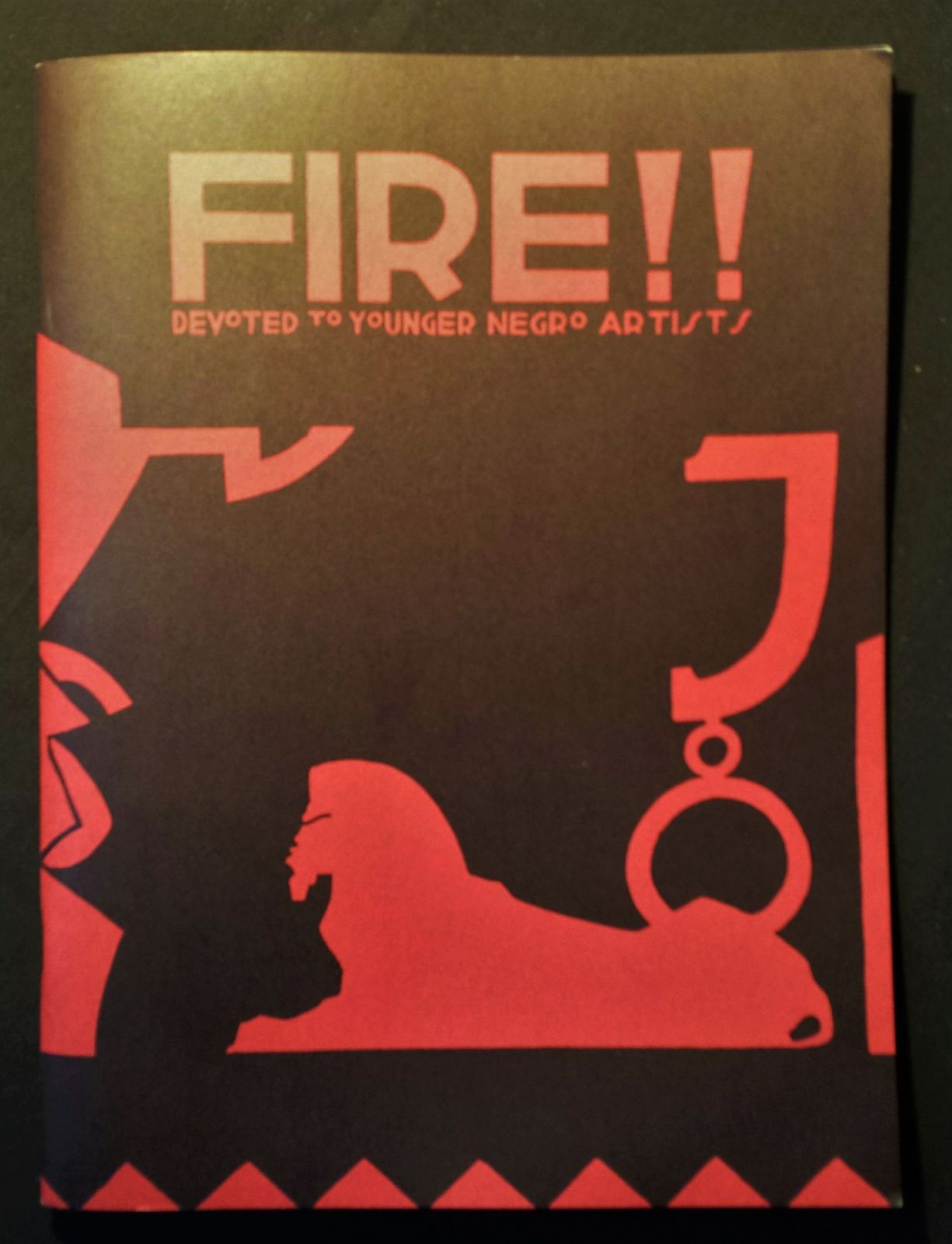
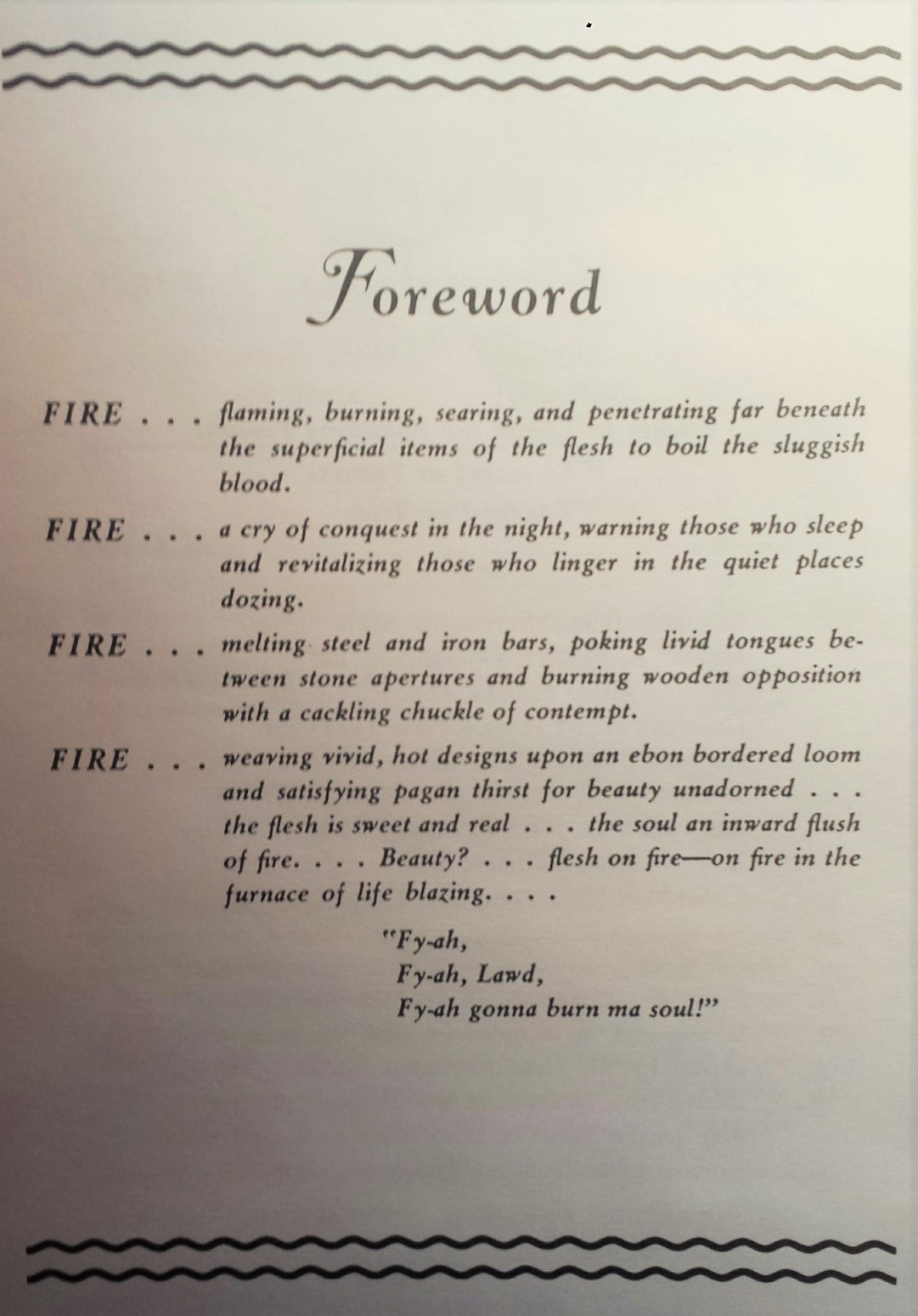
FIRE!! Devoted to Younger Negro Artists

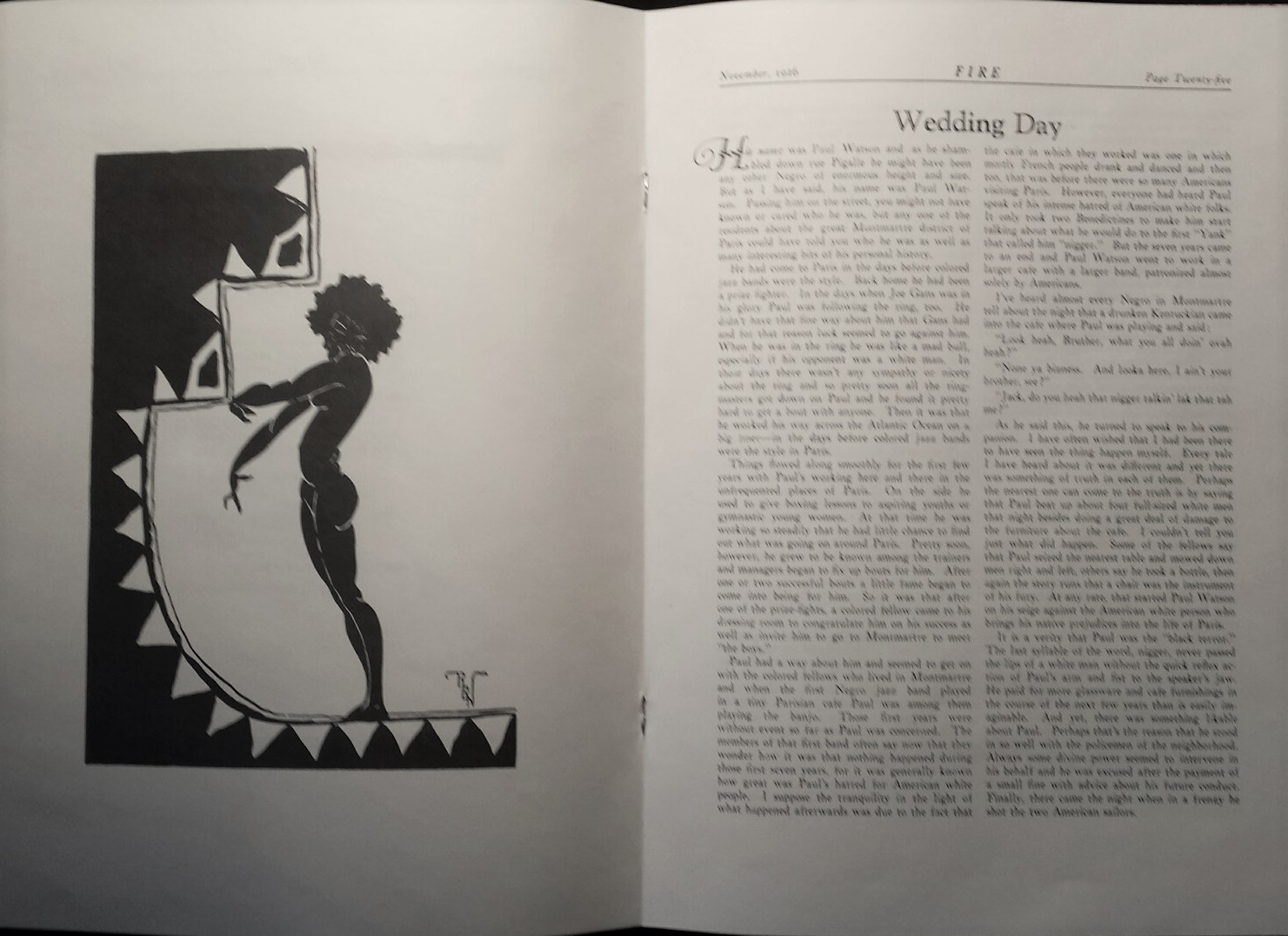
Wallace Thurman (1902-1934) editor, FIRE!! a Quarterly Devoted to the Younger Negro Artists. Facsimile edition (Metuchen, NJ: Fire!! Press, 1982, 1926). Graphic Arts Collection GAX 2020- in process. Cover design: Aaron Douglas. Illustrations: Richard Bruce and Aaron Douglas.

Vol 1, no. 1, Nov. 1926. “This facsimile edition … consists of fourteen hundred copies, of which one hundred twenty have been numbered and signed by Richard Bruce Nugent” p.48.


Contents:
Cordelia the Crude, a Harlem sketch by Wallace Thurman
Color Struck, a play in four scenes by Zora Neale Hurston
Flame from the Dark Tower, a section of poetry: From the Dark Tower by Counteé Cullen
A Southern Road by Helene Johnson
Jungle Taste by Edward Silvera
Finality by Edward Silvera
The Death Bed by Waring Cuney
Elevator Boy by Langston Hughes
Railroad Avenue by Langston Hughes
Length of Moon by Arna Bontemps
Little Cinderella by Lewis Alexander
Streets by Lewis Alexander
Wedding Day, a story by Gwendolyn Bennett
Smoke, Lilies and Jade, a novel, part 1 by Richard Bruce
Sweat, a story by Zora Neale Hurston
Intelligentsia, an essay by Arthur Huff Fauset
Fire Burns, editorial comment by Wallace Thurman
Lighting Fire!! by Richard Bruce Nugent (ca. 1982)
FIRE!! in Retrospect by Thomas H. Wirth (ca. 1982).

“Fire!! In Retrospect” by Thomas H. Wirth:

“More than fifty years have passed since FIRE!! Was published in November, 1926. Copies of the original are treasures beyond price. Langston Hughes reports in his autobiography The Big Sea that several hundred of them were consumed (quite literally) by a real fire in the basement where they ere stored. Then FIRE!! Went broke. Indeed, it never was solvent. Only the fist issue of this “Quarterly Devoted to Younger Negro Artists” ever appeared.

By definition, treasures are not simply rare. They are important. Its table of contents reveals instantly why FIRE!! Is important. Here is a roster of major names in the chronicles of Afro-American literature and art: Wallace Thurman, Zora Neale Hurston, Aaron Douglas, Langston Hughes. These, the most talented and creative of their generation, combined to generate…FIRE!!

…Unlike Alain Locke’s The New Negro, published the year before FIRE!! Was not conceived and assembled by a single impresario. FIRE!! Was the joint creation of these seven first-rate minds. A number of other significant talents also contributed to ti. It was a special time and a special place which made the collaboration possible. Hence FIRE!! Is, in a real sense, the Harlem Renaissance incarnate.”

 A copy of the original edition is archived in the Manuscripts and Rare Books Collection at the Schomburg Center for Research in Black Culture, 135 Street, New York City.

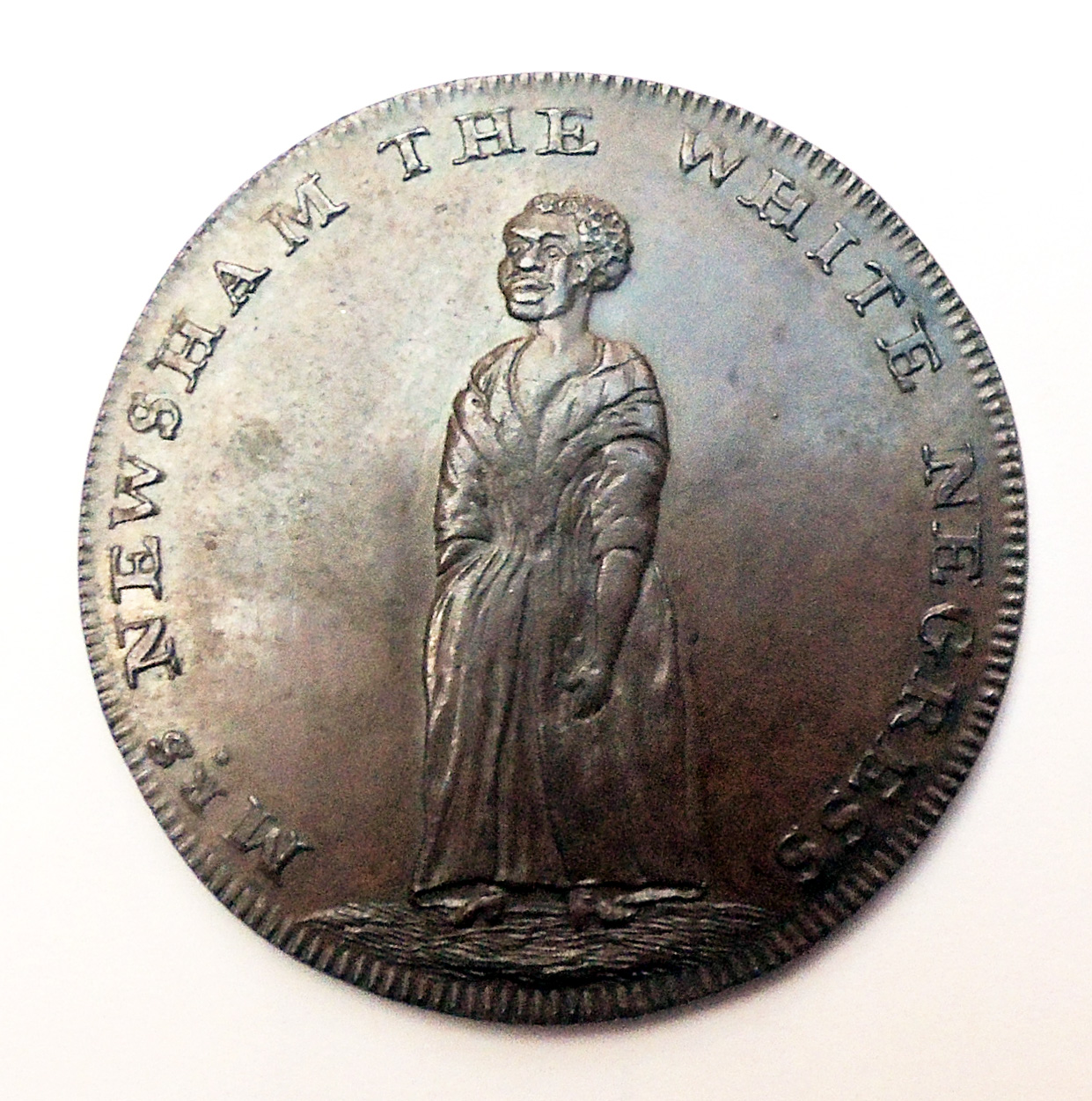
Mrs. Newsham the White Negress


According to the DNB, Amelia Lewsham or Newsham “a white negress, was born in Jamaica about 1748 to a black couple from whom she inherited a recessive gene causing albinism. She was described as being ‘as fair as the fairest among the Europeans’ (The White Negro Girl), although her features were those of her parents, of west African origin. Her mother was a house slave of Sir Simon Clarke, sixth baronet, who lived in Spanish Town.

In 1753 Clarke sent her to England, to his son Kingsmill Clarke of the Inner Temple. He sold Amelia to John Bennett or Burnet, who kept a bird and beast shop off St Martin’s Lane in London. Kingsmill Clarke asked for 400 guineas, although Amelia was probably bought for less. Amelia ‘had the Honour to be shewn to the Royal Family, and to the Royal Society’, as well as to ordinary people prepared to pay 1 shilling. She also toured the country and on 17 April 1766 was baptized in St Lawrence’s, Exeter, Devon, under the name Amelia Harlequin. She believed, like many black people, that baptism made her free and at this point she left John Burnet to exhibit herself.”  https://doi.org/10.1093/ref:odnb/98525

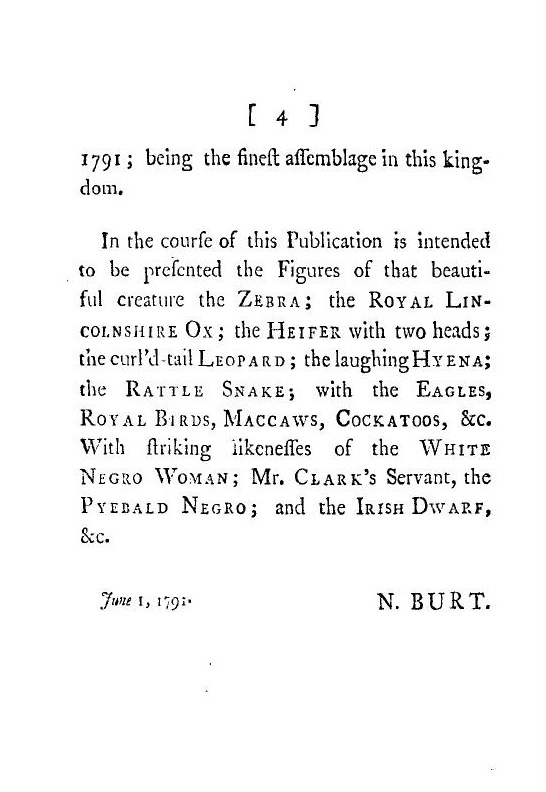
Lewsham continued to exhibit herself at many theaters. On the left is a description from the preface of Burt’s Delineation of Curious Foreign Beasts and Birds in their Natural Colours, which are to be seen alive at the great room over Exeter Change, and at the Lyceum, in the Strand (1791).

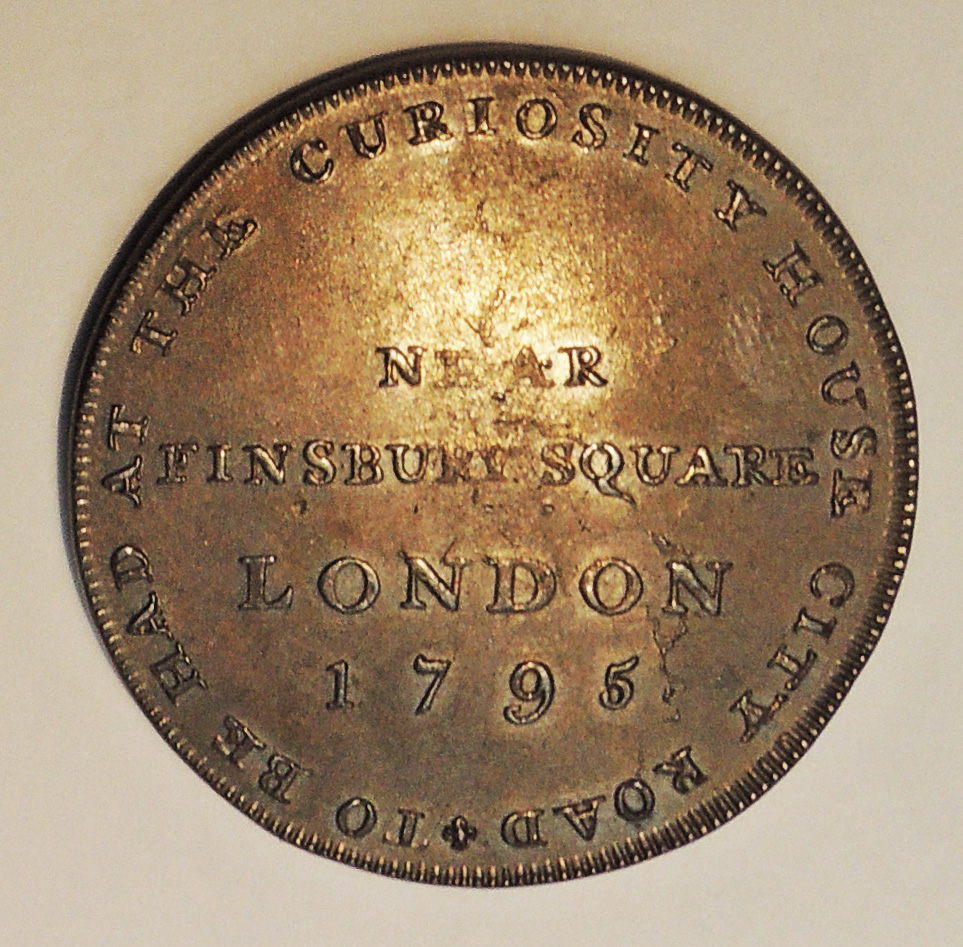
By 1795, she was working at the House of Curiosities run by Thomas Hall at No. 10 City Road in London. Several visitors made note of a verse she recited:

My nose, my lips, my features, all explore,
The just resemblance of a blackamore;
And on my head the silver-coloured wool
Gives further demonstration clear and full.
This curious age may with amazement view
What after ages won’t believe is true.


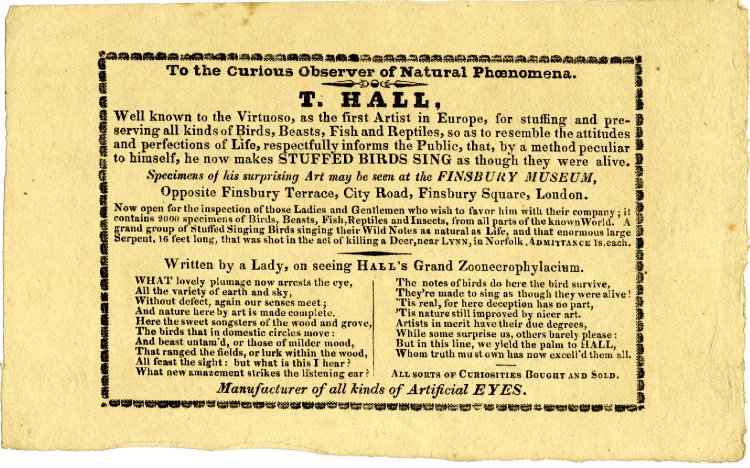
Here is an advertising ticket for Hall’s House of Curiosities, RMG, Retrieved January 31, 2020. Lettered with long advertisement for the tradesman: ‘To the curious observers of natural phœnomena, T. Hall, well known to the virtuosi… Specimens of his surprising art may be seen at the Finsbury Museum, opposite Finsbury Terrace, City Road, Finsbury Square, London. Now open for the inspection of those ladies and gentlemen who wish to favour him with their company; it contains 2000 specimens of birds, beasts, fish, reptiles and insects, from all parts of the known world… Admittance 1s. each… All sorts of curiosities bought and sold. Manufacturer of all kinds of artificial eyes.’; also with a poem ‘written by a lady, on seeing Hall’s Grand Zoonecrophylacium’, beginning: ‘What lovely plumage now arrests the eye, / All the variety of earth and sky…”

Thomas Hall, Mrs Newsham the White Negress. , 1795. Bronze token. Minted by W. Lutwtyche, Birmingham. Graphic Arts Collection GA 2020- in process

Seymour’s “Locomotion” receives new analysis by Princeton freshman

https://www.youtube.com/watch?v=v4aQZFKYogA

Grace Liu, class of 2023, shared this link to the five minute video she created to accompany her paper on self-driving cars for the 2019 writing seminar “Living with AI” taught by Lecturer Will Penman with support from Anuradha Vedantham, Assistant University Librarian for Research Services. Liu called the assignment “one of the highlights of my first semester.”

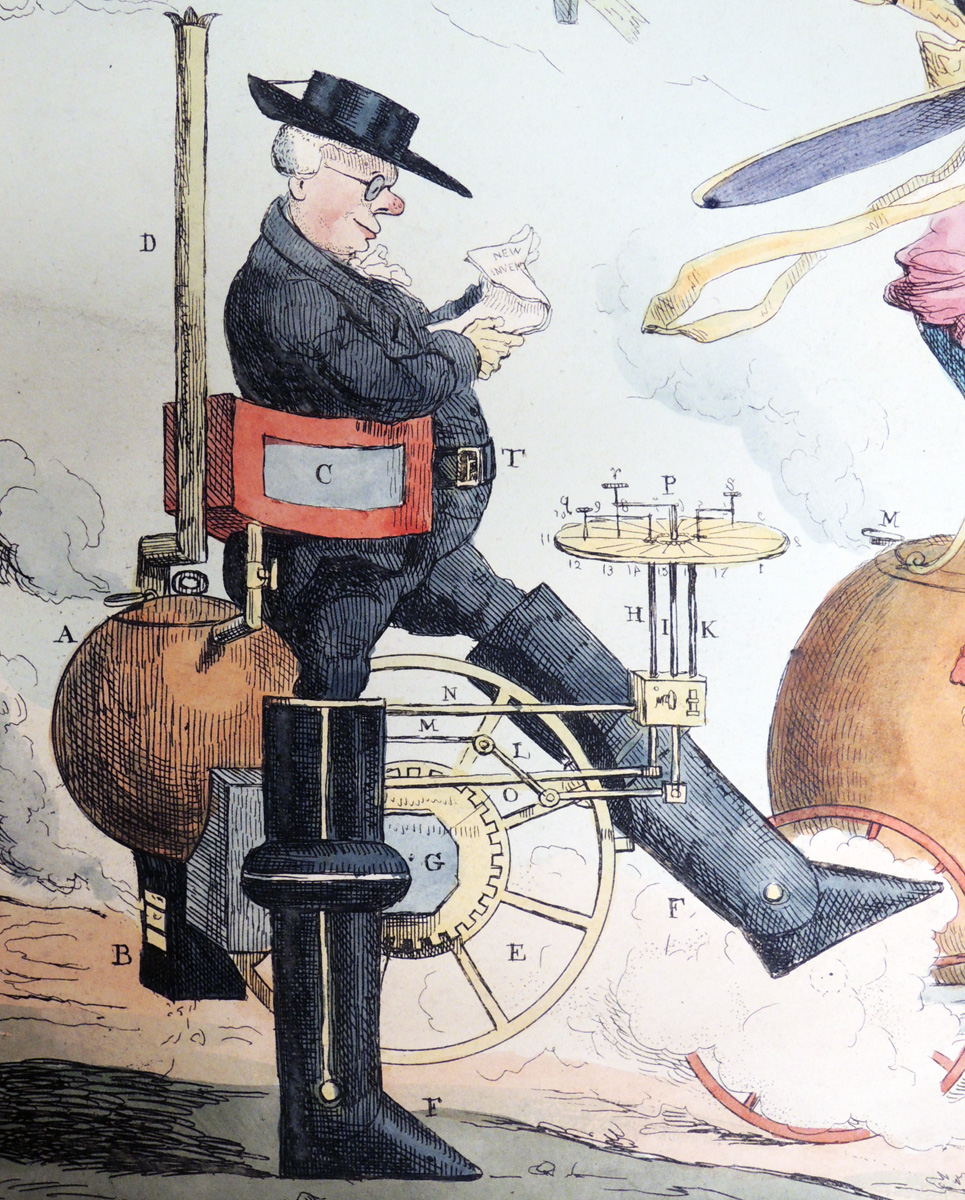
This writing seminar came to see various items in the graphic arts collection including Robert Seymour’s two part satirical etching Locomotion: Walking by Steam, Riding by Steam, Flying by Steam, ca. 1830. https://graphicarts.princeton.edu/2016/09/25/self-walking-boots/

Here is the abstract for Penman’s class:

“Searching YouTube, unlocking our phones with our faces, seeing advertising on Facebook, asking Siri to turn up the music: we already actively and passively use artificial intelligence (AI) daily. How does AI promise new kinds of interactions? Why are some industries turning to AI while others are not? How are the risks and benefits of AI shaping the future design of these technologies? This Writing Seminar explores the complex dynamics taking shape between humans and artificial intelligence. We begin by examining ImageNet, a dataset used to develop object-recognition software, in order to analyze how human biases become encoded in machine learning.

Next, we turn to self-driving cars as we question the economic, ecological, social, political, legal, and moral implications of artificial intelligence in the public sphere. For the research project, students select their own area of AI development and make an argument about its relationship to a specific population that engages with it. Possible topics include: romantic love with Samantha in the film Her; AI’s use in diagnosing skin cancer, people’s relationships with robotic pets, and the use of AI in financial trading. At the end of the semester, students each translate their research findings into a short video to share with nonexperts.”

Congratulations to Grace and the whole class. See the other wonderful videos for the writing seminar program WRI 176: Living with AI, now posted on YouTube.

Metametrica

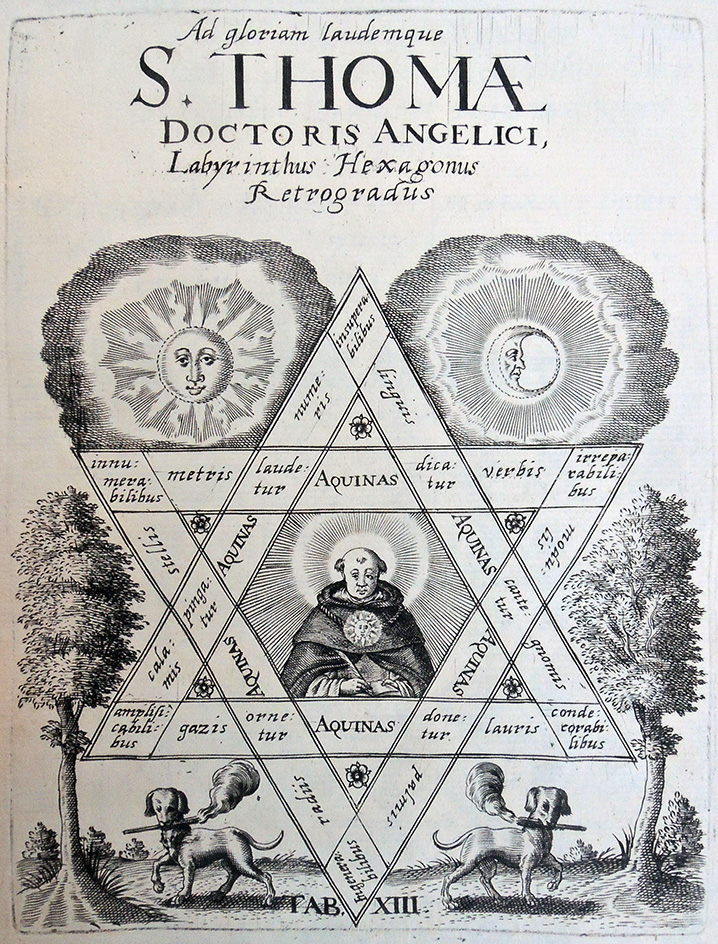
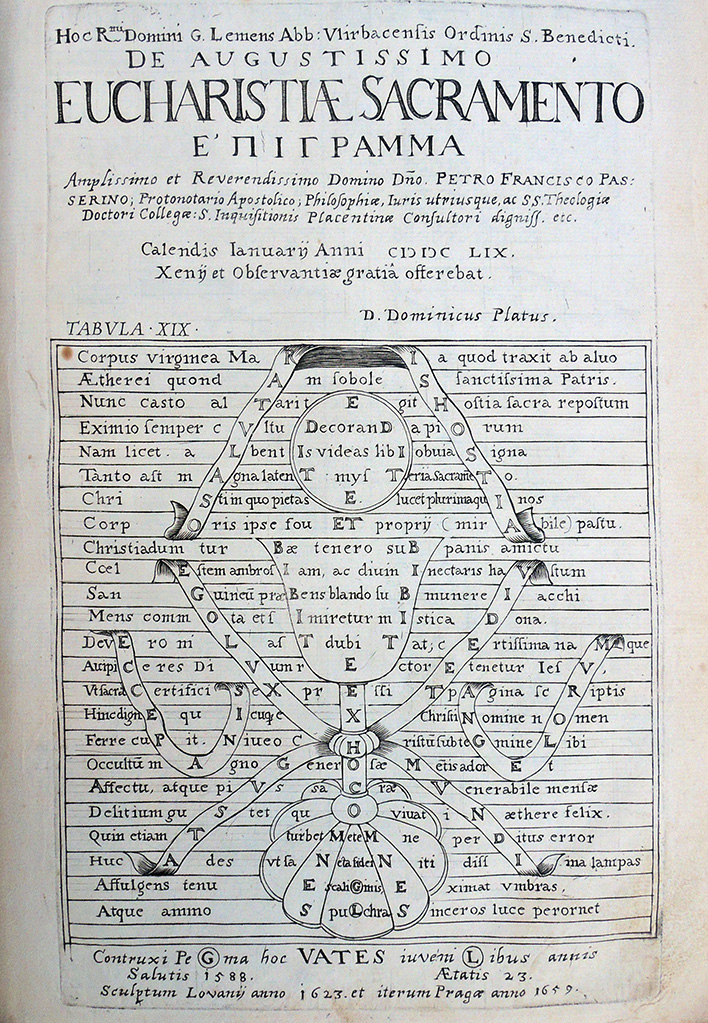
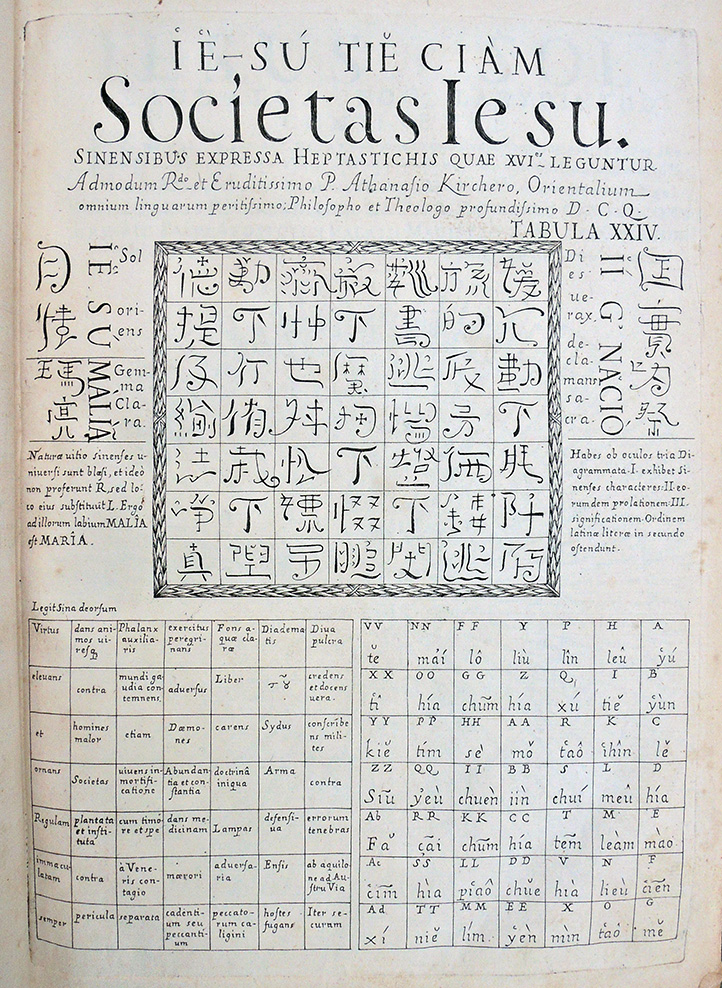
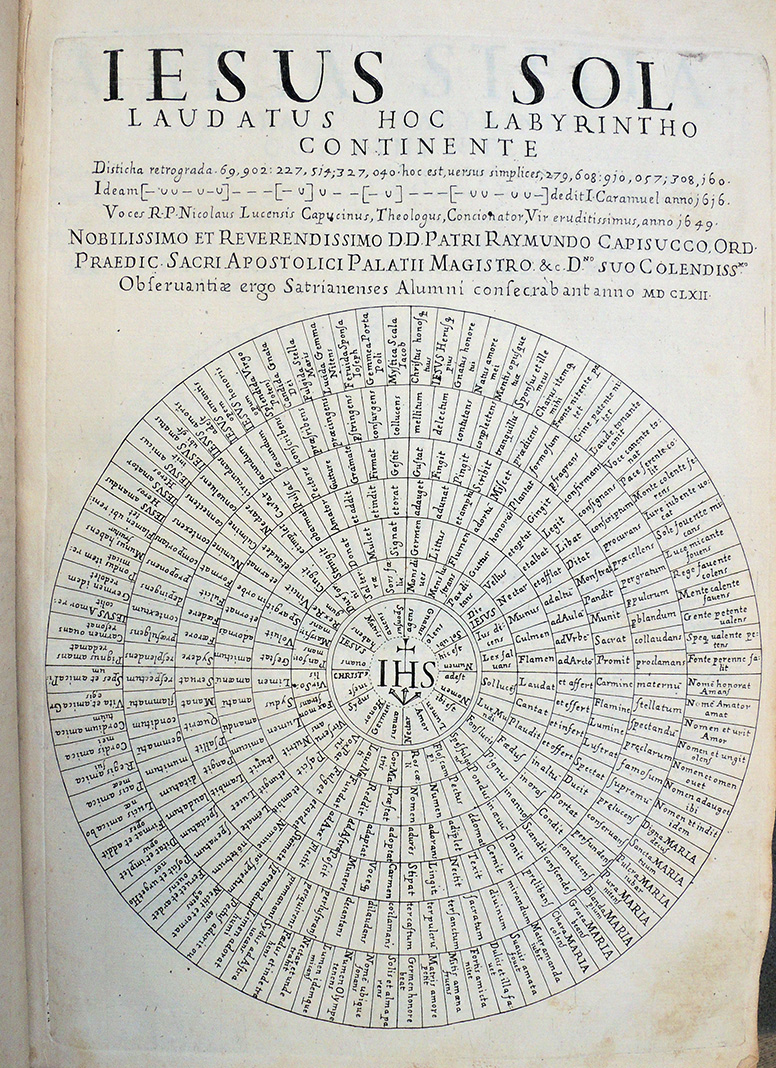
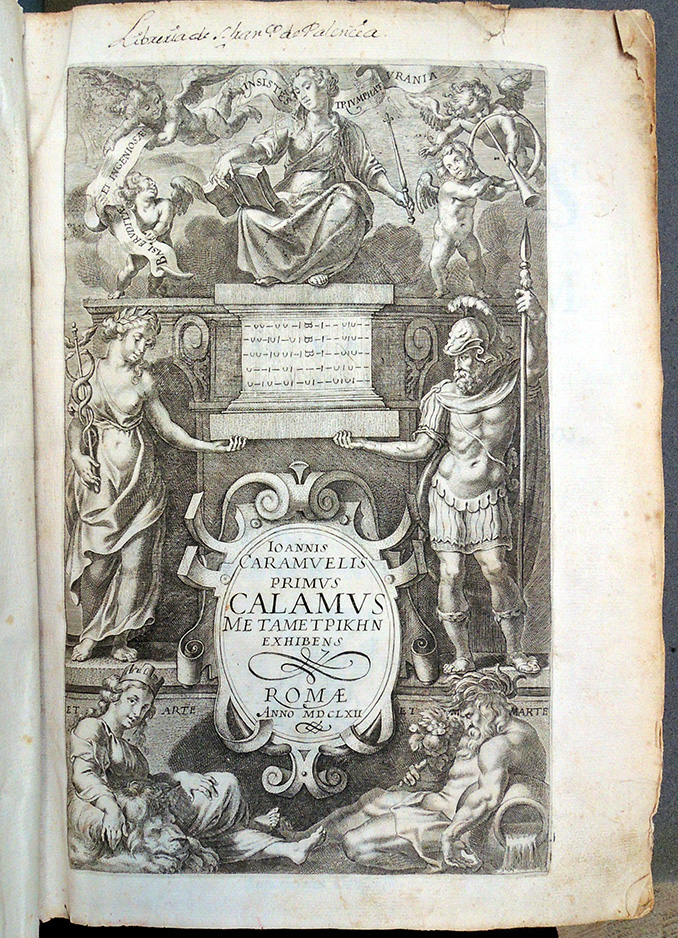
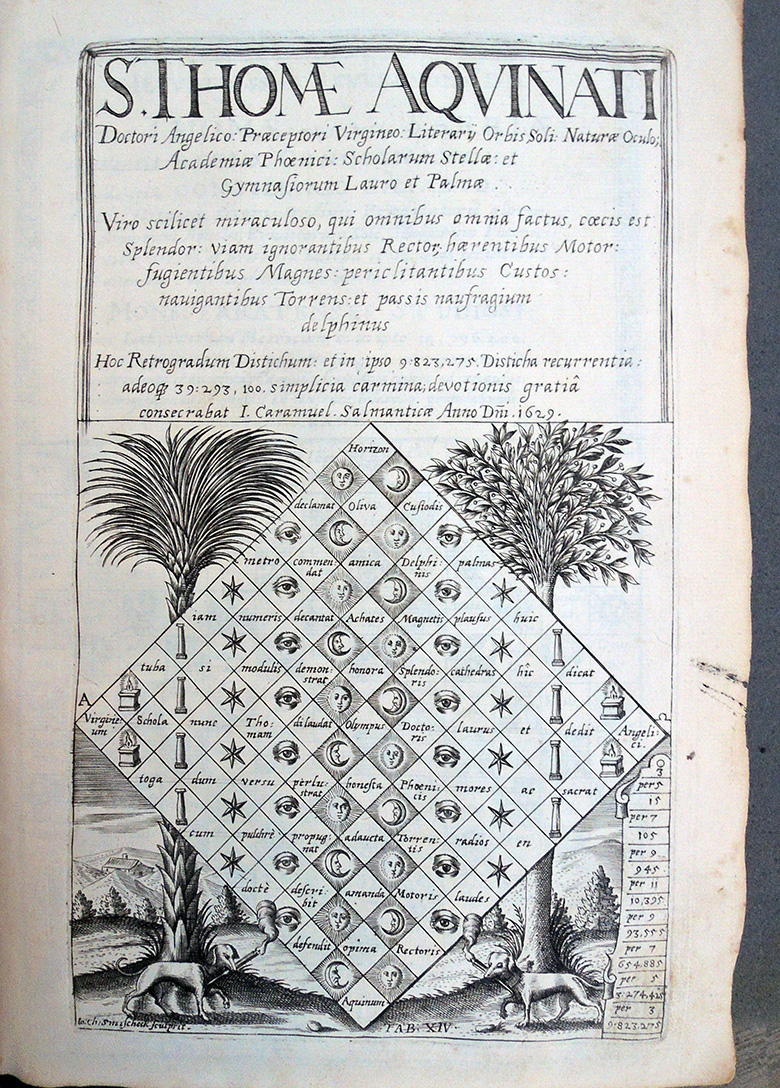
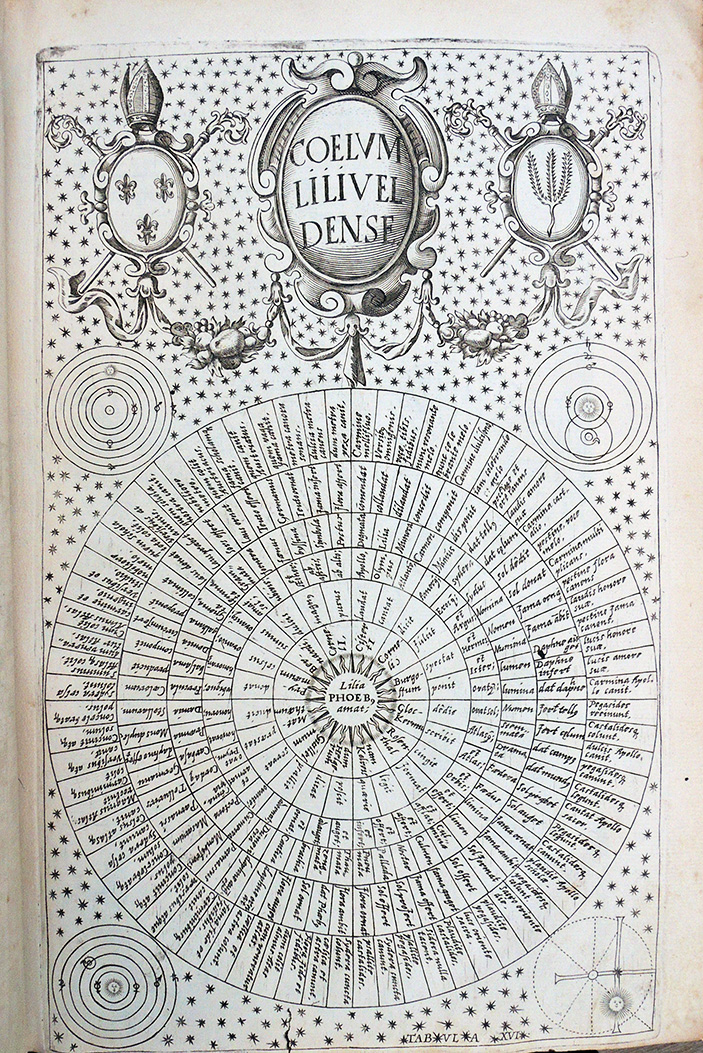
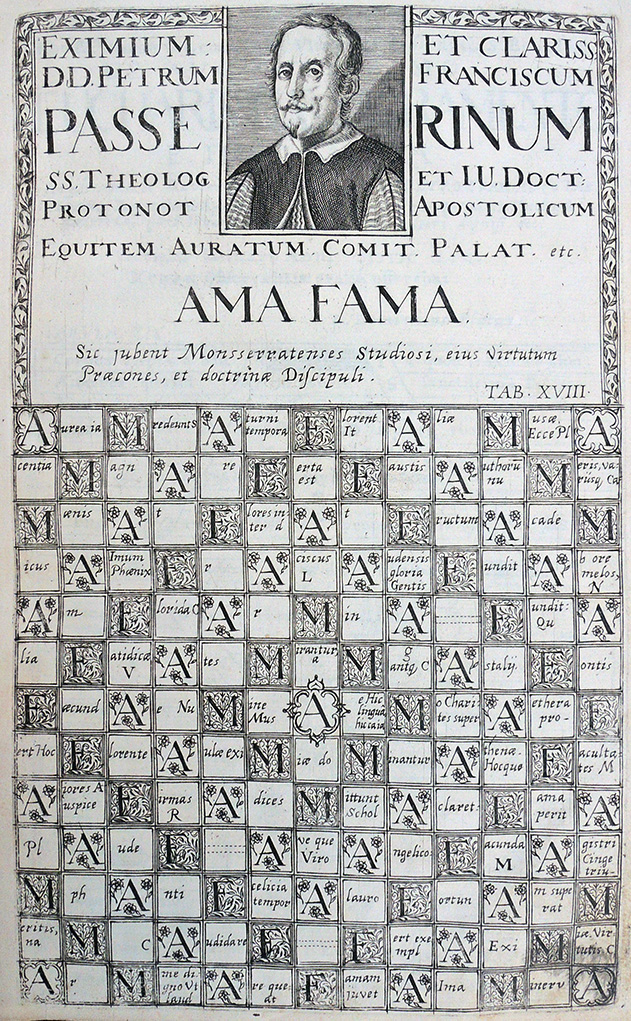
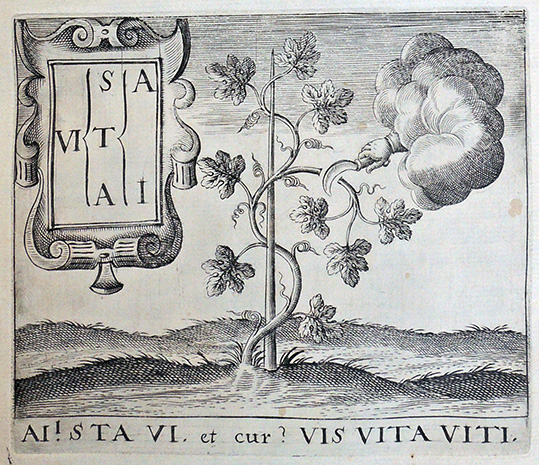
When we were offered a copy of Juan Caramuel y Lobkowitz’s 1663 book on metametrica, with a series of engraved plates that could be described as visual poetry, it was a happy surprise to find it already in our vault. Historians have labeled the plates anagrams, pattern poems, echo poems, and rebuses while Caramuel called his work “labyrinths, hexagonus, and retrogrades”. No matter the tag, he was obviously having fun with Latin and letters (although our colleagues fluent in Chinese are unimpressed with his attempt at Eastern metametrics).


Juan Caramuel y Lobkowitz (1606-1682) was a Cistercian priest and a prominent figure in the Spanish Golden Age. One biographer notes:

He was a precocious child, early delving into serious problems in mathematics and even publishing astronomical tables in his tenth year. After receiving a superficial education at college, where his unusual ability brought rapid advancement, this prodigy turned his attention to the Asiatic languages, especially Chinese. …His books are even more numerous than his titles and his varied achievements; for, according to Paquot, he published no less than 262 works on grammar, poetry, oratory, mathematics, astronomy, physics, politics, canon law, logic, metaphysics, theology and asceticism. –L. O’Neil, L. (1908). Juan Caramuel y Lobkowitz. In The Catholic Encyclopedia. New York: Robert Appleton Company. Retrieved January 30, 2020 from New Advent: http://www.newadvent.org/cathen/03329c.htm

The complete volume can be downloaded here: https://babel.hathitrust.org/cgi/pt?id=ucm.5317972478&view=thumb&seq=41

Juan Caramuel Lobkowitz (1606-1682), Ioannis Caramuelis Primus calamus ob oculos ponens metametricam : quae varijs currentium, recurrentium, adscendentium, descendentium, nec-non circumvolantium versuum ductibus, aut aeri incisos, aut buxo insculptos, aut plumbo infusos, multiformes labyrinthos exornat (Romae: Fabius Falconius excudebat, anno 1663). Rare Books Oversize PA8485.C374 P74 1663q.

Read: Dick Higgins Pattern poetry: guide to an unknown literature / Dick Higgins; with appendices by Herbert Francke … on Chinese pattern poetry, and a comparative study by Kalānāth Jhā … on the Citrakāvyas of Sanskrit and the Prākrits (Albany: State University of New York Press, 1987. PN1455 .H54 1987

Jed Rasula, Steve McCaffery, Imagining Language: an Anthology (MIT Press, 2001). P120.I53 I46 1998


See also Library of Congress post by Nathan Dorn https://blogs.loc.gov/law/2011/12/caramuel%E2%80%99s-metametrica-and-the-probability-of-law/


Analogy and harmony of colours

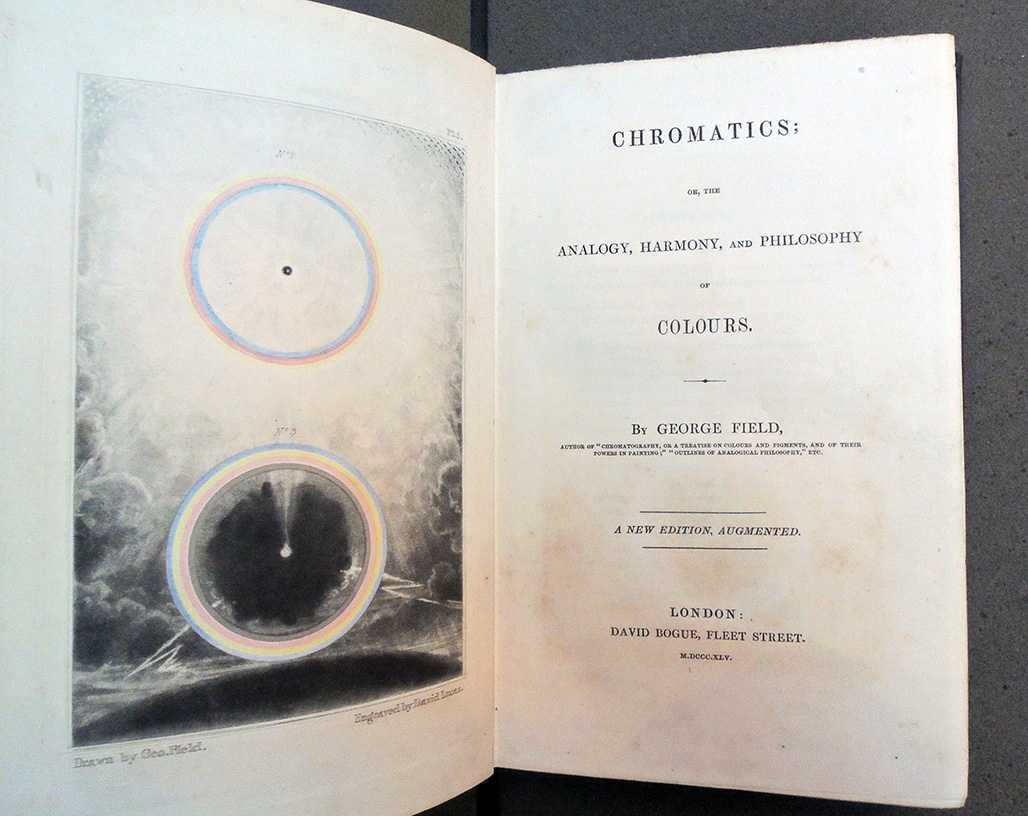
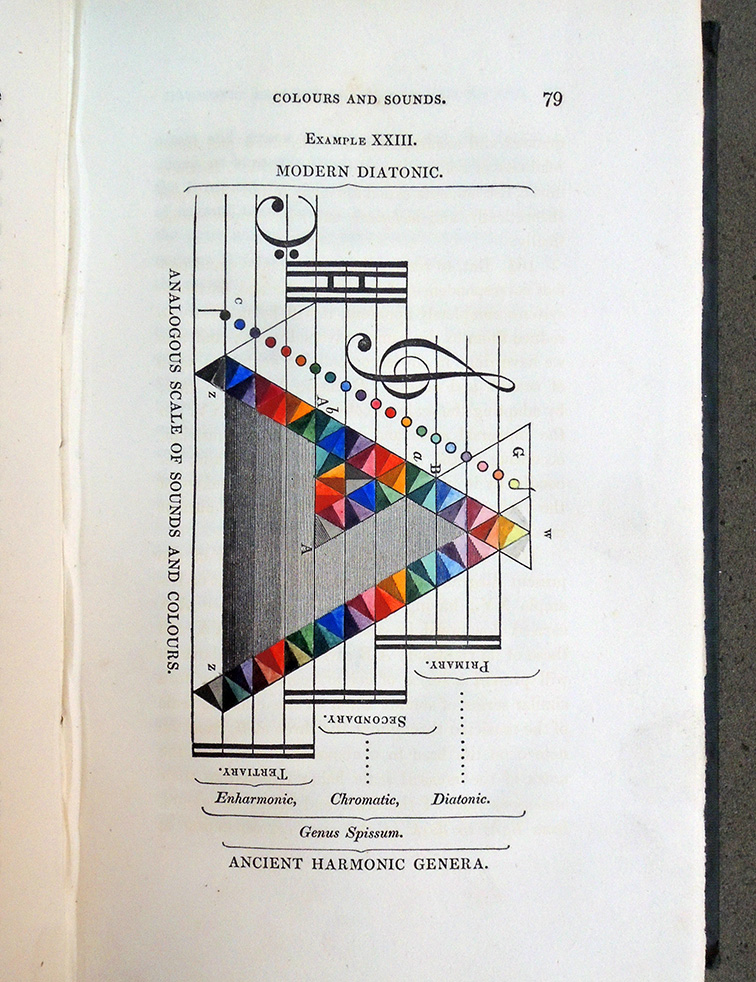
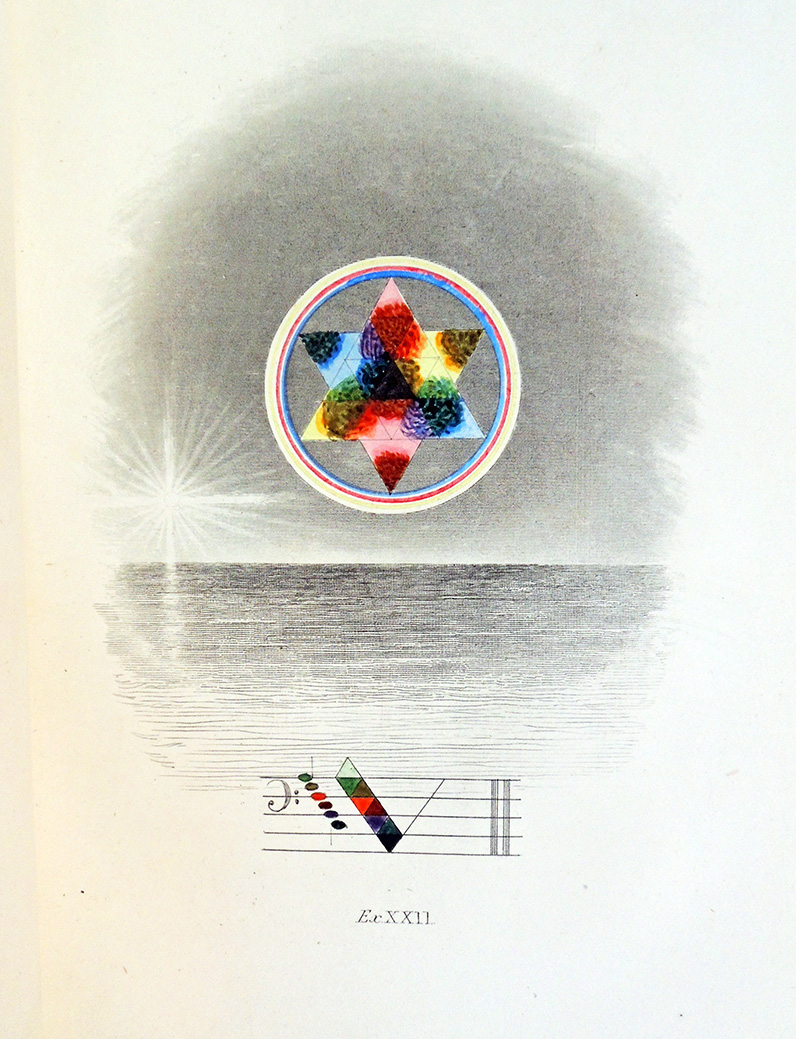
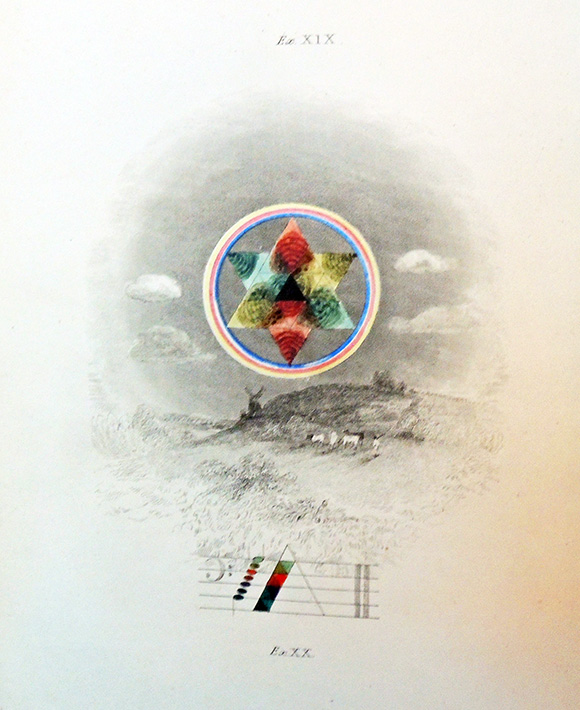
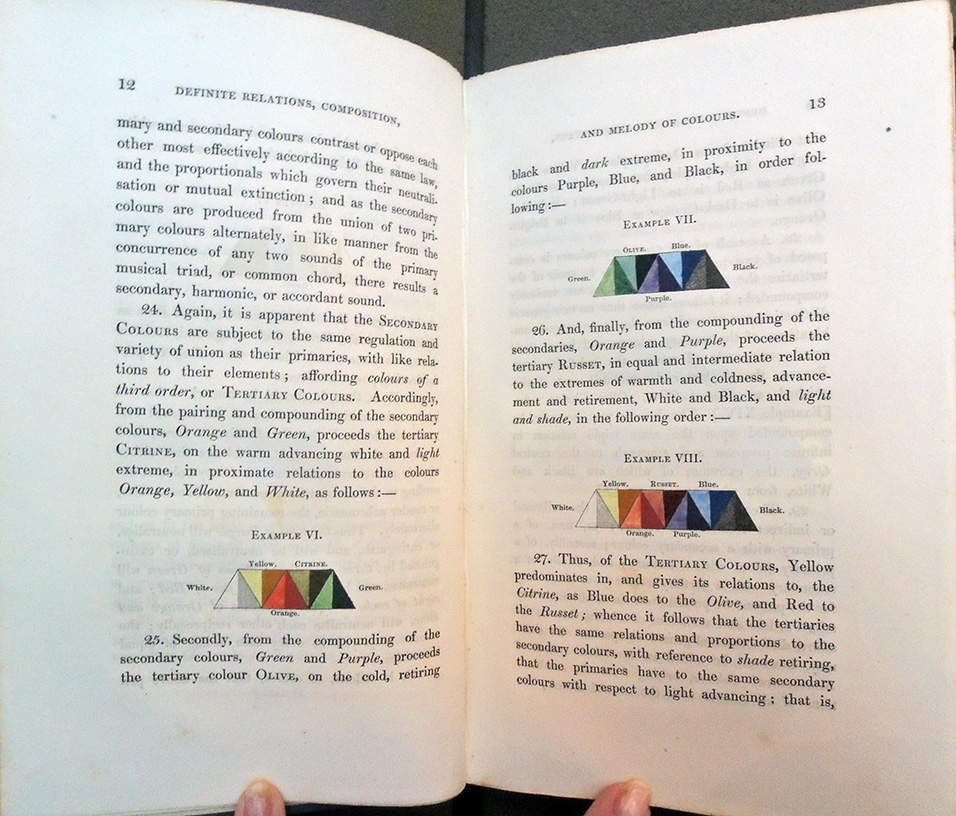
Princeton University Library owns the 1845, new augmented edition of George Field’s essay on harmony and color but not the original 1817 edition, so the two were compared to see what we were missing. The 1817 edition has 57 pages with 5 plates, the later is 263 pages with 11 plates – quite a difference.


George Field (1777?-1854), Chromatics, or, an essay on the analogy and harmony of colours (London: Printed for the Author by A.J. Valpy, 1817). viii, 57, [2] p., [5] leaves of plates). Full text online

George Field (1777?-1854), Chromatics, or, the analogy, harmony, and philosophy of colours, New ed., augm. (London: Bogue, 1845). xviii, 263 p., 11 leaves of plates. Rare Books 2008-0260

In Field’s preface to the 1845 edition he writes:

“This work, as printed twenty-eight years ago [1817], was part of a general treatise on colours, and an abstract of the first principles of chromatic science, constituting one division of a universal system of “Analogical Philosophy.” As it was well received by the artists, and the truth and practicability of its theory continue to be acknowledged, and as we hold the science to be that which, from its middle station, the simplicity, breadth, and perspicuity of its relations, the beauty of its representations, and its easy reference to nature, is best adapted to illustrate the universal analogy of science, we have been induced to republish the work under a wider development, extending the sphere of its application throughout art.”


In fact the revised edition is substantially rewritten (not always for the better) and the color plates much improved. For instance, in the first edition the author concludes: “the principal distinction of the two systems is, that the notes of sound are separated by intervals or spaces, while the notes of colour are the spaces themselves; for colour, as expansible quantity, bears the same relation to space that musical sound, as quantity successive, does to time: the Chromatist has therefore not only his melody and harmony, but he has also, if the variety of expanded quantities may be so expressed, his semibreves [whole notes] and minims [half notes], quavers [8th notes], and semiquavers [16th notes]. And this relation of colours answers to that which, in their music, the ancients called harmonica and rhytlimica theoretically; or practically to their Melopoeia and rhythmopoeia.

In the 1845 edition, Field expands on his theories, not ready to conclude at this point: “In such case there will arise this distinction of the two systems, that the notes of sound being separated by intervals or spaces, while the notes of colour (we beg the term) will be the spaces themselves; but in this diagram the distances on the scales from one sound to another, and those from colour to colour, are equally intervals. Thus from the particular hue and shade of Red to that of Orange on the scale, and from E to F, the corresponding sounds of these colours, are both intervals in which a series of intermediate hues and smaller intervals of sound have place. . . .”

The 1818 edition, Field writes “It is evident also that colours have a science as distinct from any association with figure or forms, as that of musical sounds is from figurative language or poetry. Hence the field in which the Chromatist may exercise his genius, is as extensive as that of the musician : to teach the science in all its bearings, is, however, beyond the purpose of an essay designed principally to illustrate the analogy of colours.”

1845 edition: “We may therefore terminate the present head with the remark, that, although colours have a science as distinct from any necessary connection with that of figures, or plastic, or pictorial forms in painting, as that of musical sounds is from figurative language, or the images of poetry, and are similarly associated; nevertheless, each of these sciences has its highest office under such figurative conjunction, as we shall further shew; whence the field in which the chromatist may exercise his genius is as diversified and extensive as that of the musician. To disclose the subtleties of the science is, however, beyond the purpose of an essay, designed principally to illustrate the analogy of colours.”
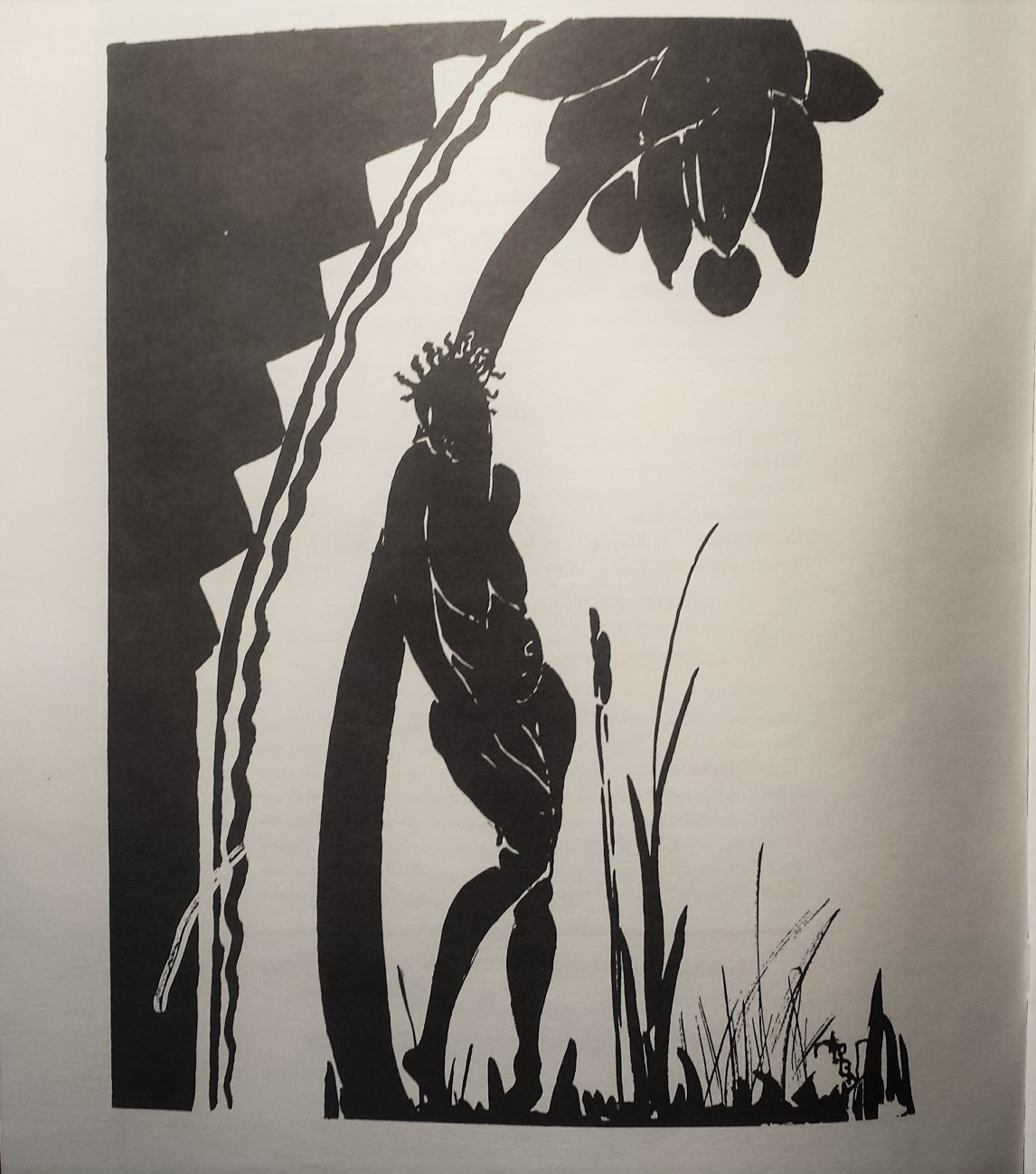
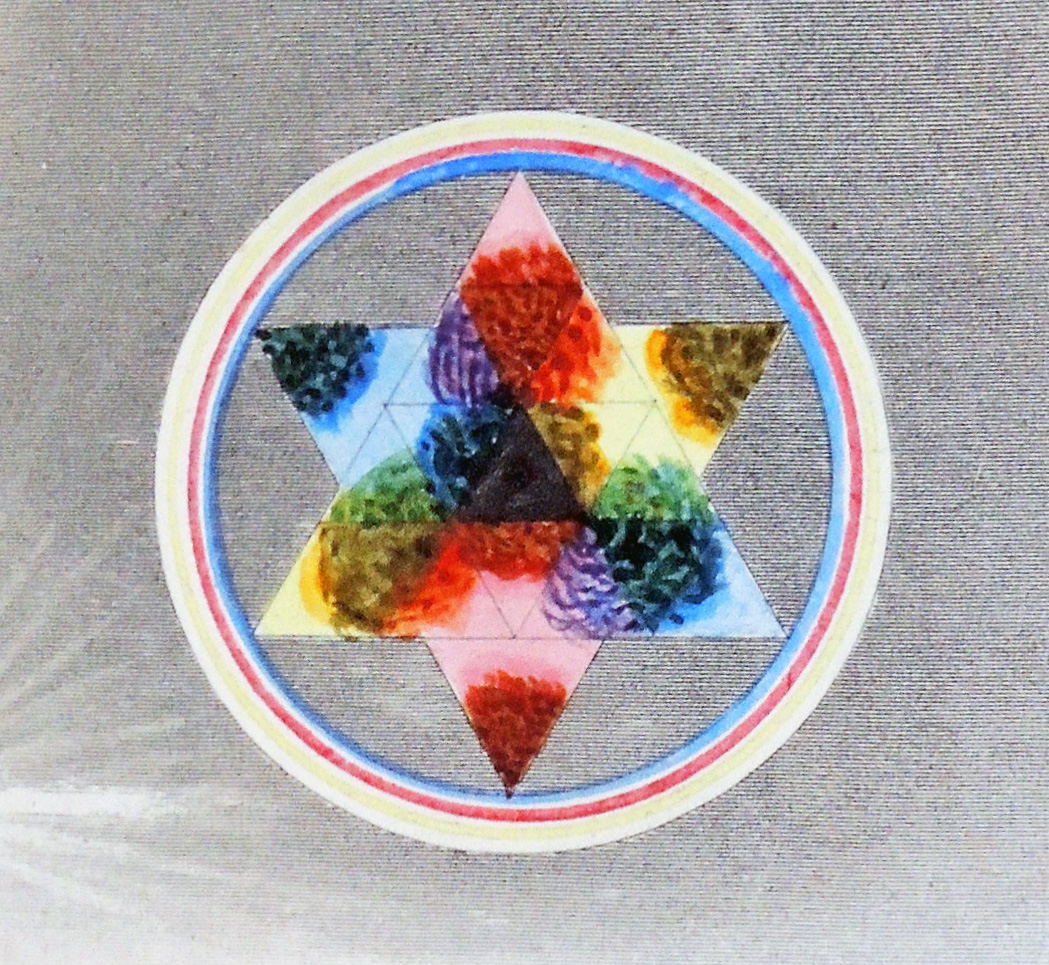
While having both is preferable, having the 1845 plates is a treat not fully appreciated with the digital surrogate. The 1817 can be read online until one is gifted. *note, the picture in our database is from the 21st century reprinting, although the record is for the 1845.

The Science of Imaginary Solutions

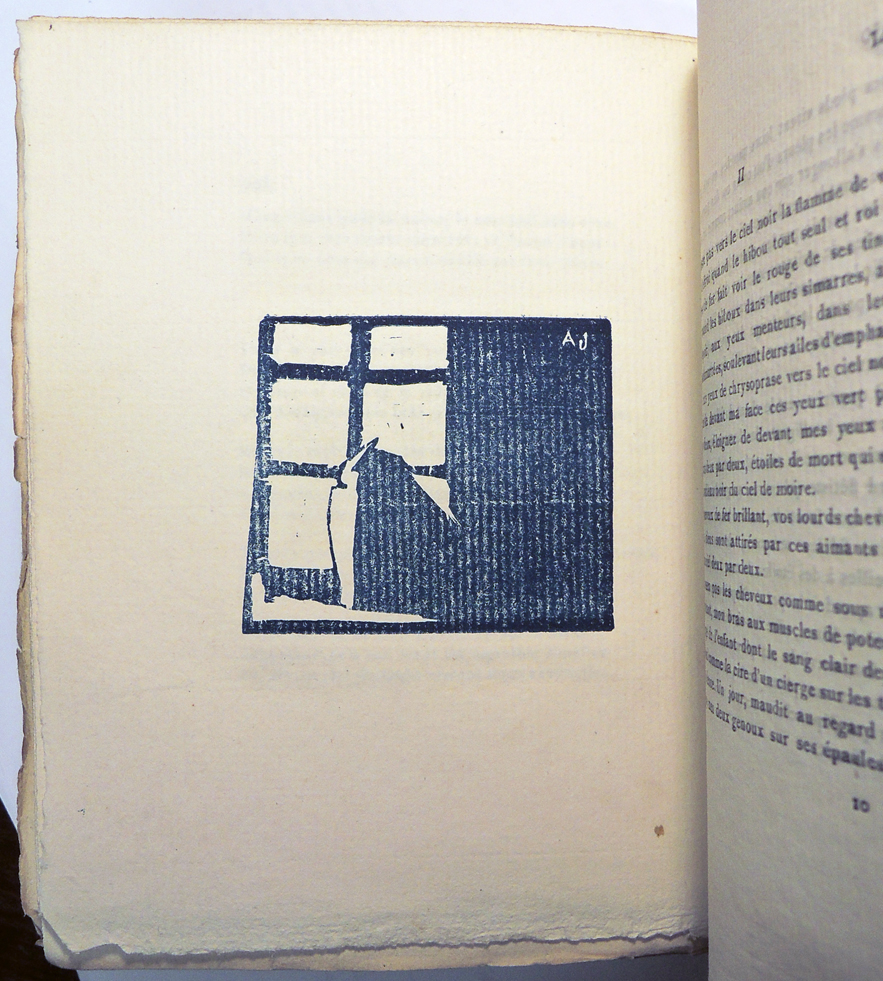
Alfred Jarry (1873–1907), Les minutes de sable mémorial (Paris: Mercure de France, 1894). The Morgan Library & Museum, gift of Robert J. and Linda Klieger Stillman, 2017. PML 197017.

It is disappointing that the New York Times has not yet published a review of the Morgan Library & Museum’s exhibition and catalogue Alfred Jarry: The Carnival of Being, which opened two days ago during bibliography week. The first American museum exhibition devoted to the French writer and artist Jarry (1873-1907) was made possible thanks to the 2017 gift to the Morgan of the books and manuscripts from the Robert J. and Linda Klieger Stillman Pataphysics Collection.
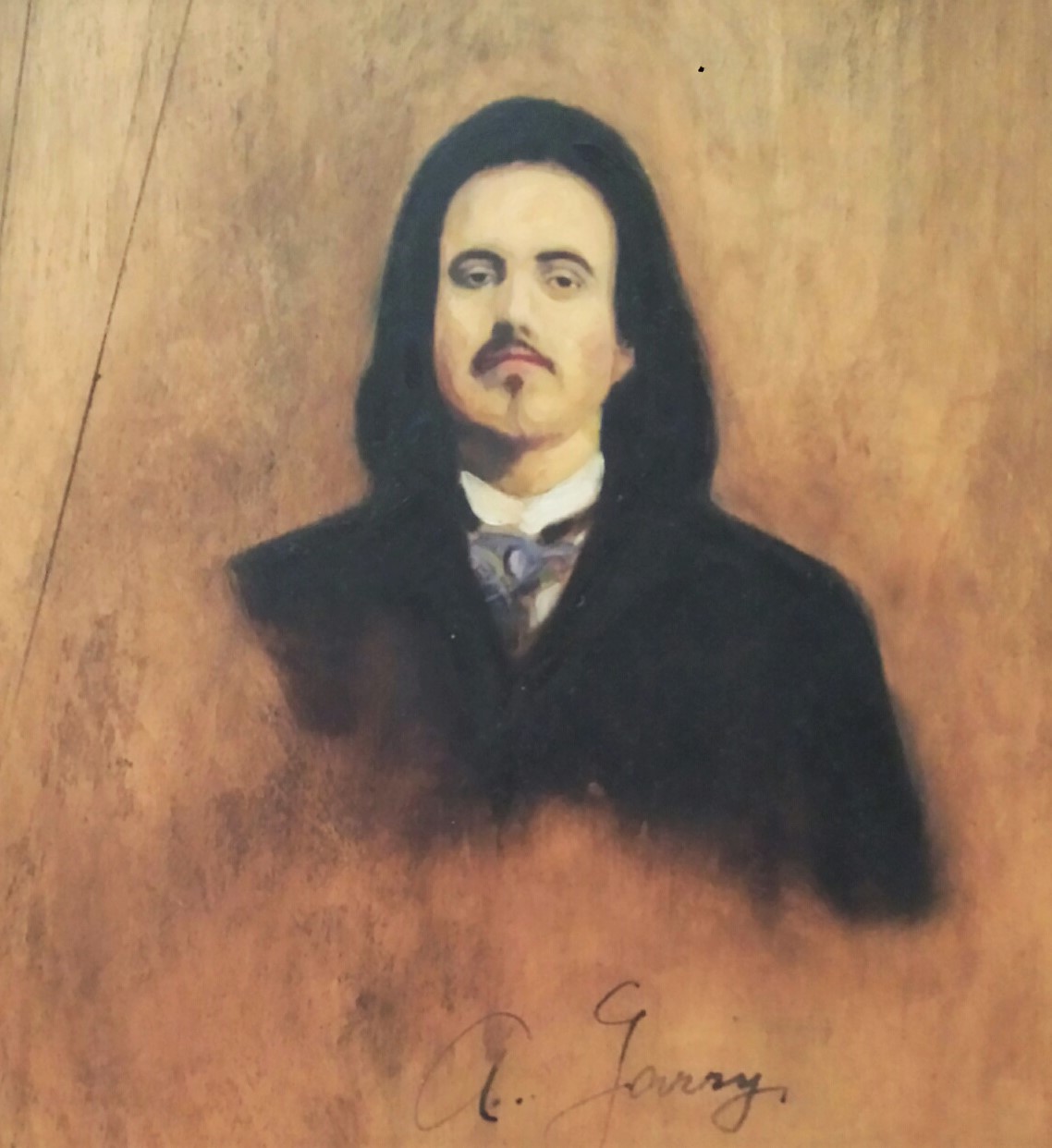
Thomas Chimes (1921–2009), Alfred Jarry (Departure from the Present), 1973, oil on panel. The Robert J. and Linda Klieger Stillman Pataphysics Collection. Courtesy of Locks Gallery.
Jarry defined pataphysics as “the science of imaginary solutions, which symbolically attributes the properties of objects, described by their virtuality, to their lineaments.” The exhibition catalogue by Sheelagh Bevan, now in the Graphic Arts Collection, helps to further illuminate Jarry’s complex philosophy and art. She situates his brief career between Arthur Rimbaud’s “Une saison en enfer” and Pablo Picasso’s “Les demoiselles d’Avignon,” with his first major book published at the age of 21. What had you accomplished by 21?

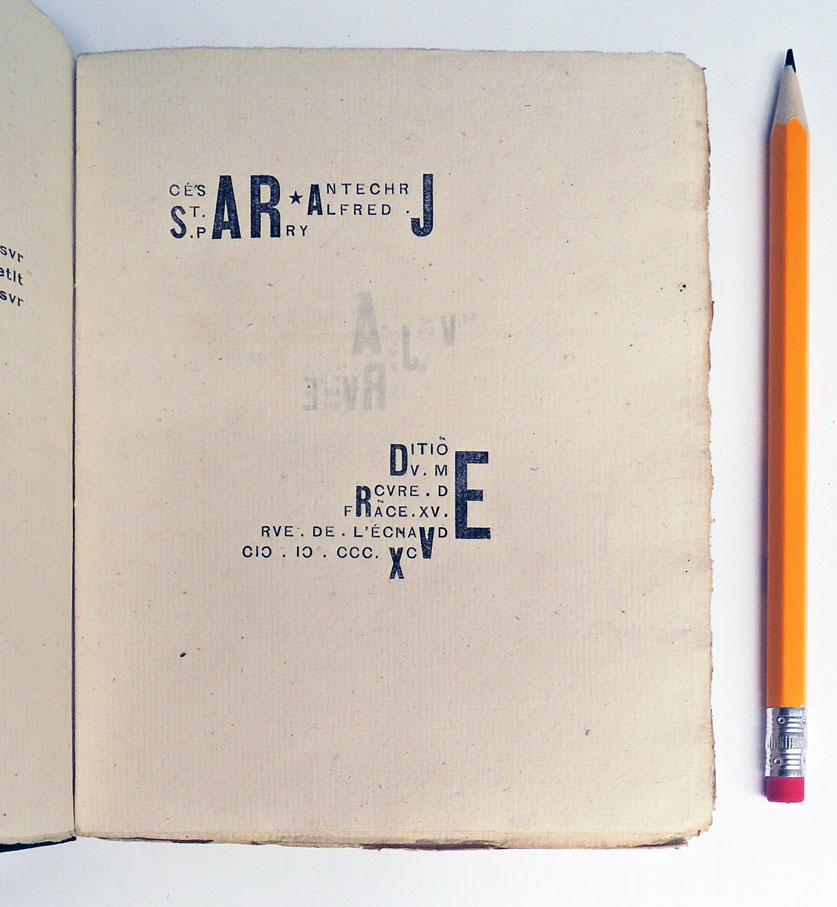
Alfred Jarry (1873–1907), César-antechrist (Paris: Mercure de France, 1895).. Princeton University Library.

The small 1894 volume, Les minutes de sable, with exquisite woodcuts, is one of the most beautiful books ever published. Full stop. The Graphic Arts Collection copy is here: https://graphicarts.princeton.edu/2016/10/11/les-minutes-de-sable-memorial/. It was only topped by Jarry’s 1895 volume, Cesar antechrjst.

The Morgan has thoughtfully planned a full schedule of tours, performances, and a conference, all listed on the website:
https://www.themorgan.org/exhibitions/alfred-jarry.

If you can’t wait, see the 1965 performance of Jarry’s Ubu Roi on Ubuweb:
. Alfred Jarry (1873-1907), Ubu Roi (Dir. Jean-Christophe Averty, 1965).